Table of Contents
| Quick Specs: Hydraulic Hose Crimp Fittings | |
|---|---|
| Fitting Types | Field-attachable (reusable) vs Permanent (crimp) |
| Hose Standards | SAE J517, DIN EN 853, DIN EN 856, ISO 1436, ISO 3862 |
| Thread Standards | JIC 37°, BSP, metric, SAE O-ring (ORFS), NPT |
| Pressure Range | Field-attachable: up to 21 MPa / Permanent: up to 42 MPa |
| Hose Size Range | 1/4″ to 2″ (field) / 1/4″ to 6″ (permanent) |
| Installation Tool | Wrench (field) / Crimper (permanent) |
| Crimp Tolerance | ±0.03 mm (permanent, CNC crimper) |
| Reusability | Field-attachable: yes / Permanent: no |
What Are Hydraulic Hose Crimp Fittings?
Hydraulic fittings connect hydraulic components to form closed-loop systems. Two main categories: field-attachable (also called reusable fittings) and permanent crimp fittings (one-piece or interlock). Engineering machinery accounts for 62% of all hydraulic fitting consumption, followed by aerospace, shipbuilding, and petrochemical applications.
The choice between them is not about preference — it is about pressure, application, and access to tooling. A field-attachable fitting screws onto the hose with a wrench and a socket. A permanent fitting requires a hydraulic hose crimping machine that compresses a ferrule around the hose and fitting stem under high tonnage. The machine uses 68# anti-wear hydraulic oil at system pressure up to 31.5 MPa to generate this radial contraction force.
According to Wikipedia’s crimp joining definition, a proper crimp creates a cold-weld bond between the ferrule and the hose reinforcement layers. This bond is what gives permanent crimp fittings their higher pressure rating. The physics behind this bond follows Pascal’s Law, where a small input force on the hydraulic pump multiplies into tons of crimping force at the die.
Field-Attachable Fittings: How They Work
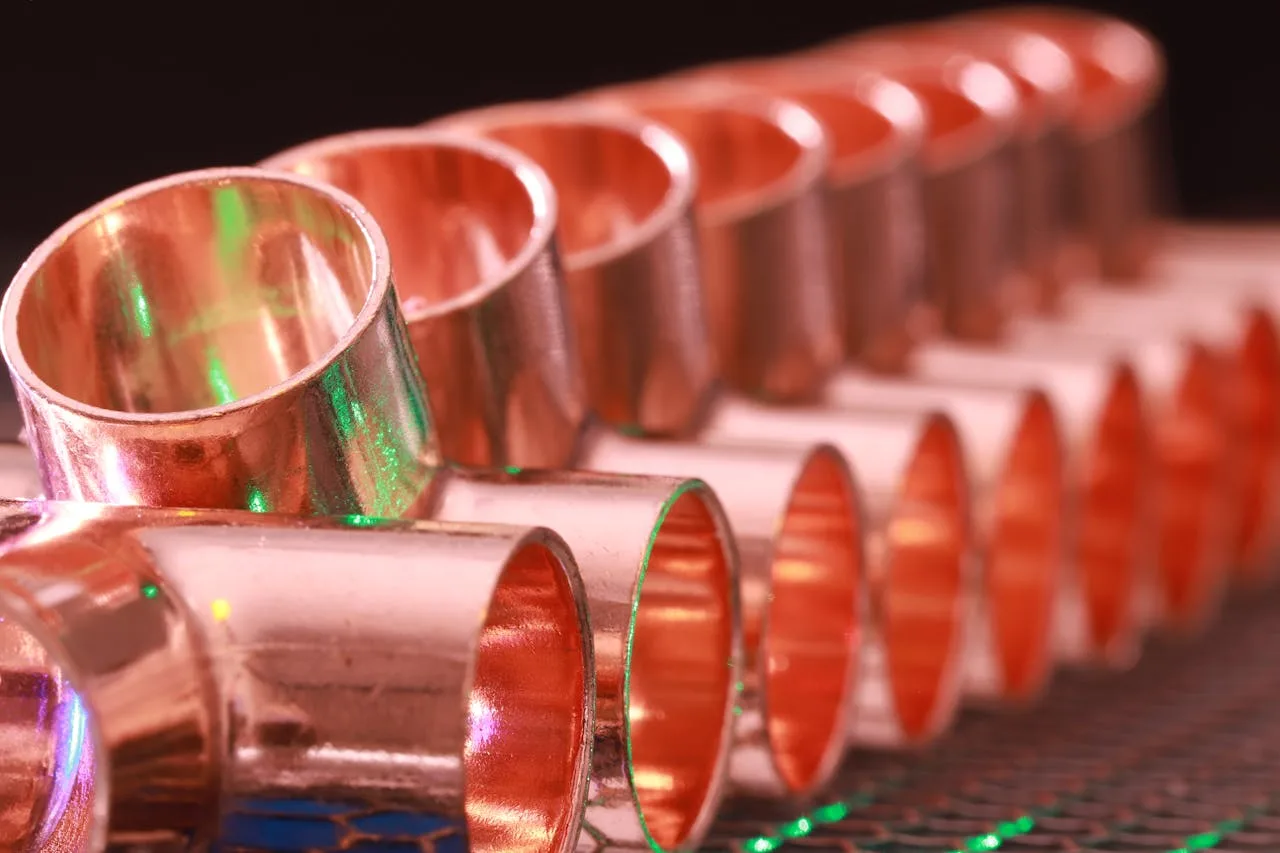
Field-attachable fittings have two or three pieces: a stem, a socket (or ferrule), and sometimes a nut. The socket threads onto the hose exterior. The stem pushes into the hose inner tube. Then the nut draws the socket and stem together, biting into the wire braid or spiral. For a visual reference of how hose layers are constructed, see Wikipedia’s hydraulic hose overview.
Advantages
- No crimper needed — install with a wrench and vise
- Reusable — if the hose fails, you can unscrew the fitting and reuse it on a new hose
- Emergency repair — keep a kit in the service truck for field breakdowns
- Low upfront cost — no capital equipment required
Limitations
- Lower pressure rating — typically rated to 21 MPa (3,000 psi), not suitable for high-pressure applications
- Limited hose sizes — commonly available for 1/4″ to 1″ hoses; larger sizes are rare
- Not accepted in safety-critical systems — mining, marine, and aerospace standards often require permanent crimp
- Inconsistent assembly quality — torque varies by operator, which means pressure capacity varies
A mechanic on r/Hydraulics described it plainly: “Field-attachable fittings are fine for low-pressure return lines. I would never trust one on a 3,000 psi excavator boom circuit.”
Permanent Crimp Fittings: How They Work
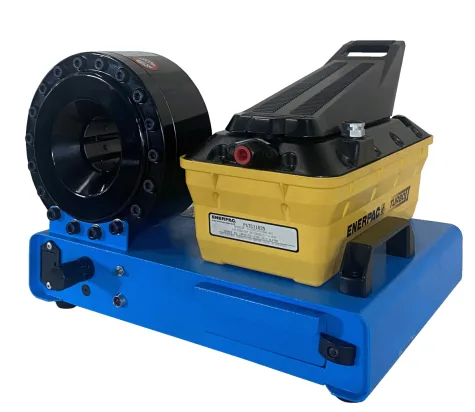
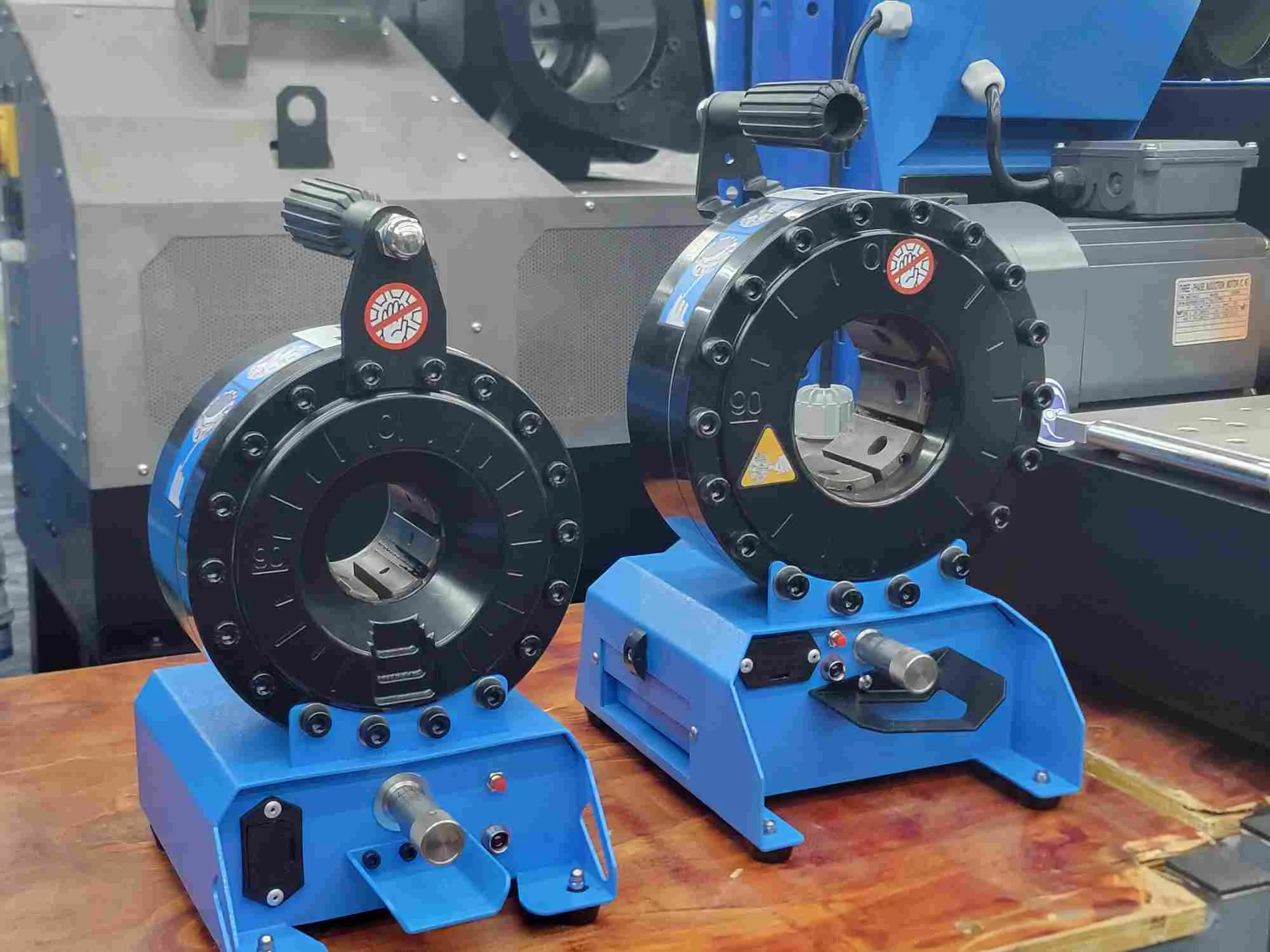
Permanent crimp fittings use a one-piece or two-piece (interlock) design. The fitting stem inserts into the hose. A ferrule slides over the connection point. Then a manual hydraulic hose crimper or electric crimping machine compresses the ferrule to a specific diameter, listed in the manufacturer’s crimp chart.
Advantages
- Higher pressure rating — up to 42 MPa (6,000 psi) for spiral hose (SAE 100R13/R15)
- Full size range — 1/4″ through 6″ hoses
- Repeatable quality — CNC crimpers achieve ±0.03 mm tolerance on every crimp
- Required by standards — SAE J517 and ISO 8434 specify permanent crimp for rated assemblies
- Faster production — 8-second cycle on a CNC machine vs 5-10 minutes by hand
Limitations
- Requires a crimper — capital investment for the machine and die sets
- Not reusable — once crimped, the fitting is permanent
- Die-specific — each fitting series needs a matching die set (see crimper dies and accessories)
Field-Attachable vs Permanent: Head-to-Head
| Parameter | Field-Attachable | Permanent Crimp |
|---|---|---|
| Max Pressure | 21 MPa (3,000 psi) | 42 MPa (6,000 psi) |
| Hose Size Range | 1/4″ – 1″ | 1/4″ – 6″ |
| Installation Tool | Wrench + vise | Hydraulic crimper |
| Assembly Time | 5-10 min | 8-15 sec (CNC) |
| Tolerance | Varies by operator | ±0.03 mm (CNC) |
| Reusability | Yes | No |
| Hose Types | Wire braid (1SC/1SN/2SC) | All (braid + spiral) |
| Safety Rating | Low/medium pressure | Full rated pressure |
| Standards Compliance | Limited | SAE J517, ISO 8434 |
| Per-Fitting Cost | $3-15 | $1-8 |
| Upfront Tooling | $0 (wrench only) | $500+ (crimper + dies) |
When to Use Each Type
Use Field-Attachable When:
- Emergency field repair on low-pressure lines (return, drain, suction)
- You build fewer than 5 hoses per month
- No crimper is available on-site
- Temporary bypass or test setup
Keep a field-attachable kit with a P10HP compact crimper in the truck for mobile repairs. Even a small portable hydraulic hose crimper gives you better results than field-attachable fittings on medium-pressure lines.
Use Permanent Crimp When:
- Working pressure exceeds 21 MPa
- Spiral hose (SAE 100R12/R13/R15, DIN EN 856)
- Safety-critical systems (brakes, steering, mining, marine)
- Production volume above 5 assemblies per week
- Customer or insurer requires certified hose assemblies
For production shops doing 20+ hoses per day, a CNC P32D or P32A pays for itself in 3-6 months through faster cycle times and zero rejected assemblies.
Pressure Ratings and Hose Standards
Hose standards define the construction and pressure rating of the hose itself. The fitting must match or exceed the hose rating. Here are the key standards:
| Standard | Hose Type | Construction | Working Pressure (1″) |
|---|---|---|---|
| SAE 100R1 / DIN EN 853 1SN | Single wire braid | 1 wire + cover | 10.3 MPa |
| SAE 100R2 / DIN EN 853 2SN | Double wire braid | 2 wire + cover | 19.0 MPa |
| SAE 100R12 / DIN EN 856 4SP | 4-wire spiral | 4 spiral + cover | 25.0 MPa |
| SAE 100R13 / DIN EN 856 4SH | 4-wire spiral | 4 spiral + cover | 27.5 MPa |
| SAE 100R15 / DIN EN 856 R15 | 6-wire spiral | 6 spiral + cover | 42.0 MPa |
Field-attachable fittings are generally limited to SAE 100R1 and 100R2 wire-braided hoses. Spiral hose (R12 and above) requires permanent crimp — no field-attachable option exists for these pressure levels. A hydraulic hose has 2/4/6 layers of wire spiral reinforcement or wire braid, depending on pressure class. The more layers, the higher the tonnage required for crimping. Reference: SAE J517 standard.
Common Mistakes With Crimp Fittings
1. Using Field-Attachable on High-Pressure Lines
This is the single most dangerous mistake. A field-attachable fitting rated for 21 MPa installed on a 28 MPa circuit will blow off under load. Always check the fitting pressure rating against the system working pressure plus a safety factor of 4:1 (SAE standard).
2. Wrong Die Set for Permanent Crimp
Each fitting manufacturer publishes a crimp chart specifying the target diameter for each hose-fitting combination. Using the wrong die produces an under-crimped (leaks) or over-crimped (damaged hose) assembly. Always verify the crimp diameter with calipers — CNC crimpers like the P20D store these settings digitally and eliminate this error.
3. Not Skiving When Required
Some fittings require the hose cover to be removed (skived) before crimping. Crimping over an un-skived cover means the ferrule cannot grip the wire reinforcement. TRC’s P20CS battery crimper and P18CS are designed for both skived and no-skive fitting types.
4. Mixing Brands
A common question from Reddit’s r/Hydraulics: “Can I mix Parker fittings with Gates hose?” The short answer is no. Each manufacturer’s crimp chart is calibrated for their own ferrule and hose combination. Mixing brands voids the pressure rating. Stick with one brand per assembly or use dedicated nut crimping machines for specialty fittings.
FAQ
Can I reuse a crimped hydraulic hose fitting?
No. Permanent crimp fittings are one-time use only. Once the ferrule is compressed, it cannot be restored. If you need reusability, use field-attachable fittings.
Are field-attachable fittings safe for hydraulic systems?
Yes, within their rated pressure range (typically up to 21 MPa). They are not safe for high-pressure circuits, safety-critical systems, or spiral hose applications.
What crimp diameter tolerance should I target?
±0.03 mm for CNC crimpers. Standard machines achieve ±0.1 mm. Always measure with vernier calipers after crimping and compare to the manufacturer’s chart. Reference: ISO 8434.
Do I need to skive the hose before crimping?
It depends on the fitting type. One-piece fittings usually require skiving. No-skive fittings have a longer ferrule that grips through the cover. Check the fitting manufacturer’s instructions.
What die set do I need for my crimper?
Die sets are matched to the fitting series (not the hose). Common series include G1 through G12. Check the die selection guide or your crimper manufacturer’s catalog for the correct die for each fitting-hose combination.
Can I crimp stainless steel fittings with a standard crimper?
Yes, if the crimper has enough tonnage. Stainless steel ferrules are harder than carbon steel and require 10-20% more force. A TRC120L (120 ton) handles most stainless steel fittings up to 1″ hose.
How many crimps can a die set last?
Cr12MoV die steel with HRC 58-62 hardness typically lasts 10,000-30,000 crimps depending on hose size and operator care. Inspect dies regularly for wear marks.
What is the difference between crimp and swage fittings?
Crimping compresses the ferrule radially inward to a specific diameter. Swaging reshapes the fitting by forcing it through a die. Crimp fittings are more common in hydraulic applications because they produce a tighter, more consistent bond.
Do I need a CNC crimper for permanent fittings?
No. Standard electric and manual hydraulic hose crimpers work well for permanent fittings. CNC machines are faster and more consistent, but a manual unit like the P18HP produces perfectly acceptable crimps for low-volume shops.
Can I make hydraulic hose assemblies without a crimper?
Only with field-attachable fittings and a wrench. For permanent crimp fittings, you must have a crimper — there is no workaround. Even a compact P18XL portable crimper gives you the ability to make permanent assemblies in the field.
| Need the Right Crimper for Your Fittings?
TRC offers 72 models across 9 series — from manual field units to CNC production machines. ±0.03 mm precision on every crimp. |
Related Articles


