
Hydraulic Hose Crimping Machine: 7 Specs That Separate Good From Great
Hydraulic hose crimping machine spec sheets all look the same. Every manufacturer lists tonnage, die range, and motor power. The numbers are there, but they don’t tell you whether the machine will hold up after 10,000 crimps, whether it can correct an under-crimp without starting over, or whether the die changeover takes 30 seconds or 5 minutes.
This article focuses on seven specs that actually affect your daily work. Not marketing numbers — real, measurable differences between machines that make your job easier and machines that make you wish you’d spent more.
Beyond Brand: What Actually Matters
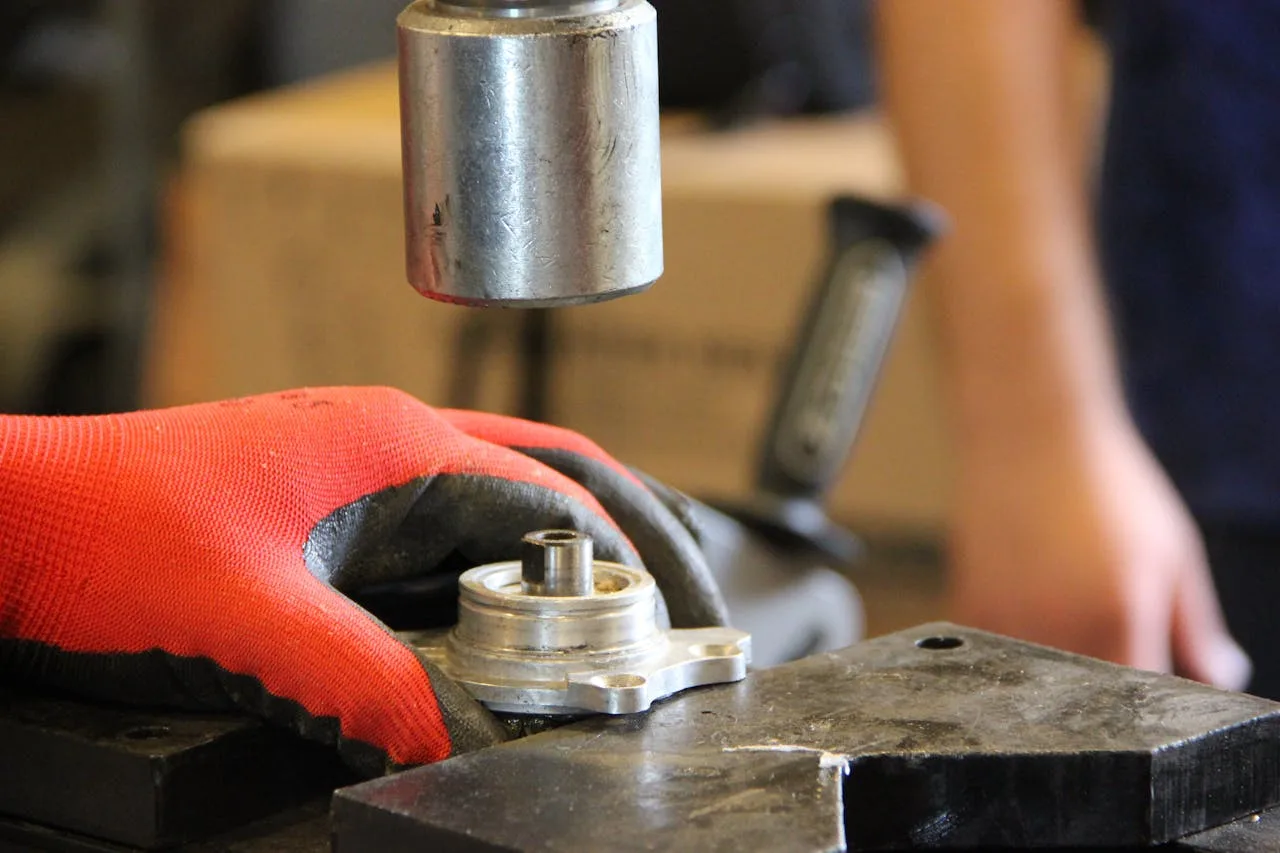
The crimping process is straightforward: a hydraulic cylinder pushes a set of dies closed around a ferrule, permanently deforming it onto the hose and fitting. The force needed depends on ferrule material, wall thickness, and diameter. A hydraulic hose crimping machine either delivers that force correctly and consistently, or it doesn’t.
Brand reputation tells you about reliability and after-sales support. But when you’re comparing two machines side by side, these seven specs predict your experience better than any logo on the frame.
Spec 1: Tonnage — The Force That Does the Work
Tonnage is the maximum crimping force the machine can deliver. It determines the largest hose size you can crimp and how hard the machine works at any given size.
General rule:
- 60–110 tons: Up to 1″ 2-wire or ¾” 4-spiral. Manual and compact electric models.
- 130–200 tons: Up to 2″ 4-spiral. Workshop electric and CNC models. This covers 90% of hydraulic applications.
- 200+ tons: 2½” to 4″ hose. Heavy industrial. Most shops never need this.
But here’s what spec sheets don’t mention: a 200-ton machine crimping ½” hose works at low pressure. The pump barely stresses. The dies last longer. A 60-ton machine crimping ½” hose works near its limit — higher pump pressure, more heat, faster seal wear.
Rule of thumb: Buy a machine with 30–50% more tonnage than your maximum hose requires. The headroom extends pump life and gives you room to grow.
Example: The TRC P32A delivers 200 tons — enough for 2″ 4SP with comfortable headroom. The P16HP at 95 tons handles up to 1″ 2-wire, ideal for mobile service.
Spec 2: Die Range — What Can You Actually Crimp?
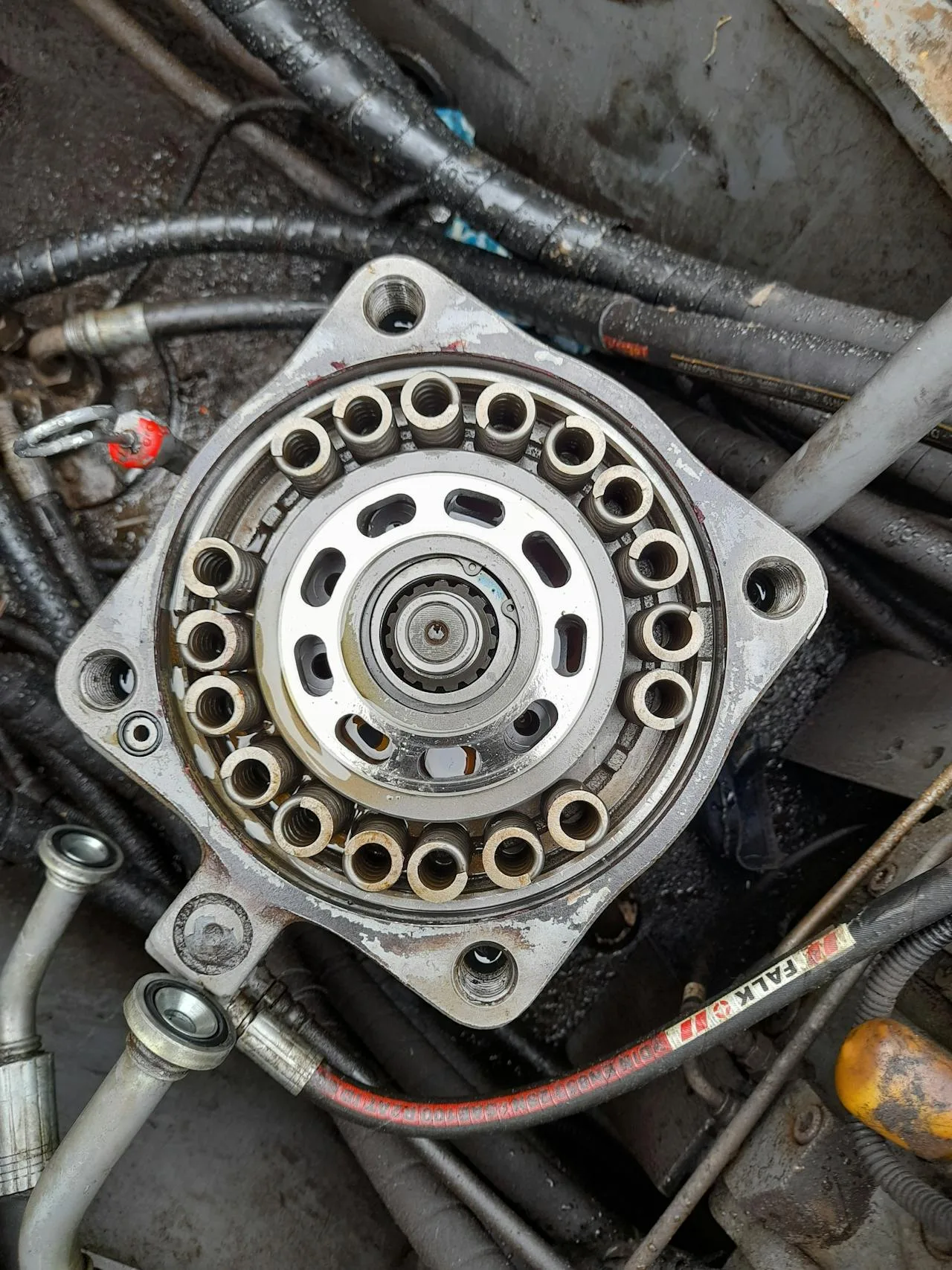
Tonnage tells you how hard the machine pushes. Die range tells you what sizes it can accept. They’re separate specs, and both matter.
A 200-ton hydraulic hose crimping machine is useless if it only ships with dies for ¼” to 1″ hose and you need to crimp 2″. The machine has the force, but the dies don’t fit.
Check three things:
- Standard die set: What sizes come in the box? Some machines include a full set (¼” to 2″), others include a basic set (¼” to 1″) with larger dies sold separately.
- Maximum die diameter: The head opening determines the largest die set that fits. A 78mm max die diameter handles 2″ 4SP. A 45mm max won’t go past 1″.
- Die availability: Can you order replacement or specialty dies? How long is the lead time? Dies are consumable — they wear out and need replacing.
The TRC P32D accepts dies from 6mm to 78mm diameter — the full range from ¼” to 2″ 4SP. Smaller machines like the P18HP cover 6mm to 51mm (up to 1¼” 4SP).
Spec 3: Cycle Time — Speed You Can Measure
Cycle time = the time from pressing start to die fully open after crimping. It directly affects daily output.
- Manual machines: 2–4 minutes per cycle (hand pumping)
- Electric semi-auto: 8–15 seconds per cycle
- CNC auto: 8–12 seconds per cycle (with automated pressure control)
The difference between 15 seconds and 2 minutes seems small for one crimp. Multiply by 40 crimps a day and it’s the difference between a 10-minute task and a 1½-hour task.
Two-speed pumps make a real difference: fast approach (die closes quickly) then slow crimp (precision force). Single-speed machines are slower because they approach and crimp at the same speed.
Spec 4: Open Head vs Closed Head
The crimping head design determines what you can reach.
Closed head: The dies close in a full circle around the hose. Produces the most uniform crimp. But you have to feed the hose straight through the head — you can’t crimp a hose that’s already attached to a machine with a bent fitting.
Open head (split head): The head opens on one side. You can swing the head onto a hose that’s already installed on equipment — no need to remove the hose from the machine. Essential for in-situ repairs on excavators, tractors, and mining equipment.
Reddit’s r/Hydraulics thread on crimping your own hoses (36 comments) has multiple users pointing out that a closed-head machine is fine for workshop assembly, but if you ever do field repairs, you need an open head. There’s no workaround — you can’t feed a 6-foot pre-bent hose through a closed circle.
Spec 5: Crimp Correction — Fix Mistakes Without Scrap
An under-crimp means the ferrule didn’t compress enough. The joint might leak. On a manual hydraulic hose crimping machine, you just pump again to add a little more force. On a basic electric model, you run another cycle at a slightly higher pressure setting.
But on a CNC model, you get crimp correction — a dedicated function that adds a calibrated amount of additional compression without disturbing the existing crimp. It’s faster, more precise, and doesn’t risk over-compressing.
This matters in production environments. If you scrap one hose assembly, you lose the hose, the fitting, the ferrule, and 10 minutes of labor. A correction feature turns a $30 mistake into a 5-second fix. Over a year, this pays for the CNC price difference.
The TRC P32D includes correction capability as standard. The P32A semi-auto model requires manual pressure adjustment for corrections.
Spec 6: Motor and Power Source
Three options, each with trade-offs:
Manual (hand pump): Works anywhere, no power needed. But slow and tiring at volume. The P18HP and P16HP are proven field tools.
Electric (motor + pump): Fast, consistent, reliable. Needs 110V or 220V. The P32A and P32D are electric workshop machines. Most popular for production use.
Pneumatic (air cylinder): Uses shop compressed air. Similar speed to electric, hands-free with foot pedal. The P18AP at 110 tons runs on standard shop air. Ideal if you already have a compressor running.
Battery (12V/24V): For mobile service trucks. No generator needed. Lower tonnage than bench models (typically 60–140 tons). Good for field repairs up to 1″ hose.
Spec 7: Frame and Build Quality
Specs that don’t appear on the data sheet but matter every day:
- Frame rigidity: A flexing frame means inconsistent crimps. Press the frame with your hand — if it moves, the crimp head moves, and your crimp diameter varies. Heavy cast iron frames don’t flex. Thin steel sheet frames do.
- Die holder fit: Dies should lock into the holder with zero play. Loose dies = inconsistent crimps. Check this by inserting a die and wiggling it. Any movement is a problem.
- Seal quality: Hydraulic pump seals determine maintenance intervals. Cheap seals leak after 6 months. Quality seals last 2–3 years. You can’t see this on a spec sheet, but you can ask about seal material (NBR vs FKM) and replacement cost.
- Die changeover time: How long to swap die sets? Some machines use a quick-release collar — 30 seconds. Others require tools and alignment — 3–5 minutes. If you change dies 10 times a day, this adds up.
Real-World Matching: 4 Use Cases
1. Mobile Hose Repair Service
Needs: Portable, no power required, covers most common sizes.
Match: P16HP (95T, manual, 34 kg). Open head for in-situ repairs. Fits in a service truck.
2. Hydraulic Hose Distribution Shop
Needs: Fast cycle, wide die range, consistent quality.
Match: P32A (200T, electric, 12-sec cycle). Handles ¼” to 2″ 4SP. Production-ready out of the box.
3. Mining Equipment OEM
Needs: Documented crimp quality, correction capability, full traceability.
Match: P32D (200T, CNC). Stores crimp profiles, logs every operation, correction mode for under-crimps.
4. General Industrial Maintenance Shop
Needs: Mid-range tonnage, pneumatic if shop air available, reliable daily use.
Match: P18AP (110T, pneumatic). Foot pedal operation, fast cycle, uses existing shop air.
FAQ
What tonnage do I need for a hydraulic hose crimping machine?
For most hydraulic applications (up to 2″ 4-spiral), 200 tons covers everything. For field service on hoses up to 1″, 95–110 tons is enough. For heavy industrial (2½”+), look at 300+ ton models. Always buy 30–50% more tonnage than your current max size requires.
Can I crimp different hose types on one machine?
Yes, as long as the die range covers the sizes you need. A single hydraulic hose crimping machine handles 1-wire, 2-wire, and 4-spiral hose — you just change the die set for each size. The machine itself doesn’t care about hose type; it’s the dies that determine compatibility.
How often does a hydraulic hose crimping machine need maintenance?
Seal replacement every 12–24 months depending on usage. Die inspection every 6 months — look for wear marks or scoring on the die face. Hydraulic oil change every 2 years. Frame and head alignment check annually. Total maintenance cost runs $50–$150 per year for a workshop machine.
Is a CNC crimping machine worth the extra cost?
If you run 50+ crimps per day with multiple hose/fitting combinations, or if you need ISO certification with documented crimp quality, yes. The correction feature alone saves more in reduced scrap than the price difference over 12 months. For 10–30 crimps a day in consistent sizes, a semi-auto electric model works fine.
Bottom Line
Don’t compare hydraulic hose crimping machines by brand or price alone. Match the seven specs to your real workload: tonnage with 30–50% headroom, die range that covers your top 5 sizes, cycle time that matches your daily volume, open head if you do field repairs, correction if you’re in production, power source that fits your infrastructure, and a frame that doesn’t flex.
For most shops, the TRC P32A hits the sweet spot: 200 tons, 12-second cycle, full die set included. Add the P16HP portable for field work, and you’ve covered 95% of what a hydraulic shop needs.