TRC · Complete hose assembly equipment
Hydraulic Hose Assembly Equipment Manufacturer for Complete Workflows
TRC manufactures and supplies the machines needed to turn hose, fittings and ferrules into a controlled process—from cutting and skiving to cleaning, crimping and testing. Tell us what hose and fittings you use, where the work happens and how many assemblies you need to make. We will narrow the equipment list before you spend time comparing models.
Start with the job
What Are You Trying to Set Up?
The same hose size can lead to a different machine when the fitting, workload, power source or loading space changes.
Mobile Hose Repair
Prioritize machine footprint, weight, power source and practical die coverage for a service truck.
Portable equipment →Workshop Assembly
Plan electric power, repeat settings, die organization and a clean cut-to-crimp flow.
Workshop machines →Heavy-Duty Production
Check ferrule OD, maximum opening, die series, controls and handling space together.
Heavy-duty equipment →A/C Hose Service
Use the correct hose, beadlock fitting and reduced-barrier data. Hydraulic die charts do not transfer automatically.
A/C equipment →Fitting Production
Separate nut crimping, steel-tube forming, cleaning and testing into the operations you actually need.
Fitting equipment →Complete assembly process
Build the Equipment Chain Around the Specification
Not every assembly uses every step. Follow the hose-and-fitting system, then select the machines that control each required operation.
Cut
Choose by hose construction, outside diameter, blade system and production volume.
Skive
Remove the cover or inner tube only when the specified fitting system calls for it.
Clean
Remove cutting debris before contamination can enter the hydraulic circuit.
Crimp
Match capacity, die series and target crimp data to the validated hose and fitting system.
Test
Verify the finished assembly using the applicable customer, manufacturer or standard procedure.
Before requesting a quote
Six Mistakes That Delay Machine Selection
These inputs determine whether the assembly fits the machine, the tooling is available and the proposed workflow is practical.
Sending only hose inside diameter and omitting reinforcement construction.
Assuming different fitting brands are interchangeable because they fit physically.
Choosing a die by its stamped number without confirming the machine’s die series.
Buying for the largest hose size but ignoring ferrule OD and fitting geometry.
Comparing power types without considering the real work location and frequency.
Requesting a quotation without voltage, destination and expected daily output.
Equipment selection
A Practical Selection Path
Start with the workpiece and site conditions. A useful recommendation depends on the complete assembly—not the headline tonnage of the machine.
- 01Hose brand, series, size and reinforcement
- 02Fitting shape, ferrule outside diameter and bend clearance
- 03Normal output, peak demand and changeover frequency
- 04Voltage, phase, compressed air or vehicle power
- 05Crimp measurement, cleanliness and test requirements
Define the assembly
Send the hose-and-fitting data plus a valid crimp specification where available.
Define the workplace
Service truck, farm shop, repair workshop and production line impose different loading and power limits.
Define the workload
Estimate the normal daily volume, peak demand and the number of die or size changes.
Confirm utilities
State the voltage, frequency and phase, or the available air, vehicle or battery supply.
Define verification
Explain how crimp diameter, cleanliness and finished-assembly testing will be recorded.
Representative product paths
Start With the Operating Condition, Then Confirm the Model
These models illustrate different equipment paths. Final suitability depends on the submitted hose, fitting, ferrule, tooling and power data.
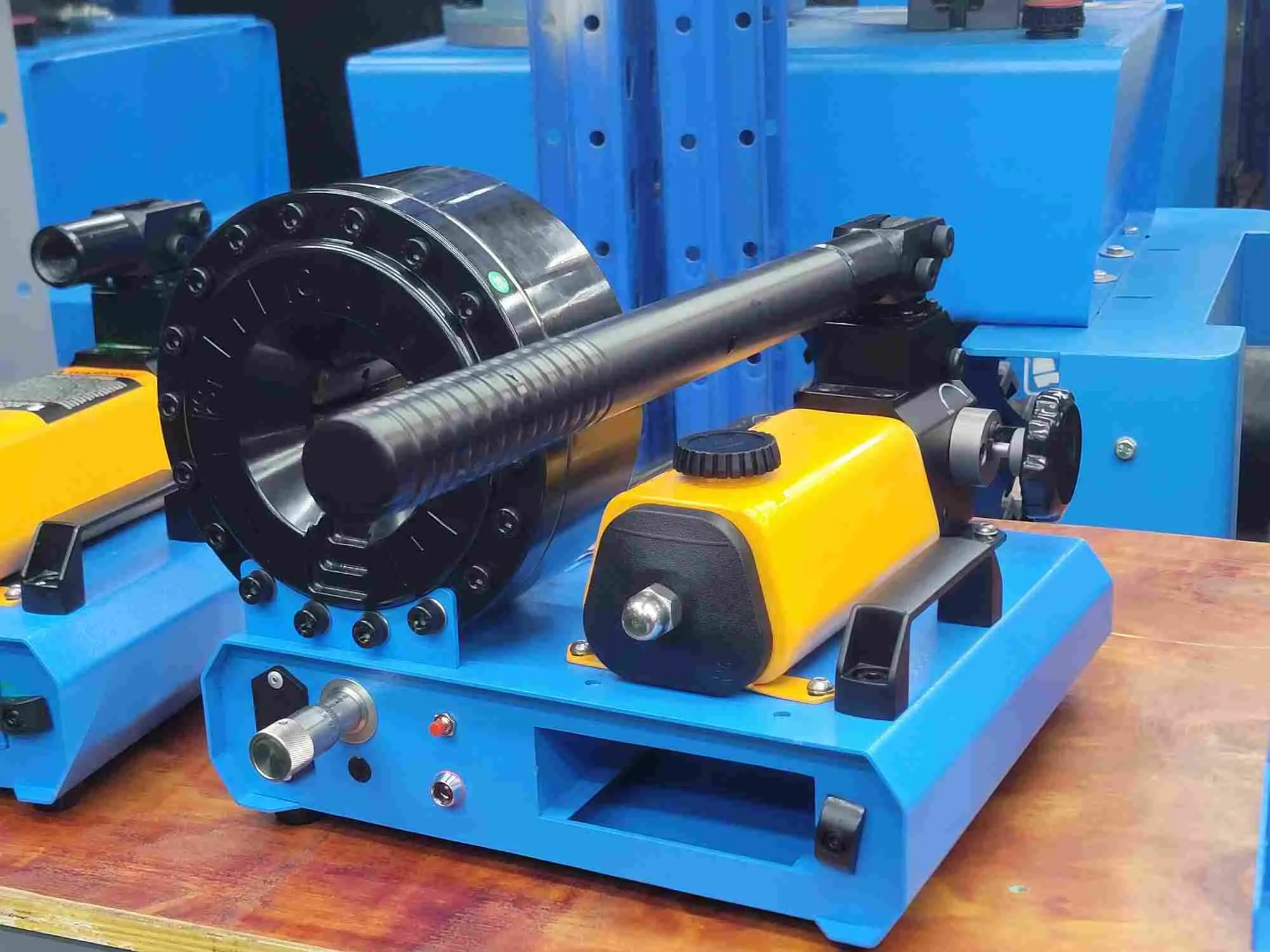
P16HP · 95 Ton Hand Operated Hose Crimping Machine
Recommended when simple power requirements matter more than production speed.
- Key limit
- Manual pumping is not the right route for sustained production.
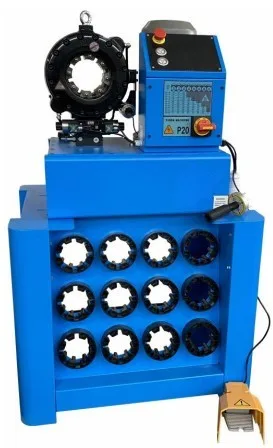
P20 · 137 Ton Workshop Hydraulic Hose Crimper
Recommended for a fixed workshop that needs electric operation and a compact footprint.
- Key limit
- Confirm ferrule OD, opening and die series before treating it as a general workshop machine.
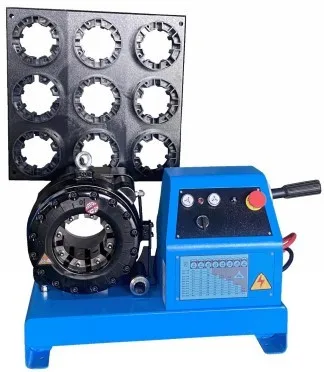
P20CS · 80 Ton 12V Hydraulic Hose Crimper
Recommended where a service vehicle provides 12V power and the equipment must travel to the hose.
- Key limit
- Truck space, cable access and the actual workload still need confirmation.
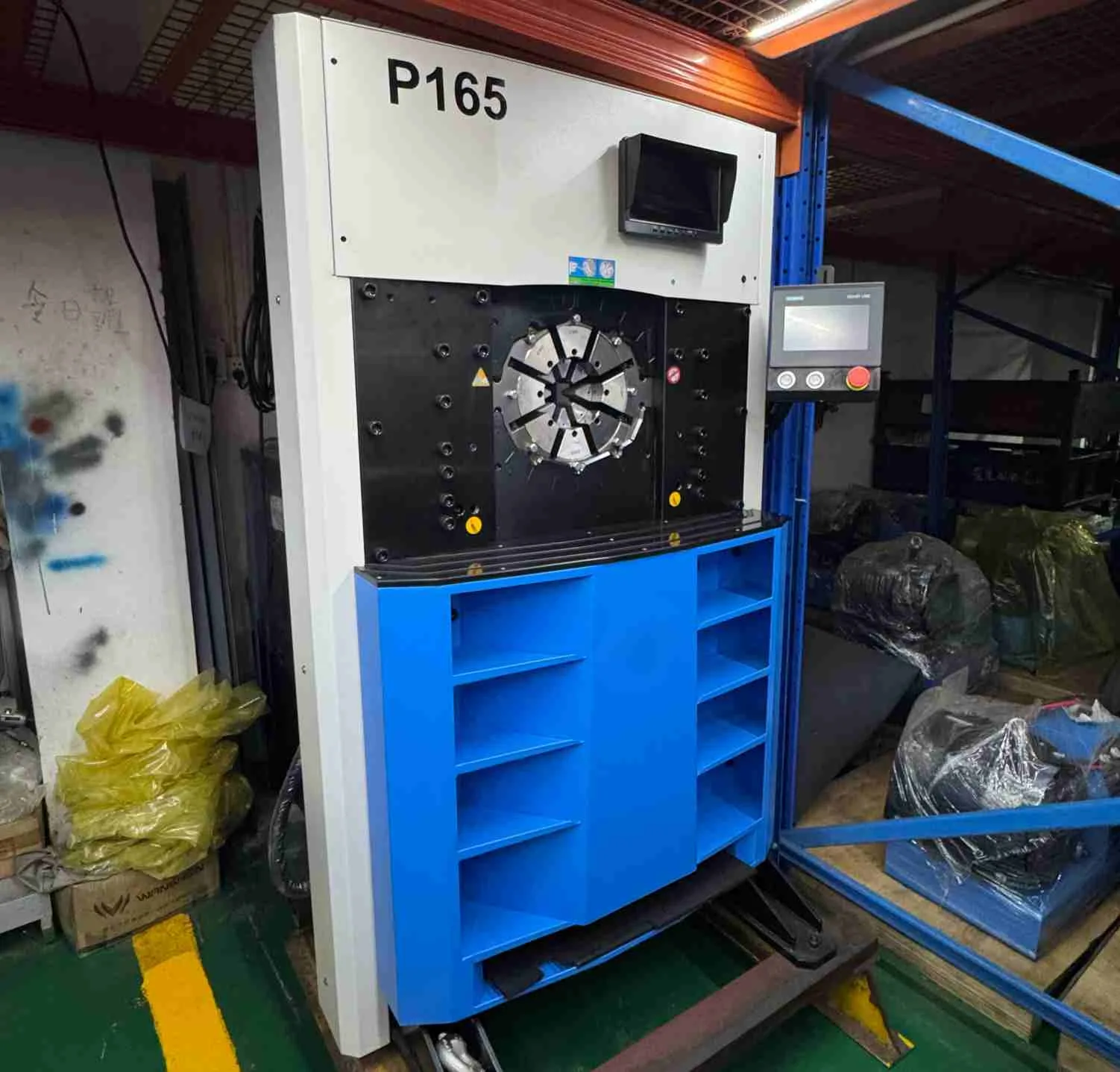
P165 · 500 Ton High-Force Industrial Hose Crimper
Recommended as a large-assembly path when opening, tooling and material handling are reviewed together.
- Key limit
- Machine tonnage alone does not prove compatibility with an assembly.
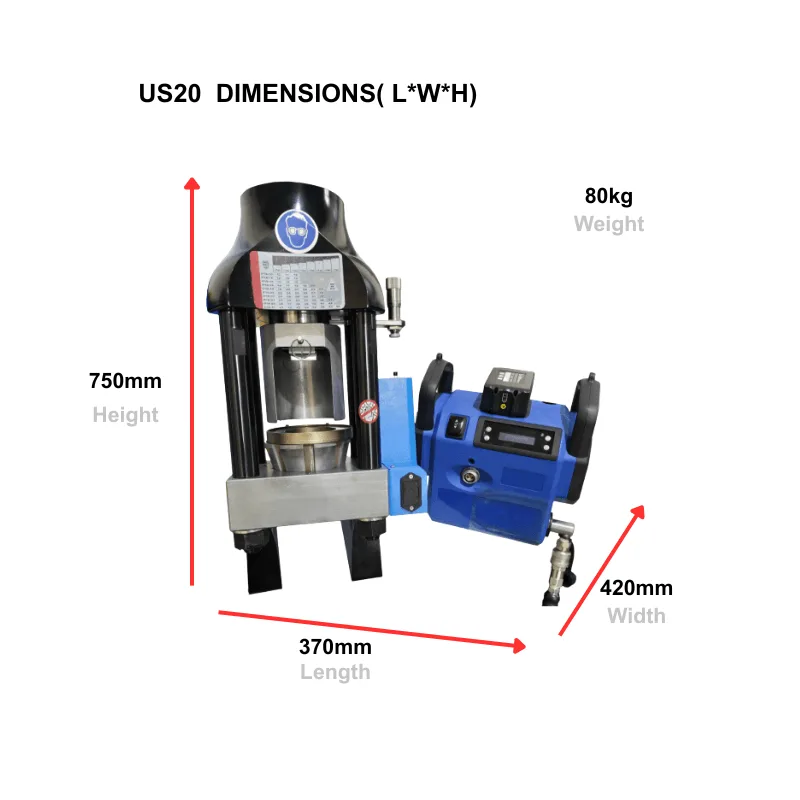
US20 · 62 Ton Vertical Hydraulic Hose Crimper
Recommended when fitting geometry and loading conditions benefit from a vertical machine layout.
- Key limit
- Vertical access does not replace hose, ferrule and die verification.
Planning resources
Choose a Guide Around the Work You Need to Control
Use a focused planning guide to connect site conditions, assembly data, equipment configuration and verification requirements.
How to Choose
Compare machine types from assembly, power, location and workload inputs.
Starter Kit
Plan the crimper, dies, cutting, measurement, cleaning and testing scope.
Buying & Quotation
Prepare configuration and landed-cost inputs before requesting a quotation.
Used Machine Check
Review tooling, hydraulics, controls, records and lifecycle risk.
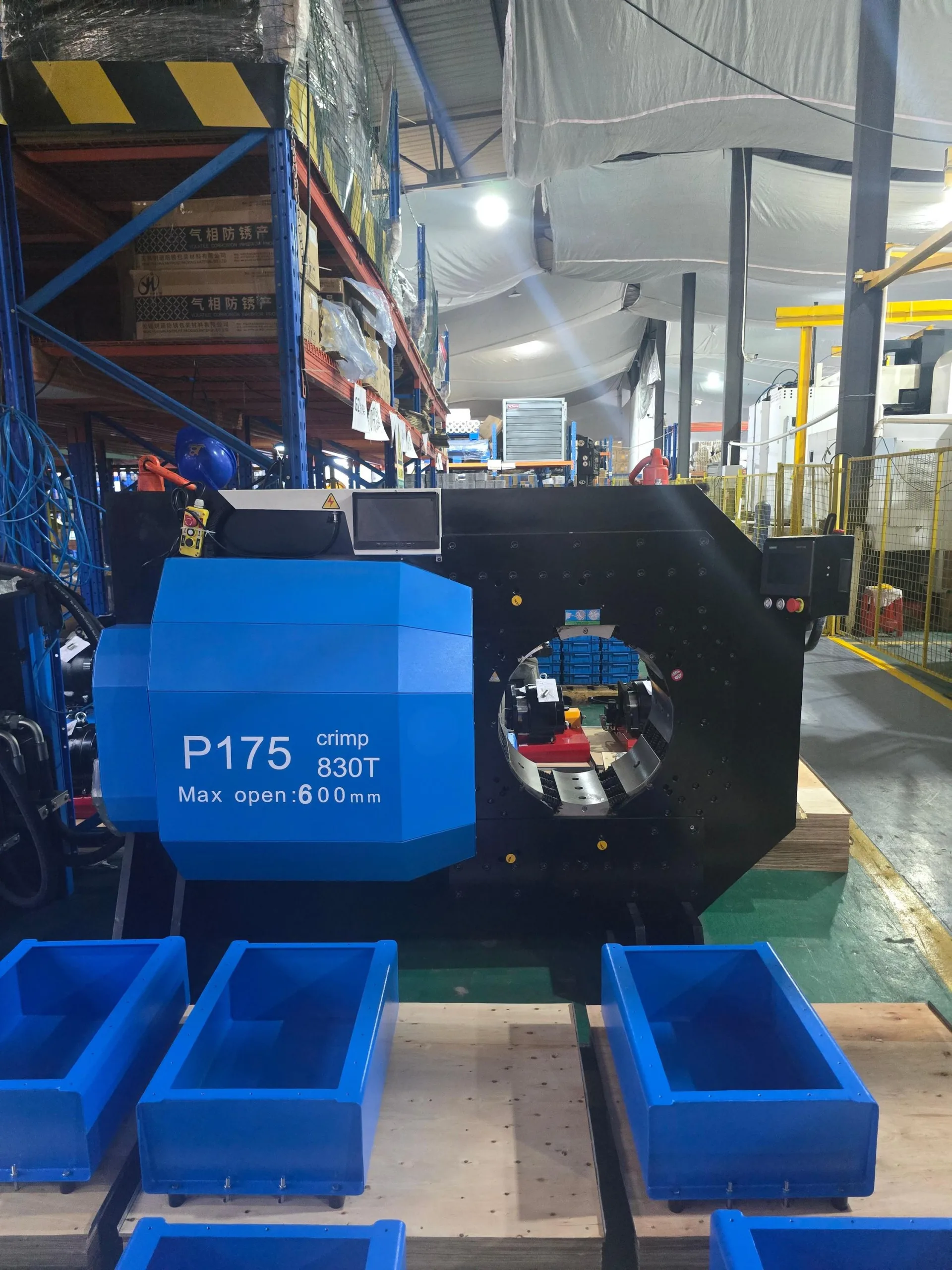
Manufacturing for overseas projects
From Application Review to Finished Equipment
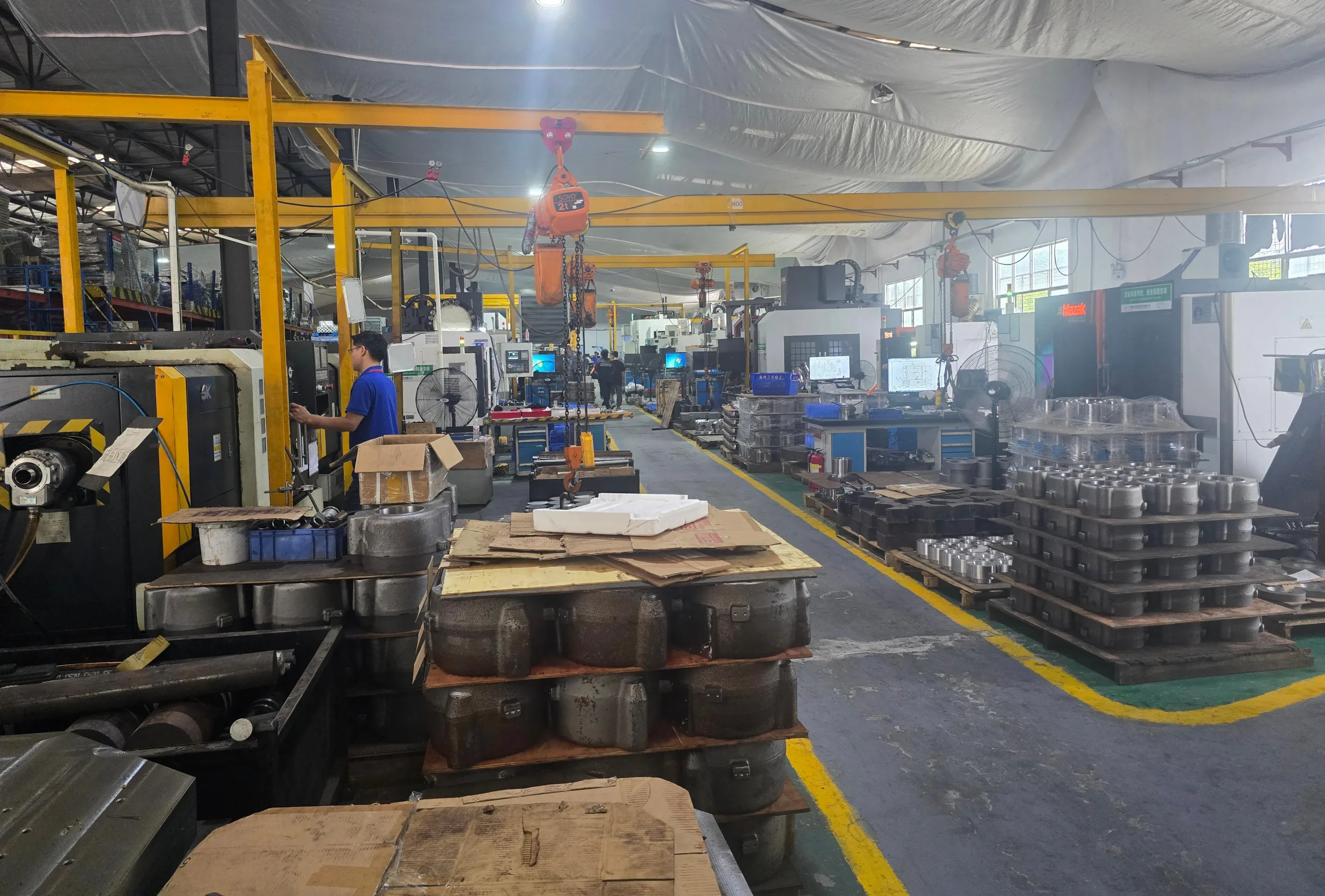
TRC manufactures hydraulic hose assembly equipment through a 5,000 m2 production facility and manages overseas projects from application review through delivery. Our team handles customer communication, configuration confirmation, production follow-up, inspection coordination, export documents and international delivery.
Image context: TRC hydraulic hose equipment production environment. The image documents the manufacturing setting; it is not an order-specific inspection or acceptance record.
See the manufacturing and QC approach →QC, delivery and lifecycle support
Confirm the Configuration and Evidence Before Shipment
The quotation or order record should state which checks apply, what is included and which documents will be supplied.
Pressure Test
Check the hydraulic system and operating function for the selected configuration.
Dimensional Inspection
Check key production and assembly dimensions against the applicable record.
Crimp-Cycle Test
Check repeated machine movement before the equipment enters the delivery route.
Certification and project records
Request the Record for the Exact Model and Project
Certificate scope can vary by equipment and destination. The document matters more than the logo.
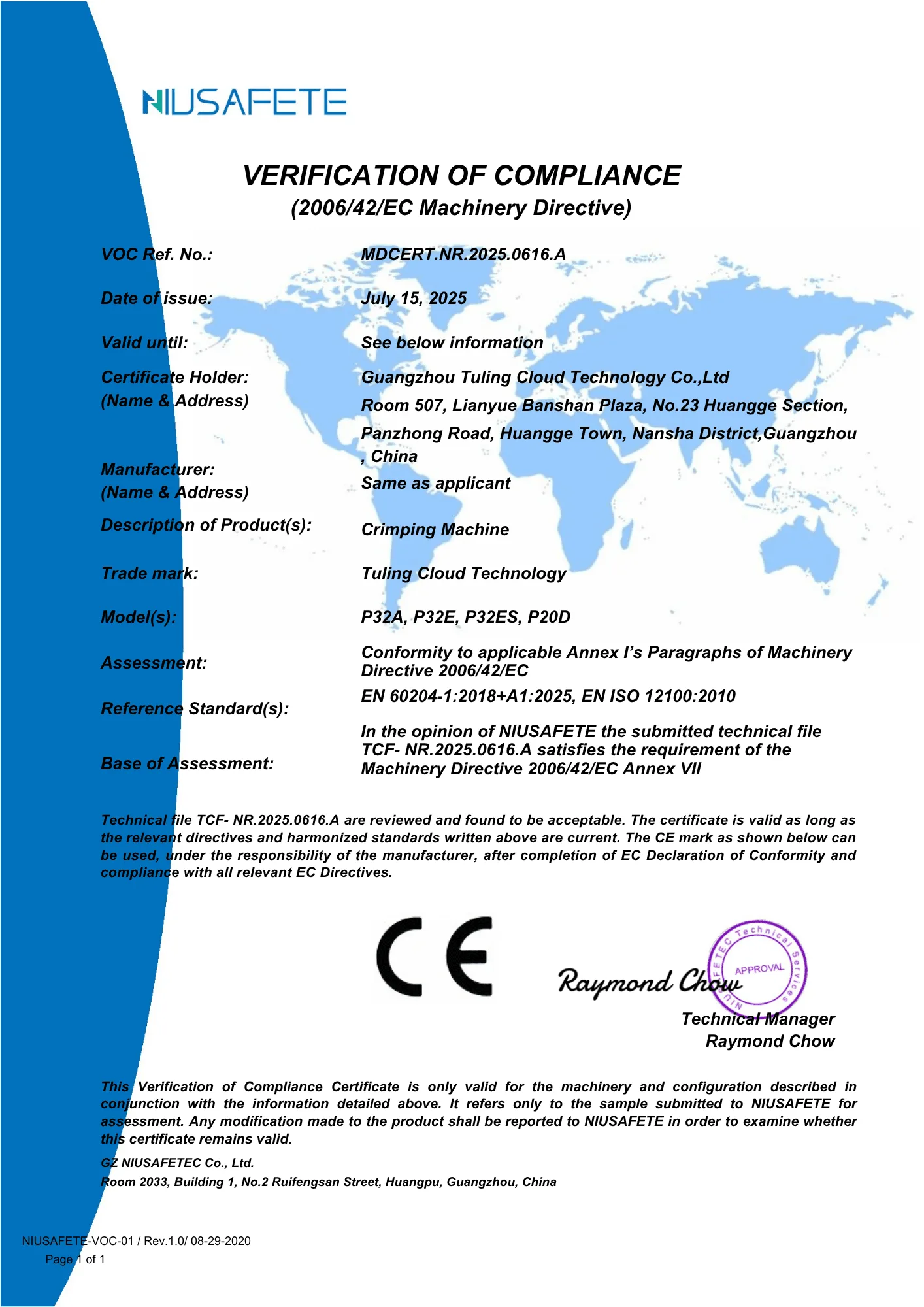
CE Record
Confirm the applicable machine, directive scope and project requirement.

SGS Record
Review the record together with its facility and audit context.
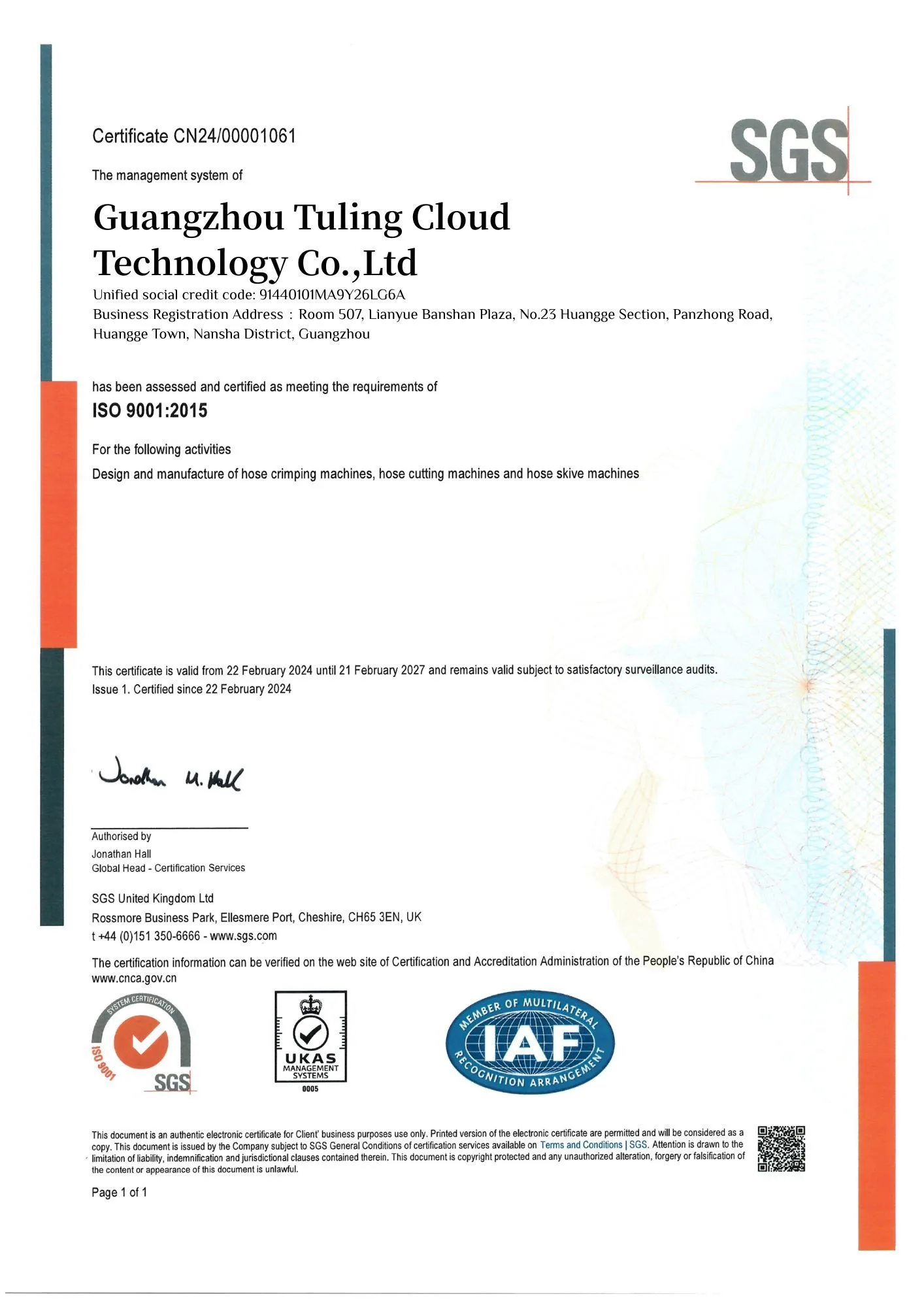
UL + ISO Record
Stored as a combined record; confirm project relevance before use.
Technical library and system comparison
Continue With the Evidence or Compatibility Question
The decision guides above help define the job. Use these routes to browse the full knowledge hub, evaluate an existing Parker-based system or send the data for review.
Hydraulic Hose Crimping Resources
Browse buying, configuration, comparison, inspection and verification guidance from one hub.
Open Resources Hub →System comparisonParker Hose Crimper Alternatives
Compare machine, tooling and component-system requirements without assuming authorization or interchangeability.
Review the comparison →Application reviewSend the Assembly Data
Provide the hose, fitting, ferrule, workload, power and destination details needed for a technical shortlist.
Contact technical sales →Model-specific data sheets, die charts, operating guidance and certificates are supplied only when the current file and applicable scope have been verified.
Buyer FAQ
Questions Buyers Ask Before Selecting Equipment
What information do you need to recommend a hydraulic hose crimper?
Send the hose brand and series, size, reinforcement, fitting and ferrule details, required crimp specification, daily output, available power and destination. Hose size alone is not enough.
Can one machine crimp hose and fittings from any brand?
A machine may have enough opening and force for several systems, but that does not make the combinations interchangeable. Use a validated hose, fitting and ferrule combination with the crimp data issued for that system.
Do I need only a crimper to make hydraulic hose assemblies?
You also need the correct cutting method, dies, measuring tools and identification controls. Some specifications also require skiving, internal cleaning and finished-assembly testing.
Is a manual machine enough for a farm or small repair shop?
It can be when the hose range and work frequency are limited and mains power is inconvenient. Check the largest real assembly, operator effort, die coverage and downtime cost before deciding.
How do I verify that a crimp is correct?
Use the target diameter and tolerance from the applicable hose-and-fitting crimp specification. Measure at the specified position and surfaces, then inspect insertion, alignment and the finished ferrule.
Can TRC customize voltage, controls or machine configuration?
TRC supports OEM and ODM projects. Feasibility depends on the model, requested change, quantity, destination requirements and validation plan.
Request an equipment recommendation
Send the Assembly Data First. Get a Shorter, More Useful Equipment List.
Include the hose and fitting system, maximum assembly size, daily output, work location, power supply and destination. TRC will use those inputs to narrow the machine and die options.