
Tractor Hydraulic Hose Crimper — Field Repair for Farm Equipment
Harvest season does not wait for the dealer. When a hydraulic hose bursts on your tractor or combine, a portable crimper fixes it in the field — 25 minutes, zero towing.
Why Every Farm Needs a Tractor Hydraulic Hose Crimper
A tractor hydraulic hose crimper is the single most important tool a farmer can own during harvest season. Tractors, combines, sprayers, and balers all depend on hydraulic systems — and those systems fail at the worst possible time.
Here is the math. A combine harvester covers 20–30 acres per hour. At $8–$12 per bushel of wheat, every hour of downtime during harvest costs $800–$1,200 in lost crops. A burst hydraulic hose on a tractor’s three-point hitch stops field work entirely. The nearest dealership is often 60–120 km away. A service call takes half a day minimum.
Agricultural equipment runs 1″ and 1½″ hydraulic hoses most often, operating at 2,500–4,000 PSI. The three-point hitch, power take-off (PTO), steering, and hydraulic lift systems all use these sizes. A crimper with 80–95 tons of force covers every standard tractor hose.
The environment does not help. UV exposure degrades hose covers season after season. Chemical exposure from fertilizers and pesticides attacks rubber compounds. Mud, debris, and crop residue abrade hoses at contact points. A tractor working 1,000+ hours per year will see at least one hydraulic hose failure annually — and probably two or three during a heavy harvest season.
3 Hydraulic Hose Failures That Cost Farmers Thousands
These three failures account for over 80% of agricultural hydraulic downtime.
Tractor Three-Point Hitch Hose Burst
The hydraulic lift hose on a tractor’s three-point hitch ruptures under load. The implement drops. The tractor loses hydraulic power for the rest of the shift.
Why: The three-point hitch raises and lowers hundreds of times per day. Each cycle flexes the hose at the same bend point. After 2–3 seasons, the wire braid fatigues. Add the weight of a loaded implement (5,000–10,000 lbs) creating pressure spikes, and the hose gives out.
Combine Harvester Header Hose Wear
A hydraulic hose on the combine header wears through the outer cover, then the wire braid, and bursts. Grain spillage stops the combine immediately.
Why: The header moves through crop residue all day. Stalks, stems, and dust act like sandpaper on the hose surface. The header also vibrates continuously, which rubs the hose against metal brackets and frame members.
Sprayer High-Pressure Hose Fitting Leak
A hose fitting on a high-clearance sprayer develops a slow leak. Hydraulic fluid drips onto the boom. If left unrepaired, the fitting blows out and the sprayer boom drops mid-application.
Why: Chemical exposure from pesticides and herbicides degrades the hose cover and the O-ring seal inside the fitting. UV exposure from working in open fields year-round accelerates rubber deterioration.
Choosing Your Tractor Hydraulic Hose Crimper
Two crimpers and one cutter cover 95% of farm field repairs.
P18CS — Battery Crimper
Best for: The lightest crimper in the TRC lineup. Fits behind the seat of a pickup truck. 80 tons handles 1″ 2SP — the most common agricultural hose size. One-button operation, no hand pumping. Charge off the tractor’s 12V system.
View P18CS →P20LHP — Manual Crimper
Best for: Zero batteries. Zero charging. Works in the middle of a 500-acre field at midnight during harvest. 185 tons handles up to 1½″ 4SP — covering every hose on a tractor, combine, or sprayer.
View P20LHP →C250CS — Portable Cutter
Best for: Pairs with either crimper for a complete field repair kit. Runs off the tractor’s 12V outlet. Cuts wire-braid hose in seconds. No hacksaw, no frayed ends.
View C250CS →🌾 John Deere Combine — Fixed in 22 Minutes
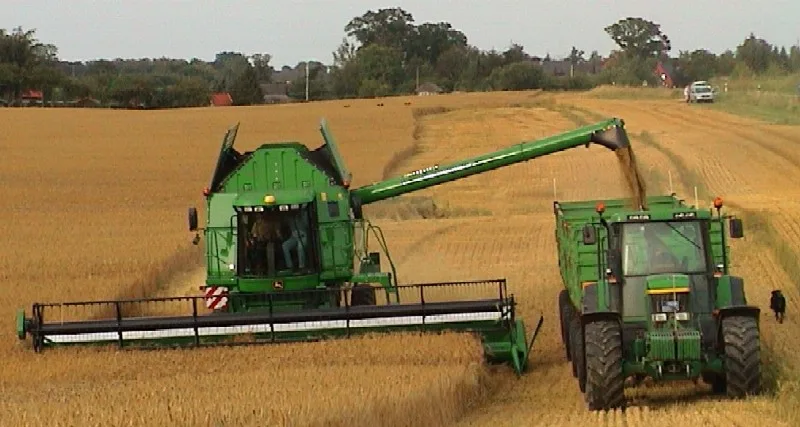
October. Wheat harvest. A John Deere S770 combine is running at full capacity when the header reel hose bursts. Hydraulic fluid sprays across the cutter bar. The header stops rotating. The combine sits dead in a 200-acre wheat field.
The nearest John Deere dealer is 120 km away. Phone call: “We can get a tech out tomorrow.” Tomorrow means 12 more hours of lost harvest time. At 25 acres per hour and $10/bushel wheat, that is not an option.
The farm manager grabs the P18CS battery crimper and C250CS cutter from the shop truck. Drives 10 minutes to the combine.
10:20 AM — Cut off the damaged section. C250CS, 15 seconds.
10:22 AM — Skive the outer cover. Hand skiver, 2 minutes.
10:24 AM — Insert fitting, slide on ferrule, load into P18CS. 2 minutes.
10:27 AM — Press the button. Crimp completes in 8 seconds.
10:28 AM — Pressure test. No leaks.
10:30 AM — Combine is cutting wheat again. Total downtime: 22 minutes.
4 Reasons Farmers Choose TRC
Runs Without Power Grid
Farms do not have electrical outlets in the middle of a cornfield. TRC manual and battery crimpers run anywhere. The P20LHP needs no power at all. The P18CS charges off any 12V vehicle outlet.
Covers Every Farm Hose Size
From ¼″ steering lines to 1½″ three-point hitch hoses. Standard die sets cover SAE 100R1, R2, R4, R5, and 4SP types used on John Deere, Case IH, New Holland, and Kubota.
Fast Enough for Harvest Season
Battery crimpers complete a crimp in 8–10 seconds. Manual crimpers take 60–90 seconds. Either way, back to work in under 30 minutes — compared to half a day for a dealer service call.
Pays for Itself on the First Use
A TRC P18CS costs less than one lost harvest day. One field repair during peak season pays for the entire tool. After that, it saves money every time a hose bursts — which happens 2–3 times per year on a working farm.
Related Equipment for Farm Repair
Portable Crimpers
Battery and manual crimpers under 25 kg. Built for the field, not the workshop.
View Series →Manual Crimpers
Zero batteries. Zero charging. Hand-pump crimpers that work at midnight in a wheat field.
View Series →Complete Crimper Guide
Compare every TRC model. Find the right crimper for your fleet size and hose types.
Read Guide →Related Articles for Farmers
Tractor Hydraulic Hose Crimper FAQ
What size crimper do I need for tractor hoses?
1″ and 1½″ are the most common agricultural hose sizes. A crimper with 80–95 tons of force handles 1″ 2SP. For 1½″ 4SP, you need 137+ tons. The P18CS (80T) covers most tractor repairs. The P20LHP (185T) handles everything up to 1½″.
Can I repair combine hydraulic hoses in the field?
Yes. A combine header hose repair takes 20–30 minutes with a portable crimper and cutter. Cut the damaged section, skive, crimp on a new fitting, pressure test, and go. The key is having the right die set for your hose size and fitting brand.
How do I maintain my crimper between harvest seasons?
Store it in a dry, covered area. Check the hydraulic oil level in manual models. Wipe down the die sets to prevent rust. For battery models, charge the battery to 50% for long-term storage — do not store fully charged or fully depleted.
What hose types do tractors use?
Most tractors use SAE 100R1 (1-wire braid) and SAE 100R2 (2-wire braid) hoses. The three-point hitch and loader use R2 for higher pressure (3,000–4,000 PSI). Steering and lower-pressure systems use R1. All are standard crimping applications.
How many crimps per charge does a battery crimper get?
The P18CS delivers 40–60 crimps per full charge. For a farm doing 2–3 field repairs per week, one charge lasts 2–3 weeks. Recharge from any 12V vehicle outlet in about 2 hours.
Get a Farm Hydraulic Hose Crimper Quote
One burst hose during harvest can cost more than the crimper itself. TRC portable crimpers fix field failures in 25 minutes.