
Table of Contents
- What Is a Hydraulic Crimp Tool?
- How a Hydraulic Crimp Tool Works
- Crimping vs Swaging vs Compression
- Hose Fitting Types Explained
- Manual vs Electric Hydraulic Crimp Tool
- Choosing by Force Range
- Force Requirements by Hose Type
- 5 Common Mistakes When Using a Hydraulic Crimp Tool
- Safety & PPE Guidelines
- Industry Applications
- Crimp Quality Standards
- Real-World Case Study
- Maintenance Checklist
- FAQ
What Is a Hydraulic Crimp Tool?
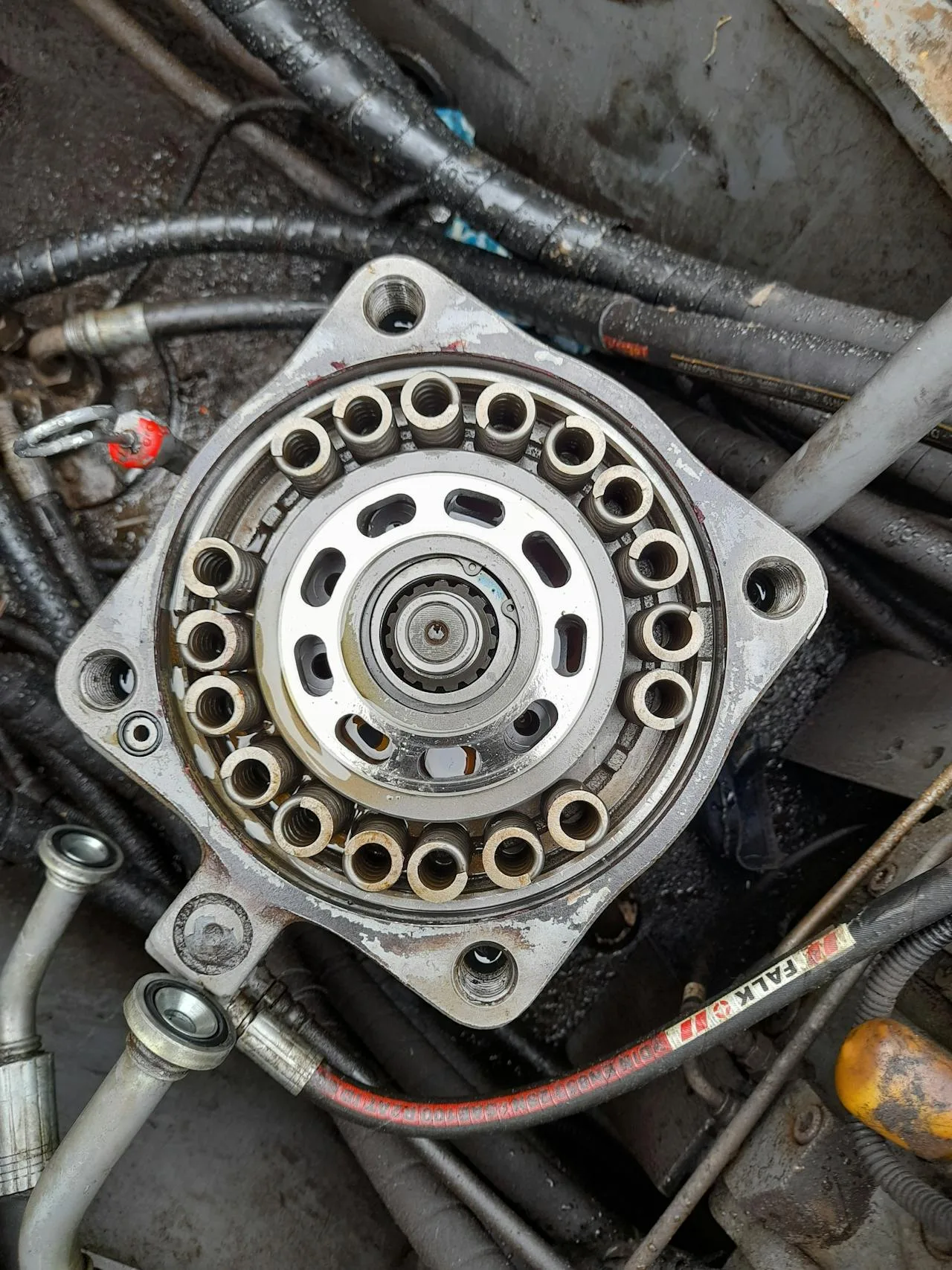
A hydraulic crimp tool uses pressurized hydraulic fluid to compress a metal fitting onto a hydraulic hose. Unlike mechanical or pneumatic crimpers, a hydraulic crimp tool generates high force (60–320 ton) through a small hand pump or electric motor, making it possible to crimp large-diameter industrial hoses that other tools cannot handle.
The term “hydraulic crimp tool” covers a wide range — from a 16-ton handheld unit for automotive fuel lines to a 320-ton CNC workshop crimper for 6″ mining hoses. What they share is the hydraulic mechanism: a piston driven by fluid pressure closes the die set around the fitting with precise, repeatable force.
How Pascal’s Law Makes It Possible
The entire principle behind a hydraulic crimp tool is Pascal’s Law, which states that pressure applied to a confined fluid transmits equally in all directions. In plain terms: a small force on a small piston creates enormous force on a larger piston.
Think of it this way. You pump a handle that moves a 1-square-inch piston with 100 pounds of effort. That creates 100 PSI in the hydraulic fluid. If the crimp cylinder has a 200-square-inch piston area, you get 20,000 pounds of force at the die — from just 100 pounds of input. This mechanical advantage is what lets one person crimp a 2-inch steel-wire hose by hand.
Electric models work the same way, except a motor drives the pump instead of your arm. The motor can maintain consistent pressure for longer, which produces more uniform crimps across a production run.
A Brief History of Hydraulic Crimping
Before hydraulic crimp tools existed, hose assemblies were connected with reusable bolt-together fittings that were bulky and prone to leaking. Modern CNC hydraulic crimp tools now store hundreds of crimp profiles, measure the finished diameter automatically, and flag any crimp outside tolerance. If you assemble or repair hydraulic hose assemblies, a hydraulic crimp tool is not optional — it is the only tool that produces a cold-weld crimp strong enough to hold at 3,000–5,000 PSI working pressure.
How a crimper Works
The crimp process takes 4 steps and under 2 minutes with an electric model:
Step 1 — Measure and cut. Cut the hose to length with a hydraulic hose cutter or a chop saw with a blade rated for rubber and steel. A clean, square cut is critical — a ragged edge from a hacksaw will cause the fitting to seat incorrectly and produce a weak crimp.
Measure twice before cutting. Hose length is measured from the end of one fitting to the end of the other when the assembly is installed. Short hoses that are cut too tight put stress on the fittings when the machine flexes. Long hoses rub against nearby structures and wear through the cover.
After cutting, blow out the hose with compressed air to remove rubber dust and steel wire fragments. Any debris left inside will enter the hydraulic system and damage pumps and valves downstream.
Step 2 — Skive (if required). Remove the outer rubber cover where the ferrule will grip. Required for 4SP, 4SH, and multi-spiral hoses. A benchtop skiver does this in under a minute.
Skiving exposes the wire reinforcement so the ferrule can grip it directly. The skive length must match the ferrule length — too short and the ferrule cannot compress the wire braid properly; too long and you waste time removing rubber that the ferrule never touches.
Some hoses are designed for “no-skive” crimping. These have a thinner outer cover, and the ferrule is designed to bite through the rubber. Check your hose and fitting specifications before you skip this step — assuming no-skive when skiving is required is one of the fastest ways to create a failed assembly.
Step 3 — Insert fitting and load into dies. Push the fitting stem into the hose, slide the ferrule over the connection, and place the assembly into the die set of your crimping tool.
Lubricate the stem with a light oil or the hose manufacturer’s recommended lubricant. This helps the stem slide into the inner tube without folding or cutting the rubber. Push until the hose end seats firmly against the stem shoulder — you should feel a solid stop.
Select the correct die set based on your hose type, size, and fitting brand. Every die set is marked with the hose size and type it fits. Using the wrong dies is the single most common cause of crimp failure.
Position the ferrule in the center of the die cavity. If the ferrule sits off-center, the crimp will be uneven — tight on one side and loose on the other. Most electric the tools have a centering ring or locator to help with alignment.
Step 4 — Crimp and verify. Close the dies with hydraulic pressure. With an electric hydraulic crimper, this takes 8 seconds. Measure the crimp diameter with a caliper — it must match the specification within ±0.05mm. For safety-critical applications, verify to ±0.03mm per SAE J517.
Measure at two points: across the die face (the widest part) and 90 degrees from that (the narrowest part). If the two measurements differ by more than 0.10mm, the crimp is oval and must be rejected. An oval crimp means the dies are worn, the ferrule was off-center, or the hose was not properly seated.
Record the crimp diameter. Many shops log every crimp with the date, hose type, size, and measured diameter. This creates a traceability record — if a hose fails in the field, you can trace it back to the specific crimp and operator.
Crimping vs Swaging vs Compression
People often confuse crimping with swaging and compression fitting. These are three different joining methods, and each has a specific use case.
| Method | How It Works | Force Needed | Typical Application | Reversible? |
|---|---|---|---|---|
| Crimping | Dies compress ferrule radially around the hose | 60–320T (hydraulic) | Steel-wire hydraulic hoses | No — permanent |
| Swaging | A tapered punch pushes through the fitting, expanding it outward into the hose | 10–60T | Aerospace, fluid connectors | No — permanent |
| Compression | Nut and ferrule tightened onto a threaded body, compressing a ring around the tube | Hand torque (20–80 Nm) | Plumbing, instrumentation tubing | Yes — removable |
Crimping
Crimping is the standard method for hydraulic hose assemblies. A set of segmented dies closes around the ferrule from all sides simultaneously, compressing it uniformly onto the hose. The result is a strong, leak-proof connection rated for the full working pressure of the hose.
Crimping and swaging are often confused but work differently. Swaging is a forging process that reshapes metal by forcing it through or into a die — the material flows and changes shape. Crimping compresses a ferrule radially inward, deforming it past the yield point to create a cold-weld bond between the ferrule and hose wire reinforcement. In practice: crimping is faster, more repeatable, and dominates hydraulic hose assembly. Swaging is used for wire rope terminals and some aerospace fittings.
The key advantage of crimping is repeatability. Once you set the die and the crimp diameter target, every assembly comes out the same. This is critical for production environments where dozens or hundreds of hoses are crimped per day.
A this tool is purpose-built for this method. The radial compression from multiple die segments distributes force evenly around the ferrule, which preserves the roundness of the hose bore and prevents flow restriction.
Swaging
Swaging uses a tapered mandrel driven into the fitting from inside, expanding it outward into the hose. It is common in aerospace and high-purity fluid systems but requires dedicated tooling for each fitting size and is slower than crimping for large-diameter hoses.
Compression Fittings
Compression fittings use a nut, a compression ring (ferrule), and a body. You tighten the nut with a wrench, which squeezes the ring onto the tube. No special machine is needed — just a pair of wrenches.
These are common in plumbing, gas lines, and instrumentation tubing up to about 1 inch OD. They are not suitable for high-pressure hydraulic systems. A compression fitting on a 3,000 PSI hydraulic line will blow apart.
The main trade-off: compression fittings are removable, which is convenient for maintenance. Crimped and swaged fittings are permanent — if you need to disconnect, you cut the hose and crimp a new fitting.
Hose Fitting Types Explained
Choosing the right fitting type matters as much as choosing the right crimp tool. A mismatch between fitting and port causes leaks, vibration damage, and even catastrophic blow-offs. Here are the five most common hydraulic fitting types you will encounter.
Hydraulic fittings fall into three structural categories. One-piece fittings are the most common — a single metal body with the ferrule formed into the stem. Interlock fittings split into a stem and socket that sandwich the hose between two metal grips, providing stronger retention for high-pressure spiral hoses (4SP, 4SH, R12/R13). Reusable fittings (also called field-attachable) bolt together without any crimping — useful for emergency repairs but bulky and 3–5× more expensive than crimp-on types. Thread standards include BSP (BSPP parallel / BSPT tapered, used in Europe and Asia-Pacific), metric (M-series, common on Komatsu, Hitachi, Liebherr equipment), and SAE (straight thread O-ring, JIC 37° flare).
JIC 37° Flare (SAE J514)
JIC fittings use a 37-degree flare seat to create a metal-to-metal seal without O-rings, making them resistant to temperature cycling and vibration. Common sizes range from -4 (1/4″) to -32 (2″). Tighten to the manufacturer’s specified torque — over-tightening deforms the flare.
ORFS (O-Ring Face Seal, SAE J1453)
ORFS fittings have an O-ring seated in the face of the fitting, compressed against the flat port face when the nut is tightened. ORFS is the best choice for high-vibration systems like excavators and loaders — the O-ring absorbs vibration that would loosen a metal-to-metal seal.
BSP (British Standard Pipe)
BSP fittings come in two variants: BSPP (parallel thread, uses a bonded seal) and BSPT (tapered thread, seals on the threads). BSP is standard in the UK, Australia, New Zealand, and much of Asia. Note: BSP threads are not interchangeable with NPT — the thread pitch and angle are different.
Metric (DIN 3861 / ISO 8434)
Metric fittings are standard on European and Asian equipment (Caterpillar, Komatsu, Volvo). They use a 24-degree cone with or without O-ring, in sizes M12×1.5 through M52×2. Your crimper dies must match — a JIC die set will not produce a correct crimp on a metric fitting.
Flange Fittings (SAE J518 / Code 61 / Code 62)
Flange fittings are used for large-diameter hoses (1″ to 5″). Instead of threads, they use a clamp block and bolts to hold the flange head against the port. An O-ring between the flange face and the port creates the seal.
Code 61 is rated for 3,000 PSI. Code 62 is rated for 5,000 PSI — it has a thicker flange head and larger bolt pattern. Make sure you use the correct clamp halves; Code 61 and 62 are not interchangeable even when the port size matches.
When crimping a flange fitting, the process is the same as any other fitting — the ferrule crimps onto the hose, and the flange head bolts to the port. The die set for flange fittings is typically larger to accommodate the wider ferrule.
Manual vs Electric crimping tool
The first decision when choosing a the tool is power source. This choice affects everything — where you can work, how fast you work, and how consistent your crimps are.
🔧 Manual hydraulic crimper
- Power: Hand pump
- Force: 95–185T
- Cycle time: 60–90 seconds
- Weight: 15–34 kg
- Works anywhere — no electricity
- Best for: Field repair, service trucks
Models: P16HP (95T), P20LHP (185T)
⚡ Electric this tool
- Power: 110V/220V motor
- Force: 80–320T
- Cycle time: 8–15 seconds
- Weight: 50–500 kg
- Consistent pressure every cycle
- Best for: Workshops, production
Models: P32A (200T), P32D CNC (200T)
When to Choose Manual
A manual crimp tool makes sense when you work in the field — on a construction site, at a mine, or on a service truck. You do not need power, so you can crimp anywhere. The lighter weight (15–34 kg) means you can move the tool to the machine instead of bringing the machine to the tool.
The trade-off is speed and consistency. Each crimp takes 60–90 seconds of pumping. After ten hoses, your arm feels it. The crimp pressure depends on how hard and how far you pump, which introduces variation between operators. An experienced technician gets consistent results; a new hire might not.
Manual models are also limited in maximum force. Most top out at 185T, which covers hoses up to about 1-1/2″. For 2″ and larger, you need an electric model.
When to Choose Electric
An electric crimper is the right choice for any workshop or production environment. The motor drives the pump at a consistent rate, producing identical crimp pressure on every cycle. This consistency matters when you are crimping 50+ assemblies per day.
Electric models also offer higher maximum force — up to 320T for large-diameter mining and marine hoses. The cycle time of 8–15 seconds is five to ten times faster than manual. Over a full day of production, that time savings adds up to hours.
CNC models take this a step further. They store crimp profiles for each hose and fitting combination. You select the profile on a touchscreen, load the hose, and press a button. The machine crimps to the exact diameter and stops automatically. No caliper check needed (though you should still verify periodically).
Battery-Powered Options
Battery crimping tools split the difference. They run on 18V or 20V lithium batteries, deliver 60–120T of force, and crimp hoses up to about 1-1/4″. A full charge handles 40–60 crimps. They are popular with field service technicians who need electric-tool speed without access to wall power.
The limitation is force. Battery models cannot match the 200–320T output of corded electric machines. If your field work involves 2″ hoses or larger, you still need a corded model or a manual pump.
Choosing by Force Range
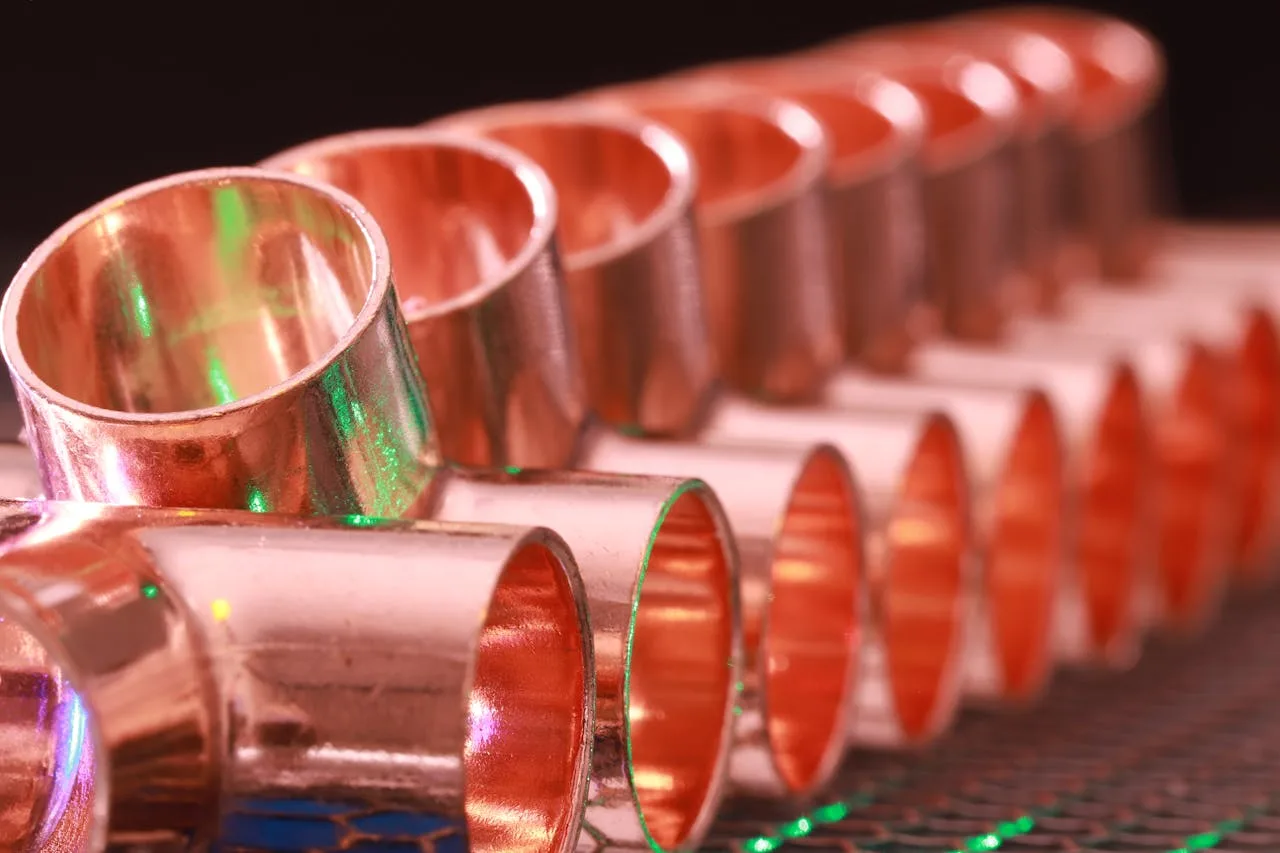
Match your the tool tonnage to the hoses you assemble. Too little force = incomplete crimp. Too much = wasted budget.
| Force Range | Hose Range | Typical Use | TRC Models |
|---|---|---|---|
| 60–95T | 1/4″–3/4″ R1/R2 | Automotive, light industrial | P10HP, P16HP |
| 120–185T | 1/4″–1½″ 4SP | Construction, field repair | P18XL, P20LHP |
| 200T | 1/4″–2″ R12/R13 | Workshop, general purpose | P32A, P32D CNC |
| 245–320T | 2″–6″ R12/R13/R15 | Mining, oil & gas, shipyard | P175, P140 |
When sizing a hydraulic crimper, buy for your largest common hose — not your average one. A 200T machine crimps a 1/4″ hose just fine, but a 95T machine cannot crimp a 2″ hose. It is cheaper to buy one machine that handles your full range than to buy two machines.
Also factor in future needs. If your shop currently works with hoses up to 1-1/2″ but you are bidding on larger contracts, a 200T machine gives you room to grow without buying another tool in six months.
Force Requirements by Hose Type
Different hose constructions require different crimp forces, even at the same nominal diameter. A 1″ 4SP hose with four spiral layers of steel wire needs much more force than a 1″ R1 hose with a single wire braid. The table below shows typical tonnage requirements by hose type and size.
| Hose Type | Construction | Size Range | Required Tonnage | Working Pressure |
|---|---|---|---|---|
| SAE 100R1 / EN 853 1SN | 1 wire braid | 1/4″–1″ | 60–95T | Up to 3,250 PSI |
| SAE 100R2 / EN 853 2SN | 2 wire braid | 1/4″–2″ | 60–120T | Up to 5,075 PSI |
| EN 856 4SP | 4 spiral wire | 1/2″–2″ | 120–200T | Up to 4,350 PSI |
| EN 856 4SH | 4 spiral wire (heavy) | 3/4″–2″ | 150–200T | Up to 4,350 PSI |
| SAE 100R12 | 4 spiral wire | 1/2″–2″ | 120–200T | Up to 5,075 PSI |
| SAE 100R13 | 6 spiral wire | 3/4″–4″ | 185–320T | Up to 5,075 PSI |
| SAE 100R15 | 6 spiral wire (high pressure) | 3/4″–2″ | 185–245T | Up to 7,250 PSI |
| SAE 100R5 | 1 textile braid + 1 wire braid | 3/8″–2″ | 60–95T | Up to 1,750 PSI |
| EN 857 1SC / 2SC | Compact wire braid | 1/4″–1″ | 60–95T | Up to 5,075 PSI |
Notice the pattern: more wire layers and larger diameters demand more force. A 2″ R13 hose with six layers of spiral wire requires 320T — that is in a completely different category than a 1/4″ R1 hose at 60T.
Hose construction affects the force your crimp tool must deliver. Wire-braided hoses (DIN EN 853 / ISO 1436) have 1 or 2 braided wire layers — lower force needed. Wire-spiral hoses (DIN EN 856 / ISO 3862) have 4–6 spiral wire layers — much more force required. Always check the minimum bend radius spec when handling hose near the crimp tool, as kinked reinforcement causes premature failure.
This is why many shops own two machines: a portable 95–120T unit for field work on small-to-medium hoses, and a 200–320T workshop machine for the big stuff. If your budget allows only one, buy the larger machine. You can always crimp a small hose on a big machine, but not the reverse.
5 Common Mistakes When Using a this tool
1. Wrong die size. Using a die set that does not match the hose + fitting combination. A die 0.5mm too large leaves the ferrule under-compressed; 0.5mm too small crushes the inner tube. The fix: keep a die chart posted on the wall next to your crimp tool. Before every crimp, confirm the matching die number. This takes 10 seconds and prevents the most common failure mode. ISO 8434 defines dimensional standards for common fitting types.
2. Not skiving when required. Skiving removes the outer rubber cover so the ferrule contacts the wire braid directly. 4SP and multi-spiral hoses (R12/R13) require skiving. When you crimp over rubber instead of bare wire, the rubber rebounds after the dies open, creating a loose grip that worsens with each pressure cycle. When in doubt, skive — a skived crimp on a no-skive hose works fine, but not the reverse.
3. Hose not pushed fully onto fitting. If the hose stops short of the stem shoulder, the crimp only grips part of the fitting. This often happens when the stem is not lubricated or the operator is rushing. Mark the hose at the ferrule edge before crimping — if the mark moves during crimping, the hose was not fully inserted.
4. Skipping the caliper check. Every crimp must be measured. The human eye cannot distinguish between a 27.30mm crimp and a 27.50mm crimp — but the second is 0.20mm oversize, enough to reduce grip force by 15–20%. Keep a digital caliper next to the crimper and measure every crimp. This takes 15 seconds per hose and catches problems before they become field failures.
5. Crimping a second time. If the first crimp is wrong, do not re-crimp the same fitting. The ferrule work-hardens from the first deformation, making the second crimp unpredictable. Attempting to “touch up” an oversize crimp can create micro-fractures invisible to the naked eye. Remove the fitting, discard it, and start with a new one. Fittings are cheap — field failures are not.
Safety & PPE Guidelines
A crimping tool generates enough force to crush steel. That same force can cause serious injury if proper precautions are not followed.
⚠️ Required PPE
- Safety glasses — Steel wire fragments can fly when cutting hose
- Steel-toe boots — A dropped die set or hose assembly weighs 10–50 lbs
- Cut-resistant gloves — Level A4 minimum when handling steel-wire hose
- Hearing protection — Electric crimpers produce 80–90 dB during operation
Pressure Testing After Crimping
Every hydraulic hose assembly should be pressure-tested before service. The standard test pressure is 2× the working pressure for 30 seconds to 5 minutes. Use a hydrostatic test bench — never compressed air, which stores dangerous energy. During the test, inspect for leaks at both fittings and along the hose body. Any pressure drop or weep at the crimp is cause for rejection.
Safe Operating Practices
Keep fingers clear of the die area during crimping. Modern electric the tools require two-hand operation — never bypass this safety. Fill the hydraulic system with 68# anti-wear hydraulic oil to 2/3 of the sight glass. System relief pressure is set at 31.5 MPa — never exceed this. Always measure the finished crimp diameter with a vernier caliper. According to industry crimp specifications, tolerance is ±0.05mm for standard hydraulic assemblies.
Industry Applications
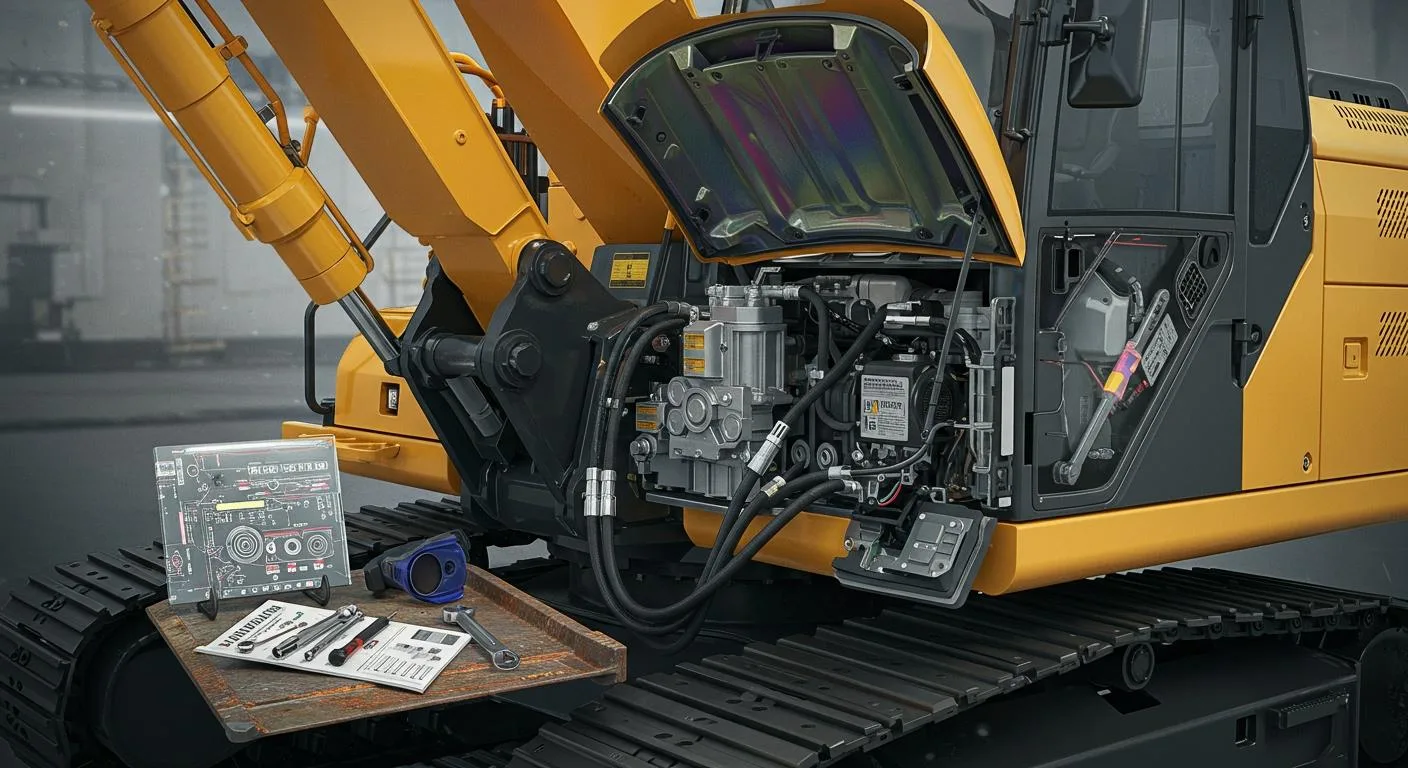
A hydraulic crimper is used across dozens of industries, but engineering and construction machinery accounts for 62% of all hydraulic fitting consumption. A single excavator contains 30–50 hydraulic hose assemblies — each one eventually needs replacement. Here are five industries where a this tool is essential.
🏗️ Construction
Excavators, loaders, bulldozers, and cranes run on hydraulic systems with 20–50 hose assemblies each. A blown hose stops the machine and shuts down the job site. Mobile repair trucks carry a manual crimp tool to build replacement hoses on site, getting equipment back to work in under an hour instead of waiting for a replacement assembly to be shipped.
⛏️ Mining
Underground and surface mines use large-diameter hydraulic hoses (2″–6″) on shovels, draglines, and hydraulic presses. These hoses operate at 3,000–5,000 PSI and must withstand abrasive environments and extreme temperatures. Mining operations use 245–320T crimpers to assemble these hoses. A single failed hose on a mining shovel can idle a machine that moves $50,000 of material per hour.
🚜 Agriculture
Tractors, combines, and sprayers rely on hydraulic systems for steering, lifting, and implement control. Most agricultural hoses are 1/4″–1″ and operate at 2,500–3,500 PSI. A 95T crimping tool covers the full range. During harvest season, equipment downtime costs thousands of dollars per day in lost productivity, so fast field repair capability is critical.
🏭 Manufacturing
Hydraulic presses, injection molding machines, and stamping equipment use hydraulic hose assemblies in their power units. These facilities typically have a workshop with an electric the tool for building and rebuilding hoses as part of preventive maintenance. Production lines run 24/7 in many plants — hose failures must be fixed fast.
⚓ Marine & Offshore
Ships, offshore platforms, and dock equipment use hydraulic systems for steering, winches, cranes, and anchor handling. Marine hoses must resist saltwater corrosion and often use stainless steel fittings. The crimp requirements are the same, but the operating environment is harsher. Offshore crews need reliable crimping capability because sending a hose assembly from shore takes days.
🔧 Mobile Equipment Service
Fleet maintenance shops that service garbage trucks, tow trucks, aerial lifts, and utility vehicles crimp hoses daily. These shops typically have a 120–200T electric hydraulic crimper mounted on a workbench, plus a manual model on the service truck for field calls. The variety of equipment means they see every fitting type — JIC, ORFS, BSP, metric, and flange.
Crimp Quality Standards
Two standards govern hydraulic hose assembly quality worldwide: SAE J517 and ISO 8434. Both define dimensional tolerances, test pressures, and performance requirements for crimped hose assemblies.
SAE J517 — Hydraulic Hose
SAE J517 defines 16 hose types (100R1 through 100R16) by construction, pressure rating, and dimensional requirements. For crimping, the critical spec is the crimp diameter tolerance. SAE J517 specifies that the finished crimp diameter must be within ±0.005″ (±0.13mm) of the fitting manufacturer’s published target.
SAE J517 also defines the proof test (2× working pressure) and burst test (4× working pressure) that every hose assembly must pass. These tests validate that the crimp is strong enough to hold under extreme conditions.
ISO 8434 — Metallic Fluid Connections
ISO 8434 covers the fittings themselves — thread dimensions, O-ring groove specs, and connection standards. Parts 1 through 6 address different connection types (flare, O-ring face seal, flange, etc.).
For crimp quality, ISO 8434 defines the dimensional tolerances of the ferrule and fitting stem. The ferrule inner diameter before crimping and the target diameter after crimping must meet these tolerances. If the ferrule is out of spec before you start, the finished crimp will be out of spec regardless of how good your this tool is.
What This Means in Practice
When you measure a finished crimp with a caliper, you are verifying compliance with these standards. The target crimp diameter comes from the fitting manufacturer’s die chart, which is built on SAE J517 and ISO 8434 requirements.
If you crimp for industries with additional oversight — mining (MSHA), oil and gas (API), or aerospace (AS9100) — you may need to document every crimp with the operator name, date, hose lot number, and measured diameter. A CNC crimp tool with data logging makes this easy — it stores every crimp record and can export reports.
For most industrial applications, the fitting manufacturer’s published crimp specification is sufficient. Follow it exactly. Do not improvise or adjust crimp diameters based on experience — the spec exists because it was tested and validated.
Real-World Case Study: Field Repair on a CAT 320 Excavator
The Situation
Mike, a field service technician for a construction equipment dealer, gets a call at 7 AM on a Monday. A contractor’s CAT 320 excavator has blown a boom cylinder hose. The machine is on a highway overpass project with a tight deadline — the crew needs it running by noon or the project falls behind schedule.
The Problem
The boom cylinder hose is a 1″ SAE 100R12 (4-spiral wire) with JIC 37° flare fittings on both ends. Working pressure: 5,000 PSI. The hose blew at the crimp — a previous repair had been done with incorrect dies, and the ferrule was under-compressed. The fitting separated from the hose under full load.
The Repair
Mike carries a P20LHP manual crimper (185T) on his service truck, along with a full die set and an assortment of fittings and hose.
Step 1: He measures the blown hose assembly (3 feet, boom cylinder to control valve). He cuts a new length of 1″ R12 hose with his portable cutter and blows out the debris with compressed air.
Step 2: R12 is a multi-spiral hose, so skiving is required. Mike uses his hand skiver to remove the outer rubber cover on both ends — about 2.5 inches per end, matching the ferrule length.
Step 3: He lubricates the fitting stems and pushes them into the hose until they seat against the shoulder. He slides the ferrules over the connection and positions the first end in the die set — die number D-24 per the TRC die chart for 1″ R12 hose with his fitting brand.
Step 4: Mike pumps the hand pump. The crimping tool closes the dies over 45 seconds. He measures the crimp diameter with his caliper: 35.82mm. The target is 35.80mm ±0.05mm. Within spec. He repeats on the other end: 35.79mm. Also within spec.
Step 5: He installs the new assembly on the excavator, connects both fittings, and pressure-tests the system at 5,000 PSI using his portable test pump. No leaks. The machine is back in service by 10:30 AM.
What Went Wrong with the Previous Repair
The contractor’s in-house mechanic had used a die set from a different fitting brand. The dies were 0.4mm oversize for this hose-fitting combination. The crimp looked normal visually but was under-compressed. It held at low pressure during a function check but separated when the boom cylinder hit full working pressure under load. A caliper check would have caught the error immediately.
Maintenance Checklist
A the tool needs minimal maintenance, but skipping it leads to inaccurate crimps:
| Task | Frequency | Why |
|---|---|---|
| Check hydraulic oil level | Monthly | Low oil = inconsistent pressure |
| Clean die seats | After each use | Dirt causes uneven crimps |
| Caliper-check first crimp of the day | Daily | Catches drift before it affects production |
| Inspect die wear | Every 6 months | Worn dies shift crimp diameter |
| Replace hydraulic oil | Yearly | Contaminated oil damages seals |
| Check hose connections for leaks | Monthly | Prevents pressure loss during crimp |
| Verify pressure gauge accuracy | Every 6 months | Ensures displayed pressure matches actual |
| Lubricate die holder slides | Monthly | Smooth die travel prevents uneven crimps |
Die wear deserves special attention. Each die segment contacts the ferrule at a specific point. After thousands of crimps, the contact surface wears down — typically 0.01–0.02mm per 1,000 crimps. At 10,000 crimps, your dies could be 0.1–0.2mm undersized, which means your crimp diameter has shifted by the same amount.
Measure your dies with a caliper every six months and compare to the original dimensions. If any die segment has worn more than 0.10mm from its original size, replace the set. Using worn dies is a false economy — the cost of a replacement die set is far less than the cost of a field failure caused by an out-of-spec crimp.
FAQ
What is the difference between a hydraulic crimper and a manual crimp tool?
How much force does a crimp tool need?
Can I use a crimper without electricity?
How accurate is a the tool?
What dies do I need for my this tool?
How long does it take to crimp a hydraulic hose?
Can I crimp different fitting brands with the same dies?
What is the difference between skived and no-skive crimping?
Do I need to pressure test every hose assembly?
How do I know when to replace my crimp tool dies?
Looking for a crimper?
TRC builds 30+ crimping tools from 60T to 320T — manual, electric, and CNC. Tell us your hose sizes and we’ll match the right tool.
Related: Hydraulic Crimping Tool Buying Guide · How to Crimp a Hydraulic Hose
Request a Quote →