Table of Contents
What Is a Manual Pipe Crimping Tool?
A manual pipe crimping tool is a hand-operated device that deforms a metal ferrule or sleeve around a hose fitting to create a permanent seal — without needing electricity. Mechanics, miners, and field technicians use these tools on job sites where power outlets don’t exist.
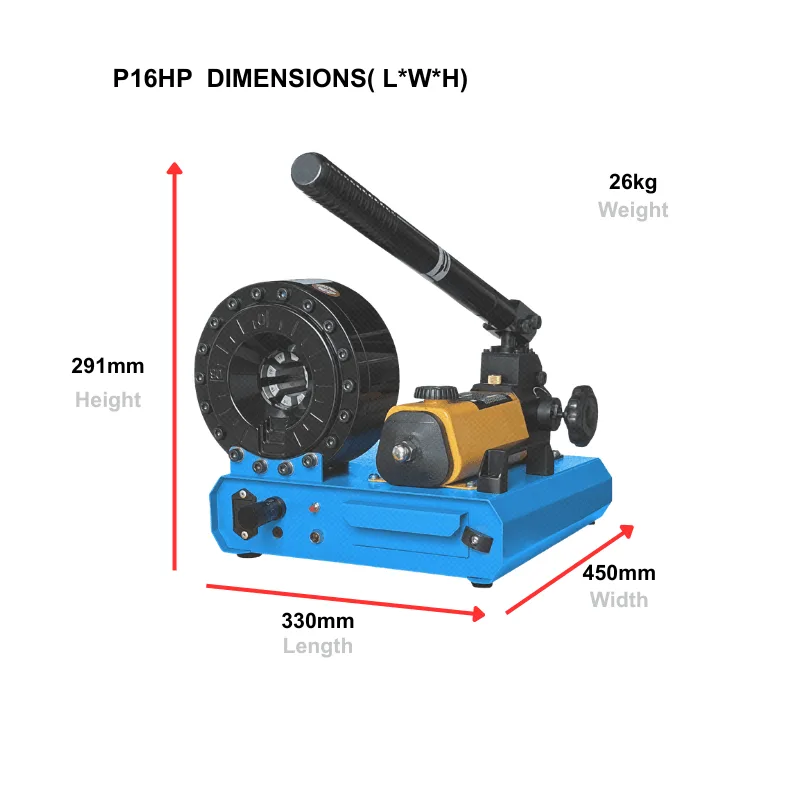
These tools work on Pascal’s Law: a small force applied to a hand pump piston generates high hydraulic pressure inside the cylinder. A 34 kg TRC P16HP can produce 95 tons of crimping force from a few pumps of the lever. The principle is the same as a hydraulic press — force multiplication through confined fluid.
The key difference between a manual crimping tool and an electric hydraulic crimper is the power source: hand pump versus motor. Both achieve the same crimp quality.
The trade-off is speed versus independence from power.
3 Off-Grid Crimping Solutions When There’s No Power
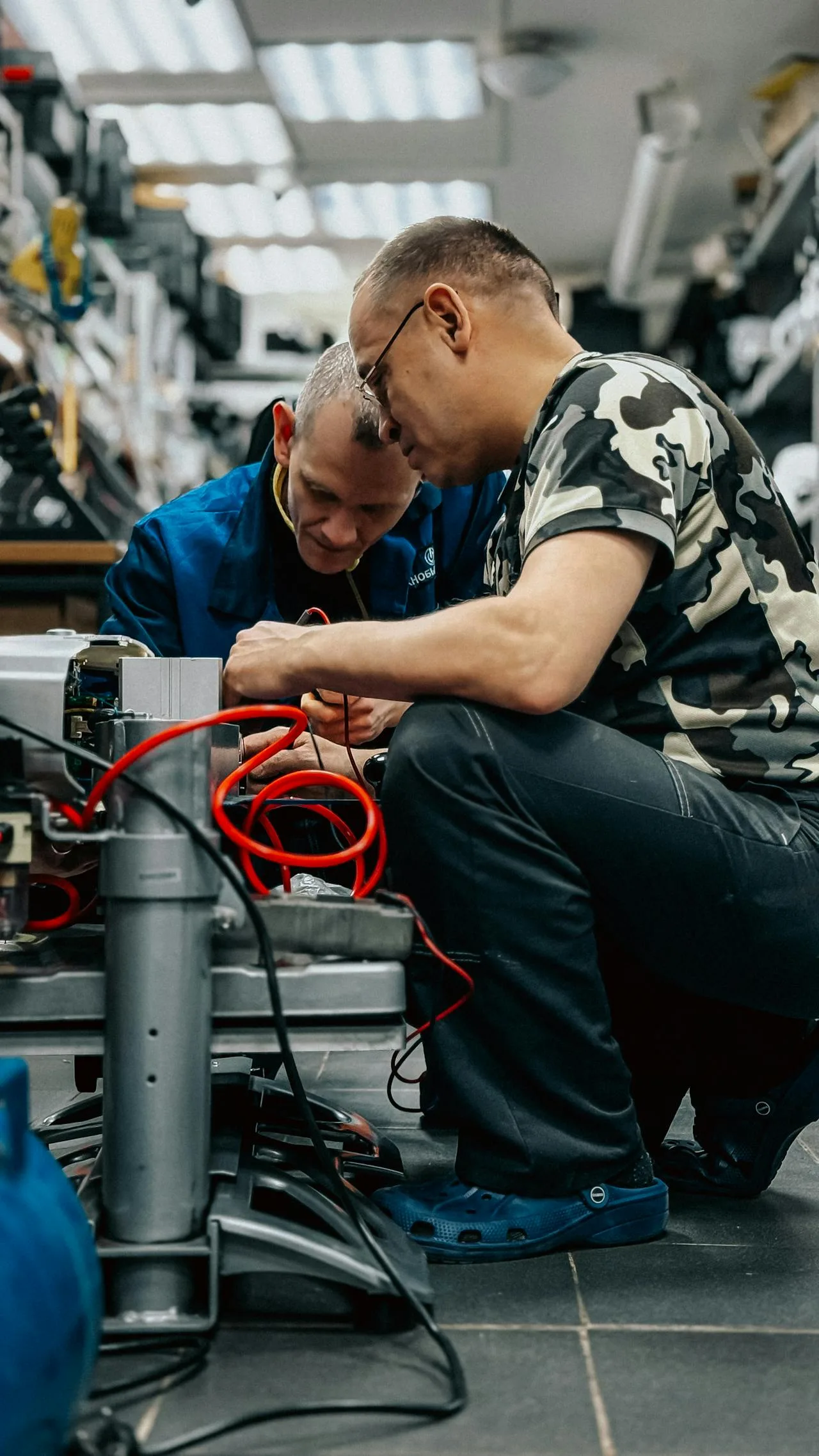
Construction sites, mining camps, logging operations, and agricultural fields share one problem: no reliable power. When a hydraulic hose bursts on an excavator 40 km from the nearest workshop, you need a tool that works without plugging in.
Here are 3 real solutions, ranked by crimping capacity and portability.
Solution 1: Hand Pump Hydraulic Crimper
The most common off-grid option. A hand pump drives hydraulic fluid into the cylinder, pushing the die set inward to compress the ferrule. Cycle time is 8–12 seconds per crimp.
| Model | Crimp Force | Hose Range | Weight | Die Series |
|---|---|---|---|---|
| P16HP | 95 ton | ¼″–1″ 2SP | 34 kg | P16 (10 sizes) |
| P18HP | 110 ton | ¼″–1″ 4SP | 38 kg | P18 (12 sizes) |
| P20HP | 137 ton | ¼″–1½″ 4SP | 52 kg | P20 (14 sizes) |
Pros: No battery, no charger, no compressor. Works in rain, mud, and freezing temperatures down to -20°C. The P16HP fits in a service truck toolbox.
Cons: Operator fatigue sets in after 20–30 crimps. The P20HP weighs 52 kg — needs two people to load.
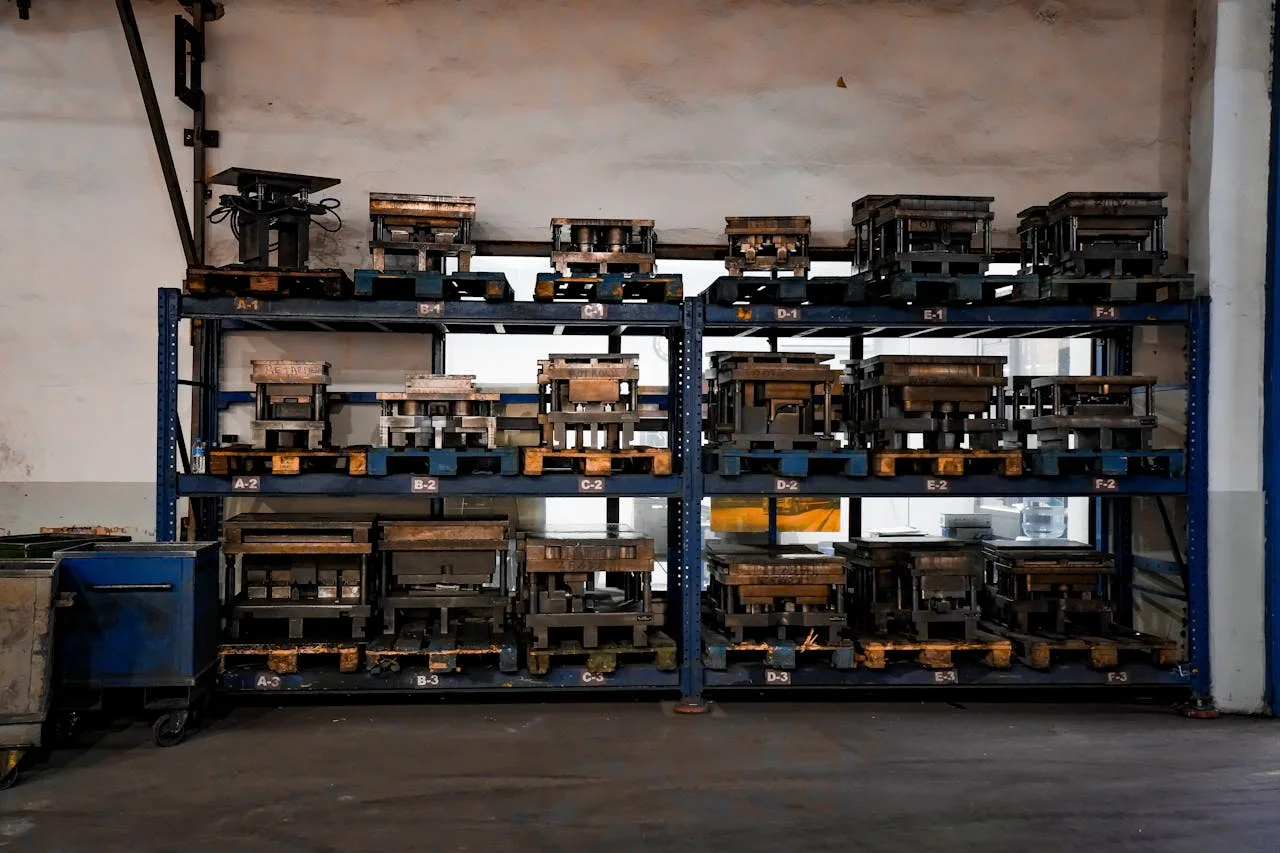
The P16HP comes with an SAE J517-compatible die set covering 10 hose sizes. It uses Cr12MoV die steel at HRC 58–62 hardness per industry crimp specifications. Crimp tolerance is ±0.04 mm — identical to factory floor results.
The crimp creates a gas-tight connection: the ferrule deforms past its yield point, compressing the wire reinforcement into a cold-weld bond with the fitting. No solder, no heat. The joint is mechanically stronger than a soldered connection and highly resistant to vibration and thermal shock.
Solution 2: Battery-Powered Portable Crimper
Battery-powered crimpers run on 12V car batteries or lithium packs. They’re faster than hand pumps — about 8 seconds per cycle — but you need a charged battery.
| Model | Crimp Force | Hose Range | Power Source | Weight |
|---|---|---|---|---|
| P18CS | 80 ton | ¼″–¾″ 4SP | 12V car battery | 35 kg |
| P20CS | 137 ton | ¼″–1½″ 4SP | 12V car battery | 48 kg |
Pros: Faster than hand pump. Less operator fatigue. P20CS covers the same range as the electric P20 shop machine.
Cons: Battery dies in 3–4 hours of continuous use. Cold weather below -10°C reduces battery capacity by 30–40%. You need a running vehicle to charge.
Solution 3: Manual Lever Crimper for Small-Diameter Hoses
For hoses under ½″ (like low-pressure hydraulic, fuel lines, and coolant circuits), a lightweight manual lever crimper works. No hydraulics at all — just a compound lever that multiplies hand force. These tools produce a simple compression crimp — adequate for low-pressure circuits but not a true radial crimp with controlled deformation.
The P10HP weighs under 10 kg and crimps up to ¼″ hose. It uses a compound lever that multiplies hand force 30×. Not suitable for high-pressure hydraulic systems, but handles automotive AC lines and fuel hoses without any power source.
Pros: Lightest option. No fluid, no battery, no maintenance. Fits in a backpack.
Cons: Limited to small diameters. Cannot crimp 4SP or 6SP multi-spiral hose.
Off-Grid Crimping Comparison Table
| Feature | Hand Pump (P16HP) | Battery (P20CS) | Lever (P10HP) |
|---|---|---|---|
| Crimp Force | 95 ton | 137 ton | ~5 ton |
| Max Hose Size | 1″ 2SP | 1½″ 4SP | ¼″ |
| Weight | 34 kg | 48 kg | 10 kg |
| Power Needed | None | 12V battery | None |
| Cycle Time | 10 sec | 8 sec | 5 sec |
| Crimp Tolerance | ±0.04 mm | ±0.04 mm | ±0.15 mm |
| Temp Range | -20°C to 50°C | -10°C to 45°C | -30°C to 60°C |
| Best For | General field repair | High-volume remote sites | Light-duty small hoses |
Real-World Applications
Mining Sites
Underground mines and open-pit mining operations rarely have power at the work face. When a hydraulic hose fails on a loader 200 meters underground, a hand pump crimper is the only option. The P18HP’s 110-ton capacity handles most mining hose sizes up to 1″ 4SP.
Construction
Construction sites often have temporary power, but it’s unreliable. A battery-powered P20CS running off the excavator’s own battery lets you crimp replacement hoses on the spot. No towing, no downtime.
Agriculture and Forestry
Tractors and harvesters break hydraulic hoses in the middle of fields. A hand pump crimper in the tractor toolbox means a 10-minute fix instead of a 2-hour trip to town. The P16HP’s 34 kg weight is manageable for one person.
Need a Manual Crimper That Works Anywhere?
TRC manual crimpers cover ¼″ to 1½″ hose, no power required. Tell us your hose sizes and we’ll recommend the right model.
FAQ
Can a manual crimping tool achieve the same quality as an electric crimper?
Yes. Both use the same hydraulic cylinder and die set. The crimp tolerance is ±0.04 mm — identical.
The only difference is the power source (hand vs. motor).
How many crimps can I do before getting tired?
Most operators report fatigue after 20–30 crimps with a hand pump unit like the P16HP. For higher volume, switch to a battery-powered portable crimper.
Can I crimp 4-spiral hose with a manual tool?
Yes. The P18HP (110 ton) handles 1″ 4SP. The P20HP (137 ton) goes up to 1½″ 4SP.
You need enough crimping force to compress the multi-spiral wire braid per ISO 8434 standards.
What die sizes do I need for field repairs?
Carry the 5 most common sizes: 14, 16, 19, 23, and 27. These cover 80% of field repair scenarios. Full die sets are available for specific hose ranges.
Does cold weather affect manual crimpers?
Hand pump units work down to -20°C with #68 anti-wear hydraulic oil. Below that, oil viscosity increases and pumping gets harder. Battery units lose 30–40% capacity below -10°C.
Can I use a manual crimper on steel pipe?
No. Hydraulic hose crimpers are designed for rubber hoses with metal reinforcement. Steel pipe requires a different tool — a pipe swaging machine or mechanical coupler.
How do I maintain a manual hydraulic crimper?
Check hydraulic oil level monthly. Replace seals every 12 months or when you notice pressure loss.
Store with dies removed to prevent die face damage. Full maintenance instructions come with every TRC crimper.
What’s the warranty on TRC manual crimpers?
12-month warranty covering manufacturing defects. Free repair or replacement within the first year. Technical support responds within 4 hours via email or video call.


