Hydraulic Hose Crimping Tool: Vertical & 90° Elbow Models
Hydraulic hose crimping tool designed for 90° elbows and bent tubes. Open-column design lets hydraulic assemblies pass through horizontally — no clearance limits.
Why 300+ Distributors Trust TRC
ISO-certified hydraulic crimping machine manufacturer since 2021
5+
Years Manufacturing
Since 2021, hydraulic specialists
300+
Global Customers
Distributors & OEM partners
72
Product Models
9 series, full coverage
100%
Quality Inspected
Every unit tested before shipping
How a Vertical Hydraulic Hose Crimping Tool Works
A vertical hydraulic hose crimper operates on the same Pascal’s Law principle as all hydraulic crimpers — a small pump force is multiplied through hydraulic fluid into massive compression force at the die face. The key difference is the orientation: the piston moves vertically (top-to-bottom) rather than radially inward. This means the die opening faces sideways, allowing workpieces to enter from the left or right — critical for pre-assembled tubes with 90° elbow fittings that can’t fit through a conventional closed-head crimper.
The force chain in a vertical crimper starts with the 0.75 kW electric motor driving a gear pump. The pump pressurizes hydraulic oil to approximately 20 MPa (2,900 PSI), which acts on a piston with roughly 120 mm bore diameter. Through the area ratio between the pump and the piston, the 0.75 kW motor generates 62 tons of compression force at the die face. The dies compress inward from all sides (typically 6 or 8 die segments), creating uniform radial pressure on the ferrule.
Step-by-step: Slide the pressure column to fit the tube length → Install die set matching the hose/fitting specification → Place the hose assembly in the die opening with the ferrule centered → Start the motor → The vertical piston drives the die segments closed, compressing the ferrule into a permanent cold-weld with the hose reinforcement → Measure crimped diameter with calipers to verify tolerance → Retract the piston and remove the finished assembly.
US18 vs US20 Specifications
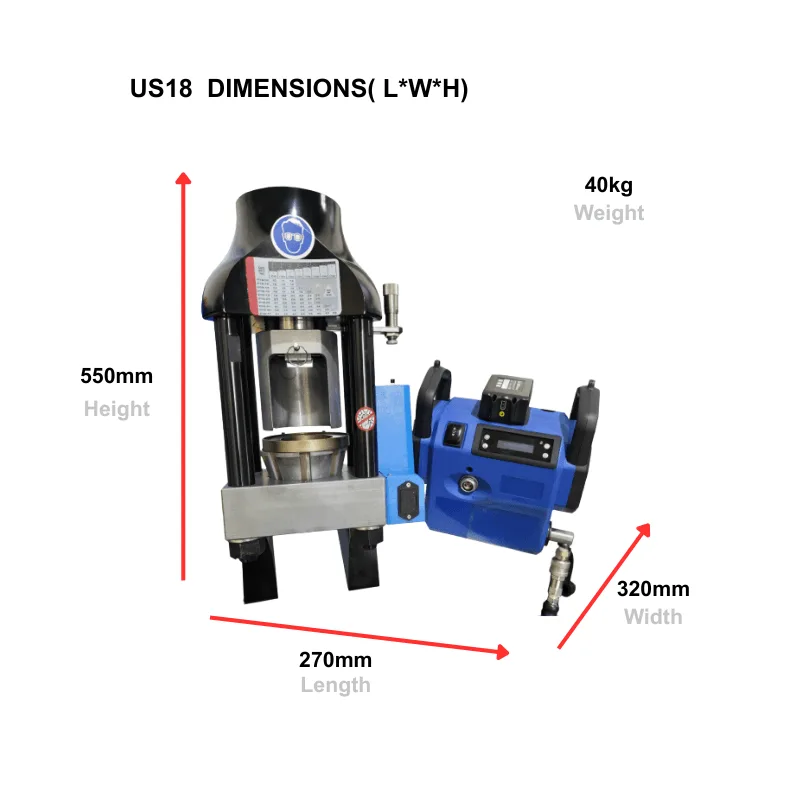
| Parameter | US18 | US20 |
|---|---|---|
| Max Force | 62 ton | 62 ton |
| Hose Range | up to 1¼” 6SP | up to 1¼” 6SP |
| Hose Types | 1SN, 2SN, 1SC, 4SP, 4SH, R6–R15 | 1SN, 2SN, 1SC, 4SP, 4SH, R6–R15 |
| Motor | 0.75 kW | 0.75 kW |
| Voltage | 110–440V | 110–440V |
| Weight | 80 kg | 80 kg |
| Dies Included | 10 (US18 series) | 12 (US20 series) |
| Die Length | 55 mm | 55 mm |
| Cycle Time | 8–12 sec | 8–12 sec |
| Production Rate | 15–25/hr | 15–25/hr |
| Fitting Types | Straight, 45°, 90°, banjo | Straight, 45°, 90°, banjo, flange |
90° Fitting Crimps, Engine Room Access, and Tight-Space Operations
Vertical and side-load crimpers exist because standard crimpers can’t handle pre-assembled 90° elbow fittings. When a hose has a bent fitting already attached, the fitting sticks out perpendicular to the crimping axis — and a closed-head crimper simply can’t accommodate it. Open-head (vertical) machines give you side access to the die area, so the elbow hangs free while the dies compress the ferrule.
This isn’t an edge case — 90° elbow fittings are among the most common hydraulic fitting types in mobile equipment. Tractors, excavators, skid steers, and trucks all use extensive hydraulic routing that requires bent fittings to navigate around structural members, engine blocks, and transmission housings. In many machines, more than half of the hydraulic connections use some form of angled fitting (45°, 90°, or custom bend angles).
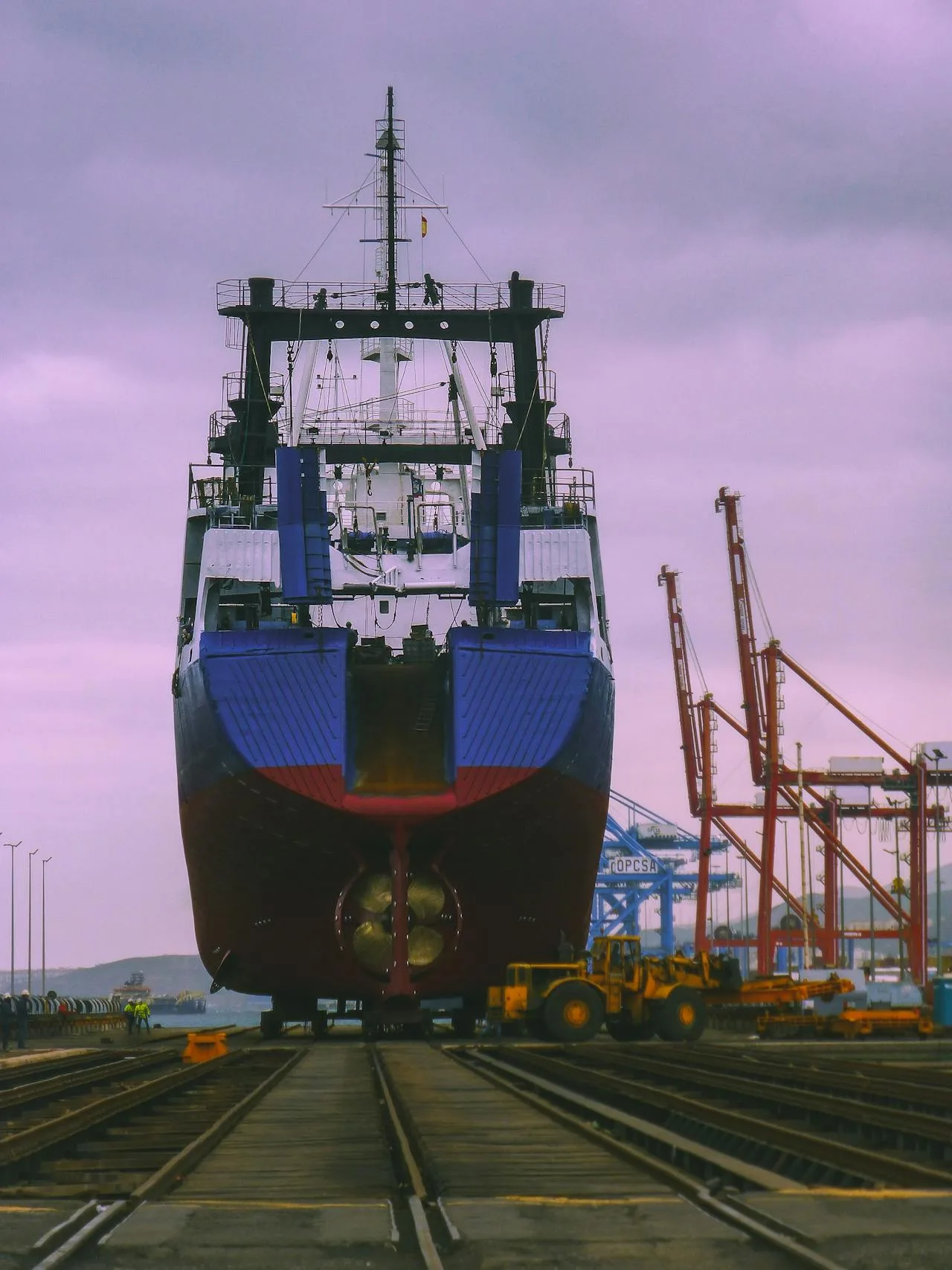
Ship engine rooms are the classic tight-space scenario. A marine engineer replacing a hydraulic brake line on a winch system is working in a space barely wider than their shoulders, with hot pipes overhead and saltwater corrosion on every surface. The crimper has to be compact, and it has to work at odd angles. Hose couplings in marine applications use specific thread standards (JIC, BSP, metric) that all need the same crimp quality regardless of fitting orientation.
“Perhaps a question as old as time.. WHY is my hose fitting leaking??” — r/Hydraulics
The usual suspects: under-crimping (most common), wrong die size, damaged O-ring on the fitting, or a ferrule that didn’t seat squarely on the hose. In tight-space work, the last one happens more often than you’d think — if you can’t see the ferrule alignment clearly, it’s easy to crimp at a slight angle. A vertical crimper helps because you can observe the crimp from the side, not just from above.
Tight-space operation isn’t just about the machine — it’s about the workflow. Die changes need to be fast (magnetic die holders help), the machine needs to be stable on uneven surfaces, and the operator needs clear sight lines to the crimp zone. Side-load machines excel here because the crimp area is fully visible from the operator’s position.
The Physics of 90° Elbow Crimping
Crimping a 90° elbow fitting requires the same 62 tons of radial force as crimping a straight fitting — the hydraulic physics don’t change. What changes is the workpiece geometry. An elbow fitting extends 40–80 mm perpendicular to the hose axis. On a horizontal bench-top crimper, this extension collides with the machine frame on one side. On a vertical crimper, the elbow passes through the open column with centimeters of clearance on all sides.
For operators transitioning from horizontal to vertical crimpers, the main adjustment is the crimping orientation. The dies still compress radially from all sides — the ferrule doesn’t know the difference between vertical and horizontal. But the operator’s sight line changes from looking down at the crimp to looking at it from the side. This actually provides better visibility for checking ferrule alignment before crimping, which reduces the most common crimp error: off-center ferrule placement.
Another advantage of the vertical orientation is gravity assistance. When crimping long tube assemblies (300–500 mm), the tube’s weight can cause it to tilt in a horizontal crimper, potentially misaligning the ferrule. In a vertical crimper, the tube hangs naturally straight down, keeping the ferrule centered in the die cavity without additional support.
When You Need Both: Vertical + Horizontal Combo
Most serious hydraulic service operations eventually invest in both a vertical and a horizontal crimper. Here’s why: the vertical handles 90° elbows, bent tubes, and pre-assembled lines that the horizontal physically can’t accommodate. The horizontal handles high-volume straight assemblies (which represent 60–70% of typical workshop output) faster and with higher tonnage for larger hose sizes.
The ideal combo for a growing shop: a US18 vertical ($2,000–3,000) for elbow work plus a P32A or P32D horizontal ($3,000–6,000) for production straight-crimp work. Total investment: $5,000–9,000 for complete workshop capability covering every hose assembly type from ¼” to 2″. The vertical handles the 30–40% of work the horizontal can’t do, while the horizontal handles the 60–70% of work the vertical is too slow or underpowered for.
Workflow optimization: position both machines side by side with a shared die storage cabinet. The operator can move an assembly between machines in seconds — crimp the elbow end on the vertical, then crimp the straight end on the horizontal. This split workflow is actually faster than trying to do everything on a single machine, because each machine is optimized for its specific task.
Vertical Crimper Safety Tips
While vertical crimpers generate less total force (62 ton) than heavy-duty horizontal machines, safety remains important: (1) Never place hands in the die area during the crimp cycle — the 62 tons of force can cause serious injury. (2) Always verify die size before crimping — using the wrong die on a vertical machine is just as dangerous as on any other type. (3) Secure long tubes — tubes extending 300+ mm from the machine can swing during crimping. Support the free end or have a second person hold it. (4) Wear safety glasses — debris can be expelled during the crimp cycle. (5) Keep the work area clean — hydraulic oil on the floor creates slip hazards around heavy machinery.
US18 vs US20
US18 — 13 Die Positions
10 dies included. Standard hydraulic assemblies up to 1¼” 6SP. North America’s most popular vertical model.
The US18 is the industry-standard vertical crimper for mobile equipment service. It covers the full range of hose sizes used on tractors, excavators, skid steers, and trucks — from ¼” to 1¼”. The 10 included dies handle SAE, DIN, and JIC fitting types. At 80 kg, it’s light enough to ship easily and compact enough to fit in any workshop corner. Best for: Equipment dealerships, independent mobile service shops, and any operation that regularly crimps 90° elbow fitting assemblies.
62 ton 10 dies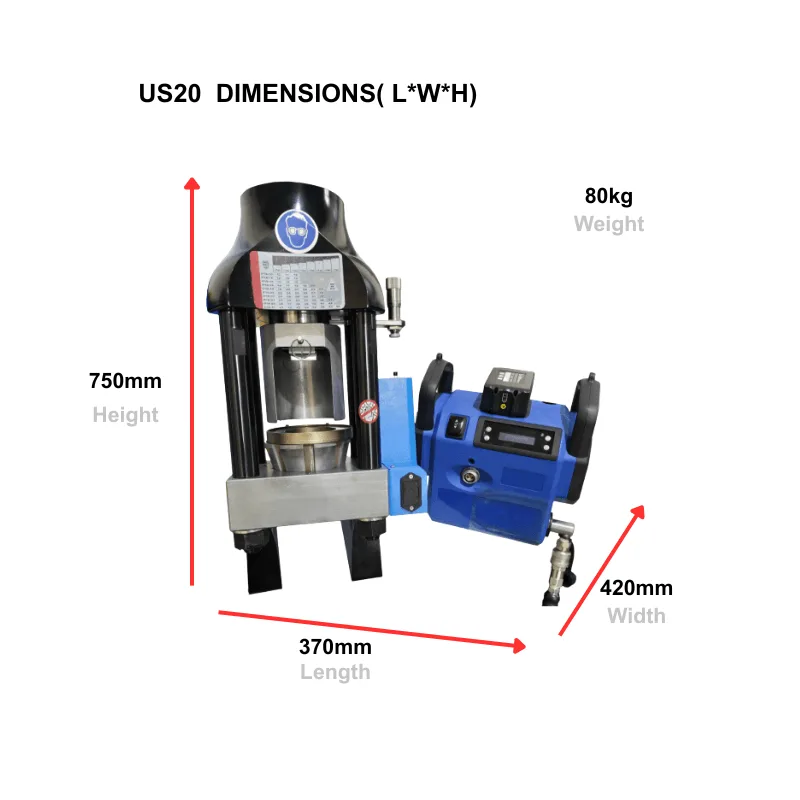
US20 — 14 Die Positions
12 dies included. Covers larger sizes (US20/45, US20/52). For shops that also crimp larger industrial fittings.
The US20 extends the die range with 12 included dies covering additional sizes up to US20/52. This makes it the better choice for shops that service both mobile equipment and light industrial machinery with larger diameter hose. The extra die positions cover less common but important sizes that the US18 doesn’t reach. Best for: Shops with mixed mobile/industrial service work, or operations that want maximum die coverage without upgrading to a horizontal machine.
62 ton 12 diesCommon Problems — Solved
“My bench-top crimper can’t fit 90° elbow fittings”
That’s exactly what vertical crimpers solve. The open-column design lets bent tubes and elbows pass through horizontally. No height or side clearance limits.
Source: Top Reddit complaint about bench-top crimpers
“Can I crimp long pre-assembled tubes?”
Yes. The adjustable pressure column slides to accommodate tubes up to ~500 mm between supports. Longer tubes can overhang the frame — the crimping zone is only 55 mm wide.
Source: Mobile equipment repair shops
“Is 62 ton enough for my work?”
62 ton handles up to 1¼” 6SP (6-wire spiral) hose. This covers the majority of mobile equipment: excavators, tractors, trucks, skid steers. For 2″+ hose, you need a 200+ ton horizontal model.
Source: Industry specification data
Tube marking after crimping
Slight die marks on the ferrule are normal and don’t affect performance. If marks are deep or uneven, check die alignment and cone surface condition.
Source: Baidu Baike — 扣压机
“I need to crimp 2″ hose with elbow fittings”
This is the limitation of vertical crimpers — 62 ton can’t handle 2″+ hose. The solution is a two-step process: crimp the elbow fitting on a US18/US20 (for the 90° clearance), then crimp the straight end on a horizontal 200+ ton machine. Many shops split the work this way.
Source: Workshop workflow optimization
“My ferrules keep going in crooked”
This is usually a die alignment issue, not operator error. Check that the die segments sit flush in the die pocket — any gap means uneven compression. Also verify the pressure column is perpendicular to the base (use a spirit level). On older machines, column guide wear can cause slight tilting that misaligns the crimp.
Source: Field service experience
Vertical vs Bench-Top: Which Hydraulic Hose Crimping Tool?
| Factor | Vertical | Horizontal (Bench-Top) |
|---|---|---|
| 90° Elbow Clearance | ✅ Open column | ❌ Limited by frame |
| Long Tube Handling | ✅ Passes through | ❌ Blocked by frame |
| Max Force | 62 ton | 80–830 ton |
| Max Hose | 1¼” 6SP | 6″+ |
| Hose Types | 1SN–4SH, R6–R15 | All types |
| Fitting Types | All incl. 90° elbows | Straight only (most models) |
| Footprint | 37 × 42 cm | 50 × 80 cm+ |
| Production Rate | 15–25 crimps/hr | 20–60 crimps/hr |
| Cost | $2,000–3,500 | $2,000–20,000 |
| Best For | Bent tubes, elbows, mobile equipment | Straight assemblies, high volume |
Many shops own both: a vertical for elbow and bent-tube work, and a horizontal electric for straight high-volume crimping. This combination covers every possible assembly type. The vertical handles the work the horizontal can’t (elbows, bent tubes, pre-assembled lines), while the horizontal handles high-volume straight-assembly production faster and with higher tonnage for larger hoses.
Vertical Crimper Workstation Setup
A well-organized vertical crimper workstation maximizes productivity. Key setup recommendations: (1) Position the machine at waist height — build a sturdy workbench or stand that places the die opening at the operator’s elbow level. (2) Store dies within arm’s reach — a die rack mounted on the wall behind the machine keeps all die sets organized and accessible. (3) Provide adequate lighting — a focused work light aimed at the die opening helps the operator verify ferrule alignment before each crimp. (4) Keep a digital caliper mounted nearby — every crimp should be verified against specification. (5) Allow space for long tubes — position the machine so long tube assemblies can extend freely on both sides without hitting walls or other equipment.
Where a Vertical Hydraulic Hose Crimping Tool Is Essential
🚜 Tractor & Agricultural
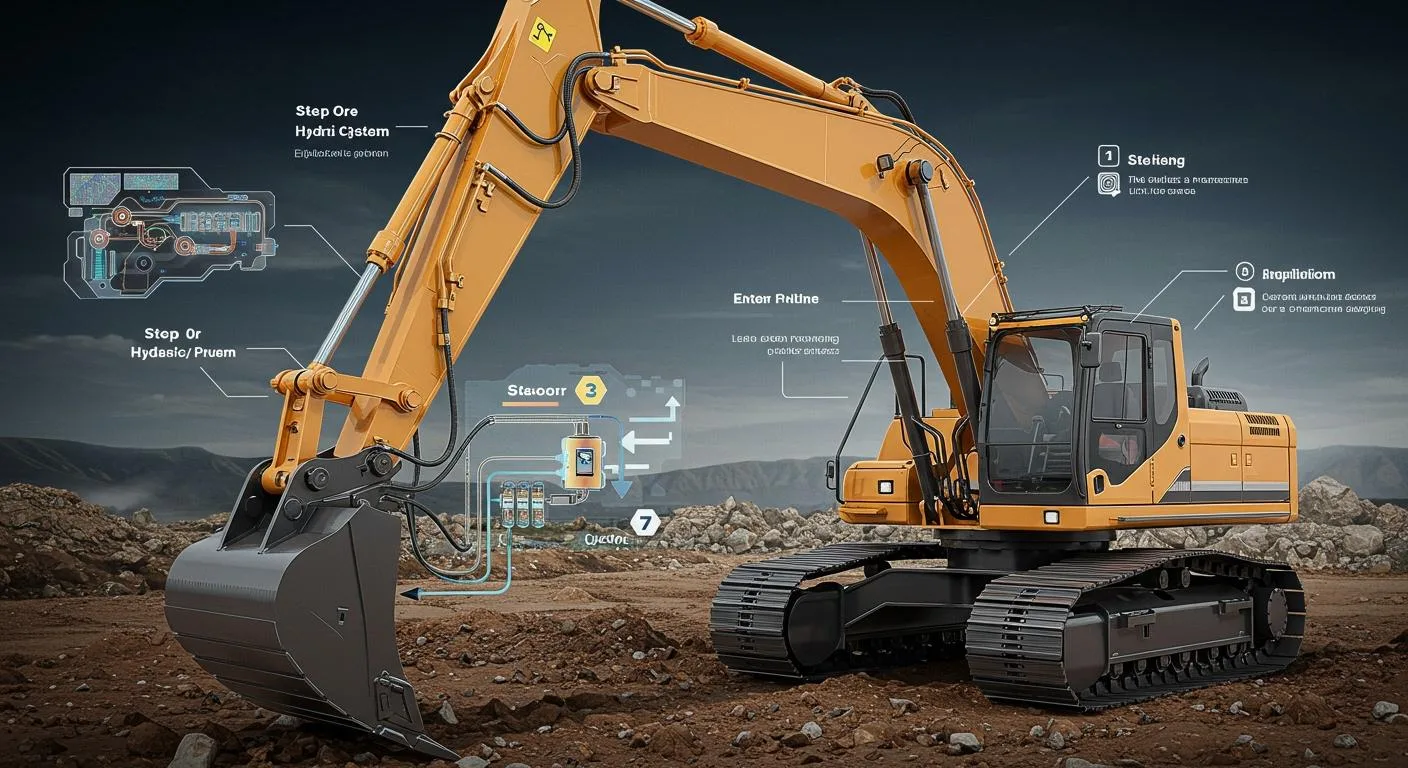
Hydraulic tubes with 90° bends are standard on tractors and harvesters. A vertical hydraulic hose crimper handles them without modification.
Modern tractors have 20–40 hydraulic connections, many using pre-bent tube assemblies with 90° elbow fittings to navigate around the engine, transmission, and implement mounting points. These assemblies can’t be crimped on a standard bench-top machine — the elbow sticks out at a right angle and hits the machine frame. The US18’s open-column design accommodates any fitting orientation, making it the essential tool for agricultural equipment service centers.
🚛 Truck & Bus
Brake line and steering tube assemblies with pre-bent sections. The open-column design fits any tube configuration.
Heavy truck hydraulic systems — power steering, dump bed lift cylinders, and brake systems — use rigid tube assemblies with multiple bends that require side-access crimping. A vertical crimper handles these pre-formed assemblies that would be impossible to crimp in a closed-head horizontal machine. Bus fleets and truck service centers rely on vertical crimpers for daily maintenance of hydraulic brake and steering lines.
🔧 Mobile Equipment Dealer
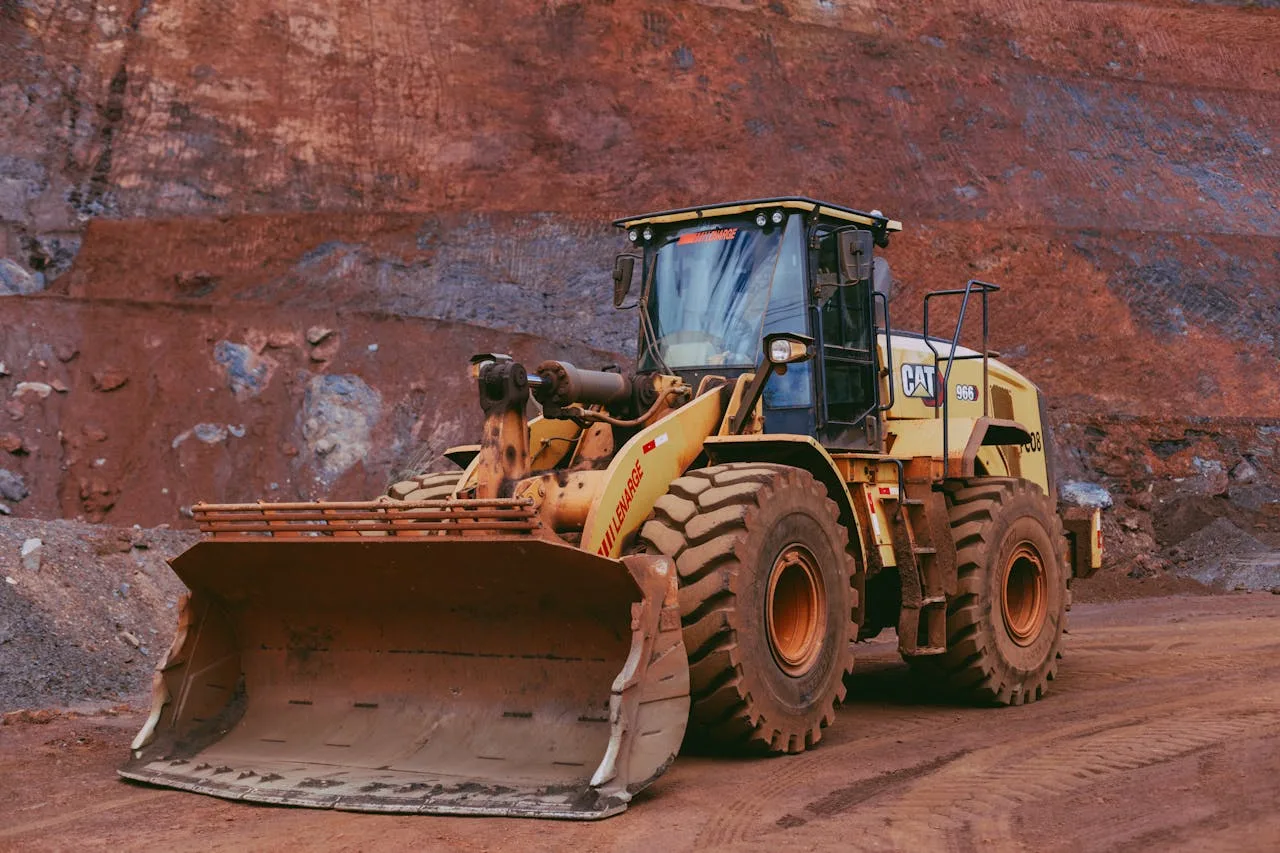
Service center for skid steers, backhoes, and compact loaders. The US18 is the standard in North American equipment dealerships.
Equipment dealerships that sell and service compact construction machines (Bobcat, Caterpillar, John Deere, Kubota) need a vertical crimper as their primary hose assembly tool. These machines use 90° fittings extensively, and the service department crimps replacement hose assemblies daily. The US18 handles the full size range from ¼” to 1¼” that these machines require, with die changes taking under 30 seconds.
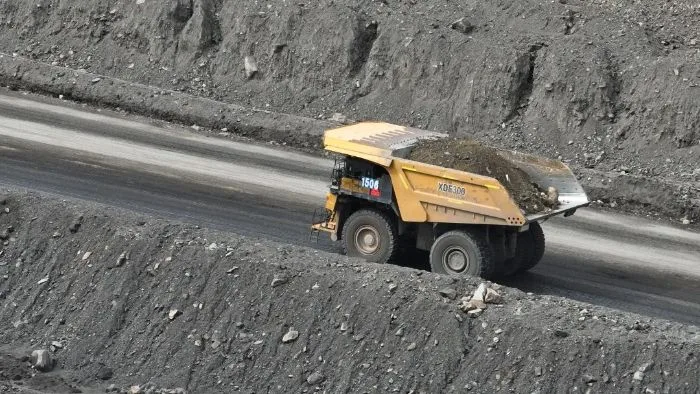
⛏️ Mining Equipment
Underground and surface mining machines with complex hydraulic routing. Open-column access for pre-assembled lines.
Underground mining equipment operates in confined spaces where hydraulic lines are routed through tight passages with multiple bends and 90° turns. When these lines fail, the replacement must match the original routing exactly — meaning pre-bent assemblies that require vertical crimping capability. Mining maintenance shops typically keep a vertical crimper alongside a heavy-duty horizontal unit for full coverage of all assembly types.
🏭 Workshop Production
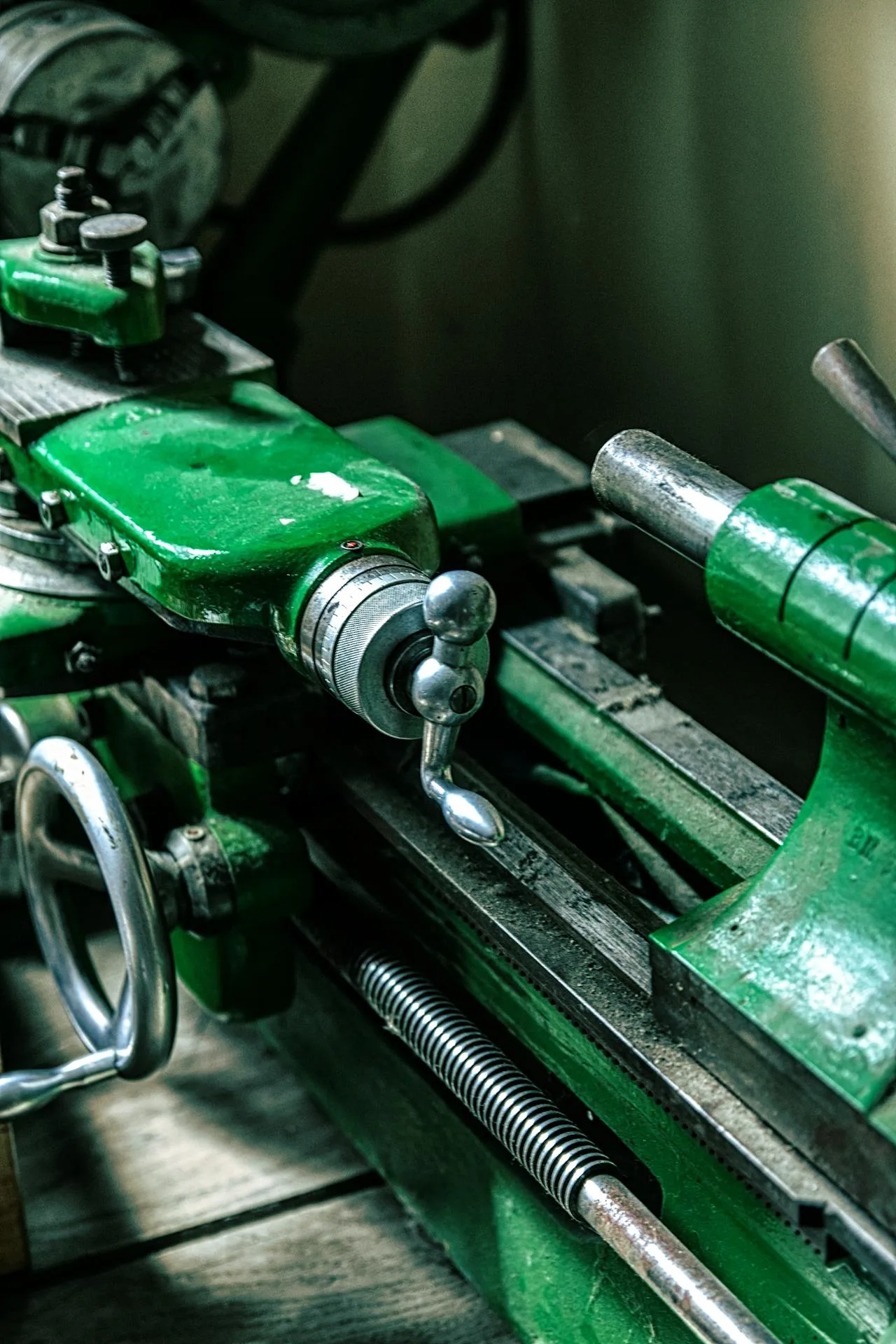
Low-to-mid volume assembly of bent-tube hydraulic lines. 20–50 crimps/day with repeatable quality.
Small to medium hydraulic assembly workshops that produce 20–50 hose assemblies per day find the vertical crimper ideal for their volume. The 8–12 second cycle time allows comfortable production without the operator feeling rushed. For workshops that also need straight-assembly capability, pairing the vertical US18 with a horizontal P32A provides complete coverage — the vertical for elbow and bent-tube work, the horizontal for high-volume straight assemblies.
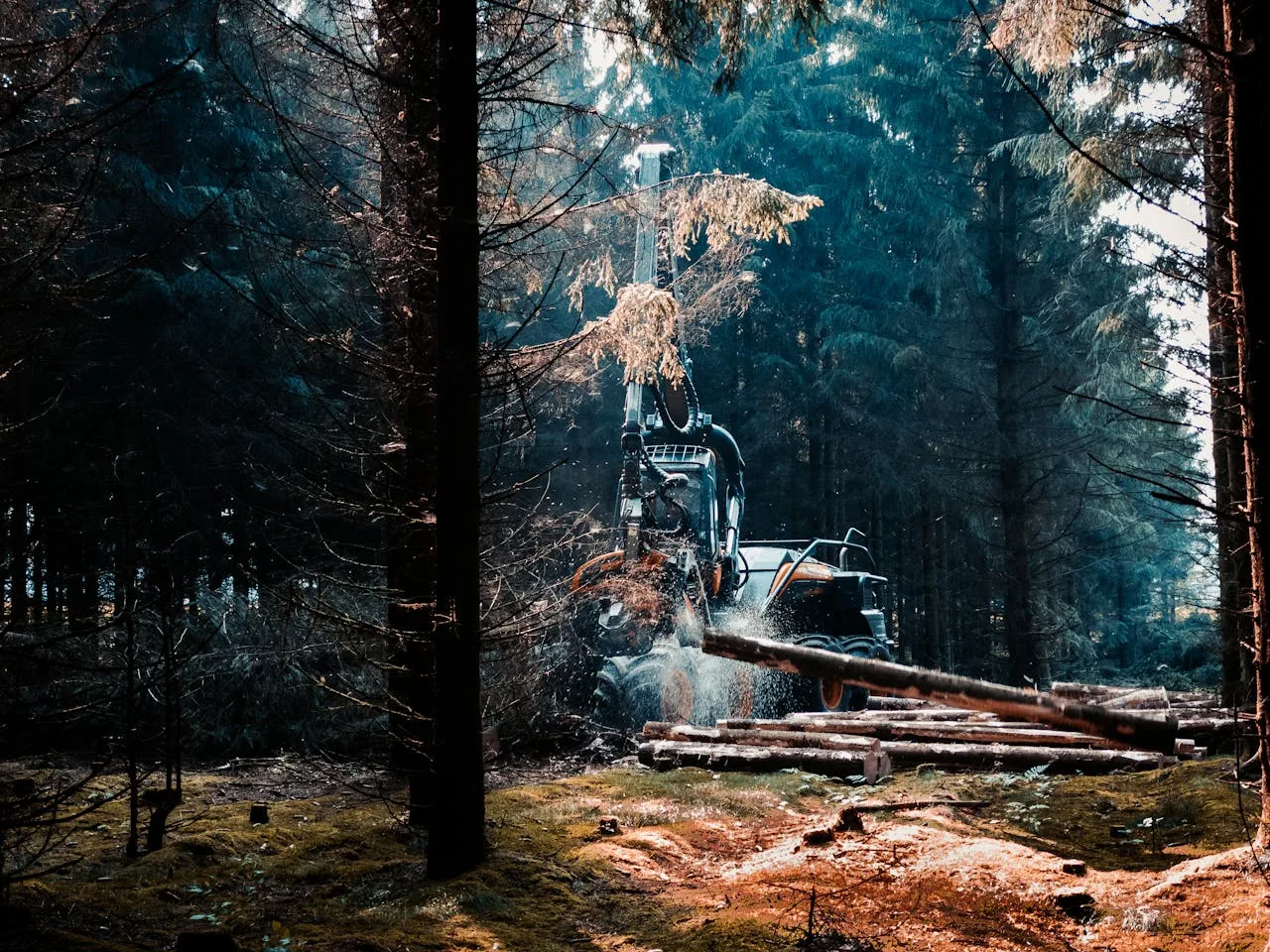
🌲 Forestry Equipment
Harvesters and forwarders with tight hydraulic routing. 90° elbow fittings are the norm in forestry machinery.
Forestry equipment — harvesters, forwarders, feller-bunchers — has extremely dense hydraulic systems packed into compact machine bodies. Virtually every hose assembly includes at least one 90° fitting to navigate around structural members. Forestry equipment dealers and independent service shops consider a vertical crimper essential — it’s the only tool that can assemble the replacement hose assemblies these machines require.
How to Choose a Vertical Hydraulic Hose Crimping Tool
| Your Situation | Recommended Model | Why |
|---|---|---|
| Equipment dealership (tractors, skid steers) | US18 | Industry standard, covers full mobile equipment range |
| Mixed mobile + light industrial | US20 | 12 dies, extended range for larger sizes |
| Dedicated 90° elbow workshop | Any vertical model | Only vertical machines handle pre-bent fittings |
| Budget under $3,000 | US18 | Best value, proven reliability in dealership use |
| Need both elbow + straight high-volume | US18 + P32A combo | Vertical for elbows, horizontal for production |
Need 90° elbow clearance? → Vertical is the only option. No horizontal crimper can match it.
Die range? Standard sizes → US18 | Need up to US20/52 → US20
Market? North America → US18/US20 is the industry standard for vertical crimping.
From Raw Material to Your Doorstep
Full in-house production — every step controlled, every unit inspected

Start from Raw Material
We machine every crimper body, die set, and hydraulic component from raw steel in-house. No outsourcing, no assembly from parts — full control from billet to finished product.
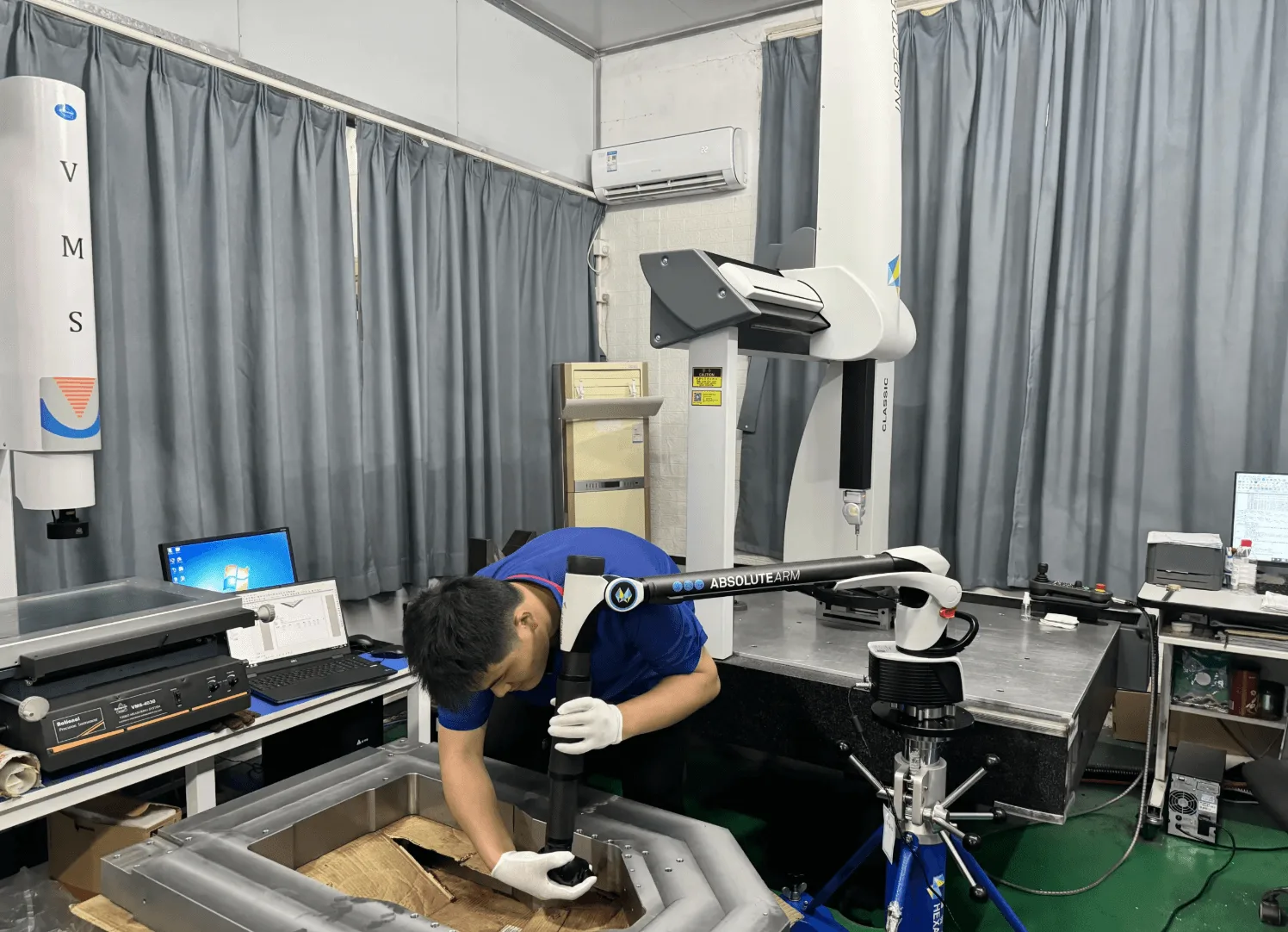
Rigorous Quality Inspection
Every unit undergoes pressure testing, dimensional checks with 0.04mm precision calipers, and a full crimp cycle test. No unit ships without passing our 3-stage QC process.
Reliable Global Service
Technical support within 4 hours, video installation guides, and spare parts shipped within 48 hours. 300+ customers across 40+ countries trust our after-sales support.
Related Guides
Hydraulic Hose Fittings Types Guide
SAE, DIN, JIC, BSP standards and how they affect die selection for vertical and horizontal crimpers.
Read GuideHow to Crimp 90° Elbow Fittings
Step-by-step guide for crimping bent-tube and elbow assemblies — where vertical crimpers excel.
Read GuideAlso see: Electric Hydraulic Crimper Hub | Manual Hydraulic Hose Crimper Hub | Portable Crimper Hub
For a complete comparison of all crimper types and how they fit together in a professional workshop, read our Hose Crimper Buying Guide covering all 9 series from manual to 830-ton heavy-duty models.
Related Resources
- Hydraulic Brake — Wikipedia
- Hose Coupling — Wikipedia
- O-Ring — Wikipedia
- Hydraulic Machinery Basics
- Hydraulic Press Principles
- Pascal’s Law Explained
- Hydraulic Hose Crimper Guide
- How to Crimp Hydraulic Hose Fittings
- Hose Crimper Buying Guide
- Crimping Tool Dies Guide
- Manual Crimping Tool Guide
- Hydraulic Crimp Tool Overview
- Custom Crimp Solutions
- Hydraulic Hose Crimping Machine
- Portable Hydraulic Hose Crimper
- Hydraulic Cylinder Design
- Hydraulic Fluid Properties
Frequently Asked Questions
Why choose a vertical over a horizontal crimper?
If you work with bent tubes, 90° elbows, or long pre-assembled hydraulic lines, the open-column design is the only way to fit the workpiece. Horizontal bench-top crimpers have side walls that block these assemblies.
What’s the maximum tube length?
The adjustable column handles ~500 mm between supports. Longer tubes can overhang freely — the crimping zone is only 55 mm wide.
Can US18 handle 6-wire spiral hose?
Is the US18 suitable for production?
It’s designed for low-to-mid volume (20–50 crimps/day). For high-volume production, a P32A auto-return is faster — but it can’t handle 90° elbows.
What voltage options are available?
Both US18 and US20 support 110V to 440V input (single-phase or three-phase). This covers North American 110V/220V, European 230V, and industrial 380–440V. Confirm your voltage when ordering so we configure the motor correctly.
How do I change dies on a vertical crimper?
Die changes take under 30 seconds. Loosen the die retainer, slide out the old die set, insert the new one matching the size marking, and tighten. Magnetic die holders on some models make this even faster — the dies snap into position automatically.
Can I crimp both hose and rigid tube?
Yes. The vertical design handles both flexible hose assemblies with ferrules and rigid tube assemblies with compression fittings. The open-column design accommodates rigid tubes up to ~500 mm between supports, with longer tubes able to overhang freely on either side.
What maintenance does a vertical crimper need?
Minimal maintenance: (1) Check hydraulic oil level monthly — use ISO 32 or ISO 46 grade. (2) Clean die surfaces after each use. (3) Inspect the pressure column slide for smooth operation — lubricate the guide rails quarterly. (4) Check electrical connections annually. With basic care, the US18/US20 will last 10+ years in daily use.
Can I use dies from other manufacturers?
Dies must match the crimper’s die pocket geometry. TRC US18/US20 dies are not interchangeable with other brands. Using non-OEM dies voids the warranty and may produce inconsistent crimps. Always use manufacturer-specified die sets for your specific model.
Need a Vertical Hydraulic Hose Crimping Tool?
TRC US18 and US20 vertical crimpers. Open-column design, 110–440V, CE certified. The standard for bent-tube and elbow assemblies.
Whether you’re running an equipment dealership servicing 20 machines a week, a mobile hose repair business handling emergency calls, or a production workshop assembling hydraulic lines — the vertical crimper is the tool that handles the work no other machine can. 90° elbow fittings, pre-bent tube assemblies, and long hydraulic lines all require the open-column design. The US18 is the proven choice trusted by thousands of North American service centers.
Get a Quote →