Table of Contents
- Quick Specs — What You Need at a Glance
- What Is a Crimping Tool for Hydraulic Hoses?
- How It Works — From Pump Pressure to Cold-Weld Bond
- 4 Types of Crimping Tools Explained
- 12-Model Comparison Table
- How to Choose the Right Crimper
- Step-by-Step: How to Crimp a Hydraulic Hose
- 5 Common Mistakes (From Real Users)
- Hose & Fitting Standards You Should Know
- Safety & Quality Control
- Frequently Asked Questions
- Ready to Crimp?
1. Quick Specs — What You Need at a Glance
Those eight numbers tell you most of what matters. Below we break down every detail — from the physics behind the force to how each model compares on tonnage, hose range, and price.
2. What Is a Crimping Tool for Hydraulic Hoses?
A crimping tool for hydraulic hoses is a machine that presses a metal fitting onto a wire-reinforced rubber hose using radial compression. The dies close inward, squeezing the fitting shell until it deforms permanently around the hose reinforcement layer — creating a cold-weld bond that holds under operating pressure.
This is not the same as clamping or bolting. Crimping reshapes the metal. Once done, the fitting cannot be removed without cutting the hose. That permanent deformation is what gives a crimped hydraulic assembly its pressure rating — typically 4,000 to 6,000 PSI depending on the hose type.
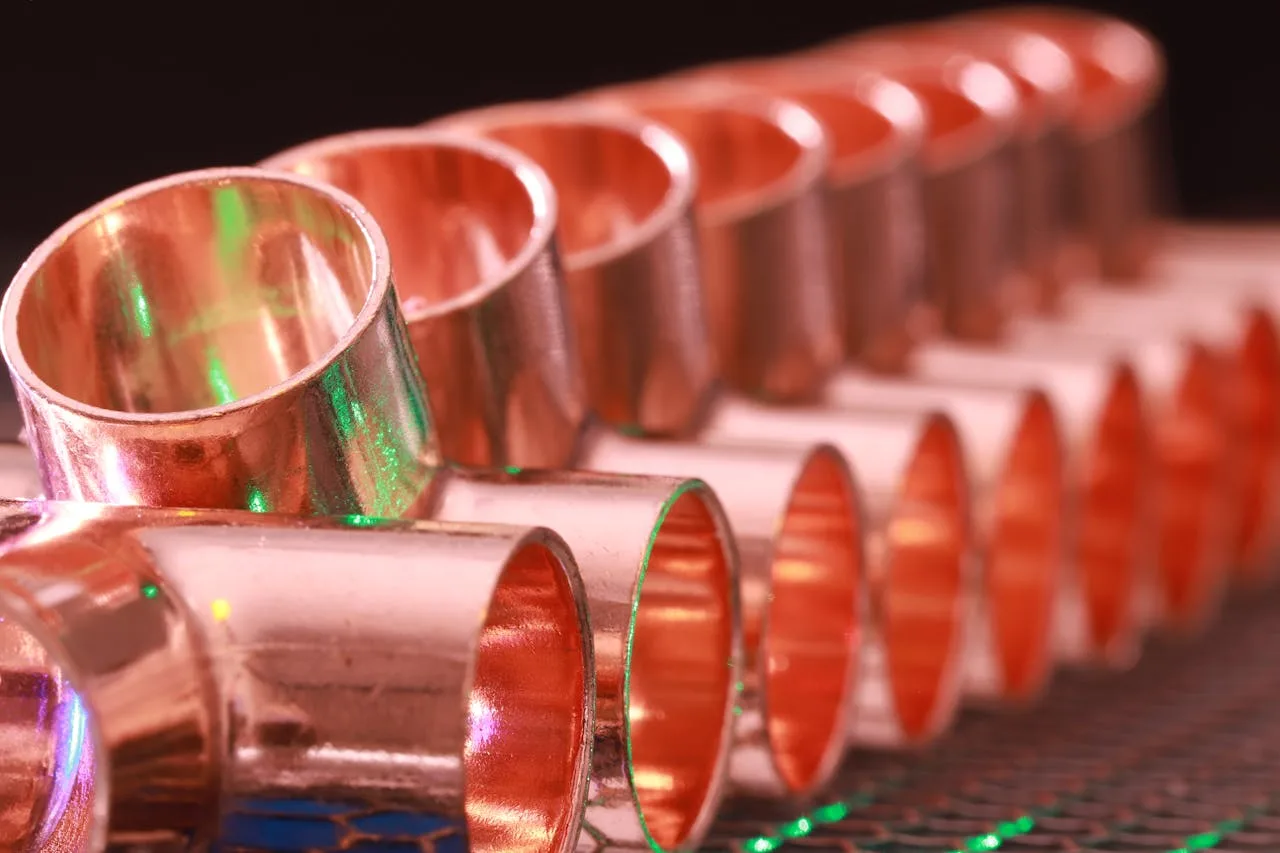
Three components make up the joint: the hose (inner tube, reinforcement, cover), the fitting (stem that inserts into the hose, shell that gets crimped), and the dies (the hardened steel segments that press the shell). The crimping tool provides the force. According to the hydraulic hose specification, a failure at this joint is the single most common cause of hydraulic system leaks.
Shops that build hydraulic assemblies, mobile service trucks that repair hoses in the field, and heavy equipment dealers all use some form of crimping tool for hydraulic hoses. The difference between a $500 manual unit and a $15,000 CNC model comes down to force, hose size range, speed, and repeatability.
3. How It Works — From Pump Pressure to Cold-Weld Bond
Every hydraulic crimper runs on the same principle: Pascal’s Law. A small pump generates fluid pressure, and that pressure multiplies across the larger area of the hydraulic cylinder pushing the dies.
Here is the math in plain terms. A hand pump on a compact crimper like the P10HP generates about 700 bar (10,000 PSI) of fluid pressure. That pressure acts on a piston with, say, 100 cm² of area. Force = Pressure × Area = 700 bar × 100 cm² ≈ 70 tons. The dies transmit that force radially inward, compressing the fitting shell against the hose.
1. Positioning — The operator pushes the fitting onto the hose and inserts it into the die cavity.
2. Clamping — The dies close around the fitting shell. No contact with the hose inner tube yet.
3. Compression — The dies squeeze inward. The fitting shell deforms plastically, biting into the wire reinforcement layer of the hose.
4. Release — Dies retract. The fitting retains its compressed shape permanently.
The key quality metric is the final crimp diameter. Die charts from manufacturers like Parker, Gates, and QC Hydraulics list the exact target diameter for each hose-fitting combination. A vernier caliper reads the actual diameter after crimping. If it falls within ±0.05 mm of spec, the crimp passes.
The die steel matters. Most quality crimpers use Cr12MoV — a Chinese tool steel equivalent to D2 — hardened to HRC 58–62. Softer dies wear fast and produce inconsistent crimps after a few hundred cycles. This is one area where cheaper machines cut costs.
4. Types of Crimping Tools Explained
Not every job needs the same tool. Below are the four main types, each suited to different volumes, hose sizes, and work environments.
The fitting type also affects your tool setup. One-piece fittings have the ferrule integrated into the stem — the most common type. Interlock fittings split into a stem and socket that sandwich the hose, providing stronger retention for high-pressure spiral hoses. Reusable fittings bolt together without any crimping — useful for emergency repairs but 3–5× more expensive. Thread standards include BSP (BSPP/BSPT, common in Europe and Asia), metric (M-series, standard on Komatsu and Liebherr), and SAE (straight thread O-ring, JIC 37° flare).
Manual Crimpers
A manual hydraulic hose crimper uses a hand-operated pump to build pressure. The operator pumps a lever, hydraulic fluid moves the cylinder, and the dies close. No electricity required.
Best for: low-volume shops, field repairs where power is unavailable, small hose sizes (up to 1–2 inches). The TRC P16HP is a good example — 160 tons of force, hoses from 1/4″ to 2″, and it runs entirely on hand pump pressure.
Downsides: slow (30–60 seconds per crimp), physically tiring in high volume, and the operator controls die travel by eye or by watching a gauge — no automatic stop. Consistency depends on operator skill.
Price range for manual units runs from $500 for a basic 60-ton unit up to $3,000 for a 200-ton model. The trade-off is straightforward: more tons means a larger hand pump, more pumping effort, and a heavier machine. The P16HPZ adds a higher-spec pump and die holder to the standard P16HP frame — worth the extra cost if you run more than 5 assemblies per day.
Electric Crimpers
Electric models use a motor-driven hydraulic pump. The operator sets the die position, presses a button, and the machine runs the full crimp cycle automatically. An electric crimper like the TRC P32A produces 300 tons and handles hoses up to 6 inches.
Best for: workshops, production environments, any job that runs more than 10 assemblies per day. Speed jumps to 8–15 seconds per crimp. Electric models also have pressure gauges and limit switches that stop the dies at the right point, which means better repeatability than manual units.
Downsides: need 220V or 380V power, heavier (300–500 kg for large models), not portable. The electric hydraulic crimper line is a shop-floor machine, not a field tool.
One detail that catches first-time buyers: electric crimpers require a dedicated circuit. A 380V three-phase machine draws 15–25 amps during the crimp cycle. Running it on a shared circuit with other shop equipment causes voltage drops, which slow the pump and produce inconsistent crimps. Plan your electrical setup before the machine arrives.
Battery / Portable Crimpers
Battery-powered crimpers use an 18V or 20V lithium battery to drive a micro-hydraulic pump. No cords, no hand pumping. The TRC P20CS delivers 200 tons on a single battery charge good for roughly 60 crimps.
Best for: mobile service trucks, field repairs on construction sites, any situation where you need real crimping force without power access. These are not the weak 10-ton hand tools — a proper battery hydraulic crimper produces the same tonnage as a mid-range electric unit.
Downsides: battery life limits daily output, hose size range is smaller than shop machines (usually up to 2″), and battery replacement cost adds up. But for a field service operation that does 20–30 hoses per day, nothing beats the convenience.
CNC Crimpers
CNC models like the TRC P32D add a programmable logic controller to the electric crimper. The operator selects the hose size and fitting type on a touchscreen, and the machine automatically sets die travel, crimp speed, and holding pressure. Some models store thousands of die programs.
Best for: high-volume production, OEM factories, distributors who build hundreds of assemblies per day and cannot afford a single bad crimp. The PLC eliminates operator error — no overshoot, no under-crimp.
Downsides: highest price point ($8,000–$15,000+), requires setup and programming time, and overkill for low-volume shops.
One feature that justifies the CNC price: crimp logging. Every cycle records the date, time, die program, target diameter, and actual diameter. For shops supplying hoses to mining, marine, or aerospace clients, this traceability is not a nice-to-have — it is a contract requirement. The P32D stores up to 2,000 crimp records internally and can export them via USB or RS232 to a PC.
| Feature | Manual | Electric | Battery | CNC |
|---|---|---|---|---|
| Power Source | Hand pump | 220V/380V motor | 18–20V battery | 380V + PLC |
| Force | 60–160 T | 160–320 T | 120–200 T | 200–320 T |
| Hose Range | 1/4″–2″ | 1/4″–6″ | 1/4″–2″ | 1/4″–6″ |
| Cycle Time | 30–60 sec | 8–15 sec | 10–20 sec | 8–12 sec |
| Weight | 18–80 kg | 150–520 kg | 25–60 kg | 250–520 kg |
| Portability | High | None | High | None |
| Repeatability | Low | Medium | Medium | High |
| Best For | Field, low volume | Workshop | Mobile service | Production |
5. 12-Model Comparison Table
Below are 12 models from the TRCrimp product line, ranked by crimping force. Each one is a production-grade machine, not a hobby tool.
| # | Model | Type | Force (T) | Hose Range | Weight (kg) | Best Application |
|---|---|---|---|---|---|---|
| 1 | P32D | CNC | 320 | 1/4″–6″ | 520 | High-volume factory |
| 2 | P32A | Electric | 300 | 1/4″–6″ | 480 | Workshop, heavy hose |
| 3 | P140 | Electric | 280 | 1/4″–4″ | 340 | Mid-volume production |
| 4 | P18XL | Electric | 250 | 1/4″–3″ | 280 | Large workshop |
| 5 | P20CS | Battery | 200 | 1/4″–2″ | 48 | Mobile field service |
| 6 | P20LHP | Manual | 200 | 1/4″–2″ | 68 | Portable workshop |
| 7 | P16HP | Manual | 160 | 1/4″–2″ | 48 | General-purpose manual |
| 8 | P16HPZ | Manual | 160 | 1/4″–2″ | 52 | Manual with higher spec |
| 9 | US18 | Electric | 140 | 1/8″–2″ | 250 | Vertical crimping |
| 10 | P10HP | Manual | 120 | 1/4″–1″ | 18 | Compact, light-duty |
| 11 | TRC120L | Electric | 120 | 1/4″–2″ | 200 | Bench-top electric |
| 12 | NC20 | Manual | 60 | 1/4″–3/4″ | 14 | Nut crimping only |
A few notes on reading this table. “Force” is the maximum crimping force the machine produces — not the operating pressure. A 320-ton machine does not apply 320 tons to every hose. The die diameter determines how that force is distributed. A small die set for 1/2\u2033 hose concentrates the same force over a smaller area, producing higher contact pressure. That is why the same 300-ton machine can crimp both a 1/2\u2033 and a 4\u2033 hose — the die geometry adapts.
Weight matters for two reasons: shipping cost and workshop layout. A 520 kg CNC machine requires a forklift to position and a reinforced concrete floor. An 18 kg manual unit ships in a cardboard box and sits on a workbench. Factor in the total cost of ownership, not just the sticker price.
6. How to Choose the Right Crimper
Picking a crimping tool for hydraulic hoses comes down to five questions. Answer them honestly, and the right model becomes obvious.
1. What Is Your Largest Hose Size?
This is the hard constraint. A crimper rated for 2-inch hoses cannot physically accept a 3-inch hose — the die opening is too small. Check your most common and your largest hose sizes. If you occasionally do 3-inch hoses but mostly work with 1/2″ to 1-1/2″, buy a machine that covers the 3-inch size. Upsizing later means buying a second machine.
For shops that never go above 2 inches, the P16HP at 160 tons or the P20LHP at 200 tons cover the full range in a portable package.
2. How Many Hoses Per Day?
Under 10 assemblies per day: a manual crimper works. You will spend 30–60 seconds per crimp, and the hand pump effort is manageable.
10–50 per day: go electric or battery. The time savings alone justify the upgrade. At 20 crimps per day, an electric machine saves you 15–20 minutes of pumping — every single day.
50+ per day: CNC. At this volume, operator fatigue causes inconsistent crimps. A CNC machine like the P32D stores die programs, runs unattended cycles, and logs every crimp for traceability.
3. Workshop or Field?
Workshop-only: electric or CNC. Heavier machines are more stable, and you never need to move them. Bolt a US18 vertical crimper to the bench and forget about portability.
Field service: battery or manual. A 480 kg electric crimper does not go in a service truck. The portable hydraulic hose crimper category exists for this exact reason — machines under 70 kg that still produce 160–200 tons.
4. What Fitting Brands Do You Use?
Dies are not universal. Parker, Gates, Dixon, and other manufacturers each have specific die sets. Before you buy any crimper, confirm it either comes with dies for your fitting brand or that dies are available separately. TRCrimp dies fit the most common fitting types and can be custom-ordered for specialty brands.
5. What Is Your Budget?
Manual crimpers run $500–$3,000. Electric models range from $2,000–$8,000. Battery units sit around $2,500–$5,000. CNC machines start at $8,000 and go up from there. Factor in die sets ($100–$400 per set), spare parts, and hydraulic oil. The machine cost is only part of the total investment.
A common mistake on Reddit: buying the cheapest manual crimper, then realizing it cannot handle the hose sizes you actually need, and upgrading within six months. Buy for your largest hose and your projected volume, not your current minimum.
7. Step-by-Step: How to Crimp a Hydraulic Hose
This is the process that every hose assembly technician follows, whether using a manual hydraulic hose crimper or a CNC production machine.
Use a cut-off saw or abrasive cutter. Measure the hose length from the cut end, not the fitting end. Allow extra length for the fitting insertion depth — check the manufacturer’s catalog for the specific dimension. A clean, square cut matters. Burrs leave debris inside the hose that contaminates the hydraulic system.
Blow out the cut end with compressed air. Remove all rubber dust and wire fragments. Any debris left inside becomes an abrasive contaminant in the hydraulic system, causing premature pump and valve wear.
Check the die chart for your hose-fitting combination. Each chart lists the die set number and the target crimp diameter. Install the dies into the crimper head. Make sure all segments seat properly — a partially seated die produces an oval crimp that fails under pressure.
Push the fitting stem into the hose until it bottoms out. If the hose has a skived end (outer cover removed), the fitting shell should sit flush against the step where the cover was removed. For non-skive fittings, the shell pushes directly over the cover.
Place the fitting end into the die cavity. The die shoulder should align with the fitting shell — not too far forward (crimping the stem) and not too far back (missing the shell). Most dies have a stop ring that sets this position automatically.
On a manual crimper, pump until the dies close fully and the pressure gauge reads the target. On electric and CNC models, press the start button. The machine stops automatically at the preset position. Do not interrupt the cycle mid-crimp.
Use a vernier caliper. Measure at the widest point of the crimped area, then rotate 90 degrees and measure again. Both readings must fall within ±0.05 mm of the die chart specification. If either reading is out of tolerance, the assembly fails. Do not use it.
Check the crimp visually. All die segments should have left an even impression. No gaps between segments. The hose cover should not be cracked or pinched. Label the assembly with the date, hose type, and crimp operator. This traceability matters in regulated industries.
Eight steps, roughly 2 minutes per fitting on an electric machine. The whole process is covered in detail in our hydraulic hose crimper buying guide, which also covers die chart reading and common fitting types.
8. Common Mistakes (From Real Users)
These five errors show up repeatedly on Reddit threads about crimping hydraulic hoses. Each one causes assembly failures, and each one is preventable.
A Reddit user asked about mixing Parker hoses with Gates fittings. The problem: each manufacturer designs their fitting shell geometry and hose reinforcement layer to work as a matched pair. There is no universal die chart for mixed brands. Without a published crimp spec for that specific combination, you are guessing. The crimp looks fine but blows off at 3,000 PSI. Always use matched hose-fitting pairs or get written cross-reference data from both manufacturers.
This happens when a shop stocks multiple hose sizes but only has one or two die sets. The operator uses a die that is “close enough” — maybe one size too large. The result: an under-crimped fitting that leaks immediately or separates under pressure. Die sets cost $100–$400. A blown hydraulic line costs thousands in downtime and cleanup. Buy the right dies.
Some operators skip the vernier caliper step. The crimp “looks right,” so they move on. But visual inspection cannot detect a 0.1 mm oversize crimp — the difference between a safe assembly and one that fails at operating pressure. Measuring takes 15 seconds. Skipping it is the single laziest mistake in hose assembly.
A mobile mechanic on Reddit bought a 60-ton compact crimper for 1/4″ to 3/4″ hoses. Six months later, a client needed a 2-inch return line replaced. The crimper could not handle it. He lost the job and the client. The lesson: buy for your largest possible hose size, not your most common one.
The hydraulic system in the crimper runs at up to 31.5 MPa. Using motor oil or general-purpose hydraulic fluid instead of 68# anti-wear hydraulic oil causes erratic die travel, pump wear, and inconsistent crimp force. One bad batch of oil can ruin dozens of assemblies before anyone notices the pattern.
9. Hose & Fitting Standards You Should Know
Three standards bodies define how hydraulic hoses and fittings are made, tested, and rated. If you are building hydraulic assemblies, you need to at least know which standard your hose follows.
SAE J517 — Hydraulic Hose
SAE J517 is the North American standard for hydraulic hose construction and performance. It defines 15 hose types (100R1 through 100R15), each specifying the reinforcement style (wire braid vs. spiral), pressure rating, minimum bend radius, and dash size.
Example: SAE 100R1AT is a single-wire-braid hose rated for working pressures from 3,250 PSI (1/4″) down to 1,125 PSI (2″). SAE 100R12 is a four-wire-spiral hose rated up to 5,000 PSI. Knowing the SAE type tells you the hose construction, which determines the fitting and die you need.
DIN EN 853 / 856 — European Hose Standards
These are the European equivalents. DIN EN 853 covers wire-braided hoses (roughly equivalent to SAE 100R1/R2). DIN EN 856 covers wire-spiral hoses (equivalent to SAE 100R12/R13). The key differences from SAE are in the bend radius and pressure testing requirements.
If your equipment is European (Bosch Rexroth, Liebherr), you will see DIN EN hose types on the spec sheets. American equipment (Caterpillar, John Deere) uses SAE. Both work the same way — the standards just define the testing and labeling.
Hydraulic hoses come in two construction types. Wire-braided hoses (covered by DIN EN 853 / ISO 1436) use 1–2 layers of braided steel wire, handling pressures up to 330 bar (1-wire) or 420 bar (2-wire). Wire-spiral hoses (covered by DIN EN 856 / ISO 3862) use 4–6 spiral wire layers, reaching 420 bar (4SP) or 460 bar (4SH). Your crimping tool for hydraulic hoses must generate enough force to compress through all those wire layers.
ISO 1436 / 3862 — International
ISO 8434 and its companion standards ISO 1436 (wire braid) and ISO 3862 (wire spiral) are the international harmonized versions. Most global manufacturers test to both SAE and ISO, and publish a cross-reference chart. When in doubt, match your hose standard to your fitting standard — SAE hoses with SAE fittings, DIN with DIN.
| Standard | Covers | Region | Hose Types |
|---|---|---|---|
| SAE J517 | Hose construction & testing | North America | 100R1–100R15 |
| DIN EN 853 | Wire-braid hose | Europe | 1SN, 2SN |
| DIN EN 856 | Wire-spiral hose | Europe | 4SP, 4SH |
| ISO 1436 | Wire-braid hose | International | 1SN, 2SN |
| ISO 3862 | Wire-spiral hose | International | 4SP, 4SH, R12, R13 |
| ISO 8434 | Metal fittings | International | Part 1–6 |
10. Safety & Quality Control
A hydraulic hose assembly that fails under pressure is a safety hazard. The fluid jet from a burst 5,000 PSI hose can cut through leather gloves and skin. Quality control is not optional.
Die quality affects every crimp. Production dies are made from Cr12MoV tool steel hardened to HRC 58–62. At this hardness, dies hold their profile for thousands of crimp cycles. Replace dies when crimp diameter variation exceeds ±0.1mm.
Hydraulic Oil Specification
Every crimper in this article runs on 68# anti-wear hydraulic oil. The “68” refers to the kinematic viscosity at 40°C — roughly 68 cSt. This viscosity maintains a stable fluid film at the pressures these machines generate (up to 31.5 MPa / 4,570 PSI). Thinner oil (32# or 46#) can cause cavitation in the pump and jerky die movement.
Change the oil every 12 months or 5,000 crimp cycles, whichever comes first. Contaminated oil is the leading cause of premature pump failure in hydraulic crimpers.
When changing oil, drain the reservoir completely and wipe the inside with a lint-free cloth. Fill with fresh 68# oil to the sight glass level. Run the machine through 5 empty cycles (no hose) to bleed air from the system. Air in the hydraulic lines causes spongy die travel and inconsistent crimp force — you will see the gauge needle bounce instead of holding steady.
Crimp Tolerance
The industry-standard tolerance is ±0.05 mm on the final crimp diameter. That is half the thickness of a human hair. A crimp that is 0.1 mm too loose can leak. One that is 0.1 mm too tight can crush the hose inner tube, restricting flow and causing premature failure.
Use a digital vernier caliper with 0.01 mm resolution. Analog calipers are not precise enough. Measure at two points 90° apart and record both readings.
Personal Protective Equipment
Wear safety glasses when crimping. Fitting fragments or hose debris can eject during the crimp cycle. Wear steel-toed boots — a dropped die set weighs 5–15 kg. Wear gloves when handling cut hose ends (wire strands are sharp). Do not wear loose clothing near moving dies.
Pressure Testing
For critical applications (mining, aerospace, marine), pressure-test every assembly at 1.5× or 2× the working pressure before releasing it. A test fixture like the TRC hydraulic test machine applies proof pressure and holds it for 30–60 seconds while the operator watches for leaks or diameter changes.
11. Frequently Asked Questions
Can I crimp my own hydraulic hoses at home?
Yes. A manual crimping tool for hydraulic hoses like the TRC P10HP handles hoses up to 1 inch and costs far less than shop labor. You need the crimper, correct dies for your hose size, a bench vise, and a vernier caliper to measure the final crimp diameter. Follow the die chart for your fitting brand, and always verify the crimped diameter falls within ±0.05 mm of spec.
What crimping tool should I get for both gas and hydraulic hoses?
You need separate standards. Gas fittings require OSHA-compliant crimpers rated for that pressure class. For hydraulic hoses, pick based on your largest hose size. The TRC P16HP covers 1/4″ to 2″ hydraulic hoses at 160 tons. Do not use one machine for both without verifying it meets gas fitting certifications.
Can I mix hose and fitting brands when crimping?
Not recommended. Each manufacturer publishes specific crimp diameters for their hose-fitting combinations. Mixing brands means you have no verified spec to target, and the crimp may fail under pressure. Stick with matched hose-fitting pairs, or contact both manufacturers for cross-reference data.
Are Chinese hydraulic hose crimpers reliable?
It depends on the manufacturer. Brands like TRCrimp use Cr12MoV die steel (HRC 58–62), PLC-controlled electric models, and test every machine at 31.5 MPa before shipping. Look for ISO certification, published crimp tolerance data (±0.05 mm), and a warranty of at least 2 years. Cheap no-name units with no published specs are a risk.
How much force does a hydraulic hose crimping tool produce?
Force ranges from 60 tons on compact manual units up to 320 tons on heavy-duty CNC machines. A typical workshop electric crimper like the TRC P32A produces 300 tons — enough for 1/4″ to 6″ hoses. The force comes from Pascal’s Law: a small pump pressure multiplied by the die area.
What is the difference between crimping and swaging a hydraulic hose?
Crimping compresses the fitting radially using segmented dies that close inward. Swaging pushes the fitting through a tapered die in one continuous stroke. Crimping produces tighter tolerances (±0.05 mm) and lets you inspect each crimp. Swaging is faster for high-volume production but offers less control over the final diameter.
What hydraulic oil should I use in a hose crimper?
Use 68# anti-wear hydraulic oil. It maintains viscosity at the high pressures these machines run (up to 31.5 MPa). Never use motor oil or general-purpose fluid — the wrong oil causes pump wear, erratic die travel, and inconsistent crimp diameters.
How do I know if my crimp is correct?
Measure the crimped diameter with a vernier caliper at two points 90 degrees apart. Compare to the manufacturer’s die chart spec. The reading must fall within ±0.05 mm. Also check that all die segments closed evenly with no visible gap. If the diameter is off, the hose can blow off under pressure.
12. Ready to Crimp?
Find the Right Crimping Tool for Your Shop
Whether you need a 48 kg manual unit for field service or a 520 kg CNC machine for production, TRCrimp has a model that fits. Every machine ships with dies, hydraulic oil, and a tested crimp report.