Hydraulic Hose Cutting Machine
Clean, square cuts without fraying. Guillotine and CNC designs for professional hose assembly — from 8 kg bench-top to 85 kg production.
What Is a Hydraulic Hose Cutting Machine?
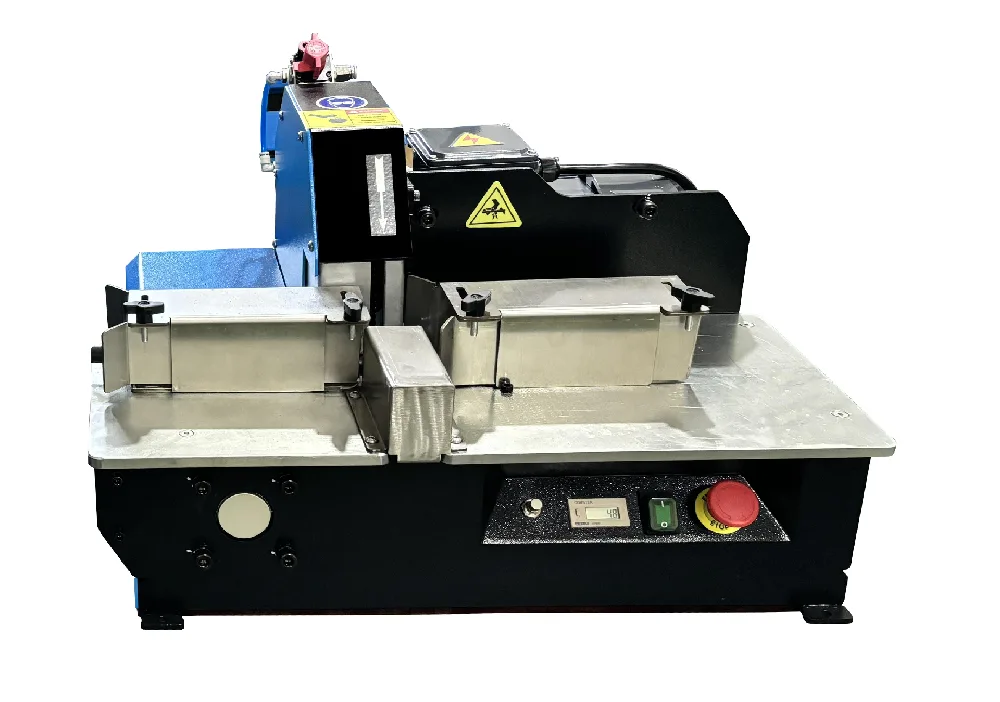
A hydraulic hose cutting machine makes clean, square cuts on hydraulic hose without fraying the wire reinforcement. Unlike angle grinders or saws, hose cutting machines produce a perpendicular cut face — critical for proper crimping.
Before dedicated hose cutters, shops used hacksaws and angle grinders: dangerous, messy, and rarely square. Modern CNC versions like the C300D automate cutting with programmable lengths and batch processing.
Why Square Cuts Matter
- Guillotine vs rotary: Guillotine cuts straight down. Rotary blades spin while cutting. Both produce square cuts — guillotine is more common for hydraulic hose.
- Square cut importance: A cut that’s even 5° off-square creates uneven ferrule compression during crimping, leading to leaks or blow-offs.
- Deburring: After cutting, wire ends are sharp. Always deburr and clean before crimping — metal particles inside the hose destroy hydraulic components downstream.
Source: Crimping — Wikipedia
How a Hose Cutting Machine Works
Measure and mark cut length → Position hose under blade → Activate (foot pedal or button) → Blade descends through hose → Remove cut piece → Deburr ends.
Key Parameters — 4 Representative Models
| Parameter | C250AC | C300 | C300D | C400F |
|---|---|---|---|---|
| Cut Range | up to 1″ 4SP | up to 2″ 4SP | up to 2″ 4SP | up to 2″ 4SP |
| Control | Manual | Foot pedal | CNC auto | Foot pedal |
| Blade Type | Guillotine | Guillotine | Rotary CNC | Guillotine |
| Motor | Manual | Electric | Electric + CNC | Pneumatic |
| Weight | 8 kg | 45 kg | 85 kg | 55 kg |
Three Cutting Types
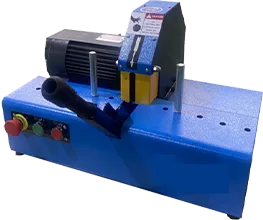
Bench Guillotine — C250AC
8 kg, manual operation. Best for low-volume shops and occasional cutting. Affordable entry point.
up to 1″8 kgManual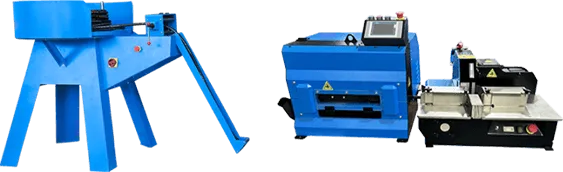
CNC Auto — C300D
Programmable cut length, automatic feed, batch processing. Best for production hose assembly.
up to 2″85 kgCNC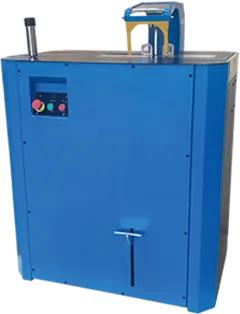
Floor Guillotine — C400F
Pneumatic foot pedal, fast cycle. Best for mid-volume workshops with air supply.
up to 2″55 kgPneumaticAll 8 models: C250AC, C300, C300A, C300D, C400F, C400A, C520A, C250CS (battery portable)
Cutting Problems — Solved
“How to clean hydraulic hoses after cutting?”
Blow out debris with compressed air. Foam projectile cleaners work well. The key is: cut → deburr → blow → crimp. Never skip cleaning — metal particles inside the hose destroy hydraulic components downstream.
Source: r/Hydraulics, 24 comments
“My cuts aren’t square — the hose moves during cutting”
Clamp the hose firmly before cutting. C300 and larger models have built-in clamps. For C250AC, hold the hose steady by hand (use gloves — wire ends are sharp).
Source: Common shop complaint
“Can I use an angle grinder instead of a hose cutter?”
You can, but it’s a bad idea: (1) Grinding creates heat that damages rubber, (2) Wire strands fray and whip dangerously, (3) The cut is rarely square, (4) Metal particles contaminate the hose interior. A proper hose cutter solves all four problems.
Source: Workshop safety guidelines
“Wire fraying at cut end”
Dull blade or wrong blade type. Replace the blade. Guillotine-style cutters produce less fraying than rotary saws. Tape the hose at the cut point before cutting with older machines.
Source: Baidu Baike — 扣管机操作
“Cutting 4SP/6SP hose is hard”
Multiple wire layers resist cutting. For 4SP, use C300 or larger. For 6SP, use C400F/C520A with pneumatic assist. Manual C250AC struggles above 1″ 2SP.
Source: Field experience
Hose Cutter vs Angle Grinder vs Hacksaw
| Factor | Hose Cutter | Angle Grinder | Hacksaw |
|---|---|---|---|
| Square Cut | ✅ Guaranteed | ❌ Rarely square | ❌ Depends on skill |
| Wire Fraying | ✅ Clean cut | ❌ Frays badly | ⚠️ Moderate |
| Safety | ✅ Enclosed blade | ❌ Open disc, sparks | ✅ Safe but slow |
| Speed | 5–10 sec | 10–20 sec | 2–5 min |
| Contamination | ✅ Minimal | ❌ Metal dust everywhere | ⚠️ Some particles |
| Cost | $200–3,000 | $50 | $10 |
Bottom line: An angle grinder is a safety hazard and produces inferior cuts. A dedicated hose cutter is a small investment that pays off from the first day. Pair it with your electric crimper for a complete workshop setup.
Where a Hydraulic Hose Cutting Machine Is Used
🔧 Hose Assembly Shops
Cut → deburr → clean → crimp workflow. A hydraulic hose cutting machine is the first station in every professional assembly shop.

🏭 Production Lines
C300D CNC auto-cut for batch processing. Programmable length, automatic feed, 100+ cuts/hour.
⛏️ Mining Workshops
C400F pneumatic for heavy R12/R13 hose. Fast cycle time with air-assist cutting.

🚢 Shipyards
Marine hydraulic hose assemblies. Clean cuts are critical for seawater-resistant fitting connections.
🏗️ Construction Service
Mobile service trucks carry a hydraulic hose cutting machine for on-site emergency repairs. Clean cuts mean reliable crimps.
🛢️ Oil & Gas
Safety-critical high-pressure hose. Clean square cuts prevent leak paths at the fitting interface.
How to Choose Your Hydraulic Hose Cutting Machine
Volume? <20/day → C300 manual | 20–100 → C400F pneumatic | 100+ → C300D CNC
Need portability? → C250CS (battery powered, pairs with portable crimpers)
Have air supply? → C400F (pneumatic foot pedal, fast cycle) | No air → C300A electric
Need batch cutting? → C300D (CNC, programmable length, auto-feed)
Related Guides
Hydraulic Hose Assembly Step by Step
Cut → deburr → clean → skive (if needed) → insert fitting → crimp → test. Complete workflow guide.
Read GuideHydraulic Hose Crimper Buying Guide
7 types compared — matching your cutter to the right crimper for a complete workshop.
Read GuideAlso see: Hose Skiving Machine Hub | Electric Hydraulic Crimper Hub
Frequently Asked Questions
Why can’t I just use an angle grinder?
Not square, wire fraying, dangerous sparks, contaminates the hose interior. A proper hose cutter solves all four problems for a small investment.
What’s the difference between C300 and C300D?
C300 = manual foot-pedal guillotine. C300D = CNC automatic with programmable cut length and batch processing.
Can I cut 6SP spiral hose?
C400F and C520A handle up to 2″ 4SP which includes some 6SP sizes. For heavy 6SP, use C520A with pneumatic assist.
How often do blades need replacing?
5,000–10,000 cuts depending on hose type. Wire-reinforced hose dulls blades faster. Keep spare blades in stock.
Do I need to deburr after cutting?
Always. Sharp wire ends are dangerous and can damage the fitting during assembly. Use a deburring tool or file.
Clean Square Cuts Matter
TRC hose cutting machines: 8 models from bench-top to CNC. The first step to a professional hose assembly.
Contact Us for Pricing →