Table of Contents
What Is a Brake Line Crimping Tool?
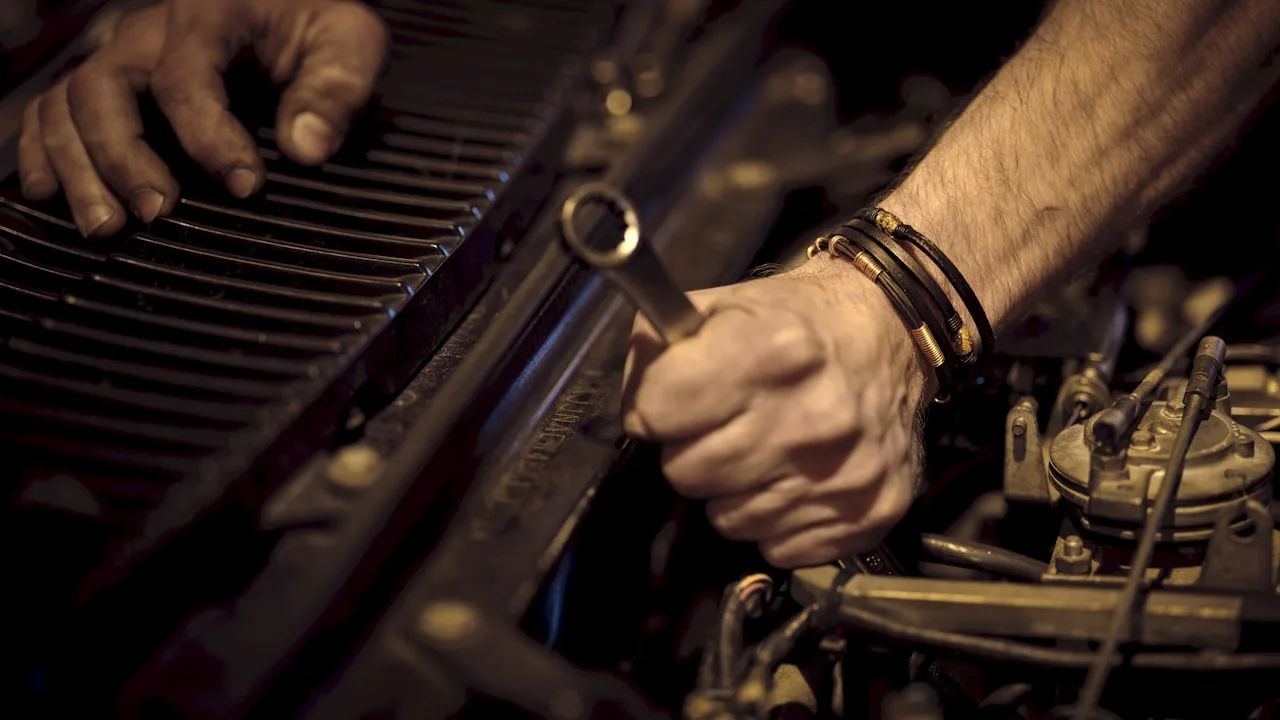
A brake line crimping tool permanently attaches metal ferrules to hydraulic brake hoses, creating a seal rated for 3000+ PSI. Unlike standard hydraulic hose crimping, brake applications demand tighter tolerances because a failure at 65 mph is not the same as a leak on a bench.
The tool compresses a ferrule around the hose and fitting using segmented dies. The result: a cold-formed bond that holds up to brake fluid pressure, heat cycles, and vibration. Shops that service automotive, heavy truck, and off-highway equipment all need one.
Not every hydraulic hose crimper doubles as a brake line crimper. Die geometry, tonnage range, and crimp diameter tolerance all matter.
Pick the wrong die and the ferrule either splits (overcrimp) or leaks (undercrimp). Neither is acceptable on a braking system. A dedicated hydraulic brake hose crimping tool gives you the tight ±0.03 mm tolerance that SAE J1401 demands.
SAE J1401: Why Brake Hose Crimping Has Stricter Rules
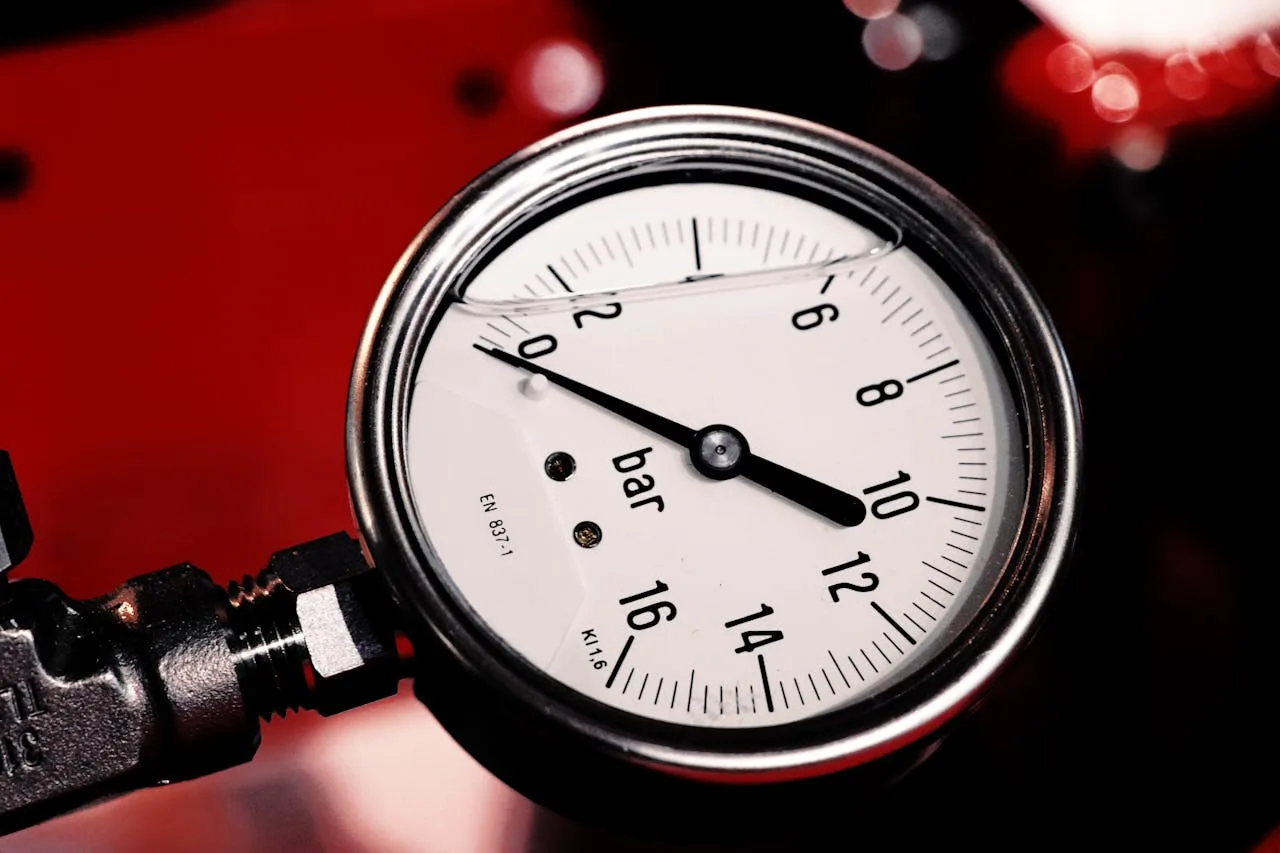
SAE J1401 is the North American standard for hydraulic brake hose assemblies. It defines construction, burst pressure (minimum 4000 PSI), and the proof test at 2000 PSI for 2 minutes with zero leakage.
What makes brake hose crimping different from general hydraulic hose crimping:
| Parameter | Brake Hose (SAE J1401) | General Hydraulic Hose |
|---|---|---|
| Working pressure | 3000 PSI typical | 225–6000 PSI range |
| Burst test minimum | 4000 PSI | 4× working pressure |
| Crimp tolerance | ±0.03 mm (safety-critical) | ±0.05 mm standard |
| Proof test | 2000 PSI / 2 min | Per manufacturer spec |
| Fluid compatibility | DOT 3/4/5.1 brake fluid | Hydraulic oil (ISO VG 32–68) |
| Temperature range | −40 °F to +250 °F | −40 °F to +212 °F typical |
That ±0.03 mm crimp tolerance is tighter than the general hydraulic standard (±0.05 mm). Per industry quality criteria, brake and steering hoses fall into the safety-critical category. Your caliper needs to read to 0.01 mm, and your crimper dies must be in good condition — no scoring, no wear beyond 0.02 mm.
Die Selection for Brake Hose Assemblies
Brake hose assemblies use smaller-diameter fittings than most industrial hydraulic crimper applications. Typical brake hose IDs range from 3/16″ to 3/8″. That means you need dies in the small-bore range.
| Brake Hose ID | Typical Fitting | Ferrule OD (before crimp) | Die Size |
|---|---|---|---|
| 3/16″ (4.8 mm) | M10 × 1.0 banjo | 11.0 mm | 10–12 mm range |
| 1/4″ (6.4 mm) | M10 × 1.0 / M12 × 1.5 | 13.5 mm | 12–14 mm range |
| 5/16″ (7.9 mm) | M12 × 1.5 / 3/8-24 | 15.5 mm | 14–16 mm range |
| 3/8″ (9.5 mm) | M14 × 1.5 / 7/16-24 | 18.0 mm | 16–19 mm range |
Match the die to the ferrule OD, not the hose ID. Ferrule OD varies by manufacturer — always measure with a vernier caliper before selecting the die.
A 0.1 mm error in die choice can be the difference between a pass and a leak at proof pressure. According to crimp specification references, incorrect die selection is the #1 cause of fitting blow-offs in hydraulic assemblies.
3 Inspection Checks After Every Brake Crimp
1. Crimp Diameter
Measure the crimped ferrule at three points (120° apart) using a vernier caliper. All three readings must fall within the manufacturer’s specified range — typically ±0.03 mm of the target. Record each measurement.
2. Visual Alignment
The ferrule must sit flush against the fitting body with no visible gap. Check for:
- Even die marks around the full circumference
- No exposed wire braid between ferrule edge and fitting
- No bulging or cracking on the ferrule surface
3. Pull Test (Destructive Sample)
For every batch, pull-test one assembly to verify the crimp holds beyond rated working pressure. The ISO 8434 pull-out force minimum is 1.5× the working pressure rating. If the ferrule slides, your die is worn or the spec is wrong.
Hydraulic vs Manual Brake Crimping Tools
Not every shop needs a full hydraulic unit. Here is the breakdown:
| Feature | Manual (Hand Pump) | Pneumatic | Electric Hydraulic |
|---|---|---|---|
| Tonnage | 10–30 ton | 20–80 ton | 60–200 ton |
| Crimp quality consistency | Operator-dependent | Good | Best (repeatable) |
| Brake hose suitability | ✅ Small bore only | ✅ Full range | ✅ Full range + heavy truck |
| Cycle time | 30–60 seconds | 8–12 seconds | 8–10 seconds |
| Best for | Low volume / field repair | Tire shops, auto service | High volume / fleet service |
| Price range | $150–500 | $500–2000 | $1500–5000 |
For most independent auto shops doing 5–10 brake lines per week, a manual portable hydraulic hose crimper in the 10–30 ton range covers 3/16″ to 3/8″ brake hoses. A brake hose crimper in this tonnage class is compact and affordable. Tire shops and fleet service centers will benefit from an electric hydraulic hose crimper for speed and repeatability.
Common Mistakes in Brake Hose Crimping
Wrong die size. The #1 cause of brake hose crimp failures.
Measure the ferrule OD, check the crimp spec sheet, then select the die. Skip any step and you are guessing with someone’s safety.
Reusing worn dies. Dies made from Cr12MoV or SKD11 tool steel at HRC 58–62 hardness eventually wear.
The die seat itself must also meet HRC 60 minimum — if both die and seat are worn, crimp accuracy drops below the 0.1 mm roundness/taper spec. Replace dies on schedule — not when failures start.
Tapered crimp. A zero-taper crimp means the front and rear of the ferrule compress equally. If one end is over-compressed, the inner tube cracks.
If under-compressed, the hose pulls out. Use a crimper with an 8-segment equal-division die seat for consistent results.
No proof test. SAE J1401 requires a 2000 PSI / 2-minute hold with zero leakage. If you skip this, you have no verification the crimp is safe.
Set up a simple hydrostatic test bench and test every assembly.
Mixing brake fluid with hydraulic oil. Brake hoses use DOT 3/4/5.1 fluid, not standard hydraulic oil. Contaminated brake fluid degrades the inner tube and reduces assembly life.
Which TRC Models Handle Brake Hoses
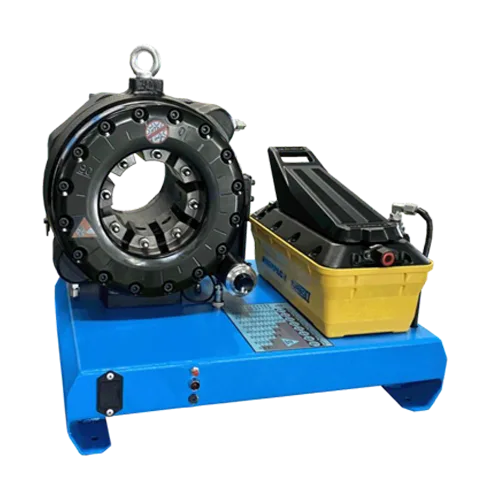
TRC offers several models suitable for brake hose crimping in the small-bore range:
| Model | Tonnage | Hose Range | Die Series | Best For |
|---|---|---|---|---|
| P16HP | 95 ton | 1/4″–1″ | P16 | Mobile brake line repair |
| P10HP | Manual | 3/16″–3/8″ | 10/13/16/17 | A/C and brake lines only |
| P20CS | 137 ton | 1/4″–1.5″ | P20 | Fleet service truck |
| US18 | 62 ton | 1/4″–1.25″ | US18 | Auto shop bench mount |
The P10HP is purpose-built for small-diameter work — A/C lines, fuel lines, and brake hoses up to 3/8″. The manual hydraulic hose crimper P16HP gives you more range and a hand pump that produces consistent pressure without electricity.
For high-volume fleet shops, the electric hydraulic hose crimper P20 or P32A series with CNC control delivers repeatable crimps at 8-second cycle times.
CNC models store 500+ crimp parameter sets — select the hose/fitting combination and the machine auto-calculates the stroke. Set the crimp spec once, and every assembly hits the same diameter within tolerance. Engineering machinery alone accounts for 62% of hydraulic fitting consumption globally, so the investment pays off for any shop serving that sector.
Need a Brake Line Crimping Tool?
TRC offers manual, pneumatic, and electric hydraulic crimpers rated for brake hose assemblies. CE certified, ±0.03 mm crimp tolerance.
FAQ
Can I use a regular hydraulic hose crimper for brake lines?
Yes, if the crimper has dies in the correct small-bore range (10–19 mm). Check that the die series matches your brake fitting ferrules. The crimp tolerance for brake assemblies (±0.03 mm) is tighter than general hydraulic work (±0.05 mm).
What SAE standard covers brake hose assemblies?
SAE J1401 covers hydraulic brake hose assemblies for passenger cars and light trucks. For heavy truck air brakes, refer to SAE J1402 and FMVSS 106.
How do I know which die size to use for a brake hose?
Measure the ferrule OD before crimping with a vernier caliper. Match the measured OD to the crimp specification sheet provided by the fitting manufacturer. The die size determines the final crimp diameter — always verify with a post-crimp measurement.
What pressure should a brake hose assembly hold after crimping?
Per SAE J1401: proof test at 2000 PSI for 2 minutes with zero leakage. Burst pressure must exceed 4000 PSI. Always test before installing on a vehicle.
Is a manual crimper enough for a small auto shop?
For shops doing fewer than 10 brake lines per week, a 10–30 ton manual crimper covers 3/16″ to 3/8″ hoses. For higher volume, an electric or pneumatic unit saves time and improves consistency.
What happens if a brake hose crimp fails?
Brake fluid loss, extended stopping distance, and potential vehicle collision. Brake hose crimping is safety-critical work. Always proof-test assemblies and replace worn dies on schedule.
Can I crimp brake lines with a bench vise?
No. A bench vise applies uneven pressure and cannot control crimp diameter. Use a proper crimper with matched dies.
The risk is not worth the tool savings.
Do TRC crimpers come with brake hose dies?
TRC crimpers include a standard die set. Small-bore dies for brake hose work (3/16″–3/8″) may need to be ordered separately depending on the model. Check the die set configuration for each hydraulic crimper model.
How often should I replace brake hose crimping dies?
Inspect dies every 5000 crimps. Replace when die cavity wear exceeds 0.02 mm from original spec. Cr12MoV tool steel at HRC 58–62 typically lasts 10,000–15,000 crimps in normal service.