Hyd Hose Crimper: Understanding 5 Industry Shorthand Terms and Equipment
Table of Contents
Hyd hose crimper is one of those search terms that tells you more about the buyer than the machine. When someone types “hyd hose crimper” into Google, they’re usually a mechanic, a shop foreman, or a field technician who’s heard the abbreviation on the job and is now looking for the right equipment. But what does “hyd” actually mean, and how does it affect what you buy?
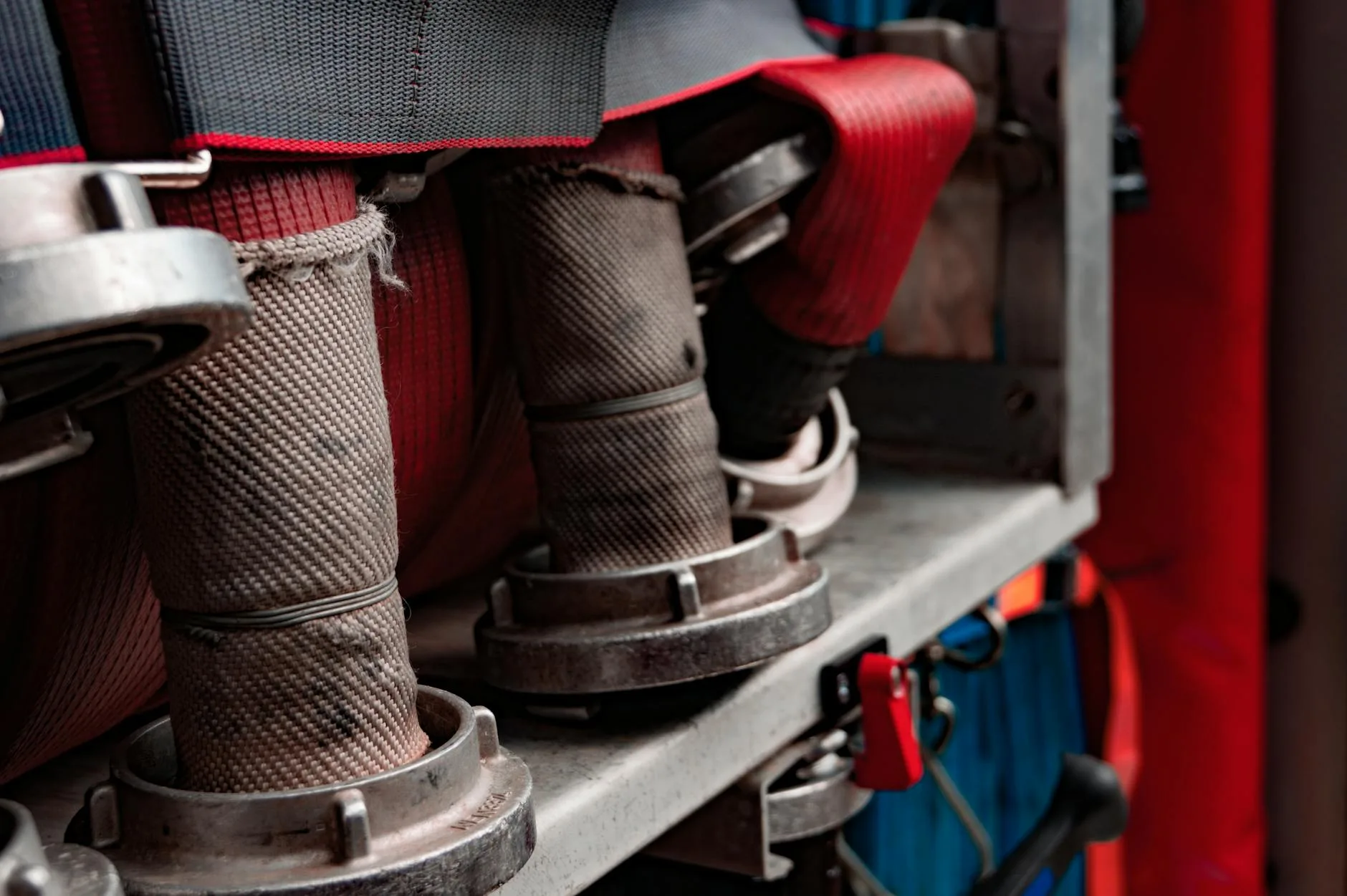
Different fitting standards require compatible dies on your hyd hose crimper
What Does “Hyd” Mean in Hydraulic Equipment?
“Hyd” is shorthand for “hydraulic.” That’s it. It shows up everywhere — on spec sheets, in part numbers, in conversation between technicians. You’ll see it in product names, on eBay listings, in forum posts on r/Hydraulics. The abbreviation saves time and space, and everyone in the trade knows what it means.
The word traces back to the Greek “hydor” (water), which also gives us “hydro” — another common abbreviation that shows up in search queries. Hydraulic machinery itself uses pressurized fluid to transmit force, a principle that dates back to Joseph Bramah’s hydraulic press in 1795. Today, hydraulic systems power everything from excavator arms to aircraft landing gear.
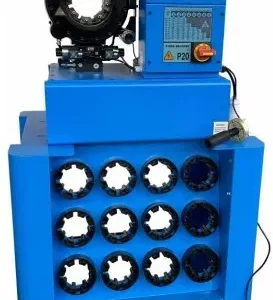
When you see “hyd hose crimper,” you’re looking at the shortened form of “hydraulic hose crimper” — a machine that permanently attaches fittings to hydraulic hoses using radial compression. The crimping process deforms a metal ferrule past its yield point so it grips the hose tightly, creating a leak-proof, high-pressure connection that holds under thousands of PSI.
Industry Abbreviations: Hyd, Hydro, SAE, DIN, and More
The hydraulic industry runs on abbreviations. If you’re shopping for a hyd hose crimper, you’ll hit these terms fast. Here’s what they mean:
Hyd vs. Hydro vs. Hydrolic
These three get mixed up constantly:
- Hyd — the standard abbreviation for “hydraulic” in technical contexts
- Hydro — a common variant, often used in casual speech or search queries (“hydro crimping tool”)
- Hydrolic — a misspelling of “hydraulic” that shows up in roughly 1,300 Google searches per month. Equipment suppliers sometimes optimize for this typo because real buyers type it.
SAE and DIN: The Two Big Standards
SAE (Society of Automotive Engineers) and DIN (Deutsches Institut für Normung) are the two dominant fitting standards:
- SAE fittings are common in North American equipment — Caterpillar, John Deere, and most US-made machinery use SAE standards
- DIN fittings dominate European equipment — Sennebogen, Liebherr, and many Chinese manufacturers follow DIN specs
Your hyd hose crimper needs compatible dies for whichever standard you’re working with. Most crimpers support both, but you need the right die set for each fitting type. As one Reddit user on r/Hydraulics discovered when starting a hose repair business, different equipment brands use completely different fitting types — Takeuchi runs BSPP, Komatsu has its own standard, and Cat/Deere use ORFS. You need dies for all of them.
Other Abbreviations You’ll Encounter
- JIC — Joint Industry Conference (37° flare fittings, very common in North America)
- ORFS — O-Ring Face Seal (used on Cat and Deere equipment)
- BSP/BSPP — British Standard Pipe (common in UK, Australia, and some Asian equipment)
- 4SP/6SP — 4-wire or 6-wire spiral hose specifications
- R13 — High-pressure mining hose standard
Types of Hyd Hose Crimpers
Not all hyd hose crimpers work the same way. The right type depends on your workflow, hose sizes, and where you work.
Die selection is critical — matching dies to your hose and fitting specifications determines crimp quality
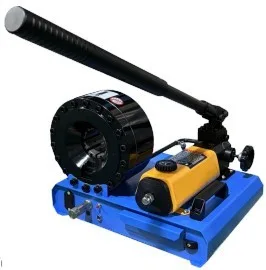
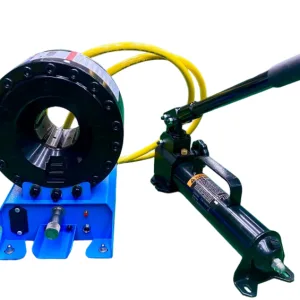
Manual and Hand-Pump Crimpers
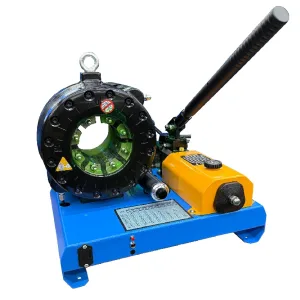
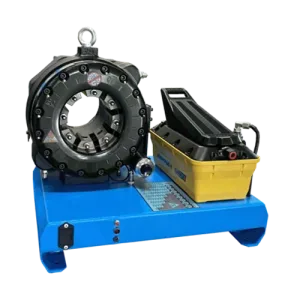
These run on hand-operated hydraulic pumps. No electricity needed. A manual model like the TRC P16HP delivers 95 tons of crimping force and handles up to 1-inch 2-wire hose. At 34 kg, one person can carry it to the job. The trade-off: cycle times run around 10 seconds per crimp, and you’re pumping by hand, which gets tiring on a busy day.
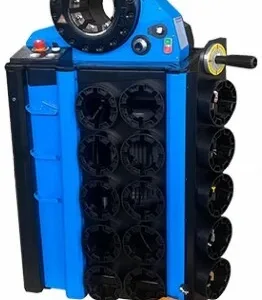
Electric Workshop Crimpers
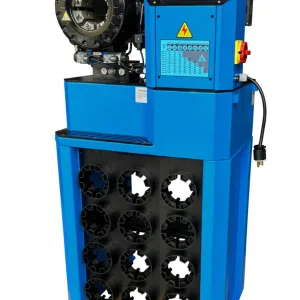
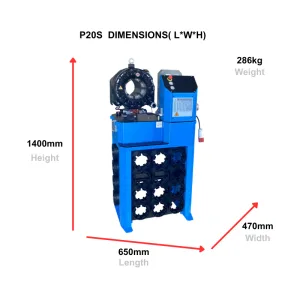
Electric crimpers plug into standard power (110–240V or 380V) and handle higher volumes. The TRC P32, for example, delivers 200 tons and handles up to 2-inch 4-spiral hose — enough for most industrial applications from construction to mining. These machines cycle in about 10 seconds and are built for continuous workshop production.
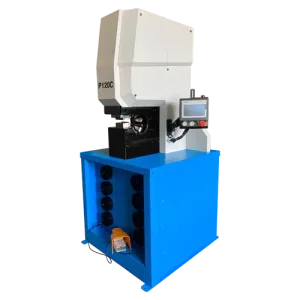
CNC Crimping Machines
CNC models add digital control. You set crimp diameter, hold time, and pressure on a screen. The machine stores settings for repeat jobs, keeping batch production consistent. Crimp accuracy hits ±0.03mm on closed-head CNC models — tight enough that every hose in a production run is identical. If you’re doing 100+ crimps per day with multiple hose types, CNC pays for itself in reduced scrap and comebacks.
Mobile Service Crimpers
These run on 12V car batteries or portable power packs. Models like the P18CS and P20CS are built for service trucks — you drive to the job site, hook up to the vehicle battery, and crimp hoses on the spot. For mobile hydraulic repair businesses, this is the core tool. One field service call typically runs $150–$300, and 24-hour response commands a 20–30% premium.
Choosing the Right Hyd Hose Crimper for Your Needs
Picking a hyd hose crimper comes down to three practical questions:
1. What’s the largest hose you need to crimp?
Hose size determines the tonnage you need. A 1/2-inch hose needs far less force than a 2-inch 4-spiral hose. Match your crimper’s maximum capacity to your actual work. Buying a 200-ton machine for 3/8-inch hoses wastes money, but underbuying means you can’t handle the jobs that pay the most.
| Hose Size | Typical Application | Recommended Tonnage |
|---|---|---|
| 1/4″ – 3/4″ | Light equipment, automotive | 60–95 ton |
| 1″ – 1-1/2″ | Construction, agriculture | 110–137 ton |
| 2″ – 2-1/2″ | Mining, industrial, oil & gas | 200–320 ton |
| 3″ – 6″ | Mining, marine, heavy industrial | 500–830 ton |
2. Where do you work?
Workshop only? Go electric or CNC. Split between field and workshop? A manual hand-pump model covers both. Running a service truck? You need 12V battery power. The location question is non-negotiable — if you can’t plug in, you need a machine that doesn’t require it.
3. How many crimps per day?
A shop doing 50+ crimps daily needs electric or CNC speed. A mobile repair technician doing 5–10 crimps per service call can work with a manual model. Volume drives the ROI: a $3,000 CNC machine that saves 5 seconds per crimp pays for itself at scale. For a low-volume user doing fewer than 10 hoses per month, even a basic hydraulic crimping tool handles the job.
One thing experienced technicians consistently point out: don’t cut corners on dies. Die quality directly affects crimp quality. A mismatched or worn die produces inconsistent crimps, which means leaks, comebacks, and potential liability. Always match dies to your fitting and hose specifications, and replace them when they show wear.
Common Search Terms and What Buyers Really Want
The search data around hyd hose crimpers tells an interesting story. Here are the most common search variations and what they reveal about buyer intent:
| Search Term | Monthly Volume | What It Tells Us |
|---|---|---|
| hyd hose crimper | 390 | Direct, experienced buyer |
| hyd hose machine | 260 | Shop owner looking for equipment |
| hyd hose crimping machine | 210 | More formal search, likely purchasing |
| hyd hose press | 170 | Alternative terminology |
| hyd hose crimping tool | 140 | Smaller-scale buyer or occasional user |
| hydro crimping tool | 260 | Using “hydro” variant |
| hydrolic hose crimper | 540 | Misspelling — real buyer, not a spec writer |
The “hydrolic” misspelling is worth noting. It accounts for the highest single search volume in this group. People typing “hydrolic hose crimper” aren’t engineers writing specs — they’re mechanics, shop owners, and field technicians who need a solution today. Their search intent is commercial: they want to buy, compare, or find information fast.
What all these searches share: the buyer needs to crimp hydraulic hoses and is looking for a reliable machine to do it. The abbreviation they use doesn’t change what the equipment does. A hyd hose crimper, a hydro crimping tool, and a hydraulic hose crimping machine all describe the same category of equipment.
Bottom Line
Understanding industry shorthand isn’t just about vocabulary. It helps you search smarter, compare equipment accurately, and communicate with suppliers who use these abbreviations daily. Whether you call it a hyd hose crimper, a hydro press, or something else entirely, the machine you need depends on three things: your hose sizes, your work location, and your daily volume.
For more on hydraulic hose crimping equipment, check out our hydraulic hose crimper guide and our breakdown of portable hydraulic hose crimpers.