Table of Contents
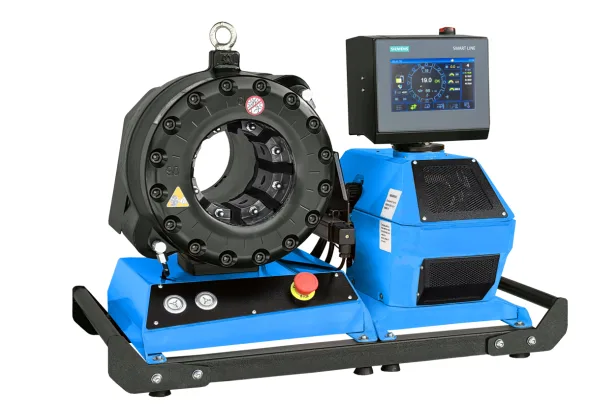
An electric hydraulic hose crimper replaces hand pumping with a motor-driven hydraulic pump. For workshops producing more than 10 assemblies per day, the switch pays for itself within months. But it’s not the right call for every shop. Here’s an honest breakdown from workshops that made the upgrade — and one that went back to manual.
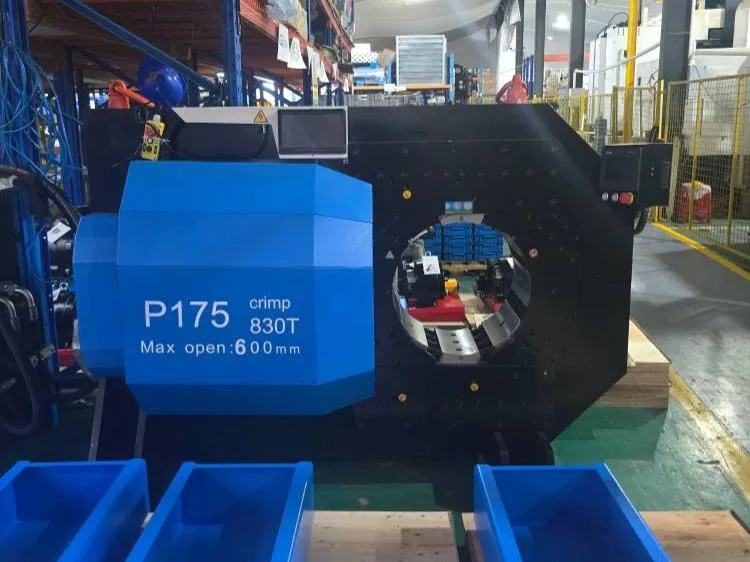
Professional crimping machines use a dual hydraulic circuit — one for piston advance/retract, one for die open/close. This design ensures smooth die movement and fast return, preventing the die lock-up that can occur with single-circuit spring-return systems. The result is zero-taper crimping: consistent compression at both the front and rear of the ferrule.
Why Workshops Switch to Electric
The core difference is simple: a manual hydraulic hose crimper uses a hand pump to build pressure. An electric one uses a motor. That sounds minor, but the effects cascade through your entire production.
Manual crimpers work fine at low volume. But once you’re past 15-20 assemblies per day, the hand pump becomes a bottleneck. Operators slow down, skip caliper checks, and quality drops. That’s when shops start looking at electric models. According to SAE J517 guidelines, consistent crimp pressure is a key factor in assembly reliability.
Reason 1: Consistency — Every Crimp Identical
A hand pump depends on the operator’s feel. One operator pumps 12 strokes, another pumps 14. The crimp diameter varies by 0.2-0.4 mm between operators — enough to be out of spec on high-pressure hose assemblies.
An electric hydraulic hose crimper builds the same pressure every cycle. The motor drives the pump to a preset pressure or position, then auto-retracts. The result:
- ±0.03 mm crimp diameter repeatability (compared to ±0.15 mm manual)
- No operator-to-operator variation
- First-pass yield above 99% (vs 90-95% manual)
One shop in Poland reported their rejection rate dropped from 4 assemblies per 100 to less than 1 after switching from a P16HP hand pump to a P32A electric crimper. That’s real money saved on fittings and hose.
Reason 2: Speed — 3x Faster Cycle Time
Manual crimp cycle: pump 15-25 strokes, hold, release. Total time: 40-60 seconds per crimp, plus operator fatigue after 30 assemblies. The difference is documented in SAE standards literature — cycle time directly affects production quality.
Electric crimp cycle: press the button, motor runs, auto-stop. Total time: 8-12 seconds per crimp. No fatigue buildup.
| Metric | Manual (P16HP) | Electric (P32A) | Difference |
|---|---|---|---|
| Cycle time | 45 seconds | 10 seconds | 4.5x faster |
| Assemblies/hour | 15-20 | 50-60 | 3x throughput |
| Operator fatigue onset | After 25-30 crimps | Minimal | — |
| Caliper check compliance | Drops after 20 crimps | Consistent all day | — |
For a shop doing 50 assemblies per day, an electric crimper saves 2-3 hours of labor. At $25/hour fully loaded, that’s $50-75 per day, or $1,000-1,500 per month.
Reason 3: Less Operator Fatigue
Hand pumping a P20HP at 137 tons takes real effort. After 30 crimps, most operators start cutting corners — fewer pump strokes, skipped caliper checks, faster die changes without verification. It’s not laziness. It’s physics.
Electric crimpers eliminate this variable entirely. The operator loads the fitting, presses a pedal or button, and the machine does the work. This frees the operator to focus on the quality checks that actually matter: ferrule alignment, hose insertion depth, and post-crimp measurement. The principle of hydraulic force multiplication remains the same — the motor just replaces human effort.


Reason 4: CNC Data Logging and Traceability
Mid-range CNC models like the TRC P32D store crimp parameters for every assembly. That data matters when your customer asks for traceability documentation — increasingly common in mining, marine, and oil & gas.
CNC features that justify the upgrade:
- Store 500+ die profiles — no more paper charts, touchscreen selection
- Auto-calculate target diameter from hose/fitting input
- Log every crimp with timestamp, diameter, and operator ID
- Reject out-of-spec crimps automatically
- Micrometer positioning: one full turn = 1mm adjustment, one mark = 0.01mm
For shops supplying to mining operations or oil & gas, this traceability isn’t optional — it’s a contract requirement. Manual crimpers can’t provide it.
The 1 Reason NOT to Switch
Field work without power. If your primary use case is mobile service trucks, remote construction sites, or agricultural field repairs, you need a crimper that works without 110V/220V.
Electric crimpers need power. A generator works, but adds weight and noise to the truck. For pure field service, a manual crimper like the P16HP or a battery-powered model like the P18CS is the better tool.
One service company in Texas bought an electric bench crimper for their truck, then added a P16HP for remote calls within 6 months. They use the electric unit 70% of the time (shop and powered job sites) and the manual for the other 30%. Both tools earn their keep. For detailed guidance, see this SAE standards guide on matching tools to hose types.

Manual vs Electric: Side-by-Side
| Feature | Manual (P16HP) | Electric (P32A) |
|---|---|---|
| Power source | Hand pump | 110-380V motor |
| Max tonnage | 95 ton | 200 ton |
| Hose range | Up to 1″ 2SP | Up to 2″ 4SP |
| Cycle time | 40-60 sec | 10 sec |
| Weight | 34 kg | 185 kg |
| Portability | High (carry to site) | Low (bench mounted) |
| CNC option | No | Yes (P32D model) |
| Price range | $ | $$ |
| Best for | Field repair, low volume | Workshop, daily production |
Which TRC Models Fit Your Shop
| Model | Tonnage | Hose Range | Best For |
|---|---|---|---|
| P20 | 137 ton | 1-1/2″ 4SP | Small workshop, budget-conscious |
| P22 | 137 ton | 1-1/2″ 4SP | Workshop wanting auto-retract |
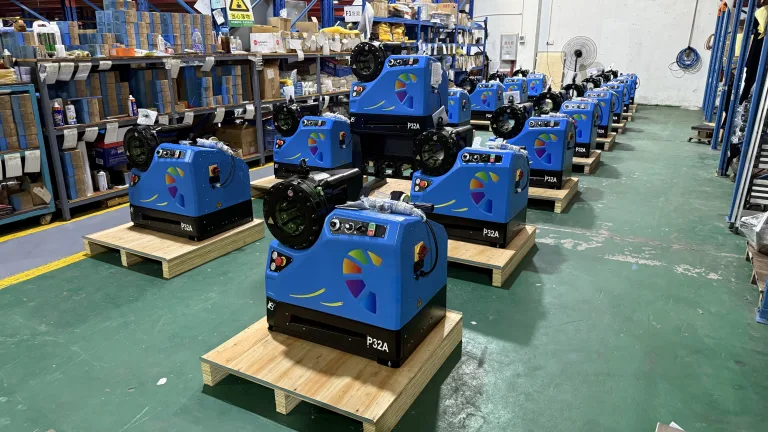
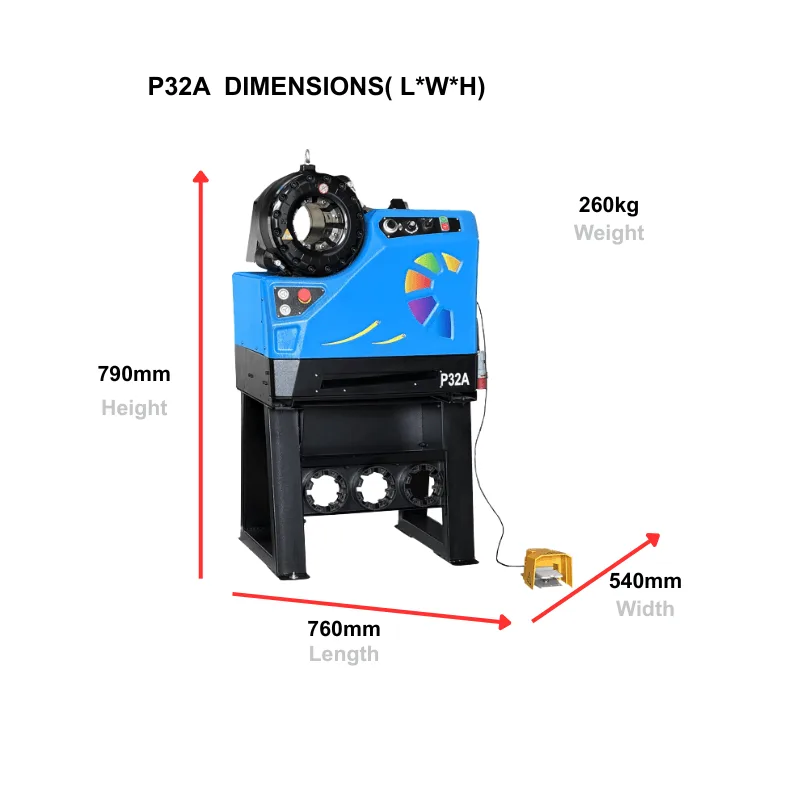
| P32A | 200 ton | 2″ 4SP | Most popular, best value |
| P32D | 200 ton | 2″ 4SP | CNC control, data logging |
| TRC120L | 245 ton | 2″ R13 | High volume, large bore |
The P32A hits the sweet spot for most shops: 200 tons covers 90% of common hose sizes, the price is competitive, and the included die set handles -6 through -51 out of the box. According to hydraulic hose specifications, most workshop assemblies fall in the -6 to -32 range, well within the P32A’s capacity.
Ready to Upgrade Your Workshop?
TRCrimp electric hydraulic hose crimpers ship with matched die sets, crimp charts, and a 3-year warranty. 48-hour spare parts shipping worldwide.
FAQ
What voltage do electric hydraulic hose crimpers use?
Most models support 110V single-phase through 380V three-phase. The TRC P32A, for example, runs on 110-240V single-phase or 380V three-phase, making it compatible worldwide. Check the motor plate before ordering.
Can an electric crimper work on a service truck?
It can, if the truck has an inverter or generator. But it adds complexity. For truck-mounted use, consider the P20CS battery crimper instead — it runs off the truck’s 12V battery.
How long does the motor last on an electric crimper?
Industrial-grade motors in TRC crimpers are rated for 10,000+ hours of operation. At 8 hours per day, 5 days per week, that’s over 4 years of continuous use before any motor service is needed.
Is CNC worth the extra cost over a standard electric model?
If you need traceability logging or switch between 20+ hose/fitting combinations daily, yes. If you crimp the same 5-6 assemblies all day, a standard electric model like the P32A is sufficient.
What maintenance does an electric crimper need?
Change the hydraulic oil every 2,000 hours (or annually). Check die wear every 5,000 crimps. Clean the die seat monthly. Beyond that, these machines are remarkably low-maintenance — one reason workshops prefer them over manual. For more on hydraulic system maintenance, see this overview of hydraulic hose standards and construction.
How much does an electric hydraulic hose crimper cost compared to manual?
An electric model typically costs 2-3x the price of an equivalent manual unit. But with 3x throughput, lower rejection rates, and zero operator fatigue, most shops recoup the difference in 3-6 months at 30+ assemblies per day.
Can I use my existing dies in an electric crimper?
If you’re upgrading within the same die series (e.g., P16 dies to a P16-based electric machine), yes. If you’re moving from a smaller to larger machine (P16 to P32 series), you’ll need new dies. The die series must match the machine’s master die seat.
Do I need special electrical wiring for an electric crimper?
Most models under 3kW run on standard 110V or 220V outlets. Models above 5kW with 380V motors may require an electrician to install a dedicated circuit. Check the spec sheet for your model’s power requirements.