Starting a Hydraulic Hose Business: Equipment Checklist for 2026
Hydraulic hose business equipment is the foundation of every profitable hose assembly shop. Without the right crimper, cutter, and skiver, you cannot produce reliable assemblies that hold pressure under real working conditions. The difference between a shop that thrives and one that struggles comes down to equipment choices made in the first 90 days.
This guide walks through every piece of gear you need to launch a hose assembly operation — from a bare-bones $5,000 mobile setup to a full $50,000 production workshop. We cover real costs, specific models, training paths, and the customer segments that generate the fastest revenue. Every recommendation comes from TRC’s experience supplying hydraulic crimping equipment to startups and established shops in over 50 countries.
Market Opportunity: Why Hose Assembly Is Profitable
Hose assemblies must comply with SAE J517 (hose construction and pressure ratings) and ISO 8434 (fitting connection dimensions).
Every piece of heavy machinery on earth runs on fluid power — excavators, combine harvesters, mining trucks, garbage compactors, logging forwarders. Each of those machines has 15 to 60 hydraulic hoses. And every one of those hoses will eventually burst, leak, or wear out.
The average hydraulic hose lasts 1 to 2 years in normal service. On a construction site with 30 machines, that means 50 to 100 hose replacements per year on that single site.
A mining operation with 100 machines? That’s 300 to 600 assemblies annually. The demand is constant, recession-resistant, and local.
Nobody ships a broken excavator 500 miles to replace a hose. They call someone with the right hydraulic hose business equipment and get it fixed on site.
A single hose assembly sells for $25 to $200 depending on size, length, and fittings. Your material cost runs $8 to $60. Crimping time: 2 to 5 minutes per assembly.
The math is straightforward — a well-equipped mobile operator can generate $1,500 to $3,000 per day in revenue once established.
The barrier to entry is low compared to other trades. You do not need a $100,000 CNC machine or a commercial lease. A crimper, a cutter, a box of fittings, and a truck bed can generate revenue from day one.
That makes a hydraulic hose business one of the fastest paths to positive cash flow in the industrial service sector.
Essential Hydraulic Hose Business Equipment List
Four machines form the core of any hose assembly operation. You can start with three and add the fourth later, but long-term you need all four to handle the full range of jobs that walk through the door.
1. Hydraulic Hose Crimper
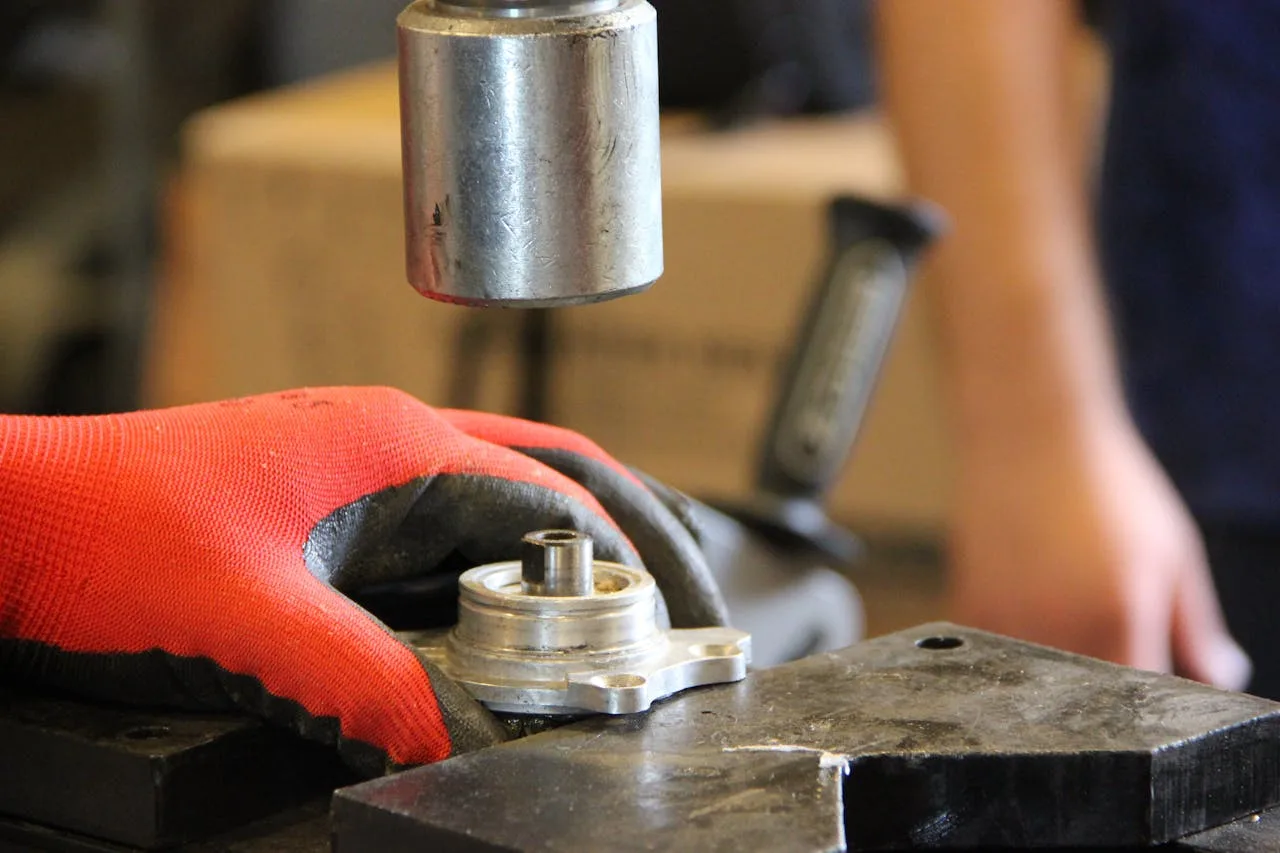
This is the money machine. The crimper applies radial force to compress a metal ferrule onto the hose and fitting, creating a permanent, leak-proof seal. Without a crimper, you have no business.
Key specs that matter: tonnage determines the maximum hose size you can crimp. A 95-ton unit handles up to 1-inch R2 / 1-1/4 R1. A 200-ton unit covers up to 2-inch 4SP — that’s the full industrial range.
Hose range and die availability are just as important as raw power. A crimper that only covers 1/4 to 1 inch will turn away half your potential customers.
For a new business, a 200-ton electric crimper like the TRC-P32 covers the widest range: 1/4 inch through 2 inch 4SP, with 12 die sets included. It runs on standard 220V single-phase power and crimps a typical 1/2-inch assembly in under 10 seconds.
2. Hose Cutting Machine
You cannot use a hacksaw on wire-braid or spiral-wound hydraulic hose. The steel reinforcement shreds blades in minutes and leaves jagged edges that damage fittings during assembly. A proper cutting machine uses a rotating abrasive blade that slices clean through steel reinforcement.
The TRC-C300 is the standard choice for startups. It cuts up to 2-inch 4SP hose, accepts multiple blade types, and runs on 110V or 220V. Cut time for a 1-inch R2 hose: roughly 15 seconds.
Clean, square cuts every time — non-negotiable for consistent crimp quality.
Skip the cutting machine and you will waste time, ruin hose ends, and produce assemblies that fail pressure tests. It pays for itself within the first month of operation.
3. Hose Skiving Machine
Skiving removes the outer rubber cover from the hose end so the ferrule contacts the steel reinforcement directly. Not all fittings require skiving — many one-piece fittings crimp directly over the rubber. But for certain hose types (4SH, 4SP, and some R12/R13) and many European-style fittings, skiving is mandatory.
The TRC-SH50 handles both internal and external skiving from 1/4 to 2 inch. It’s a benchtop unit that weighs about 40 kg and runs on standard power. For budget setups, you can skive by hand with a utility knife for the first few months, but production volume demands a machine.
4. Pressure Test Bench
A test bench pressurizes completed assemblies to verify they hold rated pressure before delivery. This is your quality control checkpoint — the step that separates professional shops from backyard operators.
Test benches range from simple hand-pump units ($300) to automated CNC testers ($5,000+). For a startup, a manual hydrostatic tester rated to 20,000 PSI handles 95% of your assemblies. You fill the hose with water, pump to test pressure (typically 2× working pressure), hold for 30 seconds, and inspect for leaks.
Minimum startup list: Crimper + cutter + die sets + basic fitting inventory. Add skiver and test bench in months 2-3 as revenue allows. Do not skip the crimper or cutter — those two are non-negotiable from day one.
Hydraulic Hose Business Equipment: 3 Budget Tiers
Three realistic budgets, three different business models. Pick the one that matches your available capital and target market.
Tier 1: Mobile Field Service — $5,000
Target: On-site repairs for construction and agriculture. You drive to the customer, replace blown hoses on their equipment, collect payment.
| Item | Model | Est. Cost |
|---|---|---|
| Manual Crimper | P16HP (95T) | $800 – $1,200 |
| Cutting Tool | Portable hose cutter | $150 – $300 |
| Die Sets (4 sizes) | Standard die set | $200 – $400 |
| Fittings Inventory | 200 pcs mixed JIC/ORFS | $1,500 – $2,000 |
| Hose Inventory | 10 coils (1/4″ – 1″) | $800 – $1,200 |
| Hand Tools + Test Kit | Wrenches, tape, hand pump tester | $300 – $500 |
| Total | $3,750 – $5,600 |
Limits: 1-inch max hose size. Manual pumping means 60-90 seconds per crimp. Fine for 5-15 assemblies per day, but not for production volume.
Tier 2: Workshop Setup — $15,000
Target: Fixed location, walk-in customers, small fleet service contracts. This is the sweet spot for most new businesses.
| Item | Model | Est. Cost |
|---|---|---|
| Electric Crimper | P32 (200T) | $2,500 – $3,500 |
| Cutting Machine | C300 | $600 – $900 |
| Skiving Machine | SH50 | $500 – $800 |
| Test Bench | Manual hydrostatic (20K PSI) | $300 – $500 |
| Complete Die Sets | 12 sizes (1/4″ – 2″) | $600 – $1,000 |
| Fittings Inventory | 500 pcs mixed types | $3,500 – $4,500 |
| Hose Inventory | 20 coils (1/4″ – 2″) | $2,000 – $3,000 |
| Bench, Shelving, Tools | Assembly bench + hand tools | $1,000 – $1,500 |
| Total | $11,000 – $15,700 |
This setup handles 20-40 assemblies per day comfortably. The 200-ton crimper covers the full industrial range up to 2-inch 4SP. Add a P32A with auto-return if you want faster cycle times and a built-in die cabinet.
Tier 3: Full Production Shop — $50,000
Target: High-volume production, mining contracts, OEM supply agreements, mobile service fleet.
| Item | Model | Est. Cost |
|---|---|---|
| CNC Crimper | P32D (200T CNC) | $4,500 – $6,000 |
| Backup Crimper | P32 or P32A | $2,500 – $3,500 |
| Production Cutter | C300D (CNC) | $1,500 – $2,200 |
| Skiving Machine | SH50 | $500 – $800 |
| Test Bench | CNC auto tester (30K PSI) | $3,000 – $5,000 |
| All Die Sets + Accessories | Full range + adapters | $1,500 – $2,500 |
| Fittings Inventory | 2,000+ pcs full range | $12,000 – $16,000 |
| Hose Inventory | 50+ coils all sizes | $8,000 – $12,000 |
| Mobile Service Kit | Manual crimper + tools | $1,500 – $2,000 |
| Shop Setup | Bench, racks, compressor, safety | $3,000 – $5,000 |
| Total | $38,000 – $55,000 |
The CNC crimper stores crimp specifications for each fitting-hose combination — no manual die selection, no lookup charts, no operator error. This is the setup for shops running 50-100+ assemblies per day and serving OEM or mining contracts where every assembly needs traceability.
TRC Business Starter Packages
TRC offers pre-configured equipment bundles designed for new hose businesses. These packages combine the machines, dies, and accessories you need into a single shipment, which cuts lead time and avoids compatibility issues between mismatched components.
Starter Package 1: Mobile Field Kit
- Crimper: P16HP manual (95-ton) — covers 1/4″ to 1″ R2
- Cutter: Portable hand-held cutting tool
- Dies: 6 die sets for common sizes
- Best for: Single operator, mobile service truck, farm and construction repair
Starter Package 2: Workshop Standard
- Crimper: P32 electric (200-ton) — covers 1/4″ to 2″ 4SP
- Cutter: C300 benchtop cutting machine
- Skiver: S50 internal skiving machine
- Dies: 12 die sets included with P32
- Best for: Fixed workshop, 20-40 assemblies/day, service contracts
Starter Package 3: Production Plus
- Crimper: P32D CNC (200-ton) — digital control, auto-return, stored programs
- Cutter: C300D CNC automatic cutting machine
- Skiver: SH50 internal + external skiving machine
- Best for: High-volume shops, mining service, OEM suppliers
Why buy a package instead of sourcing individually? Compatibility. The dies match the crimper. The cutter handles the full hose range of the crimper.
One shipment, one supplier, one warranty point. For a new business, this removes guesswork and potential downtime.
Training and Certification Requirements
You do not need a license or degree to crimp hydraulic hoses. But you do need proper training, because a failed crimp can cause injury, equipment damage, and liability claims that shut down a new business fast.
Manufacturer Training
Most crimper manufacturers provide setup and operation training at the time of purchase. TRC includes a training session with every production crimper — either in-person at the distributor or via video call.
This covers machine setup, die selection, crimp procedure, and basic troubleshooting. Plan on 4 to 8 hours for initial training.
Industry Certifications
Two certifications carry weight with commercial customers and insurance companies:
- ISO 17162:2017 — Hydraulic fluid power — Hose assemblies — Requirements and test methods. This standard defines assembly procedures, testing requirements, and quality documentation. Having it signals professional capability.
- NFPA/NAHAD Hose Safety Institute — Offers a hose assembly certification program covering proper assembly techniques, testing, and safety. Well-recognized in North America.
Neither certification is legally required. But mining companies, government contractors, and large fleet operators often require proof of training before awarding service contracts. Getting certified opens doors to higher-paying customers.
Hands-On Practice
Plan to crimp 50 to 100 practice assemblies before taking on paid work. Start with easy sizes (3/8″, 1/2″) and work up to larger diameters. Cut each practice assembly open after crimping to inspect the ferrule compression pattern.
A proper crimp shows uniform compression around the full circumference with no gaps between ferrule and hose.
Use a caliper to measure crimped diameter and compare against the manufacturer’s specification chart. The tolerance is tight — typically ±0.1 mm.
If you are consistently outside tolerance, adjust your machine settings and die selection before doing customer work.
Finding Customers: Construction, Mining, Agriculture
Three industries generate the bulk of hose assembly demand. Each has different buying patterns, price sensitivity, and service expectations.
Construction
The largest and most accessible market. Construction sites run excavators, backhoes, loaders, cranes, concrete pumps — all hydraulic. Hose failures cause immediate downtime, which means the contractor needs you now, not next week.
How to get started: Visit active construction sites between 7-9 AM (before the shift gets busy) or 4-5 PM (end of day). Ask for the equipment manager or shop foreman. Offer to measure and quote the hoses on one machine for free.
Once they see your work quality and turnaround speed, you get the call every time a hose blows.
Construction customers pay $30 to $150 per assembly. A single site with 10 machines generates $15,000 to $25,000 per year in hose service revenue. Get 5 sites and you have a solid business.
Mining
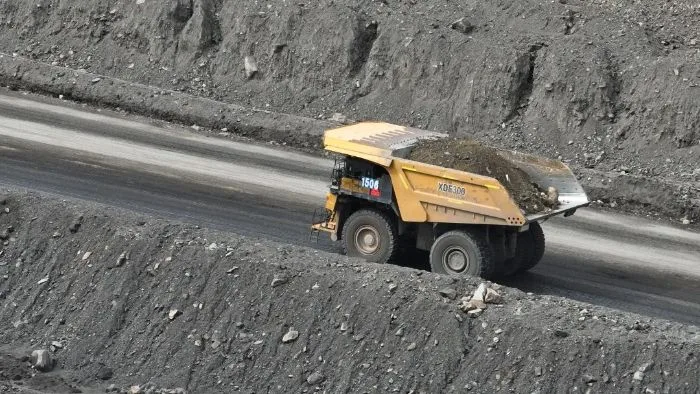
Mining is the highest-volume, highest-margin segment — but harder to enter. Mining operations run 24/7 with equipment that has 40-80 hydraulic hoses per machine. A mine with 50 pieces of equipment might need 500+ assemblies per year.
How to get started: Mining companies require vendors to meet safety and quality standards. You need proper crimping equipment, documented procedures, and ideally ISO certification. Start by contacting the maintenance manager at local quarries and sand-and-gravel operations — these are smaller mining operations with less bureaucracy than a major coal or gold mine.
Mining customers pay premium rates ($50-$300 per assembly) because downtime costs thousands per hour. A single mining contract can generate $50,000+ per year.
Agriculture
Farms, ranches, and agricultural contractors run tractors, combines, sprayers, and irrigation systems — all hydraulic. The seasonality is different from construction: demand spikes during planting (spring) and harvest (fall) and drops in winter.
How to get started: Contact local equipment dealers (John Deere, Case IH, AGCO) and offer mobile hose service for their customers. Dealers often do not have in-house hose capability and will refer customers to you. Also visit grain elevators, feed lots, and dairy operations — they have hydraulic equipment and need fast repairs.
Agriculture customers are price-sensitive but loyal. Once you service a farmer’s equipment, they call you for life. Revenue per customer is lower ($500-$3,000 per year) but the volume of customers can be high in rural areas.
Other Markets Worth Pursuing
- Trucking and logistics: Hydraulic tail lifts, dump trailers, refrigeration units
- Waste management: Garbage trucks, compactors — constant hose failures
- Marine: Boat hydraulic systems, steering, winches — requires stainless fittings
- Manufacturing: Press brakes, injection molding machines, hydraulic presses
- Forestry: Log loaders, harvesters, forwarders — extreme hose wear in rough conditions
Each of these segments has its own fitting standards and hose types. Start with one or two markets, learn the specific requirements, then expand. Trying to serve every industry from day one spreads your inventory thin and your expertise thinner.
Customer acquisition tip: The fastest path to your first 10 customers is parking your truck at a construction site entrance at 6:30 AM with a “Hydraulic Hose Service — Mobile” sign. Carry 20 common assemblies pre-made. When a hose blows and the foreman sees you standing there ready to fix it in 15 minutes, you have a customer for life.
FAQ
How much does it cost to start a hydraulic hose business?
A mobile field service setup costs $3,500 to $5,500 for a manual crimper, cutting tool, basic die sets, and initial fitting inventory. A fixed workshop with electric crimper and cutting machine runs $11,000 to $16,000. A full production shop with CNC equipment and deep inventory runs $38,000 to $55,000. Most new businesses start at the mobile or workshop level and scale up from cash flow.
Do I need a license to crimp hydraulic hoses?
No government license is required in most countries. However, many commercial customers (mining companies, government contractors, large fleet operators) require proof of training or certification before awarding service contracts. The NAHAD Hose Safety Institute certification and ISO 17162 compliance are the most recognized qualifications in the industry.
What size hydraulic hose crimper do I need?
For mobile field service covering construction and agriculture, a 95-ton manual crimper (1/4″ to 1″ R2) is sufficient. For a workshop serving industrial customers, you need a 200-ton electric crimper that covers 1/4″ to 2″ 4SP. The TRC-P32 with 12 included die sets is the standard recommendation for new workshops because it covers the full range without additional die purchases.
Can I run a hydraulic hose business from home?
Yes, for the mobile service model. You need a garage or covered area for the crimper and cutting machine, plus shelving for fittings and hose inventory. A 200-square-foot space handles the workshop equipment. Check local zoning regulations — some areas restrict commercial vehicle parking or customer traffic at residential addresses. Most mobile operators work from home and do all assembly at the customer’s location.
How do I know if my crimp quality is correct?
Measure the crimped diameter with a caliper and compare against the manufacturer’s specification chart for that hose-fitting combination. Tolerance is typically ±0.1 mm. Cut open your first 20-30 practice assemblies to visually inspect ferrule compression — look for uniform contact around the full circumference with no gaps. Once you are consistent, switch to caliper measurement only. Pressure test every assembly before delivery.
What hydraulic hose business equipment should I buy first?
Buy the crimper first — without it, you cannot produce assemblies. Second priority is the cutting machine. Third is a basic fitting inventory (JIC and ORFS in 1/4″ through 1″ sizes). Fourth is a pressure test setup. The skiving machine comes last because many common assemblies do not require skiving. Follow this order and you generate revenue from the crimper while building out the rest of your equipment.
How long does it take to learn hydraulic hose assembly?
Basic competency takes 1 to 2 weeks of daily practice — about 50 to 100 assemblies. Proficiency (consistent quality at production speed) takes 2 to 3 months. Plan to spend 4 to 8 hours on manufacturer-provided training for your specific crimper, then practice extensively before taking on paid customer work. The physical process is simple; the skill is in die selection, hose preparation, and quality verification.
Where do I buy hydraulic hose and fittings for inventory?
Major distributors like Parker Hannifin, Gates, Eaton, and Danfoss sell hose and fittings through local branches and authorized distributors. For a new business, start with a regional distributor that offers same-day or next-day delivery. Buy common sizes in bulk (1/2″, 3/4″, 1″ R1 and R2) and special-order the rest as needed. Initial inventory of 200-500 fittings and 10-20 hose coils covers 80% of common field service calls.
Further Reading
- Hydraulic Hose Crimper Buying Guide — 73 models compared by force, weight, and price
- Hydraulic Hose Maker — Complete workshop setup with equipment list
- Hydraulic Crimper Guide — 72 models across 9 series
- How to Crimp Hydraulic Hose — Step-by-step with 7 common mistakes