Manual and pneumatic
Review hand-pump, separate-pump and air-powered routes against effort and workload.
Manual category >TRC hydraulic hose crimpers cover manual, portable, workshop, electric, CNC, and heavy-duty crimping machines for hose assembly shops, repair vans, factories, and OEM hose production. Compare crimp range, force, die options, power type, and production use case to choose the right crimper model.
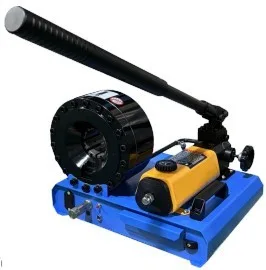
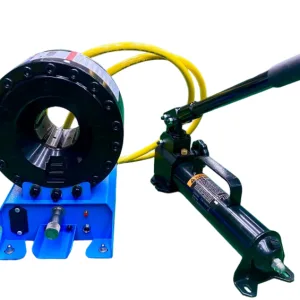
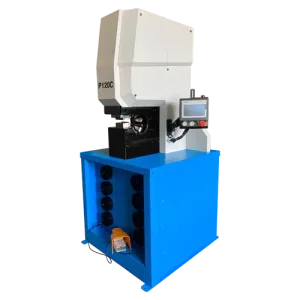
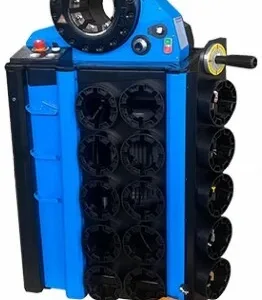
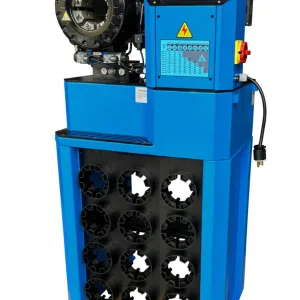
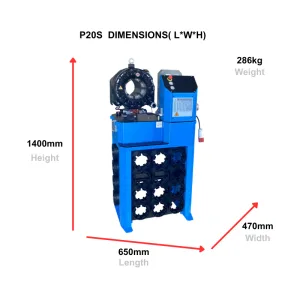
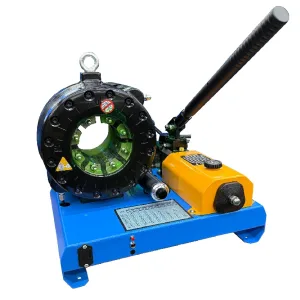
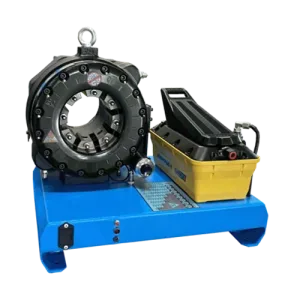
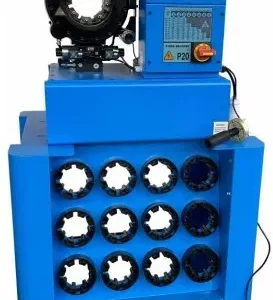
Product category | Current crimper range
Browse current TRC hydraulic hose crimper families, then filter by hose and fitting system, largest ferrule, work location, power and expected output. This page owns the current product range; use the separate Hydraulic Crimper guide for the full commercial explanation.
Quick type routes
Review hand-pump, separate-pump and air-powered routes against effort and workload.
Manual category >Compare voltage, return, opening, controls and changeover workflow.
Electric category >Compare total system weight, vehicle power, charging and die inventory.
Portable category >Use ferrule OD, opening, tooling and handling instead of a hose-size label.
Heavy-duty category >Select by workpiece and site
| If this describes the job | Start with | Verify before choosing |
|---|---|---|
| Occasional farm or remote repair | Manual or pneumatic | Largest assembly, operator effort, pump or air source and dies. |
| Regular hose-shop production | Electric workshop | Voltage, control, return, changeovers and realistic workload. |
| Service truck | Portable or battery | Weight, vehicle power, mounting, charging and die storage. |
| Bent fitting or loading challenge | Vertical or open-access route | Fitting envelope, opening, insertion and operator position. |
| Large spiral hose or ferrule | Heavy-duty | Pre-crimp ferrule OD, force, opening, tooling and handling. |
How to choose and configure
A reliable shortlist starts with hose construction, hose and ferrule outside diameters before crimping, target finished diameter, required opening, elbow-loading envelope, workload, utilities and installation location.
The machine supplies controlled radial movement through the dies. It does not make unrelated hoses, fittings or ferrules compatible.
| Status | Meaning in a quotation |
|---|---|
| Standard | Equipment explicitly listed in the selected model record. |
| Optional | Star-marked dies, upgrades and model-specific accessories. |
| Needs confirmation | Voltage, controls, tooling coverage, interface, documents and custom scope. |
Controlled workflow
Confirm hose, fitting, ferrule and valid crimp data.
Cut squarely, clean as required and skive only when specified.
Use the correct die and setting; keep hands outside the closing area.
Measure at the specified location and follow the required test route.
Common buying errors
Evidence and lifecycle handoff
Published images, listed accessories and records must identify the named model and configuration.
Review manufacturing and QC >Compare machine series, mounting geometry, die range and valid component data.
Send die data >Availability, schedule, installation, maintenance and fault evidence are confirmed per order.
Send project data >Related selection resources
Use six workpiece and site inputs before comparing individual machines.
Open selection guide >Plan dies, cutting, measurement and conditional preparation or testing.
Plan a starter kit >Compare included tooling, utilities, evidence, exclusions and delivery basis.
Review buying inputs >Hydraulic Hose Crimper FAQ
Check the assembly system, ferrule OD, target crimp, dies, work location, power, workload, operator workflow, verification and support.
It may be if it covers validated assemblies and the process can be controlled and measured. Include tooling, components and downtime in the decision.
Machine capability and component-system approval are separate. Hose, fitting and ferrule compatibility must be validated using applicable data.
Measure at the location specified by the applicable crimp data, compare with its target and tolerance, and inspect insertion and the complete assembly.
Crimper shortlist
Include hose, fitting, ferrule, target crimp, opening requirement, power and work location.