Table of Contents
A hydraulic pipe crimper and a hydraulic hose crimper are not the same tool. The question comes up regularly — on forums and Reddit — and the short answer is: a standard hose crimper usually cannot crimp steel pipe. The die geometry, tonnage requirements, and material behavior are fundamentally different. Per SAE J517 standards, the tooling requirements for hose and pipe are documented separately for good reason.
This guide explains why, covers the few exceptions where a hose crimper can do pipe work, and shows you the correct tool for each material.
Why a Hose Crimper Usually Can’t Crimp Steel Pipe
Hydraulic hose is flexible rubber reinforced with wire braid or spiral. A hose crimper compresses a metal ferrule around the hose, creating a cold-weld bond between ferrule and wire layers. The ferrule deforms; the hose compresses.
Steel pipe doesn’t compress. When you push a hose crimper die against a steel pipe, the die either bounces off (pipe too hard) or crushes the pipe out of round (die geometry wrong for rigid material). The result is a deformed pipe that won’t seal with any fitting. This is well-documented in SAE standards guides that differentiate between flexible hose and rigid pipe assemblies.
Three technical reasons this fails:
- Yield strength mismatch: Steel pipe (250–550 MPa yield) vs ferrule material (~350 MPa). The die can’t deform the pipe without exceeding crimper tonnage
- Die profile: Hose dies have concave segments that compress ferrules radially. Pipe dies need a different profile — often conical or annular
- Wall thickness: Steel pipe has 2–6 mm walls. Hydraulic hose ferrule walls are 1–2 mm. The crimper is calibrated for thin-wall compression
Die Geometry: Hose vs Pipe — What’s Different
| Parameter | Hose Crimper Die | Pipe Crimper Die |
|---|---|---|
| Profile shape | Concave segments (8–10 jaws) | Conical or annular ring |
| Compression direction | Radial inward (360°) | Axial or radial with controlled taper |
| Target material | Soft ferrule over rubber hose | Steel/copper pipe wall |
| Tolerance | ±0.05 mm on ferrule OD | ±0.02 mm on pipe OD |
| Dies per size | 8–10 segments per die set | 1–2 piece per die set |
The Exceptions: When a Hose Crimper Works on Pipe
There are a few cases where a hose crimper can handle pipe-like work:
1. Thin-Wall Copper Tubing (AC Lines)
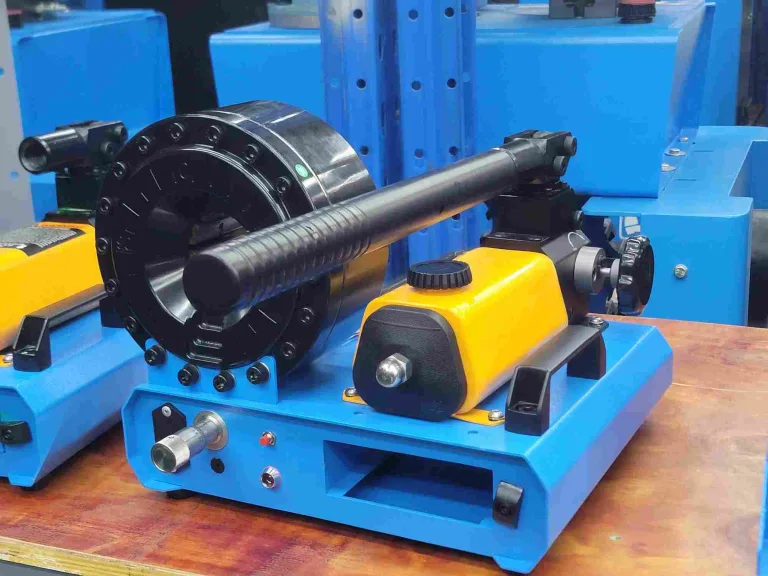
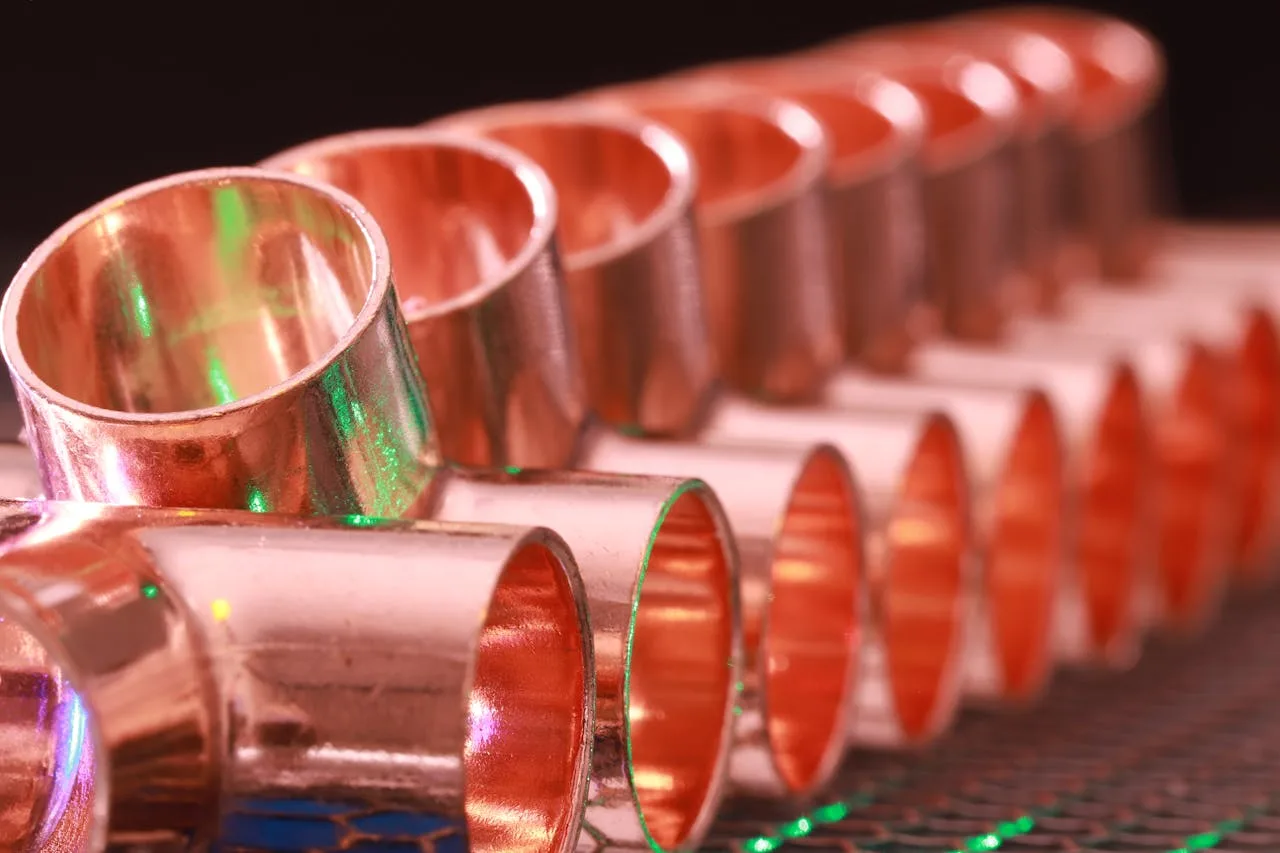
Copper tubing for air conditioning is soft enough that a small hydraulic crimper can deform it. Tools like the TRC P70C (20 ton) are specifically designed for AC hose and thin copper. The P10HP handles aluminum ferrules on AC lines up to 1″ — it’s a compact manual unit built for light-duty AC and automotive work.
2. Stainless Steel Braided Hose (Flex Pipe)
Stainless braided flexible hose (not rigid pipe) is within the range of standard hose crimpers. The braided cover is thin enough that the ferrule compresses normally. This includes SAE 100R15 and similar multi-spiral hoses.
3. Tube Nuts and Ferrules (Instrumentation)
Small-diameter instrumentation tubing (6–18 mm) uses compression fittings, not crimped ferrules. A die set from a hose crimper won’t work here — you need a dedicated tube fitting tool.
Correct Tools for Steel Pipe Crimping
For actual steel pipe work, you need one of these:
| Task | Correct Tool | Example |
|---|---|---|
| Cut ring pre-assembly on steel pipe | Cut ring assembly machine | TRC KT42 — for Ø6–42 mm steel pipe (carbon steel, stainless, copper) |
| Bend steel pipe | Pipe bending machine | TRC WH18 — Ø6–18 mm hand bender |
| Flare steel pipe ends | Flaring tool | Not in TRCrimp product line |
| Crimp ferrules on hydraulic hose | Hose crimper | TRC P32A, P32D |
| Press fittings on copper pipe | Pipe press tool | Viega/Makita press tools (not hose crimpers) |
The TRC KT42 cut ring machine is specifically designed for pre-assembling standard ferrule-type fittings onto steel pipes. It handles stainless steel (AISI 316), carbon steel, and copper from Ø6×1 to Ø42×4 mm. For higher-pressure steel pipe applications, the KF42 model offers up to 650 bar capability. Both are dedicated pipe tools — not hose crimpers.
What About Copper Tube and Brake Line?
Copper tube and automotive brake line are borderline cases. A small manual crimper (P10HP or P70C) can deform copper ferrules. But the die must match the fitting profile — using a hydraulic hose die on a brake line fitting produces an uneven crimp that leaks.
For automotive work:
- Brake lines: Use a dedicated brake line flaring tool, not a hydraulic crimper
- AC lines: Use the P10HP (light-duty manual) or P70C (20 ton, AC-specific) with the correct die for aluminum ferrules
- Fuel lines: Use a portable hydraulic hose crimper with small-bore dies (P18/06 or P18/08)
See our guide on crimping tools for hydraulic hoses for die compatibility details.
Tool Selection Guide by Material
| Material | Type | Use Hose Crimper? | Recommended Tool |
|---|---|---|---|
| Rubber hose + wire braid | SAE 100R1/R2 | ✅ Yes | P16HP/P18HP manual or P32A electric |
| Rubber hose + wire spiral | SAE 100R12/R13 | ✅ Yes (200+ ton) | P140/P175 heavy duty |
| PTFE hose + stainless braid | SAE 100R14 | ✅ Yes | Standard hose crimper |
| Steel pipe (carbon) | Rigid | ❌ No | KT42 cut ring machine |
| Steel pipe (stainless) | Rigid | ❌ No | KT42 or KF42 |
| Copper tube (AC) | Soft | ⚠️ With correct die | P10HP or P70C |
| Copper tube (water) | Rigid | ❌ No | Pipe press tool (Viega) |
| Aluminum ferrule (AC) | Soft | ⚠️ With correct die | P10HP with AC die set |
| Brake line (steel) | Rigid, small bore | ❌ No | Dedicated flaring tool |
If you’re unsure which tool fits your application, browse TRCrimp’s full hydraulic crimper lineup or contact our team — we respond within 4 hours and can recommend the right machine for your material and volume. For further reading on hose construction and standards, see QC Hydraulics crimp spec reference.
Need the Right Tool for Your Pipe or Hose Work?
Tell us your material, diameter range, and daily volume. We’ll recommend the correct machine — no overselling.
FAQ
Can a hydraulic hose crimper be used on steel pipe?
No. A standard hydraulic hose crimper compresses soft ferrules onto flexible hose. Steel pipe is rigid and requires a different tool — typically a cut ring assembly machine or pipe press tool designed for rigid material.
What’s the difference between a pipe crimper and a hose crimper?
The die geometry is different. Hose crimpers use concave segmented dies that compress ferrules radially. Pipe crimpers use conical or annular dies designed to deform rigid pipe walls without crushing them out of round.
Can I crimp copper tubing with a hydraulic hose crimper?
Yes, for thin-wall copper (AC lines, refrigeration) with the correct die. Use a small manual unit like the P10HP or P70C. Don’t use standard hose dies — they’re too large and will deform the copper unevenly.
What tool do I need for steel pipe fittings?
For cut-ring style fittings on steel pipe, use the TRC KT42 cut ring assembly machine. It handles Ø6–42 mm pipe in carbon steel, stainless steel, and copper.
Can I crimp brake lines with a hydraulic hose crimper?
No. Brake lines require a dedicated flaring tool that creates a double flare or ISO flare. Hydraulic hose crimpers are designed for rubber hose assemblies, not rigid steel brake tubing.
What size hydraulic crimper do I need for AC hose?
For AC hose crimping (aluminum ferrules, typically 3/8″ to 3/4″), the P10HP or P70C is sufficient. These are small-bore manual units designed for thin-wall ferrule work.
Why does my hose crimper leave marks on the ferrule?
Die marks on the ferrule are normal — they indicate the die segments made full contact. If marks are uneven or the ferrule is visibly deformed (not round), the die size is wrong or the ferrule wasn’t centered before crimping.
Can I use a hose crimper on stainless braided flex hose?
Yes. Stainless braided flexible hose (not rigid pipe) is within the range of standard hose crimpers. The stainless braid is thin enough that the ferrule compresses normally.