Hydraulic Line Crimper: Rigid Tube vs Flexible Hose (2026)
A hydraulic line crimper is the machine that joins fittings to hydraulic lines — both rigid steel tubes and flexible rubber hoses — by compressing a metal ferrule around the connection point. The choice between crimping a rigid tube and crimping a flexible hose changes which machine you need, which dies you load, and how you test the joint. Pick the wrong one and the fitting leaks under pressure, or worse, blows off entirely.
This guide breaks down the differences between rigid tube and flexible hose crimping, explains when to flare versus when to crimp, walks through die selection for both line types, and compares 5 TRC crimper models with real tonnage and hose-range numbers. Every recommendation comes from field experience, not marketing copy.
What Is a Hydraulic Line Crimper
Hose assemblies must comply with SAE J517 (hose construction and pressure ratings) and ISO 8434 (fitting connection dimensions).
The machine uses hydraulic pressure to drive a set of segmented dies inward, squeezing a metal ferrule until it deforms permanently around the fitting and line. This creates a mechanical seal rated for pressures from 2,000 PSI up to 10,000+ PSI depending on the hose type and crimp quality.
Two line types dominate hydraulic systems: flexible rubber hoses (wire-braided or spiral-wound) and rigid steel tubes. Both need reliable end connections. Both get crimped — but the process, tooling, and machines differ.
Flexible hoses use a ferrule-and-insert method. You push the fitting stem into the hose inner bore, slide the ferrule over the outside, and the crimper compresses everything into one assembly. The hydraulic machinery that powers these systems runs at pressures from 700 BAR (10,000 PSI) in mining equipment down to 100 BAR (1,450 PSI) in light industrial tools. The crimp has to hold.
Rigid steel tubes use a different approach. The ferrule bites into the tube outer surface, and the crimp creates a permanent metal-to-metal seal. Steel tubing handles higher pressures in smaller diameters, resists abrasion, and does not flex — which is exactly why it gets used in fixed installations like factory hydraulic power units, ship engine rooms, and aircraft landing gear bays.
Rigid Tube vs Flexible Hose Crimping
The distinction sounds simple. In practice, it changes almost everything about your setup.
Flexible Hose Crimping
Flexible hydraulic hoses are the default in mobile equipment — excavators, loaders, tractors, mining trucks. They absorb vibration, accommodate movement, and route around obstacles. The construction is layers: an inner rubber tube, one or more wire reinforcement layers (1SN/2SN braid or 4SP/4SH/6SP spiral), and an outer rubber cover.
Crimping a flexible hose means compressing the ferrule until it grips the wire reinforcement layer. Too little pressure and the ferrule slips off. Too much and you crush the inner tube, blocking flow. The target diameter after crimp is typically specified by the fitting manufacturer to ±0.1mm. A standard electric hydraulic crimper like the P32 handles this with closed-head dies that compress uniformly from all sides.
Hose sizes range from 1/4″ (DN6) to 4″ (DN100) in industrial applications. Most mobile equipment uses 1/4″ to 1-1/4″. Factory and mining applications go larger — 2″ to 4″ for high-flow circuits.
Rigid Steel Tube Crimping
Steel tube is the choice for fixed installations where the line does not move. Factories, shipyards, power plants, aircraft. Steel tubing costs less per meter than hydraulic hose, handles higher temperatures, and lasts longer when protected from corrosion.
The challenge is that steel tubing does not compress the way rubber hose does. You need a machine designed to form a permanent seal between the ferrule and the tube surface. Machines like the TRC-KT42 (Ø6×1 to Ø42×4 mm range) and TRC-KF42 (rated to 650 BAR) handle this task. They use dies shaped for steel, not rubber.
Steel tube crimping takes higher force per millimeter of diameter because you are deforming metal against metal, not compressing rubber and wire. A 32mm steel tube with a 4mm wall requires significantly more tonnage than a 32mm rubber hose.
Key difference: Hose crimping compresses a ferrule around rubber+wire. Tube crimping forms a metal-to-metal seal. Same principle, different force profiles and die geometries. Using hose dies on steel tubing gives inconsistent results — the ferrule will not bite evenly.
Pipe Crimping: Flaring vs Crimping
Steel tubing has two connection methods: flaring and crimping. Both create permanent seals. Both have valid use cases. The wrong choice shows up as a leak six months later.
Flaring (37° and 45°)
Flaring expands the tube end into a cone shape using a dedicated flaring tool. The flared end seats against a fitting nose, and a nut pulls the joint tight. JIC 37° flares dominate hydraulic systems in North America. SAE 45° flares appear in automotive and low-pressure lines.
Flaring works well for thin-wall tubing (wall thickness under 2mm) in diameters up to 1″. It requires no ferrule. The seal depends entirely on the quality of the flare angle and the mating surface. If the flare is slightly off-angle, or the tube surface has a scratch, the joint weeps.
Flaring is a mechanical forming process, not a crimping process. It does not use a crimping machine. It uses a flaring tool — either manual or hydraulic — that pushes a cone into the tube end.
Crimping (Ferrule Compression)
Crimping uses a ferrule — a ring of softer metal (usually carbon steel or stainless) — placed over the tube end. The crimper compresses the ferrule until it bites into the tube outer wall. The result is a permanent, non-reusable connection that resists vibration, thermal cycling, and shock loads better than a flared joint.
Crimping wins over flaring when:
- Wall thickness exceeds 2mm — flaring thin-wall tubing is easy; thick-wall tubing cracks during flaring
- Vibration is constant — crimped ferrule joints hold tighter than flared cone seats under vibration
- Diameter exceeds 1″ — flaring large-diameter tubing requires massive force and specialized tooling
- Pressure exceeds 300 BAR — crimped connections handle higher pressures with better safety margins
- Production volume is high — crimping is faster than flaring, 8-15 seconds per joint versus 2-5 minutes for flaring
A dedicated tube crimper — like the KT42 — handles the ferrule compression in a single 8-second cycle. Compare that to flaring: mark the tube, clamp it, flare it, inspect the angle, deburr, then assemble. Five steps minimum, each one a chance for error.
When to Use Each
| Factor | Flaring | Crimping |
|---|---|---|
| Tube wall thickness | Under 2mm | Any thickness |
| Diameter range | 1/4″ to 1″ | 1/4″ to 4″+ |
| Pressure rating | Up to 300 BAR | Up to 650+ BAR |
| Vibration resistance | Moderate | High |
| Speed per joint | 2-5 minutes | 8-15 seconds |
| Reusability | Nut can be re-tightened | Permanent — non-reusable |
| Tool cost | Low ($50-$300) | Higher ($1,500-$15,000) |
| Skill requirement | Medium | Low (machine-controlled) |
TRC Crimper Models for Different Line Types
TRC makes machines for both line types. Here is where each model fits.
For Flexible Hose — P32 (200TON Electric)
The TRC-P32 is the best-selling workshop crimper. 200 tons of force. Covers 1/4″ to 2″ 4SP hose. Ships with 12 die sets. Closed-head design gives ±0.03mm crimp accuracy. Cycle time: 8-10 seconds.
This is the machine for hose assembly shops, equipment dealerships, and maintenance departments that crimp 50-200 hoses per day. It handles everything from 1/4″ return lines to 2″ suction hoses on excavators. The electric motor runs on 220V single-phase or 380V three-phase.
If your work is 90% flexible hose and 10% steel tube, the P32 handles the hose work and you subcontract the tube work. Adding a KT42 for steel tubing is a $2,000-$3,000 decision that pays off if you do more than 20 tube assemblies per month.
For Heavy Industrial Lines — P165 (165TON Vertical)
The TRC-P165 delivers 165 tons of force. Crimps up to 2″ 4SP hose. Same frame size as the P160 but with 43% more tonnage than the P160. This is the machine for mining hose assemblies, shipyard hydraulic lines, and steel mill circuits where hose diameters hit 2″.
At 165 tons, the P165 also handles thick-wall steel tubing in larger diameters — something the P32 cannot touch. If your operation mixes flexible hose and rigid tube in the 1½″-2″ range, the P165 covers both.
For Steel Tube — KT42 and KF42
The TRC-KT42 is purpose-built for steel tube assembly. Covers Ø6×1 to Ø42×4 mm. Simple construction, low failure rate, straightforward operation. Designed for factories assembling steel tube hydraulic lines in volume.
The TRC-KF42 is the premium version. Rated to 650 BAR. Uses higher-grade materials and costs more. If your customer specifies a minimum seal pressure test at 650 BAR, the KF42 is the answer.
For Field Work — P16HP (95TON Manual)
The TRC-P16HP runs on a hand pump — no electricity needed. 95 tons of force. Covers 1/4″ to 1″ hose. At 34 kg, one person carries it to the machine. For field repairs on construction sites and agricultural operations where power is not available, this is the backup that always works.
Hydraulic Line Crimper Die Selection for Pipe and Tube
Dies are the interchangeable segments that do the actual compressing. Selecting the right die is the single most important step in any crimp job. A die that is 0.5mm too large leaves a loose ferrule. A die that is 0.5mm too small crushes the inner tube.
Hose Dies (P32 Series Example)
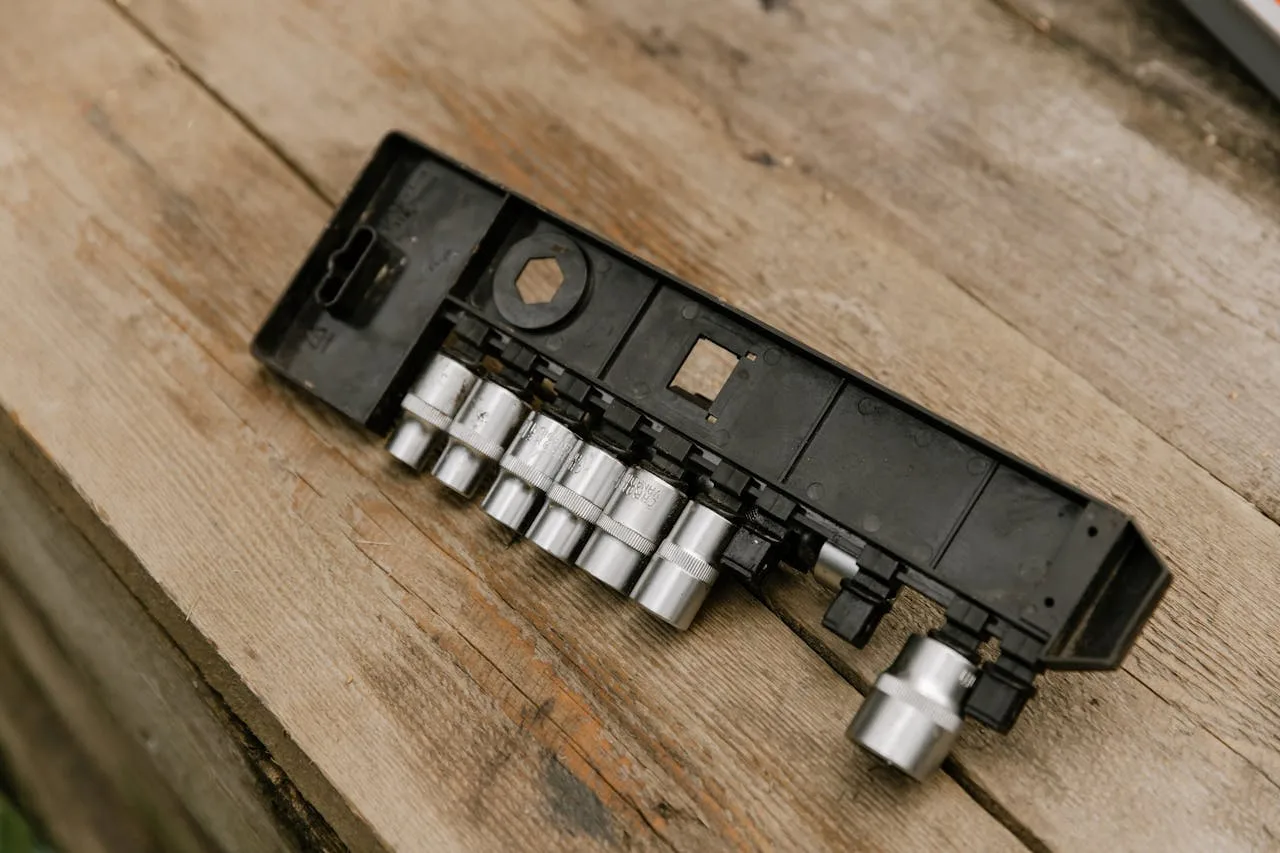
The P32 ships with 12 die sets covering hose inner diameters from 6mm to 69mm. Each die set matches a specific hose size and ferrule combination. The numbering system is straightforward: P32/06 fits 6mm, P32/12 fits 12mm, and so on.
Here is the rule: always match the die number to the ferrule, not the hose. A 1/2″ hose (DN13) typically uses a P32/16 die because the ferrule outer diameter is 16mm after accounting for wall thickness. Check the fitting manufacturer’s crimp specification sheet. It lists the exact die and target crimp diameter.
Steel Tube Dies
Steel tube dies use a different geometry. Instead of segmented fingers that compress inward, tube crimping dies often use a collet-style design that grips and forms the ferrule around the tube in a single motion. The KT42 die system covers tube outer diameters from 6mm to 42mm.
Wall thickness matters more with tube dies than with hose dies. A Ø20×2mm tube and a Ø20×4mm tube have the same outer diameter but require different crimp forces. The die may be the same, but the machine pressure setting changes. CNC machines like the KT42D allow digital pressure adjustment for each wall thickness.
Die Maintenance
Dies wear out. After 10,000-50,000 crimps (depending on material and force), the contact surfaces develop grooves. Grooved dies produce inconsistent crimps. The fix is simple: measure the crimp diameter with a caliper every 500 crimps. If the spread between consecutive crimps exceeds ±0.05mm, replace the die set.
Clean dies after every shift with a wire brush and light oil. Dirt and rubber residue build up on die faces and change the effective crimp diameter. Five minutes of cleaning prevents hours of rework.
Installation and Testing
Crimping the joint is 40% of the job. The other 60% is preparation and verification. The machine only delivers good results when the line is properly prepped and the crimp is correctly verified.
Flexible Hose Installation Steps
Step 1: Cut the hose square. Use a hydraulic hose cutting machine like the C300. A chop saw or angle grinder leaves debris inside the hose and creates an angled cut that prevents the fitting from seating fully. Clean cuts matter.
Step 2: Measure and mark. Push the fitting stem into the hose until it bottoms out. Mark the insertion depth on the hose cover with a scribe or marker. If the mark moves during crimping, the fitting pushed out — reject the assembly.
Step 3: Select the die and set the machine. Match the die to the ferrule size. On CNC machines, enter the target crimp diameter from the fitting specification sheet. On manual machines, set the dies and do a test crimp on a sample piece.
Step 4: Crimp. Load the assembly into the dies. Activate the machine. Hold until the cycle completes. Do not interrupt a crimp cycle mid-stroke — it creates an uneven ferrule.
Step 5: Measure the result. Use a digital caliper to measure the crimped ferrule diameter at three points (top, middle, bottom). All three should be within ±0.1mm of the target. If not, adjust and re-test.
Steel Tube Installation Steps
Step 1: Cut the tube. Use a tube cutter, not a saw. A rotating tube cutter produces a clean, square end with no debris. Deburr the inside and outside edges with a deburring tool.
Step 2: Mark insertion depth. Slide the ferrule and nut onto the tube. Mark the insertion depth. The ferrule must sit flush against the tube end before crimping.
Step 3: Crimp the ferrule. Load the tube assembly into the KT42 or KF42 dies. Activate the machine. Steel tube crimping takes higher force and slightly longer cycle time — 10-15 seconds versus 8-10 seconds for rubber hose.
Step 4: Inspect visually. Check that the ferrule is evenly compressed around the full circumference. Uneven compression means the tube was not seated properly or the die was misaligned.
Pressure Testing
Every crimped assembly should be pressure-tested before installation. The industry standard is 2× working pressure for 30 seconds minimum. A hose rated for 4,000 PSI gets tested at 8,000 PSI.
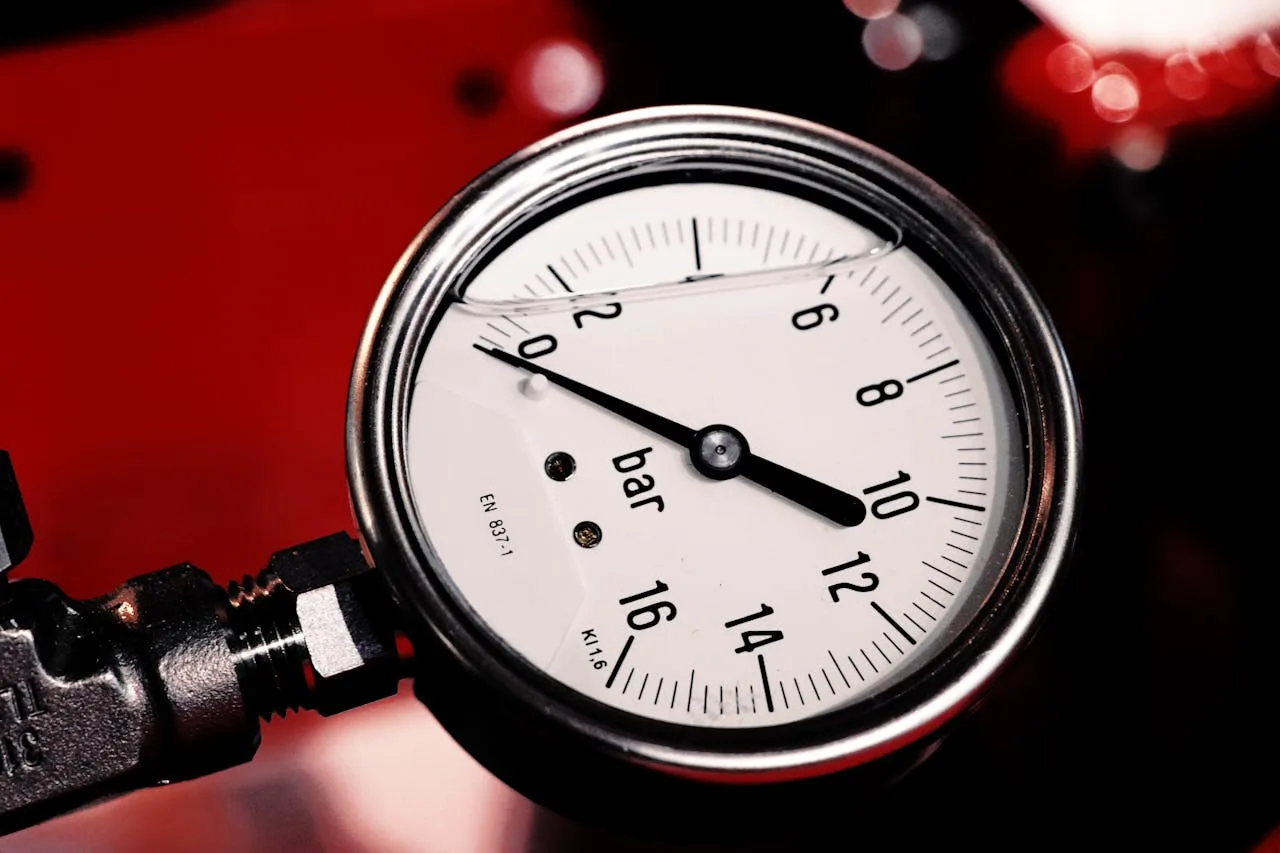
Test failures fall into three categories:
- Leak at the ferrule: Die size wrong, or crimp diameter too large. Re-do with correct die.
- Blow-off (fitting separates from line): Insertion depth too shallow, or hose/tube not pushed all the way in. Scrap and start over.
- Hose burst away from fitting: Not a crimp problem — the hose itself failed. Check hose pressure rating against system requirements.
Document test results. ISO 9001 workshops log every crimp: date, operator, die used, crimp diameter, test pressure, pass/fail. This traceability matters in industries with liability exposure — construction, mining, aerospace.
Product Specification Comparison Table
Side-by-side comparison of the 5 TRC models covered in this guide. Numbers come from factory spec sheets, not estimates.
| Model | Line Type | Max Tonnage | Size Range | Power | Die Series | Cycle Time | Best For |
|---|---|---|---|---|---|---|---|
| P32 | Flexible hose | 200T | 1/4″–2″ 4SP | Electric 220V/380V | P32 (12 sets included) | 8–10 sec | Workshop production |
| P165 | Hose + rigid tube | 165T | Up to 2″ 4SP | Electric 380V | P160 series | 10–15 sec | Mining, shipyard |
| KT42 | Rigid steel tube | N/A | Ø6×1 – Ø42×4 mm | Electric | KT series | 8–12 sec | Factory tube assembly |
| KF42 | Rigid steel tube | N/A | Ø6×1 – Ø42×4 mm | Electric | KF series | 8–12 sec | High-pressure (650 BAR) |
| P16HP | Flexible hose | 95T | 1/4″–1″ 2SP | Manual hand pump | P16 (10 sets) | 10 sec | Field service, backup |
Quick decision: Flexible hose only, workshop setting → P32. Mix of hose and tube in large diameters → P165. Steel tube only → KT42 (standard) or KF42 (650 BAR rated). No power available → P16HP.
FAQ
Can one hydraulic line crimper handle both flexible hose and rigid steel tube?
Not with the same dies. Flexible hose and steel tube use different die geometries and force profiles. The P165 handles large-diameter hose and thick-wall tube because its 165-ton capacity covers both, but you still need to swap die sets. Dedicated machines — P32 for hose, KT42 for tube — give better results in production environments.
How do I know which die to use?
Match the die to the ferrule, not the hose or tube. The fitting manufacturer publishes a crimp specification sheet that lists the exact die number and target crimp diameter for each ferrule-hose combination. Follow that sheet. If you do not have the sheet, contact the fitting supplier — guessing on die selection causes leaks.
What pressure should I test a crimped assembly at?
Test at 2× the working pressure for 30 seconds minimum. A 4,000 PSI hose assembly gets tested at 8,000 PSI. A 650 BAR steel tube assembly gets tested at 1,300 BAR. Hold pressure and watch the gauge — any drop indicates a leak. Document every test result.
Is flaring better than crimping for steel tube?
It depends. Flaring is fine for thin-wall tubing (under 2mm) in low-vibration, low-pressure applications (under 300 BAR). Crimping is better for thick-wall tubing, high-pressure systems, high-vibration environments, and production volumes above 50 assemblies per month. Crimping is faster and more consistent.
How often should I replace dies?
Measure crimp diameter with a caliper every 500 crimps. If the spread between consecutive crimps exceeds ±0.05mm, replace the die set. Typical die life is 10,000-50,000 crimps depending on material, force level, and maintenance. Clean dies after every shift — rubber and metal residue changes the effective crimp diameter.
Can I crimp steel tube with a hose crimper?
Technically possible on small diameters, but the results are inconsistent. Hose dies are shaped for rubber+wire compression, not metal-to-metal forming. The ferrule will not bite evenly into a steel tube surface. For production work, use a dedicated tube crimper like the KT42.
What is the difference between the KT42 and KF42?
Both cover Ø6×1 to Ø42×4 mm steel tube. The KF42 uses higher-grade materials and is rated to 650 BAR working pressure. It costs more but provides better sealing performance for demanding applications — chemical plants, offshore platforms, aerospace hydraulics. The KT42 is sufficient for general industrial use at standard pressures.
How long does a crimp cycle take?
Electric workshop crimpers like the P32 complete a full cycle in 8-10 seconds. Manual hand-pump machines take 10-15 seconds depending on operator speed. Steel tube crimping on the KT42 takes 8-12 seconds. Heavy industrial machines like the P165 take 10-15 seconds because the higher tonnage requires longer hydraulic cylinder travel.
Need a hydraulic line crimper for your operation?
Browse the full TRC lineup — from 95-ton manual units to 200-ton industrial presses.