Table of Contents
Verifying hydraulic crimper factory quality before placing a bulk order saves you from costly mistakes. We have seen buyers receive machines with soft dies, misaligned cylinders, and zero after-sales support.
A Reddit user in r/Hydraulics described buying a hydraulic hose crimping machine from an unverified Chinese supplier — the dies were so far off-spec that fittings wouldn’t seat properly. That problem is preventable with 6 specific checks for verifying hydraulic crimper factory quality.
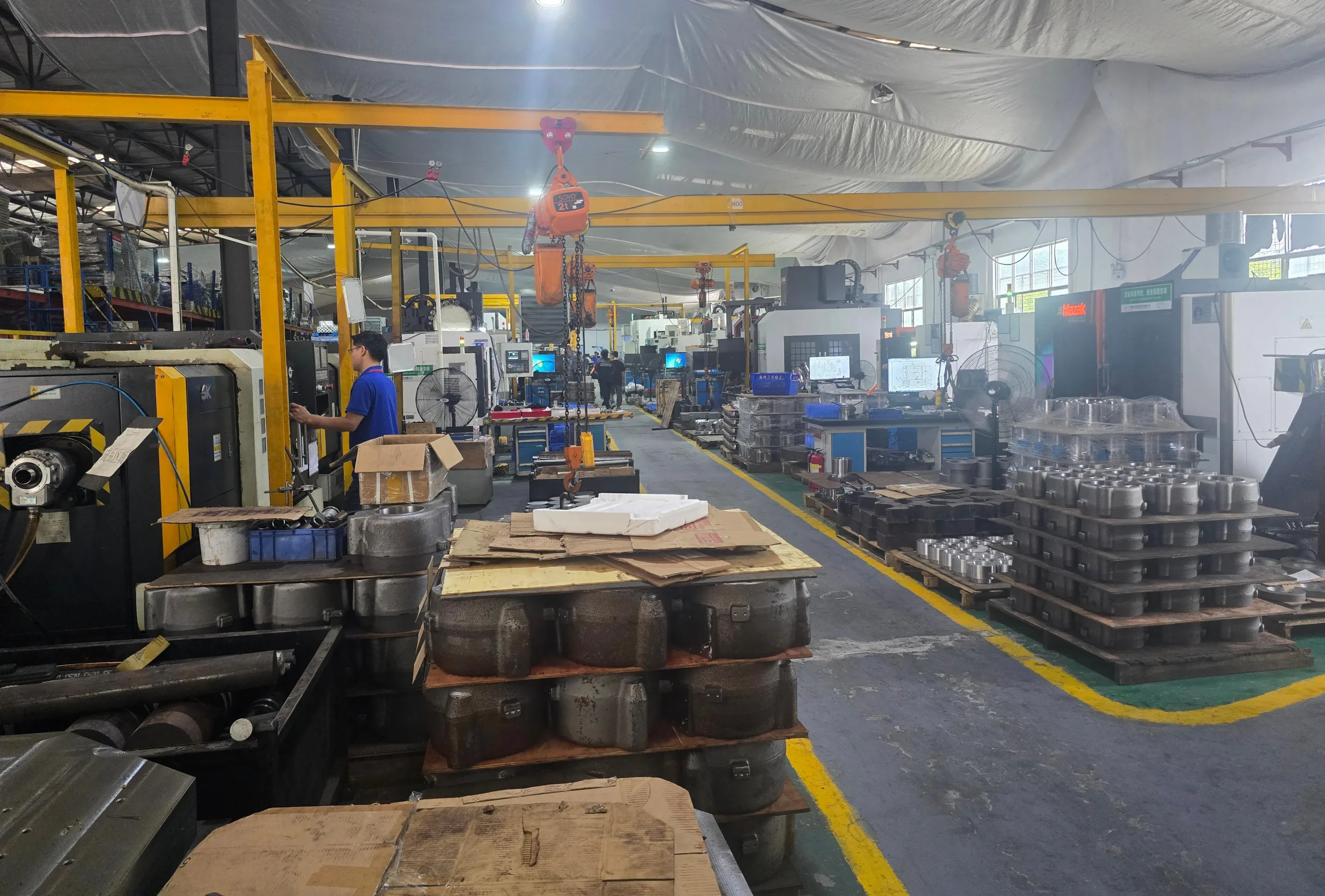
1. Request a Video Factory Tour
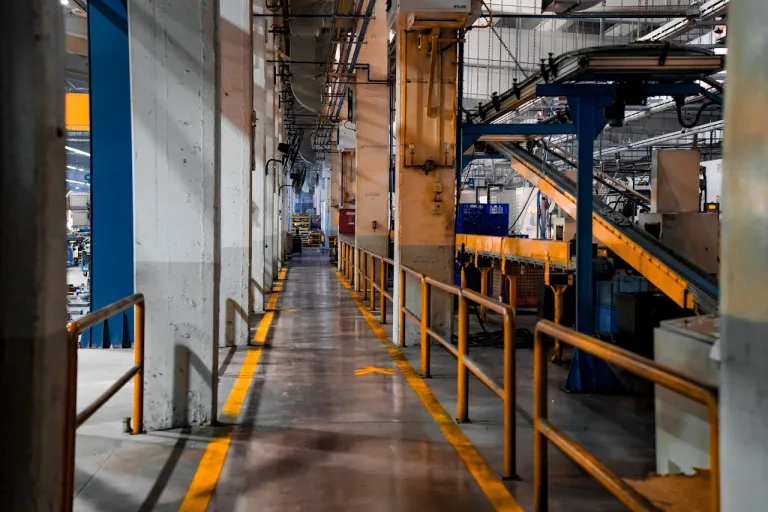
Any real hydraulic hose crimping machine manufacturer can show you their production floor via video call. Ask to see the CNC machining centers, assembly line, and QC testing area in real time. Not a polished marketing video — a live walk-through.
If the supplier stalls or only sends edited promotional clips, that is a red flag. As discussed on r/Hydraulics on Reddit, many importers discover too late that their “manufacturer” was a trading company.
These intermediaries subcontract to the lowest bidder and cannot control quality. The Factory Acceptance Test (FAT) protocol is standard practice — real factories expect this request.
2. Check Die Steel Hardness (HRC 58–62)
Dies are the wearing part of every hydraulic crimper. The steel grade and heat treatment determine crimp precision over thousands of cycles. Ask the factory:
- What steel grade do you use? (Answer should be Cr12MoV or equivalent SKD11)
- What is the die surface hardness? (Answer: HRC 58–62)
- Can you provide a hardness test report?
Soft dies below HRC 55 will deform within the first 500 crimps. We test every die batch at TRC with a Rockwell hardness tester — the tolerance is ±0.03 mm on crimp diameter, compared to the industry average of ±0.125 mm. Reference: SAE J517 hydraulic hose standard specifies crimp quality requirements.
3. Order a Sample and Crimp-Test It
Before ordering a full batch of manual hydraulic hose crimpers or electric units, buy one sample. Test it on your most common hose and fitting combinations:
| Test Item | What to Measure | Pass Standard |
|---|---|---|
| Crimp diameter | Vernier caliper across ferrule | Within ±0.05 mm of spec |
| Repeatability | 10 consecutive crimps | Variation ≤0.03 mm |
| Ferrule surface | Visual inspection | No die marks, no deformation |
| Pressure test | Proof pressure at 2× working | No leak, no blow-off |
A Reddit discussion on r/Hydraulics highlighted this exact issue: a user found that cheap import dies were sized incorrectly, forcing them to use a different die number than specified on their hydraulic hose crimping machine. That mismatch causes undercrimp or overcrimp failures. Refer to ISO 8434-1 for fitting specification requirements.
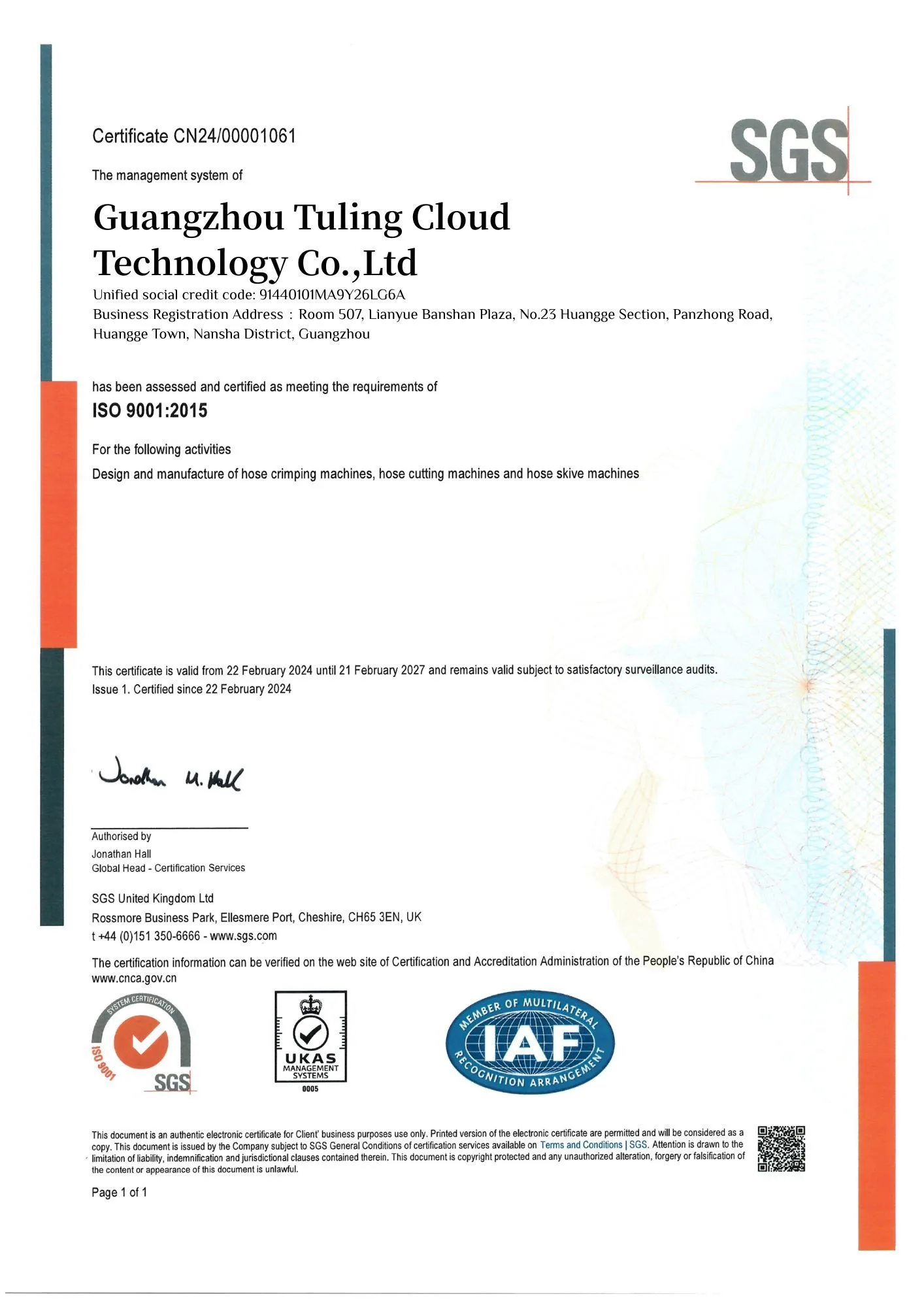
4. Verify CE, SGS, and ISO Certificates
Ask for certificate copies and check the company name matches the supplier. Real certificates have:
- CE — required for European market access
- SGS — third-party factory audit (not just product test)
- ISO 9001 — quality management system
Fake certificates are common. Cross-check the certificate number on the issuing body’s website — SGS maintains a public verification portal.
At TRC, we hold CE, SGS, and UL+ISO certifications — all verifiable through the original issuing organizations. This matters because a heavy duty hydraulic crimper operating at 200+ tons must meet strict safety standards.
5. Ask About After-Sales and Spare Parts
Even a good crimper needs spare dies and seals eventually. Before ordering from any portable hydraulic hose crimper supplier, confirm:
- How fast can you ship spare dies? (Answer should be within 48 hours)
- Do you provide a wear parts list with order?
- What is the technical support response time? (Answer: within 4 hours)
- Is there a warranty? What does it cover?
If the supplier cannot answer these questions clearly, walk away. A cheap machine with no parts support costs more in downtime than a quality unit with fast service.
6. Use Trade Assurance for First Order
For first-time orders from any supplier, use Alibaba Trade Assurance or a letter of credit. This protects your payment until you confirm the goods meet spec. Once you have established trust through 2–3 orders with consistent quality, you can switch to T/T terms.
Never pay 100% upfront to a new supplier. The standard terms are 30% deposit, 70% before shipment (or after inspection).
Hydraulic equipment operates at thousands of PSI — a poorly made hydraulic hose crimper can produce fittings that fail under load. The investment in proper supplier verification pays for itself with the first order.
Need a Verified Hydraulic Crimper Supplier?
TRC ships to 50+ countries with CE, SGS, and ISO certifications. Spare parts within 48 hours. Technical support within 4 hours.
FAQ
What does verifying hydraulic crimper factory quality involve?
It means checking the factory’s production capability, die quality, certifications, and after-sales support before placing a bulk order. The 6-point checklist in this article covers video factory tours, die hardness testing, sample crimp testing, certificate verification, after-sales support, and safe payment terms.
How do I verify a hydraulic crimper factory in China?
Request a live video factory tour, check die hardness (HRC 58–62), order a sample for crimp testing, verify CE/SGS/ISO certificates, confirm after-sales support, and use Trade Assurance for the first order.
What die steel grade should a quality hydraulic crimper use?
Quality crimper dies use Cr12MoV or SKD11 tool steel, hardened to HRC 58–62. Softer dies deform quickly and produce inconsistent crimp diameters.
What crimp tolerance should a professional hydraulic crimper hold?
Professional-grade crimpers hold ±0.03 mm tolerance. Budget units typically run ±0.125 mm or worse, which can cause fitting blow-off under pressure.
Are cheap Chinese hydraulic hose crimpers reliable?
It depends on the factory. Some Chinese manufacturers produce excellent equipment with proper QC. Check for CE/SGS certifications, die hardness reports, and order a sample before bulk purchasing.
TRC manufactures in China with full QC and international certifications.
What certifications should a hydraulic hose crimper have?
At minimum: CE for European markets, SGS factory audit, and ISO 9001 quality management. UL certification is needed for North American electrical models.
How long do hydraulic crimper dies last?
With proper maintenance, Cr12MoV dies last 10,000–50,000 crimps depending on hose size and pressure. Inspect dies monthly for scoring or wear marks. Replace when crimp diameter variation exceeds tolerance.
What payment terms are safe for importing hydraulic equipment?
Use 30% deposit + 70% before shipment for established suppliers. For new suppliers, use Trade Assurance or a letter of credit. Never pay 100% upfront.
Can I get spare dies shipped quickly from a Chinese supplier?
Reliable suppliers ship spare dies within 48 hours. TRC maintains die stock for all 9 series and ships globally. Confirm spare parts availability before placing your first order.



 English
  Español
  Русский