Custom Crimp Solutions: When Standard Dies Won’t Fit Your Assembly
Reading time: 22 minutes
| Parameter | Details |
|---|---|
| Focus | Custom crimp dies and non-standard assembly solutions |
| Custom Die Cost | $200 to $1,000 per set (2-5× standard) |
| Lead Time | 2-6 weeks from approved design |
| Die Steel | Cr12MoV / D2, HRC 58-62 |
| Machining Methods | CNC milling, wire EDM, surface grinding |
| Validation Tests | Pull-out, burst, dimensional, cross-section |
| Crimp Tolerance | ±0.05mm (same as standard) |
| Applicable Standards | SAE J517, DIN EN 853/856, ISO 8434 |
Table of Contents
What Are Custom Crimp Solutions?
Custom crimp solutions address the gap between what standard catalog dies cover and what your assembly actually requires. Every hydraulic hose crimper ships with a set of standard dies matched to common hose sizes and fitting profiles — typically covering SAE and DIN dash sizes from 1/4″ through 2″ with one-piece and interlock fittings.
But not every assembly fits those parameters. When you encounter a ferrule diameter outside the standard range, a fitting profile that no catalog die matches, or a hose construction that demands a specific compression curve, standard dies produce out-of-tolerance crimps. That means weak connections, blown fittings, and safety hazards.
A custom crimp solution involves manufacturing die segments with the exact bore profile, diameter, and land patterns to achieve the target crimp specification on a non-standard assembly. The tolerance requirement stays the same — ±0.05mm — but the die geometry is unique to your application.
According to crimp joining fundamentals, the radial compression must distribute force evenly across the ferrule surface. Standard dies achieve this for catalog fittings because the geometry is known and tested. Custom dies replicate that even distribution for geometries the catalog never anticipated.
When Standard Dies Fall Short
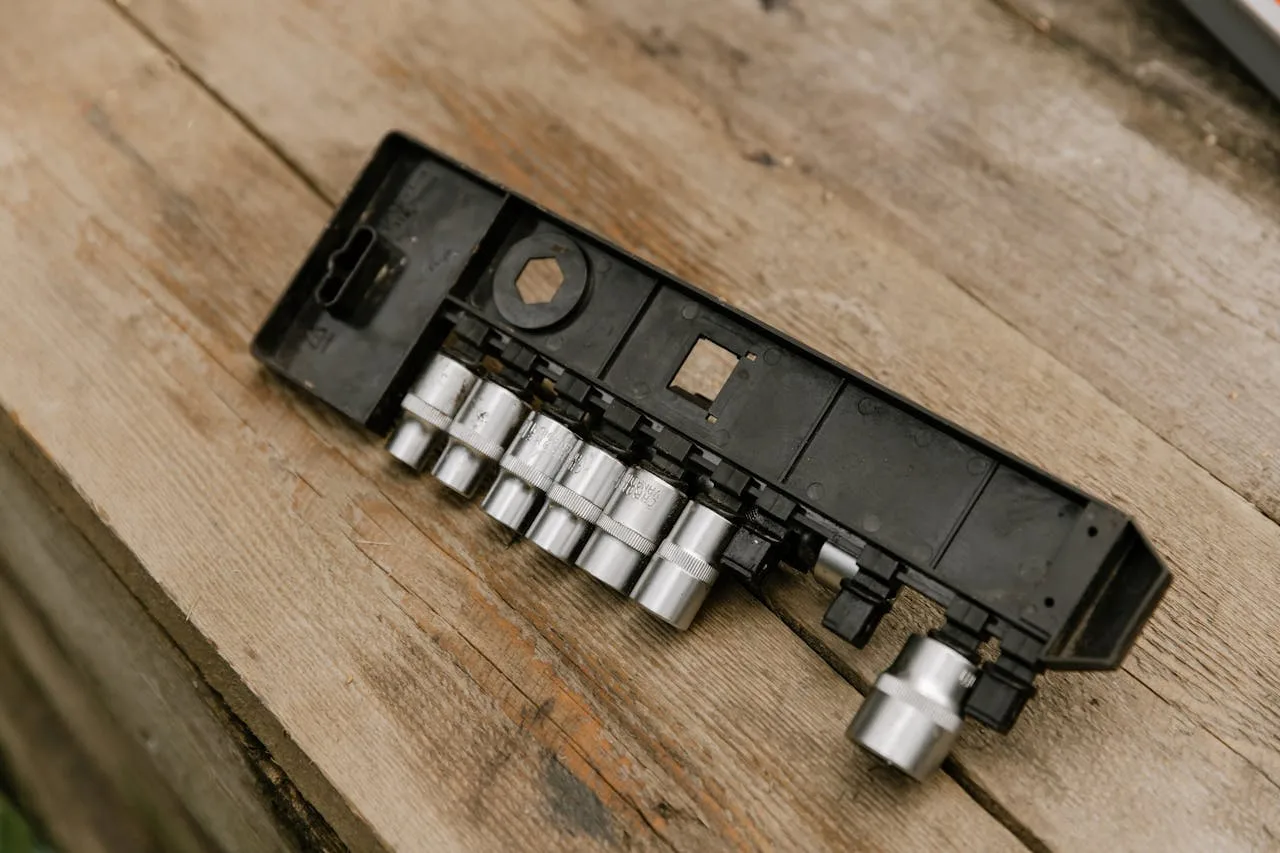
Standard dies cover about 85% of real-world crimp applications. The remaining 15% fall into specific categories where custom crimp tooling becomes necessary.
Non-Standard Ferrule Diameters
Some fitting manufacturers produce ferrules with outer diameters that sit between standard die sizes. The closest standard die either over-compresses or under-compresses the ferrule. Neither result is acceptable. A crimping tool die with a bore diameter matched to the actual ferrule OD — not the nearest catalog size — is the only way to hit target crimp diameter within tolerance.
Proprietary Fitting Profiles
Certain OEM fitting designs use non-standard profiles: tapered ferrules, multi-step diameters, or recessed grip zones. Standard dies, which apply uniform radial compression across a straight bore, cannot accommodate these features. Custom dies incorporate profiled lands — raised and recessed surfaces that match the ferrule geometry and apply compression where the fitting design requires it.
Mixed-Standard Assemblies
When a DIN-spec hose mates with an SAE-spec fitting, or when metric fittings join imperial-dimension hoses, the crimp parameters don’t align with either standard’s die chart. The target crimp diameter must be calculated from the actual materials rather than looked up in a table. Custom dies bridge this gap.
Special Reinforcement Layers
Hoses with aramid (Kevlar) fiber reinforcement, PTFE inner tubes, or thermoplastic construction compress differently than standard wire-braid or wire-spiral hose. The same die that produces a perfect crimp on 2-wire braid may over-compress a thermoplastic hose, crushing the inner liner. Custom dies with modified compression profiles account for the different material behavior.
Very Large or Very Small Assemblies
Hose assemblies above 3″ inside diameter or below 1/4″ often require custom dies simply because standard die sets in these size ranges are limited. Micro-bore hydraulic lines in aerospace and instrumentation applications demand dies with tight tolerances that general-purpose catalog dies don’t provide.
Custom Die Manufacturing Process
Manufacturing a custom crimp die follows a precise sequence from measurement to validation. Each step matters — a 0.02mm error in the die bore translates directly to an out-of-tolerance crimp on every assembly you produce.
Step 1: Gathering Specifications
Before any machining begins, collect these measurements from the actual components:
- Ferrule outer diameter (measured at three points along its length)
- Ferrule length and wall thickness
- Target crimp diameter (from the fitting manufacturer or calculated from material thickness)
- Hose construction details (wire braid count, spiral layer count, cover thickness)
- Fitting type (one-piece, interlock, field-attachable)
- Crimper model and die seat dimensions
If a sample ferrule and hose section are available, send them to the die manufacturer. Physical samples eliminate measurement errors and allow the die maker to verify the bore profile against the actual part.
Step 2: Die Profile Design
Using the gathered data, the die designer creates a CAD model of the die segment. The bore profile is the critical feature — it must account for:
- Pre-crimp clearance: The bore must be large enough for the ferrule to enter freely (typically 0.5-1.0mm radial clearance)
- Compression curve: How the die closes from open to target diameter — the curve affects how the ferrule deforms and how evenly force distributes
- Land pattern: Raised surfaces that contact the ferrule directly. Standard dies use flat lands; custom dies may use contoured lands for profiled ferrules
- Segment count: Most dies use 6 or 8 segments. Higher segment counts give more uniform compression but require more complex machining
Step 3: Material Selection and Heat Treatment
Custom dies use the same steel grades as standard production dies:
| Steel Grade | Hardness (HRC) | Best For | Expected Life |
|---|---|---|---|
| Cr12MoV | 58-62 | General custom crimp, up to 200T | 5,000-10,000 cycles |
| D2 tool steel | 58-64 | High-tonnage (200-320T), abrasive applications | 8,000-15,000 cycles |
| SKD11 | 58-62 | Equivalent to Cr12MoV, common in Asian supply chains | 5,000-10,000 cycles |
| Powdered metal (CPM) | 60-64 | Extreme wear resistance, very high volume | 15,000-25,000 cycles |
Heat treatment follows the same protocol as standard dies: austenitize, quench, and double-temper to achieve the target hardness range. The heat treatment must be uniform across all segments in the set — any hardness variation between segments causes uneven wear and oval crimps over time.
Step 4: Machining
The machining method depends on the die profile complexity:
- CNC milling — For dies with straightforward cylindrical bores and standard land patterns. The most common and cost-effective method. Tolerance capability: ±0.01mm on bore diameter.
- Wire EDM — For dies with complex profiles, tapered bores, or multi-step diameters. Wire EDM cuts the bore profile from a hardened blank with ±0.005mm accuracy. Higher cost, but necessary for intricate geometries.
- Surface grinding — For finishing the die face and land surfaces to achieve the required flatness and surface finish (Ra 0.8 or better).
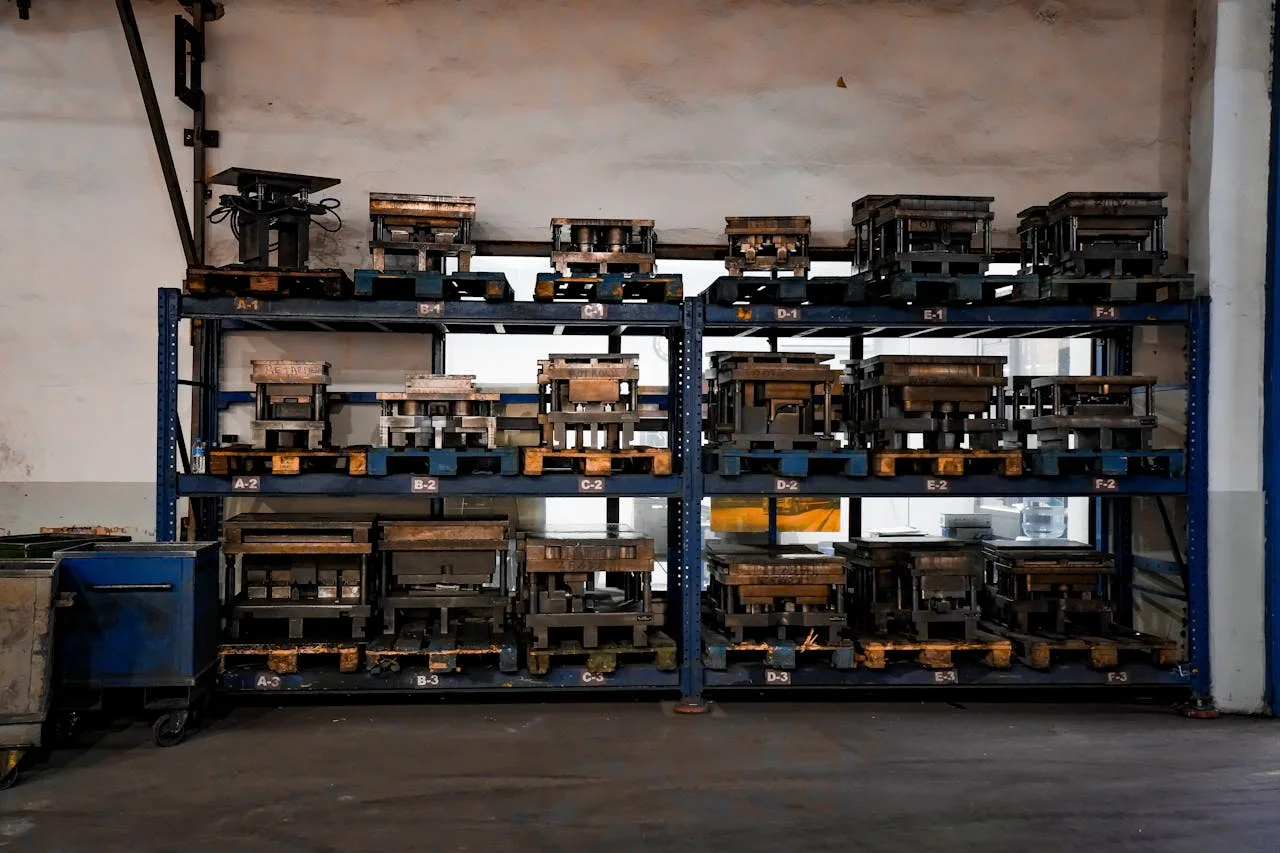
Most custom dies use CNC milling for the main features and wire EDM for any profiled surfaces. The die seat — the part that interfaces with the crimper head — must match the machine’s die holder geometry exactly. This dimension is standard within each crimper brand but varies between manufacturers.
Step 5: Inspection and Tolerancing
Every custom die segment is inspected before shipping:
- Bore diameter measured at three axial positions (entry, center, exit)
- Segment-to-segment diameter variation within 0.01mm
- Hardness verified at two points per segment (HRC 58-62 range)
- Surface finish on bore face: Ra 0.8 or better
- Die seat dimensions matched to crimper model specification
If any segment falls outside tolerance, the entire set is reworked or scrapped. Mixing a good segment with a marginal one produces the same oval crimp problem as worn standard dies.
Three Non-Standard Scenarios That Demand Custom Crimp Tooling
These three field scenarios illustrate when standard dies fail and custom crimp solutions become the only safe option.
Scenario 1: Mining Equipment with Mixed-Origin Components
A mining maintenance shop services equipment from three manufacturers — one uses DIN fittings, another uses SAE, and the third uses proprietary metric fittings sourced from a regional supplier. The hoses are standard DIN EN 856 4SP spiral construction, but the ferrules on the proprietary fittings have an outer diameter 1.2mm larger than the closest standard die.
Using the closest standard die produces a crimp diameter 0.15mm outside tolerance — enough to cause blow-off risk on a 35 MPa pressure line in an underground drill. The solution: custom dies manufactured to match the actual ferrule OD of the proprietary fitting, producing crimps within ±0.03mm of target on every cycle.
This shop now runs a TRCrimp CNC crimper with three custom die sets alongside their standard catalog dies. The CNC machine stores the custom crimp programs alongside the standard ones, and operators select the correct program by scanning a barcode on each fitting.
Scenario 2: PTFE-Lined Hose for Chemical Processing
A chemical plant uses PTFE-lined hydraulic hoses for corrosive fluid transfer. The PTFE inner liner is softer and less compressible than standard nitrile rubber inner tubes. Standard dies designed for rubber-lined hose compress the PTFE too aggressively, causing the liner to fold and create flow restrictions. The plant experienced three hose failures in six months before identifying the root cause.
Custom dies with a modified compression profile — slightly larger bore at the entry taper and a gentler final closure curve — allow the ferrule to grip the stainless steel braid over the PTFE liner without collapsing it. The target crimp diameter is only 0.08mm different from the standard specification, but the compression curve shape matters more than the final diameter in this application.
For this type of application, the die profile must be designed in consultation with the hose manufacturer to account for the specific liner material behavior under compression.
Scenario 3: Oversize Marine Steering Hose
A shipyard fabricates hydraulic steering hose assemblies in 3-1/2″ inside diameter — a size that falls between standard die ranges. The hose uses 6-spiral wire reinforcement with a thick synthetic rubber cover, requiring 280T of crimping force. No standard die in any manufacturer’s catalog covers this specific combination.
Custom dies were machined from D2 tool steel at HRC 60-63 for the extra wear resistance needed at high tonnage. The bore profile was designed with an extended entry taper to guide the oversize ferrule into the die without cocking. After validation testing (50 sample crimps, pull-out testing to 1.5× working pressure, burst testing to 2× working pressure), the dies were approved for production use.
The shipyard uses a high-tonnage portable crimper with these custom dies both in the workshop and on the dock for field installations. Each die set has lasted over 4,000 cycles with no measurable wear — the D2 steel holding up well against the abrasive spiral wire reinforcement.
CNC Machines: The Right Platform for Custom Crimp Work
Custom dies need a crimper that can exploit their precision. CNC crimpers provide the control, repeatability, and data logging that custom crimp applications demand.
Programmable Target Diameter
On a CNC crimper, you input the exact target crimp diameter for each custom die set. The machine closes the dies to that diameter and stops — no operator judgment involved. This matters because custom assemblies often have target diameters that don’t appear on standard die charts, and operators familiar with standard assemblies may not recognize when something is wrong. The CNC control removes that variable.
Tonnage Control
Some custom assemblies require less tonnage than the machine’s maximum — a PTFE-lined hose, for example, or a thin-wall ferrule on a thermoplastic hose. CNC machines allow you to set tonnage limits per program, preventing over-compression on sensitive assemblies while still delivering full force on heavy spiral hose.
Data Logging and Traceability
Every crimp on a CNC machine gets recorded: date, time, operator ID, program number, target diameter, actual diameter, and tonnage applied. For custom crimp applications — especially in mining, marine, and oilfield environments — this traceability proves that each non-standard assembly was produced within specification. Quality auditors and insurance assessors look for this data.
Quick Die Change
Shops running both standard and custom dies change between them frequently. CNC crimpers like the TRCrimp P32C and P50C feature tool-free die change systems — pull the old set, drop in the new one, select the program, and you’re running in under 60 seconds. Compare this to older machines that require bolts, alignment pins, and 10-15 minutes of setup per changeover.
CNC vs. Electric Bench vs. Manual for Custom Work
| Feature | Manual Crimper | Electric Bench | CNC Crimper |
|---|---|---|---|
| Target diameter control | Operator judgment | Digital input, auto-stop | Programmable, auto-stop, logged |
| Tonnage limiting | No | Limited | Yes, per program |
| Crimp records | Paper logbook | Paper or manual entry | Automatic digital log |
| Die change time | 5-10 minutes | 2-5 minutes | Under 60 seconds |
| Custom program storage | N/A | Limited | 100+ programs |
| Suitability for custom dies | Poor | Acceptable | Ideal |
If your operation runs more than two custom die sets, a CNC crimper pays for itself in setup time savings alone. The data logging and tonnage control are additional benefits that justify the investment.
Cost Analysis: Custom Dies vs. Alternatives
Custom crimp dies cost more than standard dies. But the alternatives — forcing standard dies, using reusable fittings, or outsourcing assemblies — often cost more in the long run.
Upfront Cost Comparison
| Option | Per-Assembly Cost | Tooling Cost | Lead Time |
|---|---|---|---|
| Standard dies (catalog) | $0.50-2.00 | $50-200 per set | In stock |
| Custom dies | $0.50-2.00 | $200-1,000 per set | 2-6 weeks |
| Reusable fittings | $8-25 per fitting | None | In stock |
| Outsourcing assemblies | $15-50 per assembly | None | 3-10 days |
When Custom Dies Pay Off
Custom dies become cost-effective when you produce more than 20-50 assemblies of the same non-standard configuration. The math is straightforward:
- A custom die set costs $200-1,000
- Reusable fittings cost $8-25 more per fitting than crimped fittings
- At 50 assemblies with two fittings each, the reusable fitting premium totals $800-2,500
- Custom dies for the same 50 assemblies cost $200-1,000 — a clear saving
For one-off or very low volume (under 10 assemblies), reusable fittings or outsourcing may make more sense. But for any recurring non-standard assembly, custom crimp dies are the economical choice.
Hidden Costs of Forcing Standard Dies
Some shops try to make standard dies work on non-standard assemblies. The hidden costs add up fast:
- Rework rate: 15-30% of assemblies fail QC and must be remade
- Material waste: Every failed assembly means a ruined hose, fitting, and ferrule
- Liability: An out-of-tolerance crimp that passes visual inspection but fails under pressure creates a safety incident
- Customer confidence: Failed assemblies in the field mean lost contracts
Designing a Custom Die: What You Need to Provide
To get an accurate custom die quote and design, provide your die manufacturer with the following information:
Essential Information
| # | Information | How to Provide |
|---|---|---|
| 1 | Ferrule outer diameter | Measure at 3 points with vernier caliper |
| 2 | Ferrule length | Measure end-to-end |
| 3 | Target crimp diameter | From fitting manufacturer’s spec sheet |
| 4 | Hose construction | Standard designation (e.g., DIN EN 856 4SP) or construction details |
| 5 | Fitting type | One-piece, interlock, field-attachable |
| 6 | Crimper model | Brand and model (e.g., TRCrimp P32C) |
| 7 | Working pressure | Maximum operating pressure of the assembly |
Helpful Additional Information
- Sample ferrule and hose section (physical samples preferred)
- Cross-section drawing of the ferrule (if available from the fitting manufacturer)
- Photos of the fitting showing any non-standard features
- Expected annual volume (affects material and treatment recommendations)
- Any previous crimp test results with standard dies
The more complete the information package, the faster the design phase and the fewer prototype iterations needed. Incomplete specifications add 1-2 weeks to the lead time as the designer requests clarifications.
Testing and Validation Protocol
Custom dies must be validated before production use. The validation process proves that the die produces assemblies meeting the required performance standards.
Dimensional Validation
- Crimp 5 sample assemblies using the new custom die
- Measure crimp diameter on each at two positions 90° apart
- Verify all measurements fall within ±0.05mm of target diameter
- Check for ovality — two measurements at 90° must agree within 0.10mm
- Inspect ferrule surface for die marks, uneven compression, or visible defects
Pull-Out Testing
Subject at least 2 sample assemblies to pull-out testing:
- Mount the fitting in a tensile test fixture
- Apply axial force until the fitting separates from the hose or reaches the minimum pull-out force specified by the fitting manufacturer
- Record the force at failure
- Compare against the minimum specification — the assembly must exceed the minimum by a safety margin
Pull-out testing according to SAE J517 and industry crimp specifications confirms that the custom die produces a mechanical bond at least as strong as a standard die would produce on a catalog assembly.
Burst Testing
For safety-critical applications, burst test at least 1 sample assembly:
- Pressurize the assembly to 2× the maximum working pressure
- Hold for 30 seconds minimum
- The assembly must not leak, burst, or show fitting movement
- Record the actual burst pressure if failure occurs
Cross-Section Inspection
Cut one sample assembly through the crimp zone and inspect the cross-section:
- Ferrule fully compressed around the wire reinforcement
- No gaps between ferrule inner surface and wire layer
- Inner tube not collapsed or significantly deformed
- Fitting stem fully seated with no gap between stem barbs and inner tube
Cross-section inspection reveals problems that external measurement cannot detect — like an inner tube that’s partially collapsed despite the outer diameter being within tolerance.
Industry Applications for Custom Crimp Solutions
Custom crimp dies see the most demand in industries where non-standard assemblies are common and failure consequences are severe.
Mining
Underground and surface mining equipment mixes components from multiple manufacturers. Pressure lines on hydraulic shovels, drills, and continuous miners run at 28-35 MPa. Custom dies ensure that mixed-origin assemblies hold pressure safely. Mining operations also require documented traceability for every crimp — crimping tool records from CNC machines provide this automatically.
Marine and Offshore
Shipbuilding and offshore platforms use oversized hose assemblies, corrosion-resistant materials, and non-standard fitting profiles from marine-specific suppliers. Saltwater environments demand stainless steel or plated ferrules that may have different outer diameters than standard carbon steel equivalents. Custom dies accommodate these dimensional differences.
Chemical Processing
PTFE-lined, thermoplastic, and composite hoses used in chemical transfer require compression profiles different from standard rubber-lined hydraulic hose. According to Parker’s hose fitting selection guide, PTFE-lined assemblies account for a growing share of custom crimp requests in chemical and pharmaceutical applications. Custom dies with modified entry tapers and compression curves prevent liner damage while maintaining a reliable mechanical bond.
Aerospace
Hydraulic systems on aircraft use lightweight titanium fittings, small-diameter hoses (down to 1/8″), and extremely tight tolerance requirements (±0.02mm in some cases). Standard dies cannot achieve this precision on these miniature assemblies. Custom dies machined to aerospace tolerances, combined with a precision crimping tool, produce the consistent results aerospace applications demand.
Custom Equipment Manufacturing
OEMs building specialized machinery — industrial presses, mobile equipment, automated systems — often specify unique fitting configurations for their hydraulic circuits. When they order hose assemblies from a distributor, those assemblies may need custom dies to produce. For OEMs producing equipment in consistent volumes, custom dies are a standard part of the tooling investment.
Maintaining Custom Dies
Custom dies follow the same maintenance protocol as standard dies, with one additional consideration: replacement is more expensive and takes longer because they’re made to order.
Maintenance Schedule
| Task | Frequency | Method |
|---|---|---|
| Bore diameter measurement | Every 500 crimps | Vernier caliper, 3 axial positions |
| Surface inspection | Every shift | Visual check for scoring, chipping |
| Die seat cleaning | Before every use | Clean cloth, remove metal shavings |
| Full set replacement | When bore deviation exceeds ±0.05mm | Replace entire set — never individual segments |
Proactive Replacement Strategy
Because custom dies take 2-6 weeks to manufacture, don’t wait until they’re worn out to order replacements. Track the wear trend by plotting bore diameter measurements over time. When the trend line approaches 80% of the wear limit, order the replacement set. This ensures you have new dies before the old ones go out of tolerance.
For high-volume custom die applications, consider ordering two sets simultaneously. Run one set while the spare sits in inventory. When the active set reaches its wear limit, swap in the spare and order another replacement. This strategy eliminates downtime waiting for custom dies.
When to Choose Custom Crimp vs. Alternatives
Not every non-standard situation needs custom dies. Use this decision framework:
| Situation | Recommendation | Why |
|---|---|---|
| One-time repair, non-critical pressure | Reusable fitting | No tooling investment, fast |
| 10-20 assemblies, moderate pressure | Outsource to specialist | Custom die cost may not justify volume |
| 50+ assemblies, any pressure | Custom die | Cost per assembly drops, consistency improves |
| Safety-critical, any volume | Custom die | Precision and traceability required |
| Mixed-standard recurring assembly | Custom die | Forcing standard dies creates liability |
| PTFE or thermoplastic hose | Custom die with modified profile | Standard compression curves damage liner |
| Ongoing production, 500+ per year | Custom die + CNC crimper | Maximum efficiency and traceability |
The bottom line: if you’re crimping the same non-standard assembly more than twice, custom dies are worth evaluating. If the assembly carries high pressure or safety consequences, custom dies are not optional — they’re required.
Custom Crimp for High-Pressure Spiral Hose
Spiral hose assemblies present specific challenges that push shops toward custom crimp solutions more often than braided hose. Four-spiral and six-spiral hose (DIN EN 856 4SP, 4SH; SAE 100R12, R13, R15) use thick wire reinforcement that requires high tonnage — 200T to 320T for common sizes. When the fitting on a spiral hose assembly has a non-standard ferrule, the die must deliver that same high tonnage across a non-standard bore profile without creating stress concentrations that crack the ferrule.
Interlock fittings dominate spiral hose applications above 25 MPa working pressure. These fittings use separate ferrule and stem pieces that sandwich the hose from both sides. The ferrule on an interlock fitting is longer and often has a different wall thickness than one-piece ferrules designed for braided hose. If the interlock fitting comes from a manufacturer whose ferrule dimensions don’t match the standard die chart, custom dies are the only safe option.
The compression behavior of spiral hose also differs from braided. Spiral wire layers resist compression more than braid layers, which means the final 0.1mm of die closure generates significantly higher pressure on a spiral hose assembly. Custom dies for spiral hose sometimes incorporate a slightly longer closing stroke to distribute this final compression phase over a greater travel distance, reducing the peak pressure on the ferrule and preventing cracking.
For shops that assemble both braided and spiral hose with non-standard fittings, maintaining separate custom die sets for each hose type is standard practice. Never use a custom die designed for braided hose on a spiral hose assembly — the compression profile and tonnage requirements are fundamentally different.
Working with a Custom Die Manufacturer
Choosing the right die manufacturer affects quality, lead time, and ongoing support. Here’s what to look for:
Capabilities
- In-house CNC and wire EDM: Avoid manufacturers who outsource the machining — it adds lead time and reduces quality control
- Heat treatment facility: Proper heat treatment is critical for die hardness and longevity
- Dimensional inspection equipment: CMM (Coordinate Measuring Machine) or optical comparator for verifying die geometry
- Crimp testing capability: The ability to test sample assemblies with your dies before shipping
Experience
- Ask about previous custom die projects for similar applications
- Request references from shops in your industry
- Verify that they understand crimp die design principles, not just general machining
Support
- Design file storage for reorders
- Warranty against manufacturing defects
- Technical support for die selection and crimp troubleshooting
- Ability to iterate on die design if the first set doesn’t produce the target diameter
TRCrimp offers custom die manufacturing for all TRCrimp crimper models, with design support based on your sample components. Contact the product team with your specifications for a quote.
FAQ
When do I need custom crimp dies instead of standard dies?
You need custom dies when your hose-fitting combination falls outside standard catalog dimensions — non-standard ferrule diameters, proprietary fitting profiles, mixed-standard assemblies, or hoses with unusual reinforcement layers that standard die profiles cannot accommodate.
How much do custom crimp dies cost?
Custom dies typically cost 2-5 times more than standard catalog dies. A single custom die set ranges from $200 to $1,000 depending on complexity, material, and the machining process required.
How long does it take to manufacture custom crimp dies?
Lead time runs 2-6 weeks from approved design. Simple diameter modifications take 2-3 weeks. Complex profiles requiring wire EDM or prototype testing take 4-6 weeks.
Can CNC crimpers use custom dies?
Yes. CNC crimpers like the TRCrimp P32C and P50C accept custom dies and allow you to program the target diameter, tonnage limits, and dwell time specific to your custom assembly.
What steel grade is used for custom crimp dies?
Cr12MoV at HRC 58-62 is the standard. For extreme tonnage applications (above 300T), some manufacturers use D2 tool steel or powdered metallurgy grades for higher wear resistance.
Do custom crimp dies require special maintenance?
Custom dies follow the same maintenance schedule as standard dies: measure bore diameter every 500 crimps, replace the full set when deviation exceeds ±0.05mm, clean the die seat before every shift.
Can I modify standard dies to fit non-standard fittings?
No. Machining a standard die changes the hardness profile and creates stress risers that cause premature cracking. Custom dies must be manufactured from blank stock with the correct profile from the start.
How are custom crimp dies validated before production?
Validation involves crimping 5-10 sample assemblies, measuring crimp diameter, performing pull-out testing to verify the assembly meets the fitting manufacturer’s minimum pull-out force, and burst testing at least one assembly to 2× working pressure.
What information do I need to provide for custom die design?
Ferrule outer diameter, ferrule length, target crimp diameter, hose construction details, fitting type, and the crimper model you use. If available, provide a sample ferrule and hose section for measurement.
Is a custom crimp solution worth it for low-volume production?
For safety-critical applications (mining, aerospace, pressure vessels), custom dies are justified even at low volume. For non-critical low-volume work, consider reusable fittings or outsourcing to a specialist.
Need Custom Crimp Dies for Your Non-Standard Assemblies?
TRCrimp manufactures custom dies for all TRCrimp crimper models — from design to validation. Get a quote based on your specifications.
Related Articles
-
Crimping Tool Dies Explained
Die steel grades, sizing charts, wear indicators, and replacement timing for standard and custom dies. -
Hydraulic Hose Crimper Guide
How hydraulic hose crimpers work and what sets CNC, electric, and portable models apart. -
Crimping Tool for Hydraulic Hoses
Choosing the right crimping tool for your hose assembly environment and workload. -
Hydraulic Hose Fitting Crimping Tool
How fitting type affects tool selection, die choice, and crimp quality across applications.