Hydraulic hose fittings types are where most assembly mistakes happen. Pick the wrong thread type and the fitting leaks or strips. Pick the wrong seat angle and it never seals. Pick the wrong material and it corrodes in six months. This guide covers the 12 fitting styles you’ll encounter in hydraulic work — with clear descriptions, thread identification tips, and application guidance so you get it right the first time.
Why Fitting Type Matters
A hydraulic system runs at 3,000 to 6,000 PSI. The fitting is the weakest link in any hose assembly. A mismatched fitting won’t hold pressure. A corroded fitting fails without warning. An undertorqued fitting leaks slowly; an overtorqued one cracks the seat. Getting the fitting type right is not optional — it’s the difference between a system that runs for years and one that fails on the first shift.
The 12 Hydraulic Hose Fittings Types
1. JIC 37° Flare
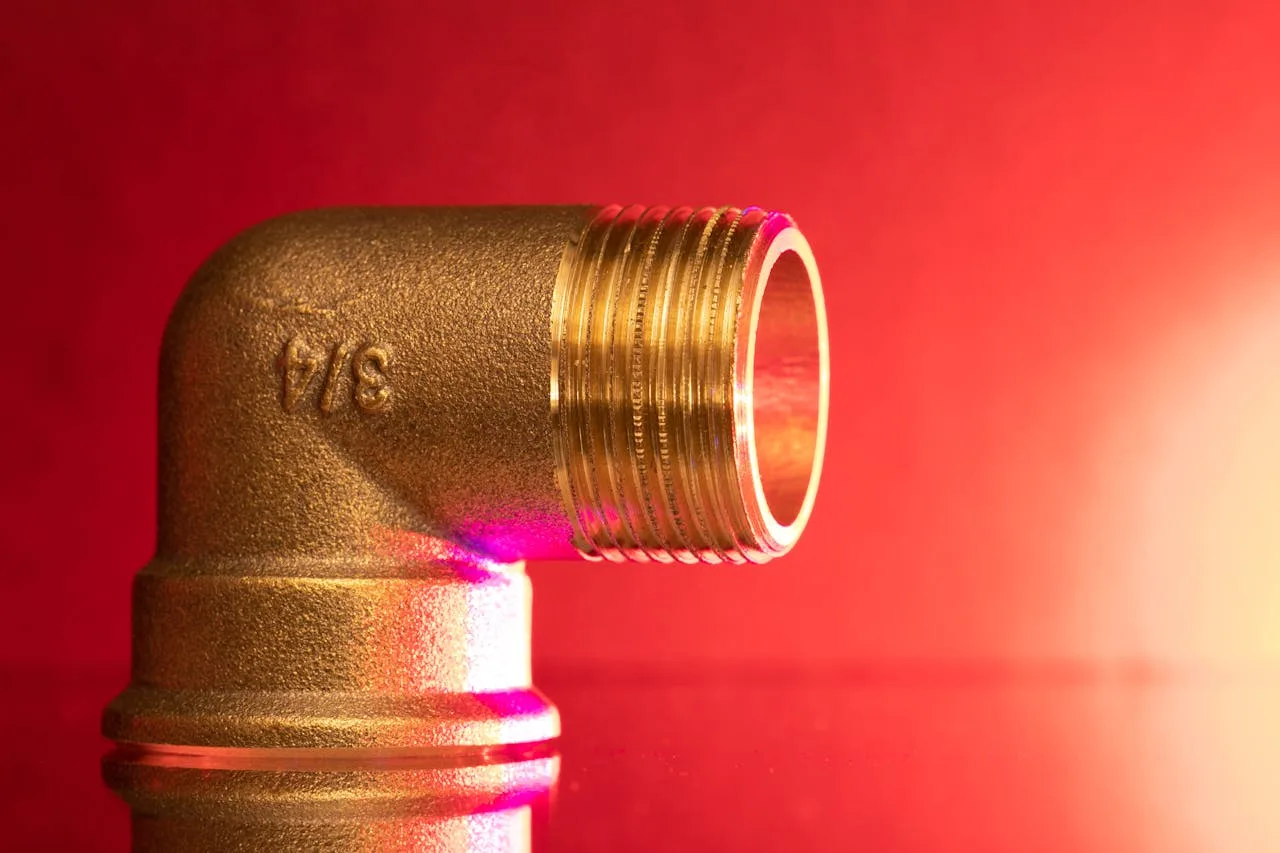
The most common hydraulic fitting in North America. A 37° cone seat creates a metal-to-metal seal. Available in sizes from ¼″ to 2″. Easy to identify: the seat has a visible 37° flare, and the thread is UNF (Unified National Fine). JIC fittings are reusable — you can disconnect and reconnect them without replacing any parts.
Typical use: General-purpose hydraulic systems, construction equipment, agricultural machinery.
2. ORFS (O-Ring Face Seal)
A flat face with an O-ring in a groove. The O-ring compresses against the mating surface to create the seal — not the metal itself. This design handles higher vibration better than JIC and resists leakage under impulse pressure. The thread is UNF, same as JIC, so you have to look at the seat to tell them apart.
Typical use: High-vibration applications, mobile equipment, systems with frequent pressure spikes.
3. NPT (National Pipe Tapered)
Tapered thread that seals by thread interference — the threads themselves compress together as you tighten. Requires thread sealant (PTFE tape or liquid) to fill the spiral leakage path. NPT is common on low-pressure hydraulic ports and plumbing. It’s cheap, widely available, and not great for high-pressure hydraulic work because the seal degrades over time.
Typical use: Low-pressure return lines, drain ports, gauge connections.
4. NPTF (National Pipe Tapered Fuel)
Same taper as NPT but with truncated crests that create a dry seal — no thread sealant needed. The threads deform slightly on tightening, filling the spiral path. NPTF is a better choice than NPT for hydraulic systems, but it’s less common in practice because JIC and ORFS handle the same pressure range more reliably.
Typical use: Fluid power systems where dry-seal threading is preferred.
5. BSP / BSPP (British Standard Pipe)
Parallel thread (BSPP) with a bonded seal or O-ring on the face. Common in Europe, Asia, and Australia — basically everywhere that isn’t North America. BSPP threads are parallel, meaning they don’t seal by thread interference. The seal happens on the face (with an O-ring or bonded washer) or on a cone seat (BSPT, the tapered variant).
Typical use: European-manufactured equipment, Asian imports, UK-standard systems.
6. BSPT (British Standard Pipe Tapered)
Tapered variant of BSP. Seals by thread interference, similar to NPT but with a different thread angle (55° vs 60°). BSPT and NPT threads are NOT interchangeable — they will thread together loosely and leak. Never mix them.
Typical use: Older British and Asian equipment, some compressor connections.
7. DIN Fittings (German Standard)
DIN 2353 series fittings use a cutting ring (24° cone) that bites into the tube as you tighten the nut. The cutting ring creates a metal-to-metal seal plus a mechanical grip on the tube. Three pressure series: LL (light), L (standard), and S (heavy). Common on German-manufactured equipment.
Typical use: German and European industrial equipment, tube-based hydraulic systems.
8. SAE Flange (Code 61 / Code 62)
Split flange or one-piece flange with an O-ring port. Code 61 is standard pressure (3,000 PSI); Code 62 is high pressure (5,000 PSI). The O-ring sits in a groove on the port face, and the flange clamps it down with four bolts. Easy to identify: four-bolt pattern with O-ring groove.
Typical use: High-flow hydraulic systems, pump and motor ports, large-diameter hose connections (1″–2″+).
9. Metric Fittings
Straight or tapered metric threads following ISO 261/262 standards. Common on Japanese and Korean equipment (Komatsu, Hitachi, Hyundai). The thread designation uses M×pitch (e.g., M14×1.5). Metric fittings often use a 24° cone seat with a cutting ring, similar to DIN, but with metric dimensions.
Typical use: Japanese and Korean machinery, some Chinese equipment.
10. Banjo Fittings
A hollow bolt through a perforated sphere (the “banjo”) with sealing washers on both sides. The hose connects to the banjo at a right angle to the bolt axis. Space-efficient in tight installations where a straight fitting won’t fit.
Typical use: Automotive hydraulic systems, clutch lines, brake lines, tight-clearance installations.
11. Swivel Fittings
A fitting with a rotating nut that allows the hose to orient without twisting. The swivel portion contains an internal seal. Available in JIC, ORFS, NPT, and BSP swivel configurations. Always specify the swivel type when ordering — a JIC swivel won’t seal on an ORFS seat.
Typical use: Hose assemblies that need to pivot or where installation requires rotational alignment.
12. Push-Lock (Push-On) Fittings
No crimping required. The hose pushes onto a barbed fitting and a clamp secures it. Rated for lower pressures (typically under 300 PSI). Fast to assemble — you can build a push-lock hose in under a minute. Not suitable for high-pressure hydraulic work.
Typical use: Low-pressure return lines, coolant circuits, air lines, non-critical fluid transfer.
Fitting Types at a Glance
| Type | Seal Method | Thread | Pressure Rating | Region |
|---|---|---|---|---|
| JIC 37° | Metal-to-metal 37° cone | UNF | Up to 6,000 PSI | North America |
| ORFS | O-ring face seal | UNF | Up to 6,000 PSI | Global |
| NPT | Tapered thread + sealant | NPT | Up to 3,000 PSI | North America |
| NPTF | Dry-seal tapered thread | NPTF | Up to 3,000 PSI | North America |
| BSPP | Bonded seal / O-ring face | BSP parallel | Up to 6,000 PSI | Europe / Asia |
| BSPT | Tapered thread | BSP tapered | Up to 3,000 PSI | Europe / Asia |
| DIN | Cutting ring 24° cone | Metric | Up to 8,000 PSI | Germany / Europe |
| SAE Flange | O-ring + 4-bolt flange | SAE | 3,000–5,000 PSI | Global |
| Metric | Cutting ring / O-ring | ISO metric | Up to 6,000 PSI | Japan / Korea |
| Banjo | Sealing washers | Metric / UNF | Up to 2,000 PSI | Automotive |
| Swivel | Internal seal + rotating nut | Varies | Varies by type | Global |
| Push-Lock | Barb + clamp | None | Under 300 PSI | Global |
Thread Identification: How to Tell Them Apart
The three tools you need: a thread pitch gauge, a seat angle gauge, and a caliper. Measure the thread OD and pitch first. That tells you whether it’s UNF (JIC/ORFS), NPT, BSP, or metric. Then check the seat angle: 37° = JIC, flat face with O-ring groove = ORFS, tapered = NPT/BSPT. When in doubt, take the fitting to your supplier — they’ll identify it in 30 seconds.
Never guess. A JIC fitting threaded into an ORFS port will leak immediately. An NPT fitting in a BSPT port will leak slowly and strip the threads. The cost of a thread gauge set is $20. The cost of a hydraulic blow-off is a lot more.
Material Selection
Carbon steel — the default. Strong, affordable, adequate for most hydraulic applications. Zinc-plated for basic corrosion resistance. Not suitable for saltwater or chemical exposure.
Stainless steel (316) — marine, food processing, chemical, and outdoor installations where corrosion matters. Costs 3–5× more than carbon steel. Worth it when the alternative is replacing corroded fittings every year.
Brass — low-pressure applications (under 1,000 PSI), air lines, and water systems. Not rated for hydraulic pressures above 1,000 PSI. Do not use brass in high-pressure hydraulic circuits.
Installation and Torque
Over-tightening is more common than under-tightening. For JIC fittings, finger-tight plus ¼ to ½ turn with a wrench is usually correct. For ORFS, tighten until the O-ring face seats flat — there’s no benefit in going further. For SAE flanges, follow the bolt torque spec in the flange standard (typically 30–50 ft-lbs for ½″ bolts depending on grade). Always use a torque wrench on flange connections. Hand-tight “feel” is not reliable at 5,000 PSI.
For the complete technical reference on pipe threading standards, the National Pipe Thread article on Wikipedia covers the NPT/NPTF specifications in detail.