Hydraulic hose crimping machine selection comes down to three things: what you crimp, how often you crimp, and where you crimp it. Pick wrong and you’ll either outgrow the machine in six months or overspend on tonnage you never use. This guide breaks down the seven main types — with real specs, not marketing copy — so you can match the machine to the job.
What Is a Hydraulic Hose Crimping Machine
A hydraulic hose crimping machine uses pressurized hydraulic fluid to compress a metal ferrule onto a hose and fitting, creating a permanent, leak-free connection. The operator places the hose assembly into a die set, activates the hydraulic pump, and the machine applies force — typically 60 to 830 tons — radially inward until the ferrule reaches a target diameter. That target diameter comes from the manufacturer’s crimp chart and varies by hose size, type, and fitting brand.
Unlike field-oriented portable crimpers, a crimping machine is designed for workshop or production use. It sits on a bench or stands on the floor. It runs on electricity or compressed air. It handles higher volume and larger hose sizes than any hand-pump unit can.
7 Types of Hydraulic Hose Crimping Machines
1. Bench-Top Electric Crimper
The most common type in small to mid-size workshops. Motor-driven hydraulic pump, foot pedal or button activation, crimps ¼″ to 2″ hose. Cycle time: 8–15 seconds. Weight: 60–120 kg. Needs single-phase or three-phase power.
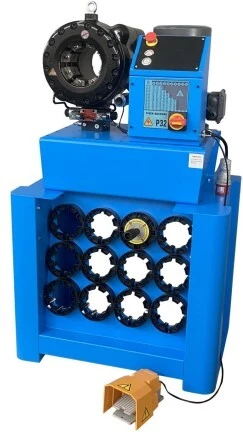
Best for: Workshops doing 20–80 crimps per day with standard hose sizes up to 2″ 4SP. The TRC P32A fits this category — 200 ton, auto-retract die, pull-out die cabinet, and a caliper holder built in.
2. CNC Crimping Machine
Same hydraulic force as a bench-top unit, but with a CNC controller that manages die positioning, crimp diameter, and multi-step crimp cycles. You program the target diameter, and the machine hits it every time — no manual measurement needed between crimps.
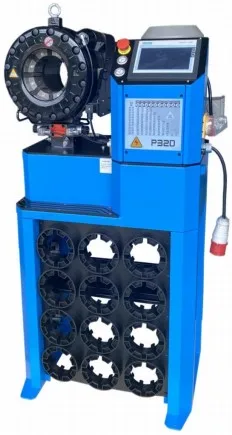
Best for: High-volume shops that need repeatable precision across multiple operators. The TRC P32D adds a full CNC system to the P32 platform — same 200-ton capacity, but every crimp is programmable and logged.
3. Vertical Crimping Press
The crimping head points downward. You load the hose from below. This orientation makes it easier to crimp long, stiff hose assemblies that won’t fit horizontally into a bench-top die. Some models have an integrated hose reel stand.
Best for: Shops assembling long hoses (3 meters+) or rigid 4SH/6SP multi-spiral that fights you on a horizontal machine.
4. Portable Electric Crimper
Smaller motor, lighter frame, sometimes battery-powered. Designed to be carried to the hose rather than bringing the hose to the machine. Tonnage tops out around 60–120 tons — enough for 1″ to 1-¼″ 4SP, not enough for 2″.
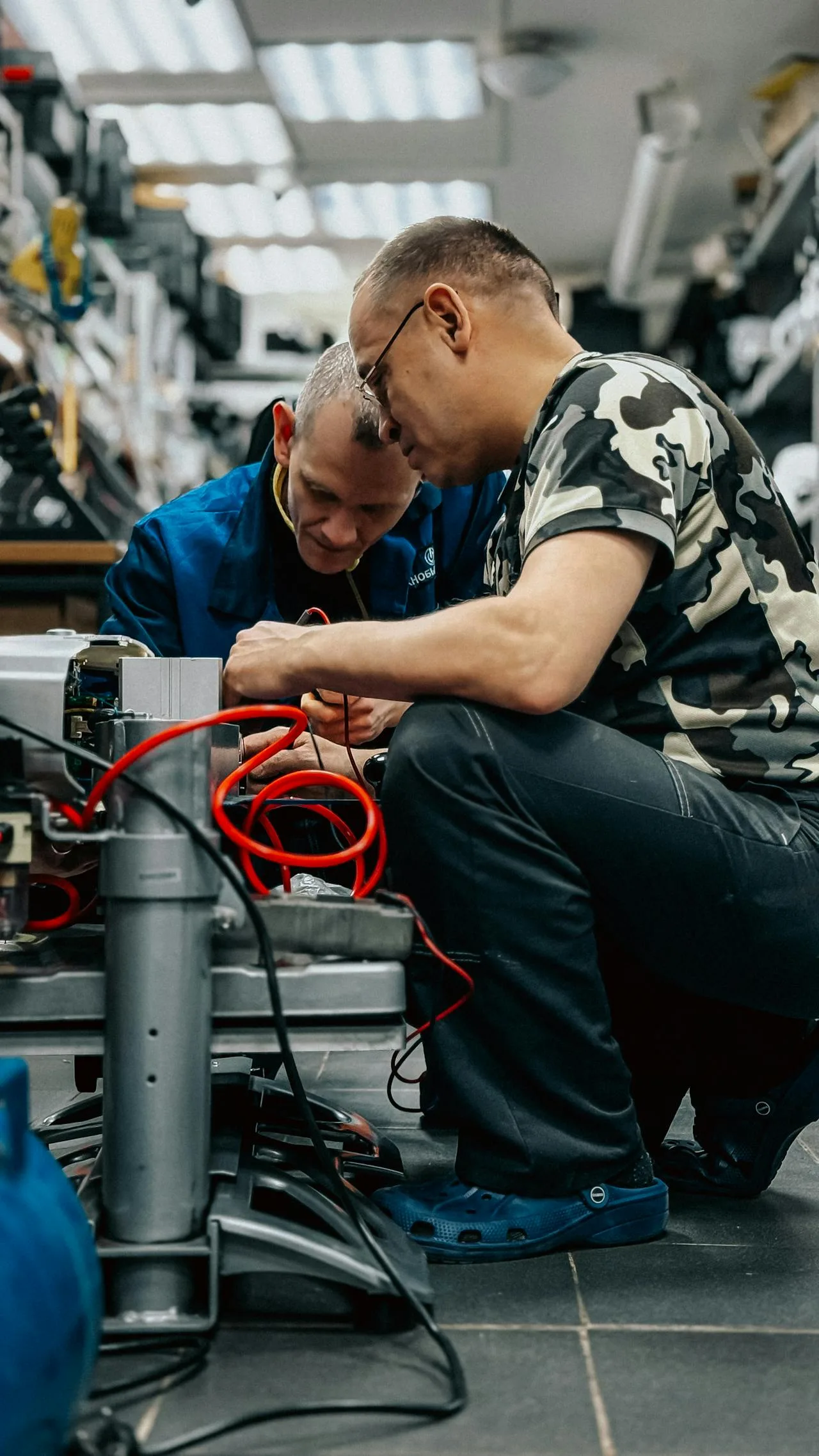
Best for: Field service trucks, mobile hose repair vans, construction sites with generator power.
5. Manual Hand-Pump Crimper
No motor, no air hose, no power cord. The operator pumps a lever to build hydraulic pressure. Tonnage ranges from 60 to 137 tons. Weight: 15–45 kg. The lightest ones are one-person portable.
Best for: Off-grid repairs, emergency field work, low-volume shops on a budget. See our manual crimper guide for the full breakdown of TRC’s 12 manual models.
6. Pneumatic (Air-Pump) Crimper
Same die set and crimping head as a manual unit, but the hand pump is replaced by an air cylinder. Needs 6–8 bar compressed air. Same force as hand-pumping, roughly 3× less physical effort. Not portable — it stays on the workbench.
Best for: Shops that already have an air compressor and want to reduce operator fatigue at volumes of 20–40 crimps per day.
7. Heavy-Duty Industrial Crimper
Big tonnage, big hose. 300 to 830+ tons. Handles 2″ to 6″ industrial hose, multi-spiral, and specialty alloys. These are floor-standing machines that weigh 500+ kg and need three-phase power and a forklift to install.
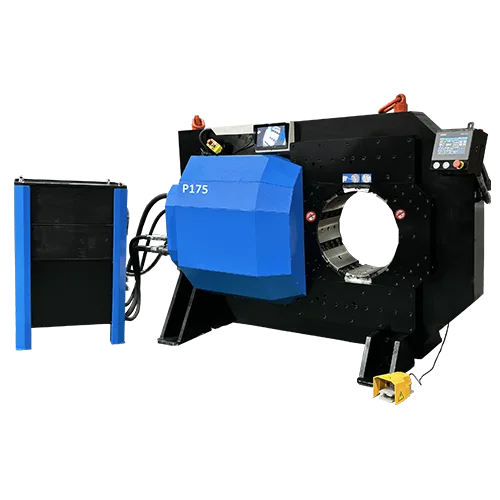
Best for: Mining, shipbuilding, steel mills, aerospace — anywhere you crimp hose that weighs more than the operator. The TRC P175 delivers 830 tons and covers up to 6″ diameter with 27 die sizes.
Key Specs Comparison
| Type | Tonnage | Hose Range | Power | Weight | Daily Volume |
|---|---|---|---|---|---|
| Bench-Top Electric | 150–200 ton | ¼″–2″ | Single/3-phase | 60–120 kg | 20–80 |
| CNC | 150–200 ton | ¼″–2″ | 3-phase | 80–150 kg | 50–200 |
| Vertical | 150–300 ton | ¼″–3″ | 3-phase | 150–300 kg | 30–100 |
| Portable Electric | 60–120 ton | ¼″–1¼″ | Battery/1-phase | 15–45 kg | 5–30 |
| Manual | 60–137 ton | ¼″–1½″ | None | 15–45 kg | 1–20 |
| Pneumatic | 60–137 ton | ¼″–1½″ | 6–8 bar air | 30–60 kg | 20–40 |
| Heavy-Duty | 300–830 ton | 1″–6″ | 3-phase | 500+ kg | 10–50 |
How to Choose the Right Crimping Machine
Match Tonnage to Hose Type
The single most common mistake: buying a 60-ton machine and then needing to crimp 4SP multi-spiral hose. It won’t work. 2SP (wire braid) needs 60–150 tons depending on diameter. 4SP (multi-spiral) needs 150–200 tons minimum. Check the crimp chart for every hose size you plan to assemble before you buy.
Count Your Daily Crimps
Under 20 per day? Manual or portable electric will serve you fine. 20–80? Bench-top electric. Over 80? CNC or vertical — the time savings per crimp adds up fast when you’re running hundreds a week.
Consider Where You Work
No power on site? Manual or battery portable. Fixed workshop with air? Pneumatic or CNC. The right answer depends on your actual work environment, not the spec sheet.
Operating Tips and Safety
Always check the die set against the crimp chart before crimping. Wrong die = under- or over-crimped fitting = potential blow-off under pressure. Measure the crimped diameter with a caliper after every 10th crimp to verify consistency. Replace dies when you see scoring or wear marks — worn dies produce inconsistent crimps. Never put your fingers inside the die area during operation. And always wear safety glasses; a blown fitting under test pressure can send metal fragments across the workshop.
For more on crimping technique, the Hose Coupling article on Wikipedia covers the mechanical principles in detail.


