Table of Contents
Searching for a DIY hydraulic hose crimper usually means one of two things: you want to save money, or you need a hose fixed right now and no shop is open. Both are valid reasons to look for alternatives. But the line between a workable budget solution and a blow-off waiting to happen is thin.
Here’s an honest breakdown of what works, what’s outright dangerous, and what to buy instead — based on field experience and real Reddit discussions from r/Hydraulics and r/SkilledTrades.
What Actually Works
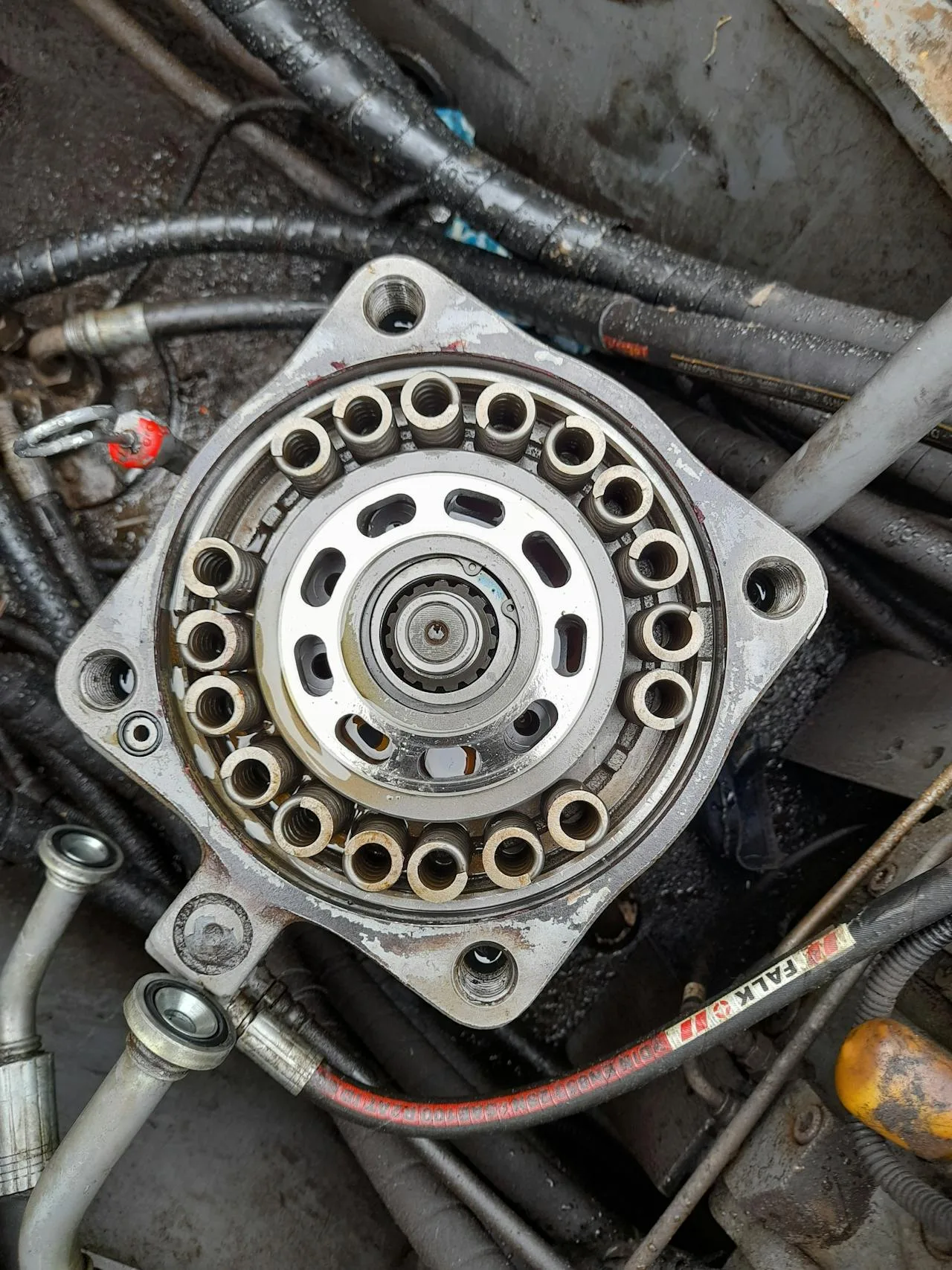
There is exactly one safe DIY approach: buy an affordable manual hydraulic hose crimper and follow the manufacturer’s crimp chart. No improvised tooling. No modified bench vises.
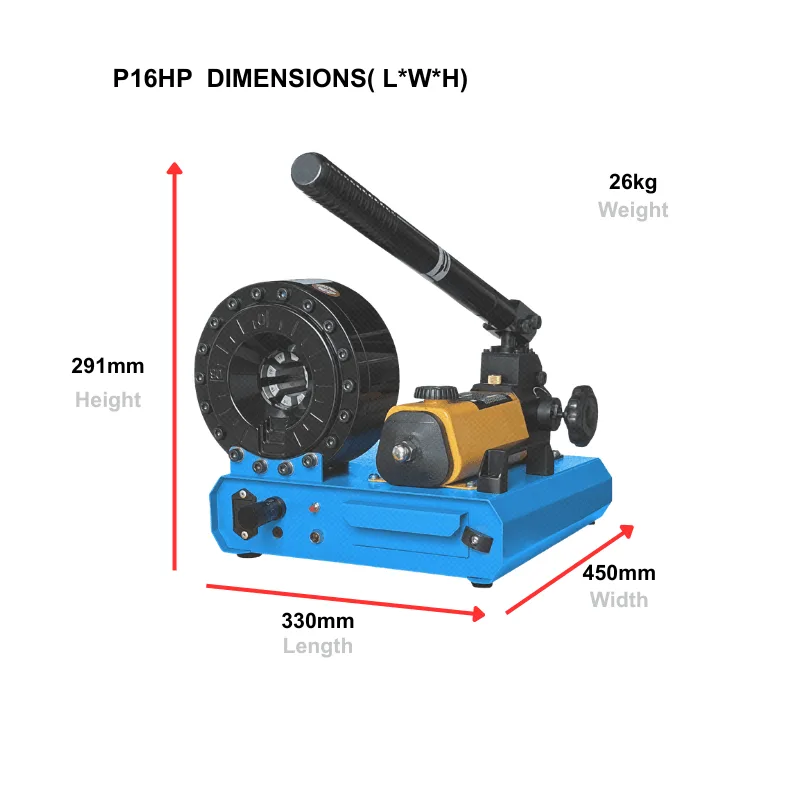
The TRC P10HP (10 ton, $200–300 range) handles 1/4″ hoses. The P16HP (95 ton, $500–800 range) covers up to 1″ 2-wire braid. Both come with matched die sets and published crimp charts.
| DIY Approach | Force | Verdict |
|---|---|---|
| Budget manual crimper (P10HP) | 10 ton | ✅ Works for small bore |
| Mid-range manual (P16HP) | 95 ton | ✅ Works up to 1″ 2SP |
| Bench vise + socket | ~2 ton | ❌ Insufficient force |
| Hydraulic shop press + custom dies | 20+ ton | ❌ Uneven pressure |
| Hammer + flat plate | Unknown | ❌ Dangerous |
What’s Dangerous
Three DIY approaches appear regularly on forums. All three are dangerous.
Bench vise crimping: A vise applies linear force, not radial force. The ferrule compresses on two sides only, leaving the other two sides under-compressed. At 3,000 PSI system pressure, the hose pushes out of the oval ferrule.
Shop press with improvised dies: A 20-ton shop press has enough force but no die alignment. The ferrule crimps unevenly — one side over-compressed, the other untouched. On Reddit, a r/Hydraulics user asked about “crimping your own hydraulic hoses” with a shop press. The unanimous response from professionals: don’t.
Modified bolt cutters: Some DIYers grind bolt-cutter jaws into die shapes. This produces random crimp diameters with zero repeatability. According to ISO 8434, crimp diameter tolerance must be ±0.03mm. No improvised tool can hold this.
What to Buy Instead
A proper manual hydraulic hose crimper costs $200–800 and comes with factory-matched dies, crimp charts, and a warranty. The hydraulic force multiplication ensures uniform radial pressure — something no improvised tool can replicate.
If you crimp more than 10 hoses per day, consider an electric hydraulic hose crimper. The time savings pay for the upgrade in 3–6 months.
| Tool | Price Range | Hose Range | Safe? |
|---|---|---|---|
| P10HP manual crimper | $200–300 | 1/4″ | ✅ |
| P16HP manual crimper | $500–800 | Up to 1″ 2SP | ✅ |
| P18HP manual crimper | $800–1,200 | Up to 1″ 4SP | ✅ |
| Harbor Freight crimper | $150–400 | Up to 3/4″ | ⚠️ Check die hardness |
| Bench vise | $0 | None | ❌ |
What Reddit Says
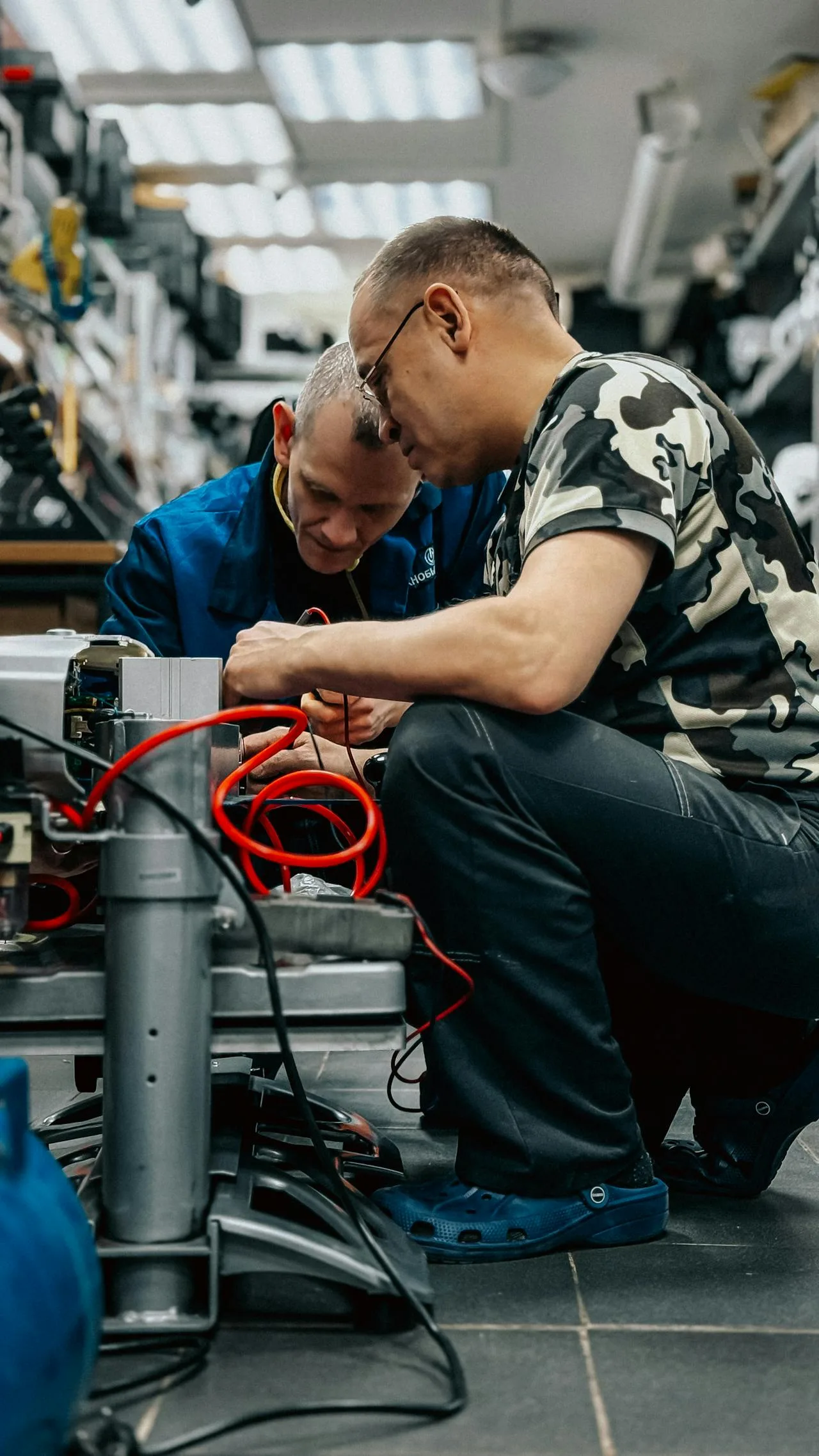
Reddit user discussions in r/Hydraulics consistently arrive at the same conclusion. One thread on “Crimping your own hydraulic hoses” drew responses from heavy equipment mechanics: “Buy a real crimper or take it to a shop. A blown hose kills people.”
Another thread about “Crimping machine chinese” discussed budget imported crimpers. The consensus: some Chinese brands (like TRC) produce reliable tools at fair prices, but you must verify die hardness (HRC 58–62), hydraulic cylinder quality, and after-sales support before ordering. See our Harbor Freight vs professional grade comparison for a detailed breakdown.
The bottom line from every professional discussion: a hydraulic crimper is not where you cut corners. For more on crimp safety, see our hose crimp failures guide or the hydraulic hose construction reference on Wikipedia.
Need an Affordable Crimper?
TRC offers manual crimpers starting at $200 with matched die sets and crimp charts. Every machine ships with a 12-month warranty.
Related Articles
Frequently Asked Questions
Can I make a DIY hydraulic hose crimper from a bottle jack?
Technically yes, but it’s not safe. A bottle jack provides force but not radial die alignment. The crimp will be uneven and unpredictable. A proper manual crimper costs less than the parts to build a safe DIY version.
Is a Harbor Freight hydraulic hose crimper safe to use?
For low-pressure return lines (under 500 PSI), possibly. For high-pressure lines (2,000+ PSI), verify the die steel hardness first. Budget crimpers often use softer die steel that wears faster. See our detailed comparison for specifics.
What’s the cheapest safe way to crimp hydraulic hoses?
Buy a TRC P10HP manual crimper ($200–300 range) for small-bore hoses up to 1/4″. It comes with factory-matched dies and a published crimp chart. This is the minimum safe entry point.
Will insurance cover a DIY-crimped hose failure?
Almost certainly not. Insurance policies for hydraulic equipment require assemblies built to SAE J517 standards using tested equipment. A DIY-crimped assembly has no traceable quality record.
Can I crimp hydraulic hose with a swaging tool?
No. Swaging and crimping are different processes. Swaging reshapes the fitting itself; crimping compresses a separate ferrule around the hose. Using a swaging tool on a crimp-style fitting produces an unreliable connection.
How much force does it take to crimp a hydraulic hose?
Between 10 and 200 tons depending on hose size. A 1/4″ hose needs about 10 tons. A 2″ 4-spiral hose needs 200+ tons. This is why no hand tool without hydraulic multiplication can produce a safe crimp.
Are Chinese hydraulic hose crimpers reliable?
Some are. TRC manufactures in China with Cr12MoV die steel (HRC 58–62), ISO 8434-compliant crimp charts, and a 12-month warranty. The key is verifying material quality and after-sales support — not assuming all Chinese brands are the same.
What’s the difference between crimping and pressing a hydraulic hose?
Crimping uses segmented dies that close inward around the ferrule, producing uniform radial compression. Pressing uses a single-direction ram, which compresses only one axis. Crimping meets SAE/ISO standards; pressing does not.



 English
  Español
  Русский