Hydraulic Hose Press: Benchtop vs Vertical — 5 Key Differences
A hydraulic hose press uses hydraulic force to compress a ferrule onto a hose fitting — the same basic operation as a crimper, but the word “press” usually refers to larger, higher-tonnage machines built for production workshops. If you are shopping for one, the first decision is benchtop or vertical. They look different, they work differently, and they handle different fittings.
This guide walks through the 5 differences that actually matter, with specification tables, tonnage requirements by hose size, and setup instructions. By the end you will know exactly which type fits your workshop and your hose assemblies.
What Is a Hydraulic Press for Hose Assemblies?
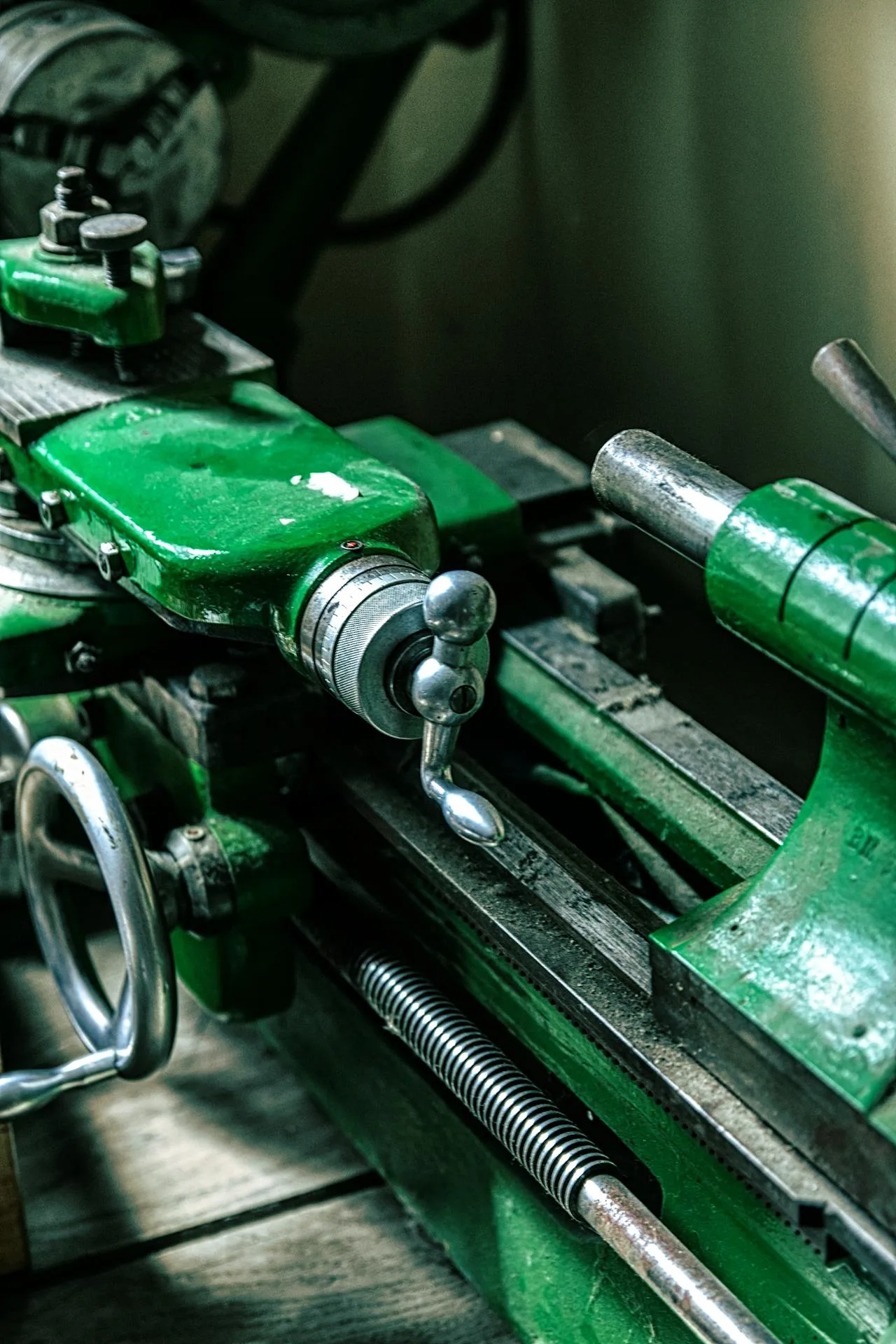
A hydraulic hose press is a machine that applies radial force to compress a metal ferrule around a hose and fitting, creating a permanent, leak-proof connection. The term overlaps with “hydraulic hose crimper” — the difference is mostly tonnage and scale. A press typically refers to machines above 100 tons, often floor-standing, designed for continuous production use.
The principle is straightforward. According to Wikipedia’s article on hydraulic presses, the concept dates back to Pascal’s Law in the 17th century: pressure applied to a confined fluid transmits equally in all directions. A small pump piston creates high pressure that a large cylinder converts into massive force. Modern presses apply this to generate 100 to 1,750 tons of crimping force.
In practice, a press differs from a portable crimper in three ways: it stays in one location (bolted to a bench or floor), it runs on mains power (110V or 220V), and it produces more consistent results because the frame is rigid and the hydraulic system is more precise. If you do more than 20 assemblies per day, you need a press — not a portable unit.
Benchtop vs Vertical: 5 Key Differences
These are the five differences that affect your daily work. Everything else is marketing.
1. Loading Direction — The Deal-Breaker
Benchtop: Hose loads from the top into a closed crimping head. The die set surrounds the ferrule and compresses inward. You need enough clearance above the machine to insert the hose with fitting attached. Straight fittings load easily. 45-degree bends load if they are short enough. 90-degree elbows cannot be loaded at all — the fitting hits the die holder before the hose seats.
Vertical: The crimping head opens from the side. You slide the hose and fitting in horizontally. This changes everything for angled fittings. 90-degree elbows, 45-degree bends, custom bent tubes — all load without restriction.
If you work with 90-degree fittings (marine steering, automotive brake lines, equipment manufacturing), you need a vertical press. Benchtop machines cannot load angled fittings. This is not a preference — it is a physical limitation.
2. Tonnage and Hose Range
Benchtop: Typically 60-200 tons. Covers quarter-inch to 2-inch hose. The TRC P165 (120T benchtop) handles up to 1½-inch 4SP. The P175 (200T) pushes into 2-inch R12 territory.
Vertical: Typically 60-100 tons. Covers quarter-inch to 1½-inch hose. The TRC VT-62 (62T vertical) handles up to 1½-inch 4SP despite its lower tonnage because the open-head design allows different die configurations.
The tonnage difference matters because benchtop machines can handle larger hoses. If you work with 2-inch hose, benchtop is your only option in the press category. Vertical heads max out around 1½-inch.
3. Floor Space and Workshop Requirements
Benchtop: Mounts on any workbench. Footprint is roughly 40×40 cm. Weight: 50-160 kg. You need a sturdy bench but no special floor preparation. Most workshops already have a suitable bench.
Vertical: Also benchtop-mountable but taller. The vertical head extends upward, requiring more ceiling clearance — typically 80-100 cm above the bench surface. Weight: 80-120 kg. The base footprint is actually smaller than a benchtop, but you need vertical space.
4. Fitting Compatibility
| Fitting Type | Benchtop | Vertical |
|---|---|---|
| Straight (0°) | ✅ | ✅ |
| 45° elbow (short) | ✅ | ✅ |
| 45° elbow (long) | ⚠️ May not fit | ✅ |
| 90° elbow | ❌ Cannot load | ✅ |
| 90° elbow + bent tube | ❌ Cannot load | ✅ |
| Custom multi-angle | ❌ Cannot load | ✅ |
5. Speed and Production Workflow
Benchtop: Faster cycle time because the closed head provides more rigid support. The dies close with less deflection, producing more consistent crimps at speed. Die changes take 30 seconds. Best for high-volume production of standard assemblies where most fittings are straight.
Vertical: Slightly slower per cycle but more versatile. You spend less time reconfiguring for different fitting angles because every angle loads the same way. Best for mixed production where fitting types vary from one assembly to the next.
Tonnage Requirements by Hose Size
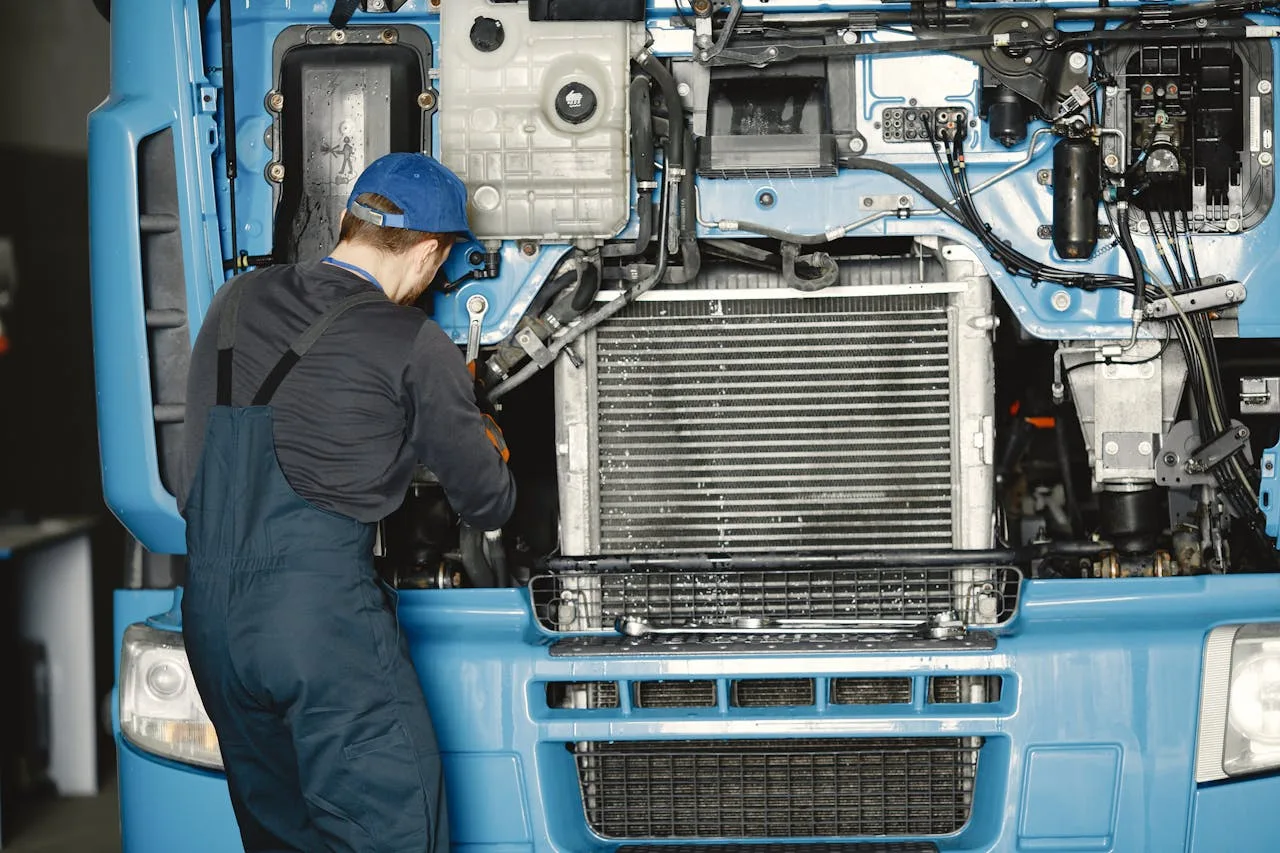
More hose layers and larger diameters require more force. This table shows what you need:
| Hose Size | Construction | Working Pressure | Tonnage Required | TRC Model |
|---|---|---|---|---|
| ¼″–¾″ | 1-wire (R1) | 2,250–1,275 PSI | 20–40T | Any benchtop or vertical |
| ¼″–1″ | 2-wire (R2) | 5,000–1,450 PSI | 40–95T | P165 (120T), VT-62 (62T) |
| ¾″–1½″ | 4-spiral (4SP) | 4,400–1,450 PSI | 95–185T | P165 (120T for ≤1¼″) |
| 1½″–2″ | 4-spiral (R12) | 3,000 PSI | 200–245T | TRC-120L (245T) |
| 2″–4″ | Multi-spiral (R13/R15) | 5,000–6,000 PSI | 450–1,750T | TRC-300L to TRC-1000L |
Most workshops need 80-120 tons. This covers quarter-inch to 1½-inch — the range used by 90% of industrial, construction, and agricultural equipment. Only mining and oilfield applications require the 200+ ton range. For those, see the heavy-duty CNC crimper lineup.
TRC Press Series Comparison
| Model | Type | Tonnage | Weight | Hose Range | Power | Cycle Time | Best For |
|---|---|---|---|---|---|---|---|
| P165 | Benchtop | 120T | 120 kg | ¼″–1½″ 4SP | 220V | 10–15 sec | General workshop production |
| P175 | Benchtop | 200T | 160 kg | ¼″–2″ 4SP | 220V | 12–18 sec | Larger hoses + mixed production |
| P32 | Benchtop | 80T | 58 kg | ¼″–1″ 4SP | 110V | 8–10 sec | Small workshops, light production |
| VT-62 | Vertical | 62T | 85 kg | ¼″–1½″ 4SP | Manual | 45–60 sec | 90° fittings, marine, automotive |
| TRC-120L | CNC Floor | 245T | 800 kg | ¼″–4″ R15 | 380V | 18–30 sec | Heavy-duty production + data logging |
P165 — Benchtop Electric Press (120T)
The P165 is TRC’s mid-range benchtop press. 120 tons handles quarter-inch to 1½-inch 4SP. Motor-driven pump with 10-15 second cycle. Semi-automatic operation: load the hose, press the button, the machine crimps to the preset diameter and stops. The operator measures with a caliper to confirm.
P175 — Heavy-Duty Benchtop Press (200T)
200 tons pushes into 2-inch R12 territory. Still benchtop-mountable at 160 kg. For workshops that need to handle both standard industrial hoses and the occasional large-bore mining assembly without investing in a floor-standing CNC machine. The extra tonnage means you never have to turn away a job because the hose is too big.
VT-62 — Vertical Press (62T)
The only vertical head in the TRC lineup. 62 tons, open-side loading, handles 90-degree elbows and bent tube fittings that benchtop machines cannot. The VT-62 is a specialist tool — if you work with marine steering systems, automotive brake lines, or equipment manufacturing where angled fittings are common, this is the machine. Manual pump operation means it works anywhere, even on a ship’s engine room.
For the complete range of high-capacity options, see the heavy-duty CNC crimper lineup.
When to Choose a Press Over a Portable Crimper
The terms overlap, but in practice: if you need 100+ tons and production-level throughput, you are shopping for a press. If you need portability or field capability, you are shopping for a crimper.
Choose a press when:
- You do 50+ assemblies per day
- Your hose range goes above 1 inch
- You need consistent ±0.05mm accuracy without operator skill
- You have a fixed workshop location with power
- You need to document crimp quality for ISO 9001 or customer audits
Choose a portable crimper when:
- You work at multiple job sites
- Your hoses are 1 inch or smaller
- Portability matters more than throughput
- You do fewer than 20 assemblies per day
- You need to carry the tool to the machine, not bring the hose to the workshop
Many operations have both — a press in the workshop for production work, and a portable unit for field calls. The portable crimper series covers field requirements, while the press handles everything that comes through the shop door.
Setup and Operation Guide
Setting up a hydraulic hose press takes about 30 minutes from unboxing to first crimp:
- Mount the press. Bolt it to a sturdy workbench or stand. The machine generates significant downward force during crimping — it needs a solid base that will not shift. For machines over 100 kg, use a dedicated steel stand bolted to the floor.
- Connect power. 110V or 220V depending on model. Most TRC presses run on standard single-phase power. Heavy-duty CNC models (245T+) may require three-phase 380V.
- Install the die set. Select the die that matches your hose size and fitting type. TRC die sets slide into the crimping head and lock with a quarter-turn. Standard sets cover quarter-inch to 2-inch. Custom dies available for specific fitting brands.
- Set the crimp diameter. On manual and semi-automatic machines, adjust the stop nut to the specification from the die chart. On CNC machines, select the profile on the touchscreen — the machine applies the correct force automatically.
- Test crimp and measure. Crimp a sample assembly, measure the ferrule diameter with a vernier caliper, compare to the spec chart. If the measurement is within ±0.05mm, the setup is correct. Adjust and re-test if needed.
- Production. Once the first crimp checks out, every subsequent crimp with the same setup is identical. Change the die set when you switch hose sizes — the 30-second die change is the only production interruption.
Browse the complete TRC hydraulic crimper catalog to compare all press and crimper models.
Hydraulic Hose Press FAQ
What is the difference between a hydraulic hose press and a crimper?
Functionally, they do the same thing — compress a ferrule onto a hose fitting. The difference is scale and context. A “press” typically refers to larger machines (100+ tons, benchtop or floor-standing) built for production workshops. A “crimper” can include smaller manual and portable units. In practice, the terms are used interchangeably. If you need 100+ tons, you are looking at presses.
Do I need a vertical press for 90-degree fittings?
Yes. Benchtop presses load from the top — a 90-degree elbow cannot be inserted because the fitting hits the die holder. A vertical press loads from the side, accepting any fitting angle. If you work with marine, automotive, or equipment hydraulics where 90-degree elbows are common, a vertical press is essential. The VT-62 (62T) is TRC’s vertical option.
What tonnage do I need for 1-inch 2-wire hose?
1-inch SAE 100R2 (2-wire braid) requires approximately 60-95 tons. Any TRC press rated at 95T or above handles this size. The P165 (120T) covers this with tonnage to spare, giving you room for larger hoses too.
Can I mount a press in a service van?
Smaller benchtop models (under 60 kg) can be mounted in large service vans or truck bodies. The P32 (80T, 58 kg) is the largest practical option for vehicle mounting. Anything heavier needs a fixed workshop location. For true mobile service, use a portable battery crimper instead.
How accurate is a benchtop press compared to CNC?
Benchtop semi-automatic: ±0.05mm accuracy, depends on correct stop nut adjustment. CNC: ±0.03-0.05mm, automatic positioning, no manual adjustment needed. For most industrial applications, ±0.05mm is sufficient. CNC becomes necessary for safety-critical assemblies (oil and gas, aerospace) where every crimp must be documented.

