Portable Hydraulic Hose Crimper: Field Service Guide for 2026
A portable hydraulic hose crimper is what separates a 30-minute field repair from a half-day shutdown. When an excavator hose bursts on a construction site, you either fix it on the spot or you wait for a service truck — and wait, and wait, while $2,500 per hour drains from the project budget.
This guide covers the 4 types of portable hydraulic hose crimpers, a specification comparison table with real numbers, the weight-versus-capability trade-offs that matter in the field, and actual repair times from construction, mining, and agricultural operations. Everything here is based on what happens on real job sites, not spec sheets.
Why Field Service Teams Need a Portable Crimper
Here is the math that justifies owning one, broken down by industry:
Construction
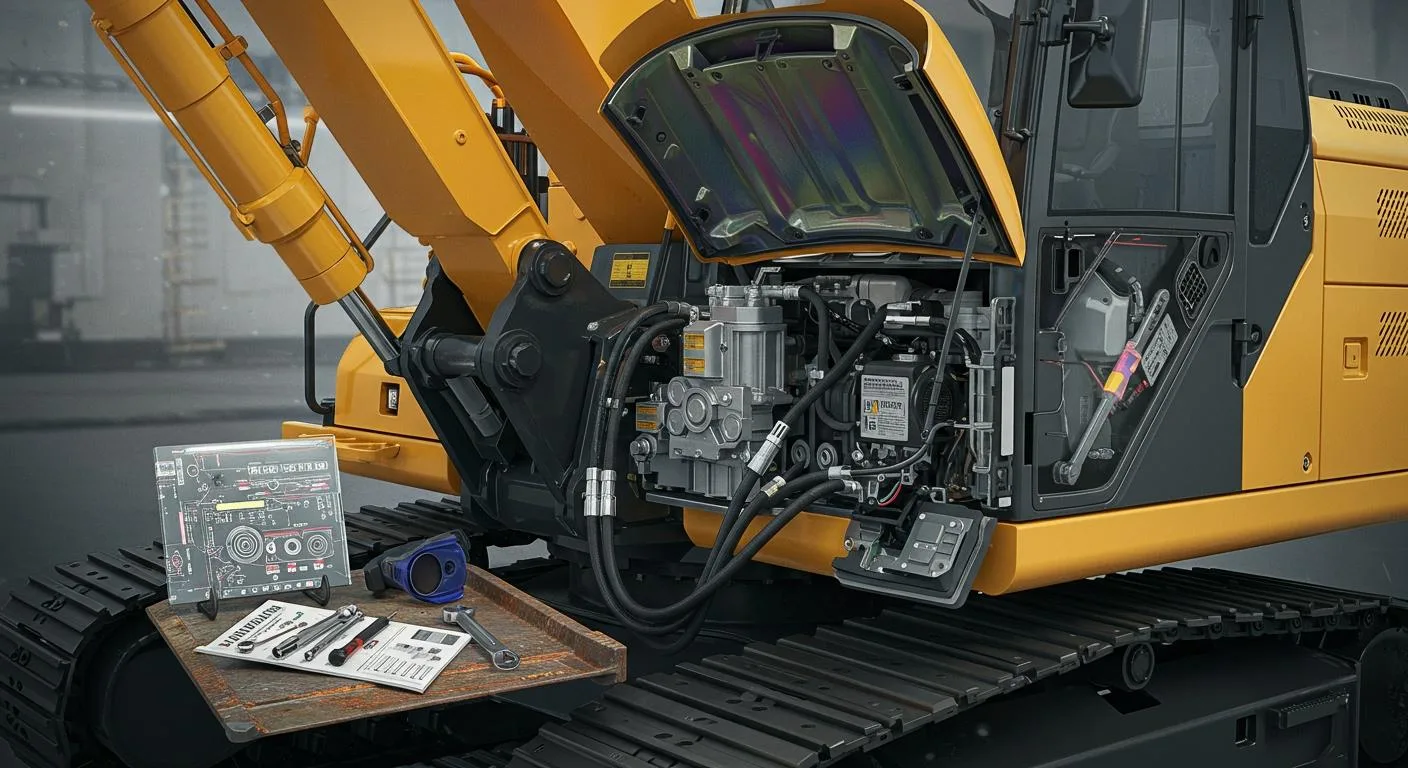
An excavator hose burst on a construction site costs $2,500 per hour in downtime. A field repair with a portable crimper takes 25 minutes. Calling a service truck takes 4-6 hours. The difference: $10,000+ per incident. Most excavators see 2-3 hose failures per year.
Agriculture
A combine harvester covers 20-30 acres per hour during harvest. At $8-12 per bushel of wheat, every hour of downtime costs $800-$1,200 in lost crops. A dealer service call takes half a day minimum. A field repair takes 22 minutes. During harvest season, the nearest dealership is often 60-120 km away — they cannot get to you today.
Mining
An underground loader with a burst steering hose blocks the entire haulage decline. Production for the section stops. Downtime cost: $5,000-$50,000 per hour depending on the operation. A workshop crimper like the TRC-120L handles the repair in 45 minutes. The alternative — flying in a hose assembly from the nearest city — takes 18+ hours.
The ROI math: Most working machines see 2-3 hydraulic hose failures per year. A portable crimper costs $1,500-$3,000. It pays for itself on the first repair. After that, it saves money every time a hose bursts.
4 Types of Portable Crimpers
1. Handheld Manual Crimpers (Under 15 kg)
Small, light, hand-operated. Force output: 10-30 tons. Covers quarter-inch to half-inch hoses. The smallest and cheapest option.
Limited use. These handle low-pressure hoses and small diameters only. Not suitable for construction equipment (1-inch+) or high-pressure systems (3,000+ PSI). Good for automotive brake lines, power steering hoses, and light industrial applications. If you only work with quarter-inch to half-inch hose and budget is tight, a handheld manual unit gets the job done.
2. Cordless Battery Crimpers (20-30 kg)
Rechargeable lithium battery drives a motor. One-button operation. 80-200 tons of force. 40-60 crimps per charge. This is the category that changed mobile hose service.
Before battery units, mobile technicians had two choices: hand-pump slowly (60-90 seconds per crimp) or haul a generator to run an electric unit. Battery crimpers like the P20CS (80T, 25 kg) deliver 8-second crimps with zero power infrastructure. Charge from any 12V vehicle outlet. Run all day on one charge for typical service volumes.
The most popular choice for mobile service. Covers quarter-inch to 1-inch 4SP — the range used by 90% of construction and agricultural field repairs.
3. 12V Vehicle-Powered Crimpers
Runs directly off a vehicle’s 12V electrical system. No separate battery to charge. Continuous operation as long as the vehicle engine runs. Force: 60-80T typical.
Good for service trucks that are always near the vehicle. The downside: you are tethered to the truck. If the broken machine is 100 meters into a construction site, you either drive closer or run a long extension — neither is always possible. Battery units are more flexible.
4. Manual Field Crimpers (25-40 kg)
Larger hand-pump units like the P16HP (95T, 34 kg) and P20LHP (185T, 25 kg). Technically portable — one person can carry them — but hand-pump operated rather than battery powered. Heavier to carry than the US18 but the same weight as the 80T battery units, with more than double the force.
The reliable backup. No batteries to die, no chargers to forget, no electronics to fail in rain or salt spray. Works at midnight in the rain in the middle of a wheat field. Every mobile service truck should carry one as insurance. Also the primary choice for operations in extreme environments where battery performance degrades — arctic cold, desert heat, offshore saltwater.
Specification Comparison Table
| Model | Type | Tonnage | Weight | Hose Range | Power | Crimps/Charge | Cycle Time | Price Range |
|---|---|---|---|---|---|---|---|---|
| US18 | Battery | 60T | 18 kg | ¼″–¾″ 4SP | 12V Li-ion | 40–50 | 8–10 sec | $1,500–$2,000 |
| US20 | Battery | 80T | 25 kg | ¼″–1″ 4SP | 12V Li-ion | 40–60 | 8–10 sec | $1,800–$2,500 |
| P20CS | Battery | 80T | 25 kg | ¼″–1″ 4SP | 12V Li-ion | 40–60 | 8–10 sec | $1,800–$2,500 |
| P16HP | Manual | 95T | 34 kg | ¼″–1″ 4SP | None | Unlimited | 60–90 sec | $1,200–$1,800 |
| P20LHP | Manual | 185T | 25 kg | ¼″–1½″ 4SP | None | Unlimited | 60–120 sec | $1,500–$2,000 |
Weight vs Capability Trade-Offs
Heavier machines deliver more force. Lighter machines are easier to carry. The trade-off is real and you need to pick based on your actual work patterns.
| Weight Class | Tonnage | Hose Coverage | Carry Distance | Best Application |
|---|---|---|---|---|
| Under 15 kg | 10-30T | ¼″–½″ | 200m+ one-handed | Automotive, light industrial |
| 15-25 kg | 60-80T | ¼″–1″ | 100m one-handed | Construction, agriculture, mobile service |
| 25-35 kg | 95-200T | ¼″–1½″ | 50m (two hands) | Heavy equipment, mining overflow |
| 35-50 kg | 120-200T | ¼″–2″ | Hand truck only | Workshop + truck mounted |
Practical advice: If you regularly carry the crimper more than 50 meters from your truck, stay under 25 kg. The US20 and P20CS are at the upper limit of what most people can carry one-handed for more than a minute. If you mostly drive up to the machine, go heavier — the P20LHP (25 kg, 185T) gives you 1½-inch capability at the same weight as an 80T battery unit.
TRC Portable Series
US18 — Compact Battery Crimper (60T, 18 kg)
The US18 is TRC’s lightest battery unit. Under 18 kg with the battery installed. 60 tons of force covers quarter-inch to three-quarter-inch hose — the range used by most automotive and light equipment field service operations.
Who should buy it: Auto repair shops that offer mobile service, small equipment dealers, maintenance departments that only work with smaller hoses. If you never see 1-inch hose on your service calls, the US18 saves you 7 kg compared to the US20 — that is the difference between easy one-handed carry and struggling.
US20 / P20CS — Full-Size Battery Crimper (80T, 25 kg)
80 tons in a 25 kg package. Quarter-inch to 1-inch 4SP. 40-60 crimps per charge. This is the tool for construction and agricultural mobile service — it handles the two most common field repair sizes (1-inch 2-wire and three-quarter-inch 1-wire) with tonnage to spare.
Who should buy it: Mobile hose service providers, construction site maintenance teams, agricultural equipment dealers. Anyone who does more than 5 field crimps per week and needs each one done in 8 seconds. This is the single most popular portable crimper in the TRC lineup.
P16HP — Manual Field Crimper (95T, 34 kg)
95 tons, 34 kg, hand-pump operation. Covers quarter-inch to 1-inch 4SP — same range as the battery units but with zero power dependency. Carry it in the truck as your backup for dead-battery days, or as your primary tool if you work in remote locations where charging is not an option.
Who should buy it: Remote construction sites, offshore platforms, underground mines, farms without reliable power. Anyone who cannot afford battery failure. The 34 kg weight is manageable for short carries but requires two hands.
P20LHP — Manual Heavy-Duty (185T, 25 kg)
The surprise in the TRC lineup: 185 tons at only 25 kg — the same weight as the 80T battery units but more than double the force. Covers quarter-inch to 1½-inch 4SP. The P20LHP achieves this through a higher-pressure hydraulic system and longer pump lever. Each crimp takes 90-120 seconds of pumping, versus 8 seconds for battery, but the force output opens up 1½-inch capability that no other 25 kg unit can match.
Who should buy it: Service operations that encounter 1½-inch hose on construction sites and mining operations. The P20LHP is the only 25 kg crimper that handles 1½-inch 4SP. If you need that capability and cannot carry 34 kg, this is your tool.
Real-World Use Cases and Repair Times
Construction: CAT 320 Excavator — 25 Minutes
The most common portable service call in construction. A CAT 320 excavator boom cylinder hose bursts while digging. The operator shuts down. The site superintendent calls.
Timeline:
- Drive to the excavator: 10 minutes (from service truck parking)
- Cut the damaged section: 30 seconds (C250CS cutter)
- Skive the outer cover: 2 minutes
- Insert fitting and position ferrule: 2 minutes
- Crimp: 8 seconds (battery) or 90 seconds (manual)
- Pressure test to 1.5× working pressure: 5 minutes
- Total: 20-25 minutes
Cost of repair: $15 in parts + $0 in labor (your own crew) + 25 minutes of downtime. The alternative: $10,000+ in downtime waiting for a service truck.
Agriculture: John Deere S770 Combine — 22 Minutes
October. Wheat harvest. A combine header reel hose bursts in a 200-acre wheat field. The combine sits dead. The nearest John Deere dealer is 120 km away. “We can get a tech out tomorrow.” Tomorrow is not an option during a 5-day harvest window.
Timeline:
- Drive from shop truck to combine: 10 minutes
- Cut, skive, crimp, test: 12 minutes
- Total: 22 minutes
The combine is cutting wheat again before the hour is out. The P20CS battery crimper handles the 1-inch R2 hose in a single 8-second crimp.
Mining: CAT R2900 Underground Loader — 45 Minutes
Mining repairs take longer because the hoses are larger (2-inch R13) and access is difficult in underground environments. A 2-inch R13 hose requires 245 tons — beyond any portable crimper. But the steering and control lines (three-quarter-inch to 1-inch) that fail most often on underground loaders are well within portable range.
For 2-inch+ hoses, you need a workshop CNC crimper like the TRC-120L (245T). Portable units handle the smaller, more frequent failures while the workshop handles the big jobs.
Building a Complete Field Repair Kit
A portable crimper alone is not enough. You need a complete kit to do field repairs. Here is what goes in the truck:
| Item | Model | Weight | Purpose |
|---|---|---|---|
| Battery crimper | US20 or P20CS (80T) | 25 kg | Primary crimping tool |
| Manual backup | P16HP (95T) | 34 kg | Dead-battery insurance |
| Portable cutter | C250CS | 8 kg | Clean cuts on wire-braid hose |
| Die set box | ¼″–1″ standard set | 5 kg | Matches all common hose sizes |
| Fitting kit | JIC + ORFS + BSP | 10 kg | 50-100 fittings covering ¼″–1″ |
| Skiving tool | Hand skiver | 1 kg | Outer cover removal for high-pressure |
| Caliper | Digital vernier | 0.2 kg | Measure crimp diameter |
| Pressure test kit | Hand pump + gauge | 3 kg | Test to 1.5× WP |
| 12V charger | Cigarette lighter adapter | 0.5 kg | Recharge battery between calls |
| Total kit weight | ~55 kg | Fits in a standard pickup truck | |
Field Maintenance Tips
Portable crimpers take abuse on job sites. Here is how to keep yours working in harsh conditions:
- Clean die sets after every use. Mud, dust, and hydraulic fluid residue build up on die surfaces and cause inconsistent crimps. Wipe with a clean rag and apply a light coat of oil. Dies are made from Cr12MoV tool steel — they resist corrosion but not neglect.
- Check hydraulic oil level monthly. Manual crimpers can lose hydraulic fluid through seals over time. Low oil means inconsistent pressure and incomplete crimps. Top up with the manufacturer’s specified fluid grade.
- Store batteries at 50% charge for long-term storage. Do not store lithium batteries fully charged (degrades capacity) or fully depleted (can cause cell damage). Charge to 50% before putting the crimper away for the off-season.
- Protect from rain and saltwater. Battery crimpers have electronics. If you work in marine or coastal environments, keep the control unit covered during use. The manual P16HP has no electronics — it works in any weather.
- Carry spare die sets. Die sets are small and inexpensive relative to the cost of a service call. Keep a full set covering quarter-inch to 1-inch in your truck. Running into a hose size you cannot crimp means driving back to the shop — which defeats the purpose of carrying a portable unit.
- Inspect hoses before crimping. Check for wire braid exposure, cracked covers, or inner tube damage. Crimping a damaged hose is a waste of time and materials — it will fail again quickly. Replace the entire hose section.
For the complete range of portable and workshop options, see the TRC hydraulic crimper catalog.
Portable Hydraulic Hose Crimper FAQ
How much does a portable crimper weigh?
TRC portable units range from 18 kg (US18 battery) to 34 kg (P16HP manual). Battery models in the 20-25 kg range are the most popular — light enough for one person to carry, powerful enough for 1-inch hose. Anything over 30 kg usually requires a hand truck or two-person carry for distances over 50 meters.
Can a portable unit handle 1-inch 2-wire hose?
Yes. 1-inch SAE 100R2 (2-wire) requires about 60-95 tons. The P20CS battery unit (80T) and P16HP manual (95T) both handle this size. It is the most common field repair size for construction equipment. The P20LHP (185T) handles up to 1½-inch 4SP — still at only 25 kg.
How many crimps per charge on a battery unit?
The P20CS delivers 40-60 crimps per full charge. For a mobile service doing 5-8 repairs per day (10-16 crimps total), one charge lasts 3-5 days. Recharge from any 12V vehicle outlet in about 2 hours. Carry a second battery for back-to-back heavy days.
Is a manual or battery crimper better for field work?
Battery if you do more than 5 crimps per day. 8-second crimps versus 90-second manual pumping adds up fast — 20 crimps a day is 27 minutes on battery versus 30 minutes of continuous hand pumping on manual. Manual if you work in extreme conditions where batteries fail (arctic cold below -20°C, extended multi-day trips without charging access, offshore saltwater). Most professionals carry both — battery as primary, manual as backup.
What is the complete field repair kit cost?
A complete mobile hose service kit — battery crimper ($1,800-$2,500), manual backup ($1,200-$1,800), portable cutter ($400-$600), fitting assortment ($300-$500), hand tools and test equipment ($200-$400) — totals $3,900-$5,800. At $150-$350 per field repair and 5-8 repairs per day, the kit pays for itself in under 5 business days.