Crimper for Hydraulic Hose: What Buyers Must Specify Before Inquiry
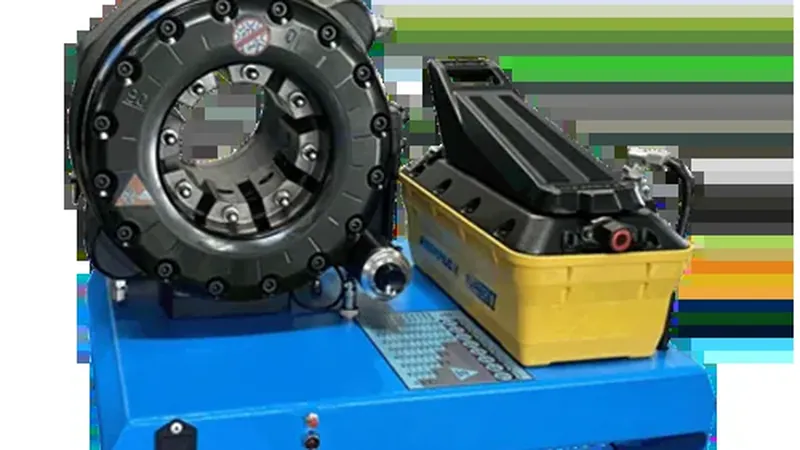
The most common reason a buyer ends up with the wrong crimper for hydraulic hose is not a bad supplier. It is a vague inquiry. A message that says “I need a crimper for hydraulic hose, what do you recommend?” gives the supplier nothing to work with except the budget. The supplier either guesses (and guesses wrong), or quotes the safest middle-of-the-road machine (which is usually too much machine for the actual workload). Either way, the buyer pays for the missing information later.
This article lays out the six inputs a supplier needs to make a real recommendation. Gather them before you send the inquiry, and you will get a specific TRC model recommendation in one round instead of three.
Why “I Need a Crimper” Is Not Enough Information
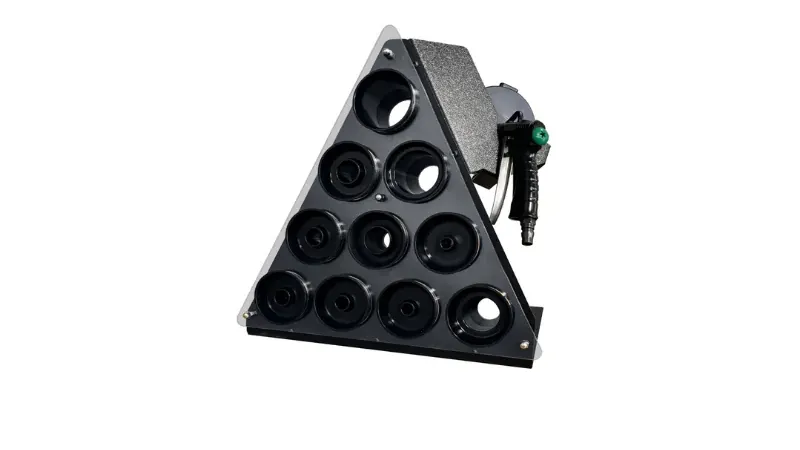
A crimper for hydraulic hose is specified by what it has to do to a specific assembly. That means the hose type, the fitting system, the daily volume, the site it will run in, and the verification the customer requires. Without those, every recommendation is a guess.
| What the buyer says | What the supplier hears | What is actually missing |
|---|---|---|
| “I need a crimper for 1-inch hose.” | “Any machine that reaches 1-inch OD.” | Braided or spiral? Which fitting family? Which die system? |
| “I need a workshop crimper.” | “A powered electric machine.” | What hose mix? What monthly volume? What power is available? |
| “What is your best price?” | “Quote the cheapest acceptable spec.” | What tooling is included? What verification is required? What service scope? |
| “I need a portable unit.” | “A battery or hand-pump unit.” | For what hose range? On what vehicle? With what charging setup? |
Every one of those missing inputs is a variable the supplier will either fill in with a default (which may not match your application) or leave to you to discover after delivery.
The Engineering Reason the Inquiry Must Be Specific
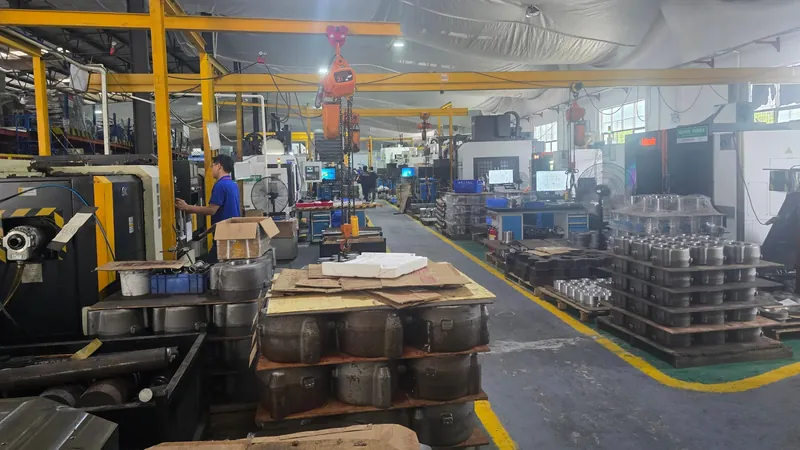
A hose crimper is not a standalone tool. It is the deformation station in a hose coupling system. The hose coupling is the connector at the end of a hose, and the crimped assembly is what makes that connector permanent and pressure-rated. According to the Wikipedia entry on hose couplings, coupling systems rely on highly specific mating geometries, and incompatibilities exist even within the same nominal sizes.
That last sentence is the engineering reason why a vague inquiry cannot produce a specific recommendation. A “1-inch hose” can mate with several different fitting families, and each fitting family has its own ferrule profile, its own die series, and its own target crimp diameter. The crimper, the die, the ferrule, and the published crimp data form a controlled system. Changing any one of the four invalidates the validation.
| Coupling family | Mating geometry | Crimper requirement |
|---|---|---|
| JIC 37° flare (SAE J514) | Threaded fitting with machined 37° seat; the seat, not the crimp, carries the seal. | Crimp attaches ferrule to hose; thread engages the flare. |
| ORFS (O-ring face seal, SAE J1453) | Flat face with O-ring groove; O-ring carries the seal. | Crimp attaches ferrule; O-ring at the face carries the static seal. |
| ORB (O-ring boss, SAE J1926) | Straight-threaded boss with O-ring; O-ring carries the seal at the boss. | Crimp attaches ferrule; O-ring at the boss carries the static seal. |
| NPT/NPTF tapered pipe thread | Tapered threads wedge against each other or seal with thread sealant. | Crimp attaches ferrule; thread interference carries the seal. |
| SAE 4-bolt flange (SAE J518) | Flat face clamped between two flanges with an O-ring. | Crimp attaches flange to hose; O-ring carries the seal. |
| BSP (British Standard Pipe) | Parallel or tapered thread, with bonded seal or O-ring. | Crimp attaches ferrule; thread or O-ring carries the seal. |
The crimper does not know which family you are using. The die does. The target crimp diameter published in the crimp data sheet does. When a buyer asks for “a crimper for 1-inch hose” without naming the fitting family, the supplier cannot know whether the recommendation should be a no-skive one-piece die series, an interlock die series that requires skiving, or a flange-crimp die series. Each requires different tooling.
A second engineering fact compounds this. Wikipedia notes that permanent swaged or crimped couplings require special hydraulic ram machinery and matched dies, while reusable field-attachable couplings allow manual field attachment. The two coupling types are not interchangeable on the same crimper. A buyer who has reusable couplings today and wants to switch to permanent crimped couplings tomorrow is buying a crimper, a die set, a fitting inventory change, and a process change all at once.
The Controlled-System Principle
The hose, fitting, ferrule, die, and target diameter form what ISO/TS 17165-2:2018 calls a controlled system. The principle is simple to state and hard to communicate in a one-line inquiry.
| Variable | Decided by | What breaks if it is wrong |
|---|---|---|
| Hose reinforcement (braid vs spiral) | Hose spec. | Tonnage class of the machine. |
| Ferrule profile | Fitting family. | Die series that fits. |
| Target crimp diameter | Component manufacturer’s data sheet. | Whether the finished assembly passes acceptance. |
| Skive requirement | Fitting system design. | Whether the ferrule grips the wire or only the cover. |
| Die series | Machine model + fitting family. | Whether the crimp profile is correct. |
| Verification requirement | Customer spec + industry standard. | Whether the assembly is traceable in service. |
A crimper quote that does not address all six variables is, in effect, a quote for a machine that has not been specified for the buyer’s application. The buyer who accepts such a quote is paying for the missing information later, in trial-and-error setup, in scrap, or in field failures.
The Six Inputs That Decide the Machine
Input 1 — Component Information
The most important input. The hose and fitting system decides the die, the target crimp diameter, and the tonnage class of the machine.
| What to send | Example |
|---|---|
| Hose part number(s) and construction | “SAE 100R2 1/2-inch braided” or “EN 856 4SH 1-inch spiral.” |
| Fitting part number(s) and series | “One-piece no-skive, 1/2-inch” or “Interlock, 1-inch stem + ferrule.” |
| Uncrimped ferrule OD, measured at the bench | “1-inch interlock ferrule measures 25.4 mm uncrimped.” |
| Target crimp diameter from the component data sheet | “Target 23.1 mm ±0.05 mm per the manufacturer’s chart.” |
| Skive or no-skive | Whether the fitting system requires external or internal skiving. |
If you do not have the target crimp diameter published, the supplier cannot tell you whether the die set will produce an acceptable crimp. This is the single most important piece of information in the inquiry.
Input 2 — Workpiece Geometry
The machine has to physically accept the assembly.
| What to send | Example |
|---|---|
| Maximum hose OD you will crimp | “Up to 2-inch R13, OD about 56 mm.” |
| Maximum fitting length | “Some 90° elbow fittings are 220 mm long.” |
| Maximum assembly weight | “2-inch R13 assemblies weigh about 8 kg per meter.” |
| Special geometries | 90° / 45° elbows, straight-only, multi-axis, bulkhead fittings. |
For long elbow fittings, a vertical machine like the TRC US18 (56 ton, 0.75 kW, open-frame column with horizontal pressure adjustment) or TRC US20 (62 ton) is often the only option, because the elbow can hang below the die opening.
Input 3 — Workload
The daily and monthly volume decides whether the format is manual, pneumatic, electric, or CNC.
| What to send | Example |
|---|---|
| Monthly volume | “About 400 assemblies per month.” |
| Peak volume | “Up to 80 per day during harvest season.” |
| Batch size | “Typically 20 of the same configuration per batch.” |
| Hose mix distribution | “60% 1/2-inch 2SN, 30% 1-inch 2SN, 10% 1-inch 4SH.” |
| Changeover frequency | “About 6 die changes per day.” |
A shop doing 400 mixed assemblies per month is in the sweet spot for a 137-ton powered electric machine like the TRC P20 (3 kW motor, 600–850 crimps per hour) or TRC P32A. A shop doing 80 field repairs per month fits a battery-powered portable like the TRC P20CS.
Input 4 — Site Conditions
The site decides which power formats are even possible.
| What to send | Example |
|---|---|
| Available power | “220V single-phase” / “380V three-phase” / “12V vehicle” / “shop air 90 PSI.” |
| Space available | “About 2 m × 3 m bench area.” |
| Floor loading | “Second-floor workshop, 500 kg/m² limit.” |
| Environment | “Clean indoor workshop” / “field, dust, occasional rain” / “mining site.” |
| Vehicle integration (if mobile) | “Service truck, bed space about 1.2 m × 0.6 m, 12V available.” |
A three-phase 380V machine cannot run in a workshop that only has 220V single-phase. A pneumatic unit cannot run on a service truck. These constraints eliminate formats before any tonnage discussion starts.
Input 5 — Tooling and Inspection
What you already have, and what inspection process the assemblies will go through.
| What to send | Example |
|---|---|
| Existing die sets | “We have a TRC P20 die set, 14 dies, covering 6–60 mm.” |
| Calipers and gauges | “0.02 mm caliper; go/no-go gauges for our standard sizes.” |
| First-piece process | “First piece measured and recorded per batch.” |
| Functional test requirement | “Proof pressure test at 2× WP before shipping.” |
| Cleanliness requirement | “ISO 4406 code 15/13/10 required for servo applications.” |
If you already have a die set, the recommendation should stay within the matching machine family. If you have no inspection tools, the supplier should quote them alongside the machine — because a machine without measurement is half a workflow.
Input 6 — Verification Requirement
What the finished assembly has to prove, and to whom.
| What to send | Example |
|---|---|
| Customer spec | “End customer requires burst test at 4× WP.” |
| Industry standard | “SAE J343 impulse test, 200,000+ cycles.” |
| Records requirement | “Each assembly must carry a serial number and batch record.” |
| Certifications | “Customer audit requires CE-marked equipment.” |
| Documentation | “Crimp data sheet for each hose/fitting combination must be on file.” |
OEM supply, mining, marine, and aerospace applications almost always require batch records and functional test results. For those, a CNC machine with automatic records — like the TRC P20D or P32D — is usually the right call.
The Total Cost of Ownership Framework
A focused buyer evaluates the crimper as a total cost of ownership, not as an acquisition price. The TCO framework divides the cost of a capital asset into five categories: acquisition, operating, maintenance, downtime, and disposal. On a hydraulic hose crimper, the ownership cost is typically several times the acquisition cost over a five-year horizon.
| TCO category | What it includes on a crimper | How the six inputs affect it |
|---|---|---|
| Acquisition | Machine, die sets, voltage option, factory delivery, installation. | Inputs 1, 2, and 5 set the die count and voltage option; buying dies with the machine is cheaper than adding them later. |
| Operating | Electricity, hydraulic oil, consumables, operator labor per assembly. | Input 3 (workload) sets the operator count; matching motor size to the work avoids over-spending on electricity. |
| Maintenance | Die reconditioning, oil changes, seal kits, blade sharpening. | Input 5 (existing tooling) decides what can be reused; Input 1 (hose mix) sets die wear rate. |
| Downtime | Line stoppage for die change, machine failure, missing tooling. | Input 3 (changeover frequency) decides whether parallel stations are worth it; a four-hour response window on technical support limits downtime. |
| Disposal | Resale value at end of life; cost of scrapping worn tooling. | A standardized platform (e.g. the TRC P20 die series, shared across P20/P20S/P20D/P20CS) holds resale value better than a one-off. |
A buyer who evaluates only acquisition cost will usually choose the cheapest acceptable machine, then discover that operating and maintenance costs over five years exceed the acquisition cost. A buyer who evaluates all five categories will usually choose the machine whose die series matches the dominant hose size, whose voltage matches the site, and whose control format matches the workload — even if that machine is not the cheapest in the quote.
A Useful Inquiry Package — The Template
Below is a template you can copy into an email or inquiry form. Filling it in takes about 15 minutes, and it gets you a real answer on the first round.
“` Subject: Crimper inquiry — [your company] / [your application]
- Components
- Hose: [part number, construction]
- Fitting: [part number, series, coupling family]
- Uncrimped ferrule OD: [measured at bench, mm]
- Target crimp diameter: [from data sheet, mm]
- Skive / no-skive: [which]
- Workpiece geometry
- Maximum hose OD: [mm]
- Maximum fitting length: [mm, note 90° elbows if any]
- Special geometries: [elbows, bulkhead, etc.]
- Workload
- Monthly volume: [number]
- Peak volume: [number]
- Hose mix: [% by type]
- Die changes per day: [approximate]
- Site
- Available power: [voltage, phase, or air pressure]
- Space: [m × m]
- Environment: [workshop / field / vehicle]
- Tooling
- Existing die sets: [list or “none”]
- Inspection tools: [calipers, gauges]
- First-piece process: [yes / no]
- Verification
- Customer spec: [standard or “none”]
- Records requirement: [yes / no]
- Certifications required: [CE / none]
Target timeline: [when you need the machine in service] “`
With that package, a supplier can give you a specific TRC model, a die set configuration, a power and voltage option, and a service scope — in one reply.
How the Six Inputs Map to TRC Models
| Input profile | Likely TRC recommendation |
|---|---|
| Field, low volume, up to 1″ braided, 12V only | TRC P20CS (80 ton, 12 V) |
| Small workshop, 50–200/month, mixed braided | TRC P20 (3 kW, 137 ton, classic) or TRC P20S (compact, 3.6 s cycle) |
| Workshop production, mixed up to 2″ R13 | TRC P32A (value pick, drawer-type die cabinet) |
| Mixed production with traceability | TRC P20D or TRC P32D (CNC, batch records) |
| Mining / heavy, 2″–4″ R13 | TRC P140, TRC P160, TRC P175 |
| Low budget, entry-level manual | TRC P10HP or TRC P16HP |
| Long 90° / 45° elbow fittings, bench vertical | TRC US18 (56 ton, 0.75 kW) |
Browse the full hydraulic hose crimper category or use the crimper selection resource to self-screen before you send the inquiry. All TRC crimpers ship from a 5,000 m² CE/SGS/UL+ISO certified factory serving more than 300 customers across 50+ countries, with a four-hour response window on technical inquiries.
Frequently Asked Questions
What information do I need to send a crimper supplier?
Six inputs: component information (hose + fitting part numbers, ferrule OD, target crimp diameter, coupling family), workpiece geometry (max hose OD, fitting length, special geometries), workload (monthly volume, peak, mix), site conditions (power, space, environment), tooling you already have, and the verification requirement (customer spec, records, certifications).
Why do I get different quotes from different suppliers for “the same” machine?
Because “the same machine” is not a well-defined spec without the six inputs. Each supplier fills in the missing variables differently — different tonnage class, different die set, different control system, different service scope. The quotes look comparable on price but are for different configurations.
Do I need to know the target crimp diameter before I buy a crimper?
Yes. The target crimp diameter comes from the hose and fitting manufacturer’s crimp data sheet, and it decides whether the machine + die combination can produce an acceptable crimp. Without it, you are buying a machine and hoping it will work for your assembly.
Why is “1-inch hose” not enough information?
Because hose coupling systems rely on highly specific mating geometries, and incompatibilities exist even within the same nominal size. A 1-inch SAE 100R2 braided hose, a 1-inch EN 856 4SH spiral hose, and a 1-inch 4-bolt flange assembly all use different ferrule profiles, different die series, and different target crimp diameters. The crimper recommendation depends on which one you have.
Buyer question: how many dies do I need?
It depends on your hose mix. A workshop running five hose sizes needs at least five die sets, one per size. A workshop running only 1/2-inch hose needs one die. Buying a machine with too few dies is a common false economy — adding dies later costs more than buying them with the original machine. TRC ships the P20 with 10 standard dies (P20/14 through P20/47) covering 14–52 mm crimp diameters.
References and technical boundaries
- ISO/TS 17165-2:2018 — Hydraulic hose assemblies, practices. Supports the requirement that hose, fitting, die, and setting form a controlled, validated system.
- SAE J343 — Test procedures for SAE 100R series hose assemblies. Defines the proof and impulse tests referenced in the verification requirement.
- Wikipedia — Hose coupling. Reference for coupling family mating geometries and the permanent vs reusable distinction.
- Wikipedia — Total cost of ownership. Reference for the five-category TCO framework applied to capital equipment.