How to Make a Hydraulic Hose Crimping Machine: Risks and Safer Options
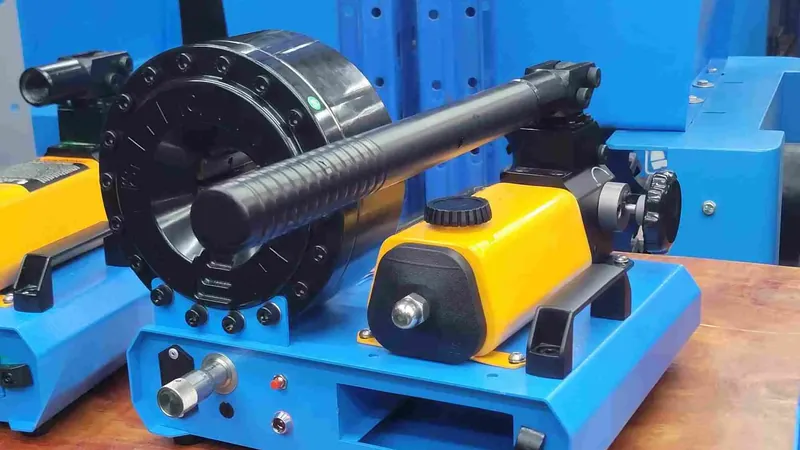
We understand why the question gets asked. A hydraulic hose crimping machine looks simple from the outside: a frame, a hydraulic cylinder, a set of dies, and a way to close them around a ferrule. A workshop with a welder, a lathe, and a hydraulic press might reasonably think they could build one. Some have tried. A few have produced a working prototype for one hose size, at low volume. Almost none have produced a machine that is defensible across a real production workload.
This article respects the question. It lays out what “making a hydraulic hose crimping machine” actually requires, where the costs accumulate, why the press frame is the easy part and the dies are the hard part, what the safety and validation gaps look like, and what the safer TRC alternatives are. The honest answer for most builders is that a factory-built entry-level machine is cheaper than a defensible DIY build, and safer by a wide margin.
What Building a Crimper Actually Requires
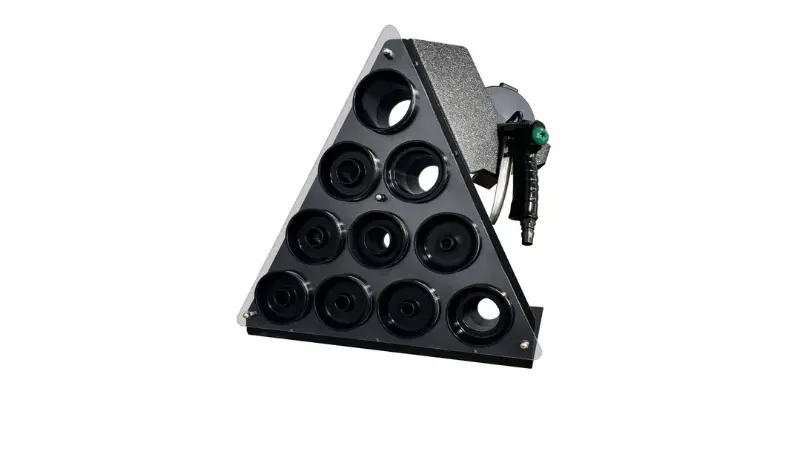
A hydraulic hose crimping machine is not one component. It is eight subassemblies that have to work together, each engineered to a specific tolerance, each capable of withstanding full crimp tonnage thousands of times. The frame is one of the eight, and it is the easiest of the eight.
| Subsystem | What it requires | Where DIY builds typically fail |
|---|---|---|
| Frame | Rigid steel frame that resists full crimp tonnage without flexing; stiffness, not just strength. | Under-built frames flex, producing oval crimps. |
| Hydraulic system | Pump, cylinder, valves, hoses, fittings rated for operating pressure; clean assembly. | Wrong valve sizing; contaminated oil; undersized pump. |
| Die set | Segmented radial dies, machined to correct cone angle, profile, length; hardened to HRC 58–62 in Cr12MoV. | This is where most DIY builds fail. A die is not a piece of metal with a hole. |
| Pressure control | Unloading valve, relief valve, pressure gauge, sequence valve; calibrated. | A pump is not a pressure control system. Without calibrated relief, the cylinder will over-travel or stall. |
| Master die or conical piston | Converts cylinder linear force into radial closure; cone angle matched to dies within tight tolerance. | Mismatched cone angles produce uneven segment closure and oval crimps. |
| Setting system | Stop the cycle at the correct position; manual, pressure-based, or CNC. | Without a defined stop, the operator cannot reproduce a target crimp diameter. |
| Guarding | OSHA 1910.212-compliant point-of-operation guards; interlocked operation. | Most DIY builds have no guarding. Stored energy in the ferrule can eject a die segment. |
| Validation | Burst, impulse, and pull-off testing for every hose + fitting combination the machine will crimp. | DIY builds are almost never validated. The first sign of a bad crimp is a field failure. |
Why a Press Frame Is Not Enough
The most common DIY starting point is an existing hydraulic press. The press frame supplies force in one axis, but hose crimping requires radial closure. A shop press is a frame, a hydraulic ram, and a bed. The ram moves in one axis; the workpiece is trapped between two flat or shaped surfaces. That geometry produces an oval crimp, not a round one.
Converting uniaxial press force into radial die closure requires a conical master die or a mechanical linkage that splits the ram force into six to ten radial vectors. That conversion is real engineering, not a bolt-on accessory. The cone angle has to match the die segment angles within a tight tolerance; the segment-to-segment clearance has to be uniform; the master die travel has to be concentric to the die ring. Get any of those wrong and the crimp is oval.
This is why a shop press with V-block tooling is not acceptable for hydraulic hose crimping at any pressure class. The geometry is wrong, and no amount of operator care fixes geometry.
The Die Problem: Engineering, Not Machining
Dies are the core of a hose crimper, and they are where DIY builds usually fail. A die is not just a piece of metal with a hole. It is an engineered component with a specific profile, length, cone angle, and hardness, matched to the hose and fitting system it will crimp.
| Die variable | What it requires | Why it matters |
|---|---|---|
| Profile | Bowl, flat, or stepped — matched to the ferrule design. | A wrong profile over-compresses or under-compresses the ferrule. |
| Length | Long enough to cover the ferrule crimp band. | A short die produces a partial crimp; the ferrule lifts at the edges. |
| Cone angle | Matched to master die within tight tolerance. | Angle mismatch produces uneven segment closure. |
| Hardness | HRC 58–62 in Cr12MoV (D2-type) tool steel. | Softer dies wear quickly and drift; harder dies chip. |
| Surface finish | Smooth enough to avoid marking the ferrule. | Rough dies transfer defects to every crimp. |
| Segment geometry | Each segment matches the others within tight tolerance. | A mismatched segment produces ovality. |
A set of dies for one hose size costs several hundred to a few thousand dollars in materials, machining, heat treatment, and grinding. A factory amortizes that cost across many machines. A DIY build carries the full cost for one set, for one machine, for one builder.
Pressure Control Is Not Just A Pump
A common DIY assumption is that a hydraulic pump and cylinder are sufficient to crimp a hose. They are sufficient to apply force. They are not sufficient to apply the correct force, at the correct position, repeatably.
A defensible crimper has a pressure control system: an unloading valve that stops the cycle when set pressure is reached, a relief valve that protects the cylinder from overpressure, a sequence valve that times the hold, and a calibrated gauge that tells the operator what is actually happening. Without those components, the operator has to guess when the crimp is complete. Guessing is not a production process.
| Pressure control component | Function | What happens without it |
|---|---|---|
| Relief valve | Limits maximum system pressure | Cylinder over-travels; ferrule crushed; ram may stall. |
| Unloading valve | Stops the cycle at set pressure | Operator has to guess cycle end; inconsistent crimps. |
| Sequence valve | Times the hold at pressure | Hold time varies; cold flow in the ferrule is inconsistent. |
| Calibrated gauge | Shows actual system pressure | No feedback; setup drift undetected. |
| Check valve | Holds pressure during the hold phase | Pressure decays during hold; under-crimp. |
Guarding and Safety: OSHA 1910.212
OSHA 1910.212 covers general requirements for all machines — including DIY-built hose crimpers used in a commercial workshop. The standard requires point-of-operation guarding that prevents the operator’s hands from entering the danger zone during the cycle, and it requires protection against flying chips and parts.
Hose crimping stores energy in the ferrule. If a die cracks, a segment shifts, or a master die releases unexpectedly, the stored energy can eject the die or the fitting with real force. A purpose-built crimper has a die head enclosure, interlocked operation, and engineered retention. A DIY build typically has none of those. The safety gap between a factory machine and an unguarded DIY build is the strongest single argument for buying rather than building.
| OSHA 1910.212 requirement | What it means for a hose crimper |
|---|---|
| Point-of-operation guarding | The die opening has to be guarded so the operator cannot reach in during closure. |
| Flying chip and part protection | The die head has to retain segments and ferrules in case of failure. |
| Interlocked operation | Opening the guard stops the cycle; closing the guard is required to start. |
| Secure anchoring | The machine has to be anchored against frame walk under full tonnage. |
The Validation Gap
A factory-built crimper is validated against a published hose and fitting system. The hose and fitting manufacturer publishes a target crimp diameter for each combination, and the crimper manufacturer confirms that their die set, at the published setting, produces that target diameter. That confirmation is backed by burst, impulse, and pull-off testing per standards such as SAE J343.
A DIY build is almost never validated. The builder has no target crimp diameter for the hose + fitting combinations they intend to crimp, no burst test data, and no impulse test data. The first sign of a bad crimp is a field failure — typically a ferrule blown off under pressure, or a leak at the crimp edge. By the time the failure happens, the assembly is in service on someone’s equipment.
The Real Cost Math
| Cost component | DIY build | TRC entry-level crimper |
|---|---|---|
| Frame | Capital and time; engineering for stiffness | Included |
| Hydraulic system | Components + assembly; correct valve sizing | Included |
| Die set (machined, hardened, ground) | High; custom for one machine | Included; factory-made and matched |
| Master die | Custom machining; cone angle matched to dies | Included |
| Pressure control valves | Components + calibration | Included |
| Setting system | Custom; manual or pressure-based | Included |
| Guarding | Custom; OSHA-compliant | Included |
| Validation | Test bench time; samples; burst and impulse data | Done by the hose and fitting manufacturer |
| Engineering time | Significant; multiple disciplines | Zero |
| Total | Usually exceeds the dedicated machine | Lower |
For any real workload, the dedicated machine wins. For a one-off build that will only ever crimp one hose size at low volume, a DIY build may be defensible — but only with engineered tooling, calibrated pressure control, OSHA-compliant guarding, and validation data. Without those four, the build is not defensible.
TRC Safer Alternatives
| Model | Tonnage | Why it beats DIY | Strong markets |
|---|---|---|---|
| TRC P10HP | 10 ton | Cheapest purpose-built option; compact hand pump for small-diameter hose and tubes; zinc-nickel anti-corrosion alloy; 720-hour salt-spray tested; 3.5 kg N.W. | Russia, Middle East, mobile A/C. |
| TRC P16HP | 95 ton | Much higher tonnage than any DIY build; matched factory die sets; factory-tested; telescopic pole saves about 30% of operator effort. | Europe (global dealer sales). |
| TRC IN2 | Non-electric | No power required; moderate weight; simple construction; low failure rate; for workshops and individuals with large-pipe needs. | Global inquiries. |
See the hydraulic hose crimper category for the full range.
Our recommendation for a builder who has the skills but is questioning the value: build a test sample first. Machine one set of dies, harden them, grind them, and validate them against one hose + fitting combination with a burst test. If that exercise takes less than the cost of a TRC P10HP, the DIY path is worth considering. In our experience, the test-sample exercise alone costs more than the entry-level machine.
Frequently Asked Questions
Can I build my own hydraulic hose crimping machine?
With significant engineering, yes — but the cost usually exceeds buying a dedicated entry-level machine like the TRC P10HP or TRC P16HP. A factory-built machine amortizes engineering, tooling, and validation costs across many units; a DIY build carries all of those costs for one unit.
Why does building a hose crimper cost more than buying one?
Because the cost is concentrated in three places: the die set (engineered tooling, not just machining), the pressure control system (not just a pump), and the validation data (burst and impulse testing per SAE J343). A factory spreads those costs across many machines. A DIY build pays them once, for one machine.
Is it safe to use a DIY hose crimper?
Only with proper guarding (OSHA 1910.212), engineered tooling, calibrated pressure control, and validation data. Without those four, the build is not safe for any work beyond the builder’s own use, and arguably not safe even for that. Hose crimping stores energy in the ferrule; an unguarded die failure can eject a segment with real force.
Why can’t I just use my shop press with hose dies?
Because a shop press applies force in one axis, and hose crimping requires radial closure. Converting uniaxial press force into radial die closure requires a conical master die or mechanical linkage — real engineering, with tight tolerance on cone angle and segment geometry. A shop press with V-block tooling produces an oval crimp, not a round one, and is not acceptable for hydraulic hose at any pressure class.
Buyer question: what is the alternative to building a hose crimper?
For most builders, the right alternative is a dedicated entry-level TRC crimper. For very low volume, outsourcing assembly to a hose shop may be cheaper than either building or buying. Contact us through the contact page for entry-level options matched to your hose mix.
References and technical boundaries
- OSHA 1910.212 — General requirements for machine guarding. Applies to any hose crimping setup, including DIY builds, used in a commercial workshop.
- ISO 12100:2010 — General risk assessment and risk reduction for machinery. Supports the general risk-assessment framework for any machinery build.
- SAE J343 — Test procedures for SAE 100R series hose assemblies. Reference for the burst and impulse validation that a factory-built crimper’s die set is matched against.
- Wikipedia — Tool steel. Reference for Cr12MoV (D2-type) cold-work tool steel properties, including HRC 58–62 hardness typical for crimp dies.