Hydraulic Hose Crimper Prices and Landed-Cost Calculation
Hydraulic hose crimper prices are the number buyers focus on. They are also the number that misleads most often, because the price is only the first of several costs. The real cost is the landed cost: machine + freight + import charges + installation + training + downtime during commissioning. Two machines with similar sticker prices can have very different landed costs.
This article explains the three cost totals that matter, how to build a landed-cost sheet using the TCO framework, and how TRC quotes are structured to make the comparison honest.
Three Cost Totals You Must Separate
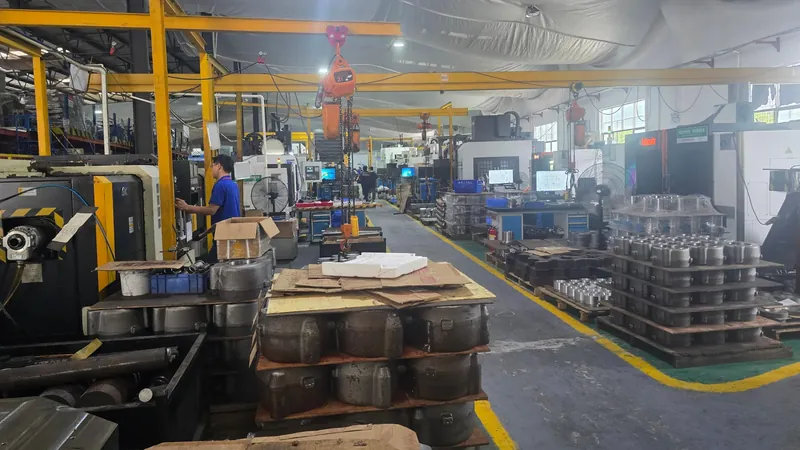
Wikipedia’s total-cost-of-ownership framework groups costs into categories that extend well beyond the acquisition price. For a hose crimper bought internationally, those categories map to three practical totals.
| Total | What it covers | Why it matters |
|---|---|---|
| Total 1 — Acquisition | Machine + freight + import + inland transport. | The cost to get the machine to your door. |
| Total 2 — Commissioning | Installation + training + spare parts kit. | The cost to make the machine productive. |
| Total 3 — Ownership | Downtime during commissioning + three-year operating cost. | The cost of owning and running the machine. |
A quote that covers only Total 1 is not a landed cost. A quote that covers Total 1 + Total 2 is closer. A real comparison includes all three totals, because Total 3 is where the cheaper machine often loses.
What Drives Each Total
Total 1 — Acquisition Drivers
| Driver | What changes the cost |
|---|---|
| Machine configuration | Tonnage, control format (manual vs CNC), included dies. |
| Incoterms | EXW (buyer arranges everything from seller’s door) vs CIF (seller arranges freight and insurance to destination port) vs DDP (seller delivers duty-paid to buyer’s door). |
| Freight mode | Sea freight (cheapest, slowest), air freight (fastest, expensive), land freight. |
| Import duties and VAT | Set by destination country’s HS code classification. |
| Port and broker fees | Destination port handling, customs broker, documentation. |
| Inland transport | From destination port to your workshop. |
Total 2 — Commissioning Drivers
| Driver | What changes the cost |
|---|---|
| Installation | On-site setup, calibration, first-piece verification. |
| Training | Operator and maintenance training; on-site or remote; days included. |
| Spare parts kit | Initial inventory of seals, filters, die parts. |
| Documentation | Manuals in local language; compliance certificates. |
Total 3 — Ownership Drivers
| Driver | What changes the cost |
|---|---|
| Downtime during commissioning | Lost production during installation and learning curve. |
| Power consumption | Electricity for electric machines; compressor load for pneumatic. |
| Maintenance | Oil changes, seal kits, filter elements, die reconditioning. |
| Unplanned repair | Frequency depends on construction quality and service network. |
| Calibration | Periodic calibration of machine, calipers, and gauges. |
The Downtime Cost Most Buyers Forget
Downtime cost is the cost most commonly omitted from landed-cost sheets. It is also one of the largest hidden costs.
| Downtime source | Typical impact |
|---|---|
| Machine not yet delivered | Production continues on the old machine or is outsourced. |
| Installation time | 1–3 days typical for a workshop machine. |
| Calibration and first-piece verification | 0.5–1 day. |
| Operator learning curve | 1–2 weeks for manual; 2–4 weeks for CNC. |
| Setup errors during learning | First-pass yield drop of 5–15% for the first month. |
For a workshop producing 200 assemblies per day at a margin of $20 per assembly, each day of downtime costs about $4,000 in lost margin. A two-week learning curve without on-site training can cost $40,000+ in lost margin — often more than the acquisition saving from a cheaper quote.
TRC Landed-Cost Approach
TRC is a hydraulic hose equipment manufacturer serving overseas projects from application review and configuration through factory production, inspection coordination, export documentation, and international delivery. Our equipment is manufactured in a 5,000 m² production facility, and we hold CE, SGS, and UL+ISO certifications.
| Cost layer | TRC quote includes |
|---|---|
| Machine configured to your spec | ✓ |
| Die set matched to your hose/fitting system | ✓ |
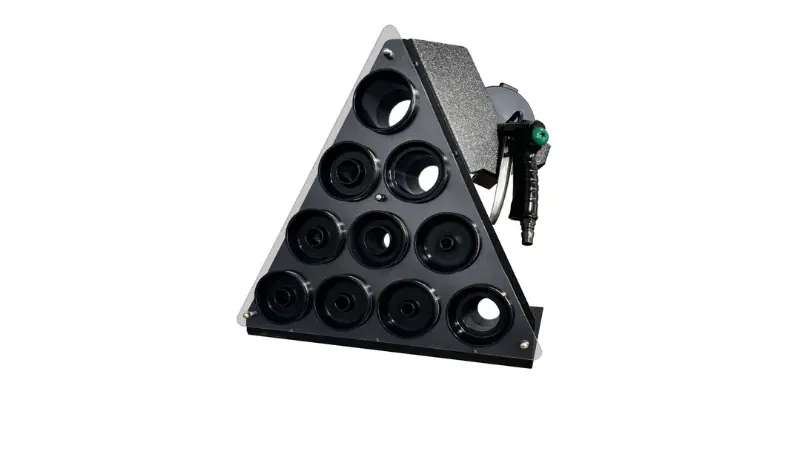
| Accessories (foot pedal, die rack, calipers) | ✓ |
| Crating (export-grade, ISPM-15) | ✓ |
| Freight (Incoterm agreed) | ✓ |
| Insurance | ✓ |
| Import duties and VAT | Per destination |
| Installation (optional) | On request |
| Training (optional) | On request |
| Spare parts kit | On request |
| Warranty | 1 year standard; extended on request |
Building a Landed-Cost Sheet
Use the template below for every quote. Fill it in completely, and the comparison becomes honest.
| Cost layer | Quote A | Quote B |
|---|---|---|
| Machine (configured) | ______ | ______ |
| Die set (full) | ______ | ______ |
| Accessories | ______ | ______ |
| Crating | ______ | ______ |
| Freight (Incoterm) | ______ | ______ |
| Insurance | ______ | ______ |
| Import duties and VAT | ______ | ______ |
| Port and broker fees | ______ | ______ |
| Inland transport | ______ | ______ |
| Installation | ______ | ______ |
| Training | ______ | ______ |
| Spare parts kit | ______ | ______ |
| Warranty (if extended) | ______ | ______ |
| Total landed cost | ______ | ______ |
| Downtime during commissioning | ______ | ______ |
| 3-year operating cost | ______ | ______ |
| 3-year TCO | ______ | ______ |
The three-year total cost of ownership is the number that should drive the decision. The acquisition price alone is the number that misleads.
A Working Scenario — Not a Customer Case
An illustrative scenario. A workshop compared two quotes for a 137-ton machine. Quote A was higher and included the full landed package: 10 dies, CNC, installation, 2-year warranty, spare parts kit, and on-site training. Quote B was about 35% cheaper on acquisition but stripped the dies (3 instead of 10), installation, training, and spare parts.
The workshop chose Quote B based on acquisition price. Within the first year, the additional dies (purchased separately at higher unit cost), the installation (contracted locally at a premium), the training (a month of operator learning curve with a 10% yield drop), and the spare parts (air-freighted at premium rates) added up to more than the acquisition saving. By month 18, the total cost of the “cheaper” machine exceeded the full landed quote.
The lesson: the cheaper acquisition price was real, but it was not the cheaper machine.
Why Incoterms Change the Total
The Incoterm in a quote decides who pays for what in international shipping. A quote that looks cheaper may simply have shifted more cost to the buyer.
| Incoterm | What the seller covers | What the buyer covers |
|---|---|---|
| EXW (Ex Works) | Makes the machine available at the seller’s facility. | Everything from the seller’s door to the buyer’s workshop: loading, export clearance, freight, insurance, import duties, inland transport. |
| FOB (Free On Board) | Delivers the machine loaded on the vessel at the origin port. | Freight, insurance, import duties, inland transport from the destination port. |
| CIF (Cost, Insurance, Freight) | Delivers the machine to the destination port, with insurance and freight paid. | Import duties, port handling, broker fees, inland transport. |
| DDP (Delivered Duty Paid) | Delivers the machine to the buyer’s door, duty-paid. | Unloading only. |
An EXW quote and a DDP quote for the same machine are not comparable without normalizing the cost layers the buyer takes on under EXW.
Frequently Asked Questions
What is the real cost of a hydraulic hose crimper?
The landed cost: machine + freight + import + installation + training + spare parts + downtime + three-year operating cost. The acquisition price alone is typically only part of the total.
Why did my “cheap” machine end up being expensive?
Because the cheap quote stripped items that had to be purchased separately: additional dies, installation, training, spare parts. When those costs are added back, the total landed cost often exceeds a fuller quote.
What is downtime cost and why does it matter?
Production lost while the machine is being installed, commissioned, and learned. For a workshop producing 200 assemblies per day at $20 margin, each day of downtime costs about $4,000. A two-week learning curve without on-site training can cost $40,000+ in lost margin.
Buyer question: how do I compare quotes from different suppliers honestly?
Build a landed-cost sheet listing every cost layer — acquisition, freight, import, installation, training, spare parts, downtime, and three-year operating cost — and compare three-year TCO. Contact us through the contact page for a TRC line-item quote.
References and technical boundaries
- Wikipedia — Total cost of ownership. Reference for the TCO framework and cost categories.
- TRC quotation process. Source for the line-item structure used in TRC quotes.