Hydraulic Hose Crimping Machine Price Guide
A hydraulic hose crimping machine price is not one number. Two quotes for "the same" 137-ton machine can differ by a factor of two, because they are not actually for the same configuration. One may include ten dies, CNC control, installation, and a warranty; the other may include three dies, a manual valve, no installation, and a shorter warranty. Both are legitimate quotes. They are not comparable without a line-item breakdown.
This article walks through the five price drivers, the total-cost-of-ownership framework that makes sense of industrial equipment pricing, and the TRC configurations that match each budget class.
Why Acquisition Price Alone Is Misleading
Wikipedia's article on total cost of ownership defines TCO around the principle that "ownership costs are significantly greater than the cost of purchasing or acquiring a product." For capital equipment, the relevant cost categories extend well beyond the acquisition price:
| TCO category | What it includes for a hose crimper |
|---|---|
| Acquisition | Machine, die set, accessories, crating, freight, import duties. |
| Operating | Electricity, floor space, operator time per crimp. |
| Maintenance | Oil changes, seal kits, filter elements, die reconditioning. |
| Downtime | Lost production during installation, commissioning, learning curve, and unplanned repair. |
| Disposal / replacement | Decommissioning and replacement at end of service life. |
A low acquisition quote typically strips items from the acquisition layer — fewer dies, no installation, shorter warranty, no spare parts kit. The stripped items reappear as costs later, often at higher unit prices than if they had been included in the original quote. Within 12–18 months, the total cost of the "cheaper" machine often exceeds the full quote.
Five Price Drivers
| Driver | Effect on price |
|---|---|
| Machine structure and tonnage | Higher tonnage costs more; heavier frame costs more. |
| Control system | Manual valve baseline; CNC adds 30–80%. |
| Dies and accessories | Die count, die quality, storage, calipers, cleaning kit. |
| Power and destination configuration | Voltage, certification (CE, UL), crating, documentation. |
| Service scope | Installation, training, warranty, spare parts kit, remote support. |
Driver 1 — Machine Structure and Tonnage
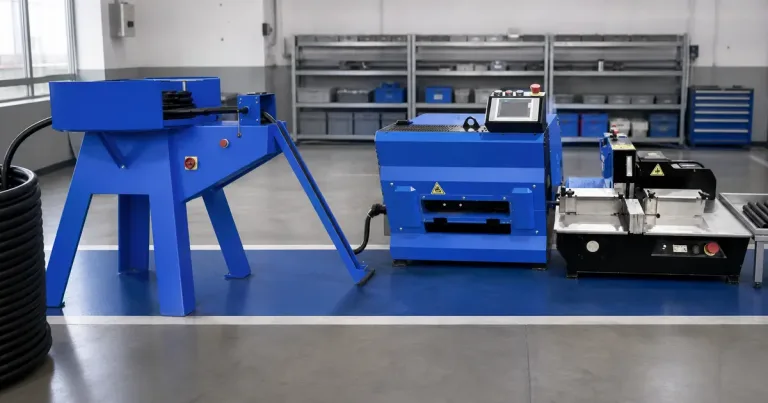
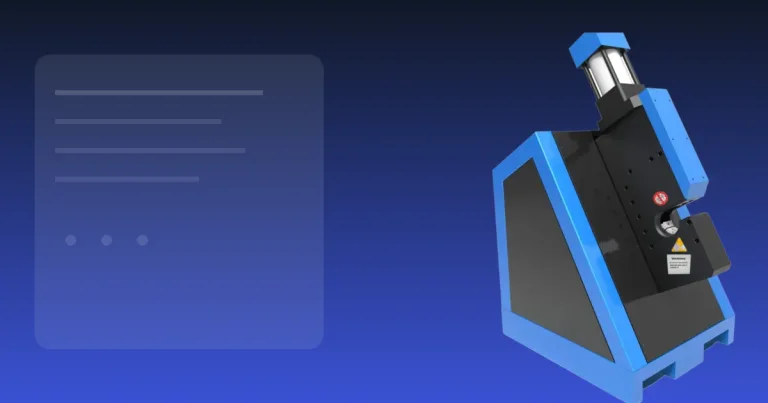
The physical machine — head, frame, hydraulic system — is the largest single component of the price. Higher tonnage classes cost more, because the structure has to be heavier and the hydraulic system larger.
| Tonnage class | TRC models | Price tier |
|---|---|---|
| Compact hand-pump (6–95 ton) | TRC P10HP, TRC P16HP | Entry |
| Workshop 137 ton | TRC P20, TRC P20S | Workshop |
| Workshop 200 ton | TRC P32, TRC P32A | Workshop |
| CNC 137–200 ton | TRC P20D, TRC P32D | CNC |
| Industrial 245–830 ton | TRC TRC120L, TRC P140, TRC P160, TRC P175 | Industrial |
Driver 2 — Control System
| Control format | Price impact |
|---|---|
| Manual valve | Baseline; lowest cost. |
| Powered hydraulic with manual valve | Small premium. |
| CNC programmable | Premium of roughly 30–80%, depending on features. |
| CNC with automatic die handling | Highest premium. |
CNC is worth the premium when the line has frequent changeover, mixed production, or traceability requirements. For a single-hose-type workshop, CNC is over-specified.
Driver 3 — Dies and Accessories
This is where low quotes most commonly cut.
| Item | What to check |
|---|---|
| Number of dies included | A "10-die set" is standard for a workshop machine; a "3-die set" is a stripped configuration. |
| Die quality | Forged and hardened dies cost more than machined mild steel. |
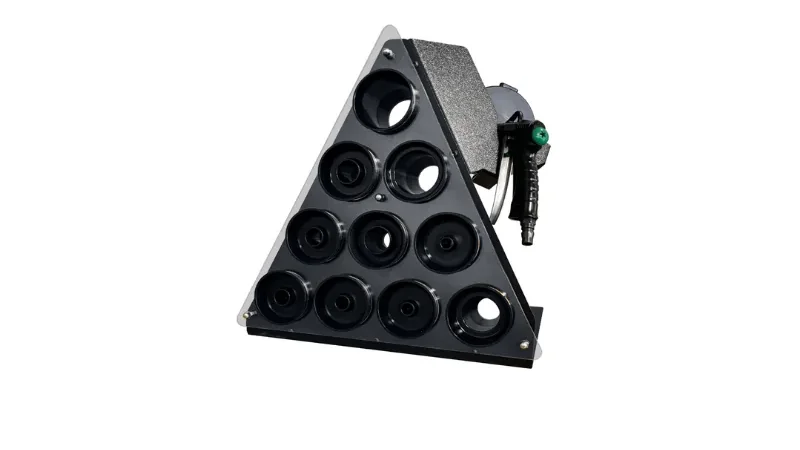
| Die storage | Die racks, cabinets, or carts. |
| Foot pedal | Usually standard; sometimes optional. |
| Quick-change tool | Standard on some models; optional on others. |
| Calipers and gauges | Sometimes included; sometimes extra. |
| Cleaning kit | Usually extra. |
A quote that lists only "machine + 3 dies" is missing the accessories required to run a working line.
Driver 4 — Power and Destination Configuration
| Variable | Effect |
|---|---|
| Voltage configuration | 110V, 220V single-phase, 380V/440V three-phase; configured per destination. |
| Frequency (50 Hz vs 60 Hz) | Motor and electrical components specified per destination. |
| Certification marks | CE, UL, EAC, etc.; required per destination market. |
| Crating and export packaging | Required for international shipping. |
Driver 5 — Service Scope
| Service item | What it adds |
|---|---|
| Installation and commissioning | On-site setup, calibration, first-piece verification. |
| Operator training | On-site or remote. |
| Warranty | 1 year, 2 years, or extended. |
| Spare parts kit | Common wear items (seals, filters, die parts). |
| Remote support | Email, phone, video; response time commitments. |
A low quote usually strips service scope. For a first-time buyer, the service scope is often worth more than the price difference.
The Low-Quote Trap
| Item stripped from low quote | What it costs you later |
|---|---|
| Dies (only 2–3 instead of 8–10) | Cannot cover your hose mix; buy separately at higher unit cost. |
| Manual valve instead of CNC | Higher setup time; no batch records; more setup errors. |
| No installation or training | Operator learns by trial and error; first-month quality issues. |
| Short warranty | Repair costs come out of pocket sooner. |
| No spare parts kit | First seal or filter failure stops the line; parts air-freighted. |
| No remote support | Problems take longer to resolve; downtime accumulates. |
| Lighter construction | Machine wears faster under heavy use; shorter service life. |
TRC Pricing Tiers (Indicative)
| Tier | TRC models | Typical configuration |
|---|---|---|
| Entry | TRC P10HP, TRC P16HP | Hand-pump; basic die set; no installation. |
| Workshop | TRC P20, TRC P20S, TRC P32A | Powered electric; 10-die set; foot pedal; die rack. |
| CNC | TRC P20D, TRC P32D, TRC TRC120L | CNC; stored programs; batch records; full die set. |
| Industrial | TRC P140, TRC P160, TRC P175 | Separate power unit; industrial die set; installation; training. |
A Working Scenario — Not a Customer Case
An illustrative scenario. A workshop received two quotes for "a 137-ton hose crimping machine." Quote A was higher and included 10 dies, CNC control, installation, 2-year warranty, and a spare parts kit. Quote B was about 35% cheaper and included 3 dies, a manual valve, no installation, 1-year warranty, and no spare parts.
On a three-year TCO basis, Quote A was cheaper. The missing items in Quote B — additional dies purchased separately, installation and training purchased separately, commissioning downtime — added up to more than the acquisition saving. Within about 18 months, the total cost of the "cheaper" machine exceeded the full quote.
Building a Price Comparison Sheet
Use the template below to compare quotes on a like-for-like basis.
| Line item | Quote A | Quote B | Quote C |
|---|---|---|---|
| Machine (configured) | ______ | ______ | ______ |
| Die set (full) | ______ | ______ | ______ |
| Accessories | ______ | ______ | ______ |
| Crating | ______ | ______ | ______ |
| Freight (Incoterm) | ______ | ______ | ______ |
| Import duties and VAT | ______ | ______ | ______ |
| Installation | ______ | ______ | ______ |
| Training | ______ | ______ | ______ |
| Spare parts kit | ______ | ______ | ______ |
| Warranty (years and scope) | ______ | ______ | ______ |
| Remote support | ______ | ______ | ______ |
| Total acquisition cost | ______ | ______ | ______ |
| Estimated 3-year operating cost | ______ | ______ | ______ |
| Estimated 3-year TCO | ______ | ______ | ______ |
Fill the sheet in for every quote, and the comparison becomes honest. Leave any cell blank, and the quote is incomplete.
Frequently Asked Questions
How much does a hydraulic hose crimping machine cost?
It depends on configuration. A stripped hand-pump TRC P10HP is much cheaper than a CNC TRC P32D with full dies and installation. Comparing prices without a line-item breakdown is not meaningful — two quotes for "the same machine" can differ by a factor of two because they include different items.
Why do quotes for "the same" machine differ by a factor of two?
Because they are not for the same configuration. One includes dies, CNC, installation, warranty; the other strips those items. Both are legitimate quotes for "a 137-ton machine." They are not comparable without a line-item sheet.
What should be included in a hose crimping machine quote?
Machine, die set, control format, voltage and certification, accessories, calipers, cleaning kit, installation, training, warranty, spare parts kit, remote support, crating, shipping. A quote that omits any of those items is incomplete.
Buyer question: is a CNC hose crimping machine worth the extra cost?
For mixed production with frequent changeover or traceability requirements, yes. For single-hose-type workshops with an experienced operator, a powered hydraulic machine produces equivalent quality at lower cost. Contact us through the contact page for a specific TRC quote.
References and technical boundaries
- Wikipedia — Total cost of ownership. Reference for the TCO framework applied to industrial equipment pricing.