Hydraulic Crimper: The Complete Guide to Industrial Hose Crimping [2026]
Hydraulic Crimper: The Complete Guide to Industrial Hose Crimping [2026]
hydraulic crimper — if you’ve worked with hydraulic systems for any length of time, you’ve seen the aftermath of a bad hose assembly. Leaking fittings, failed connections, equipment down for days. The difference between a shop that keeps machines running and one that constantly sends work out comes down to one piece of equipment: the hydraulic crimper.
A proper hydraulic crimper takes the guesswork out of hose assembly. It applies the right pressure, every time, so the connection holds at working pressure instead of failing the first time the system cycles. This guide covers everything you need to know before buying one.
Introduction
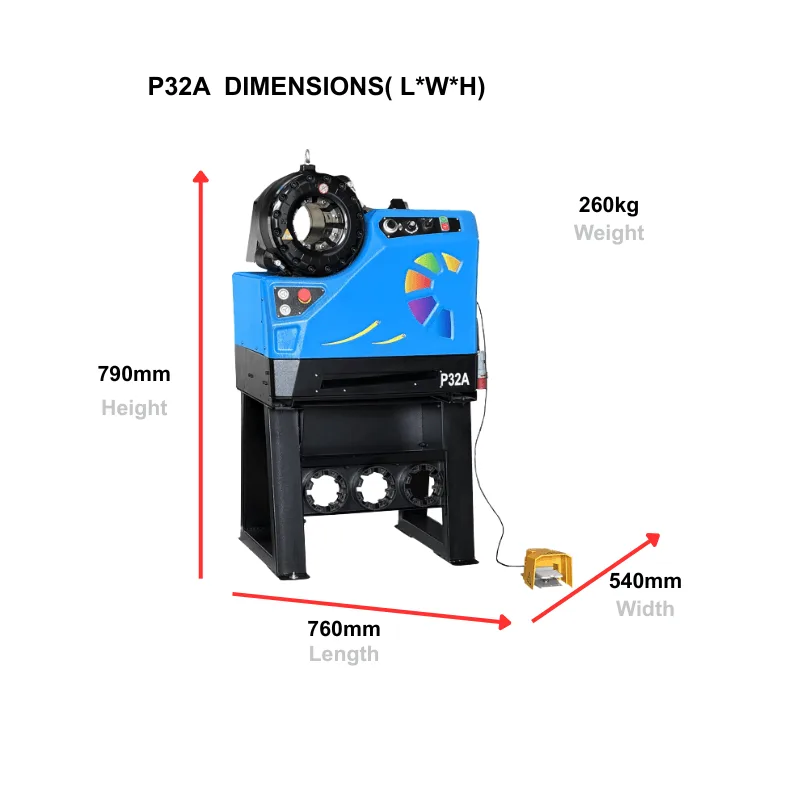
A hydraulic crimper is a heavy industrial machine that permanently deforms a metal ferrule around a hydraulic hose end and fitting. The ferrule compresses against the hose wall under massive radial force — 95 to 830 tons depending on the model — creating a leak-proof connection rated for high-pressure hydraulic systems.
The spec that matters most on any hydraulic crimper is tonnage. A 95-ton unit like the P16HP hydraulic crimper handles most mobile jobs up to 1-inch diameter hose. A 200-ton unit like the P32A hydraulic crimper runs all day on 2-inch industrial hoses. At the heavy end, the P140 pushes 320 tons for mining and marine applications where other crimpers simply can’t fit.
You might see this called a hydraulic hose crimper, hose crimping machine, or just “crimper” depending on who’s using it. Same machine, different words. The mechanism is identical: hydraulic rams drive dies closed around a ferrule, deforming it permanently against the hose.
How a Hydraulic Crimper Works
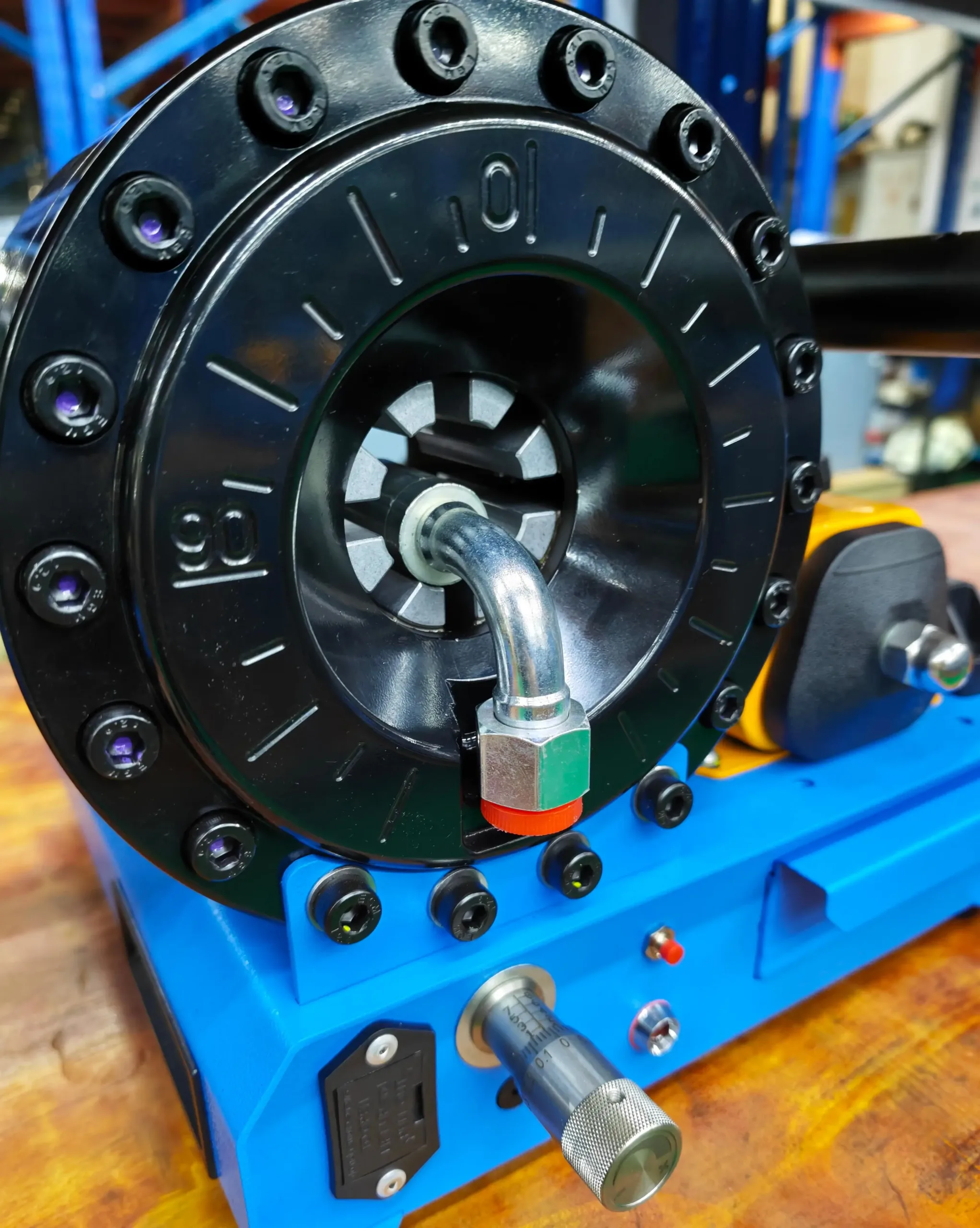
The process breaks into four steps:
- Select the right die. Match the die to the hose’s finished OD, not the hose ID. Wrong die means wrong crimp diameter.
- Load the assembly. The hose-with-fitting slides into the die opening. The ferrule sits over the hose end, ready to be compressed.
- Activate the machine. Foot pedal or control button triggers the hydraulic rams. Dies close radially around the ferrule.
- Done. The ferrule deforms permanently. The connection holds at the hose’s rated working pressure.
What separates a good hydraulic crimper from a bad one is consistency. Budget units produce crimp diameters that vary ±0.5mm or more — enough to cause leaks or restricted flow. The P32D CNC hydraulic crimper locks in exact pressure values and logs every single crimp. When a customer asks why a connection failed, you pull the quality report and show them the exact pressure, die size, and timestamp.
Key Benefits of a Hydraulic Crimper
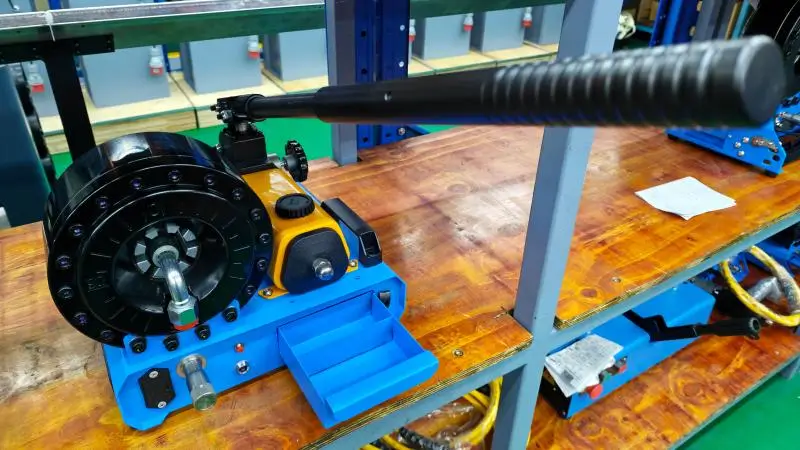
Shops invest in a proper hydraulic crimper for concrete reasons:
- Speed. A typical hose assembly takes 10–15 minutes from cut to crimp. Mobile technicians with a portable hydraulic crimper handle on-site repairs that used to require a tow back to the shop.
- Cost savings. A hose repair runs $30–$80 in materials. OEM assembly replacement: $200–$600 plus freight. The machine pays for itself in the first month of serious use.
- Connection quality. A properly crimped connection outperforms clamped or swaged fittings in high-pressure applications. The ferrule compresses evenly against the hose wall — no O-rings to degrade, no bands to vibrate loose.
- Throughput. The P32A hydraulic crimper handles 850 crimps per hour at 3.3 seconds per cycle. At that speed, a full production shift outproduces competitors running older equipment by hundreds of assemblies.
The price difference between a budget hydraulic crimper and an industrial unit is real — maybe $2,000–$4,000 depending on the model. But budget imports fail within 18 months on serious jobs. The P16HP and P32A from TRC run for years without drama. Buy once, buy right.
Applications of a Hydraulic Crimper

Every industry that runs hydraulic systems depends on a hydraulic crimper:
- Mobile service — The P16HP hydraulic crimper goes on the service truck. Field repairs, emergency callouts, rural routes — this is what keeps equipment running when the alternative is a long tow.
- Workshop production — Electric units like the P32A run all shift without the operator fatigue that comes with hand-pump models. High volume, consistent quality.
- Industrial manufacturing — CNC models like the P32D store exact pressure recipes and log every cycle. Quality managers love this traceability when warranty claims come in.
- Mining and marine — 245–830 ton machines handle the large bore hoses that lighter hydraulic crimper units physically cannot crimp. The P140 at 320 tons and the P175 at 830 tons are in a different class entirely.
The right hydraulic crimper for your operation depends on three things: the largest hose diameter you crimp most often, the volume per shift, and how important consistent quality is to your customer base.
Frequently Asked Questions
What’s the difference between a hydraulic crimper and a hydraulic hose crimper?
How much tonnage do I need in a hydraulic crimper?
How do I choose the right die for my hydraulic crimper?
What’s a good cycle time for a hydraulic crimper?
Do I need a CNC hydraulic crimper or is semi-auto enough?
How often should I replace dies on my hydraulic crimper?
Industry reference: hydraulichoses.com — Crimp fitting basics and hydraulic hose standards. hydraulicinsight.com — Technical resource for hydraulic system professionals.


