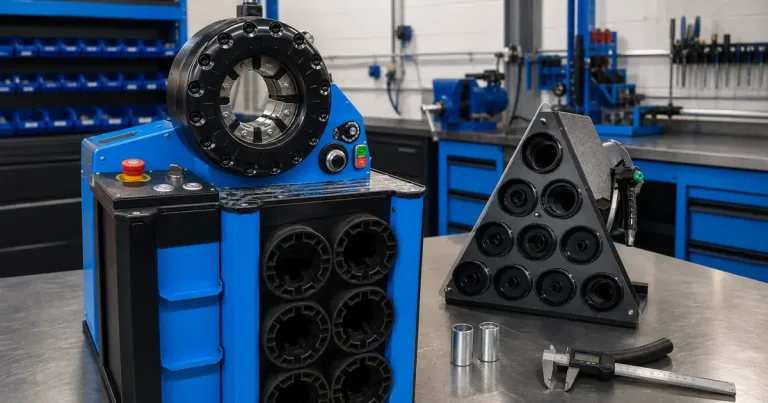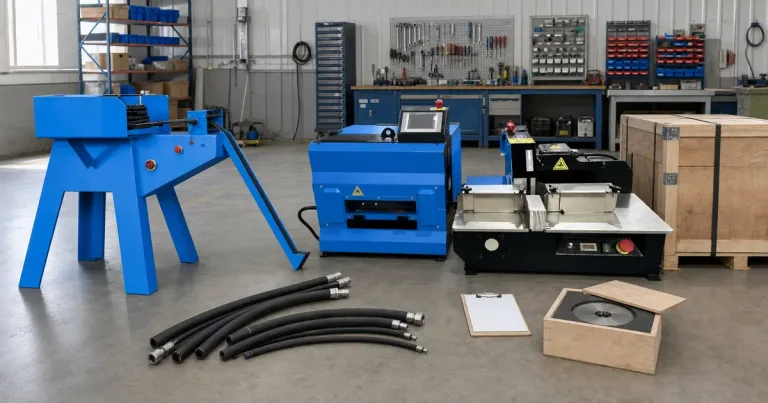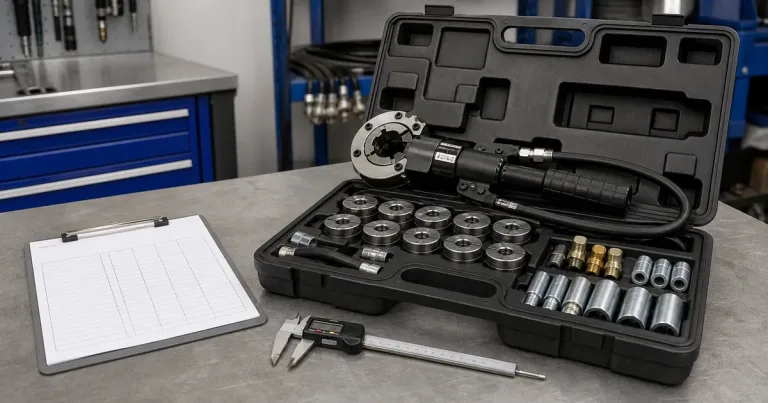

Hydraulic hose crimper rental can make sense for a defined short project when the machine, dies and component data are available together. Buying becomes stronger when delays, repeat demand and inventory control outweigh ownership cost.
A ten-day shutdown gives rental a fair test
A contractor needs a crimper for one shutdown project and is comparing rental with a permanent set. Frequency matters, but availability, compatible dies, transport, training, component stock and downtime exposure can change the answer.
Rental works best when
- the job is temporary and scheduled;
- the required hose system is known;
- the rental includes identified dies;
- operators have instructions and measuring tools;
- equipment condition can be checked;
- return timing does not create downtime risk.
Buying works best when
- repairs recur unpredictably;
- machine access affects equipment uptime;
- the shop can control hose and fitting inventory;
- trained operators are available;
- the workload supports maintenance and tooling ownership.
Compare complete systems
A rented or purchased hydraulic hose crimper set should include the pump or power unit, dies and necessary adapters. It does not automatically include a cutter, cleaning equipment, components or validation tools.
Cost model
Do not use a generic hose crimping machine price list. Compare:
Rental: daily/weekly fee, delivery, deposit, damage responsibility, consumables, setup time and late-return risk.
Purchase: machine, dies, freight, import, utilities, maintenance, training and capital cost.
Then add downtime avoided or created by each route.
Equipment condition
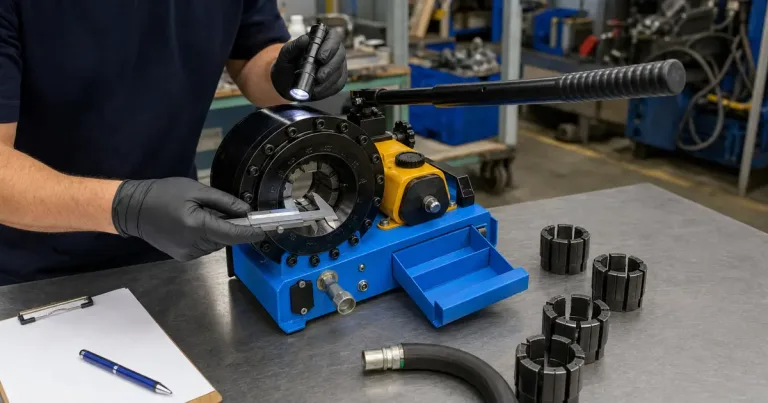
Inspect rental tooling before use. Record die identity and visible wear. Make and measure a first piece using valid component data. Do not assume rental equipment was calibrated for your hose system.
Build the rental job package before asking for a rate
Give the rental company the component system, hose range, fitting and ferrule rows, crimp data source, project dates, location and available utilities. A daily rate means little until the machine and dies are matched to the work.
| Package item | Confirm before dispatch | Why it matters |
|---|---|---|
| Machine | Exact model, power and condition | Avoids an unusable site configuration |
| Dies | Marked list tied to component rows | Prevents a “machine only” delivery |
| Crimp data | Current controlled source | Gives the operator the target setup |
| Measuring tools | Method and responsibility | Allows finished work to be released |
| Training | Named operators and model-specific briefing | Reduces setup and handling mistakes |
| Transport | Delivery, lifting, return and restraints | Exposes time and damage risk |
| Breakdown support | Contact, response and replacement terms | Prices downtime instead of ignoring it |
If the provider cannot document the dies or current process data, the machine is not ready for hose-assembly work.
Gates’ crimp data and dies manual is one manufacturer example of why the component, die and completed measurement must stay together. Use only the current data for the rented machine’s approved component system.
Inspect at handover
Photograph the machine, nameplate, dies and existing damage. Check controls, guards, power, loaded operation and return. Run one identified component sample and record the completed measurement before the provider leaves.
Parker’s specified-crimper preventive-maintenance guidance shows why condition evidence should include more than an empty cycle. Its maintenance intervals and fluid instructions remain limited to the named Parker equipment.
Repeat the inventory at return. This protects both sides and keeps a worn die or missing tool from becoming an argument after the project.
Put availability risk into the cost model
Rental cost includes more than days on site:
rental project cost = rental + delivery + pickup + tooling + setup + extension + standby + expected downtime
Buying includes machine, dies, freight, commissioning, maintenance and capital tied up. Use the same project horizon and component scope for both.
| Event | Rental effect | Ownership effect |
|---|---|---|
| Project finishes on time | Known term and return | Asset remains available |
| Project extends | Extra rent and rescheduling | Mainly labor and operating cost |
| Machine fails | Provider response controls downtime | Owner controls spares and repair route |
| New hose family appears | New dies/data may be unavailable | Owner still needs validated tooling |
| Next emergency starts | Rental availability must be checked again | Machine can be ready if maintained |
Do not insert invented market rates. Put your actual quote, transport distance, labor rate and downtime exposure into the model.
Work through a 14-day shutdown
A plant plans ten production days plus setup and contingency. The component list is fixed, the dies are confirmed and the rental machine can arrive two days before work begins. Rental can be a sensible way to avoid owning a machine used once.
Now change one fact: the shutdown moves by a week, but the provider has promised the machine to another customer. The low daily rate no longer describes the risk.
Commercial point: The value of rental is access to the correct working system on the correct dates, not temporary possession of a press.
We recommend agreeing extension rates, collection notice and breakdown response before dispatch. If downtime would stop a critical site, price an alternate repair route or replacement machine.
Compare rental with outsourcing
For a very small, fixed batch, a qualified hose shop may be safer and cheaper than bringing a crimper to site. Outsourcing transfers equipment setup to the supplier, but you still need correct hose and fitting identification, routing dimensions and acceptance.
A service truck can justify rental when it supports a planned remote project with a known component program. It is a poor fit when crews expect to make any hose they encounter from mixed, unverified parts.
Close the project with operating evidence
Record machine hours, accepted assemblies, extensions, faults, damaged tooling and final cost. Compare that result with the ownership model before the next project.
If repeated rentals occur because demand is unpredictable but frequent, the evidence may support buying. If the machine sat idle for most of the hire, the better answer may be tighter scheduling or outsourcing.
There is no universal break-even month. Use your project record, not a generic “rent for short term, buy for long term” slogan.
The job schedule determines whether rental is practical
Put the crimper on the project schedule beside the component delivery, operator training and test window. If any of those arrive late, the rental clock may run while no accepted hose can be made.
Confirm the component system before booking
The provider should receive exact hose, fitting and ferrule references, not “one-inch hydraulic hose.” Ask which dies and crimp data support each row. If a component remains unresolved, decide before dispatch whether to substitute an approved system, add tooling or outsource that assembly.
| Schedule gate | Evidence before the next gate |
|---|---|
| Booking | Machine and die availability confirmed |
| Dispatch | Component map and destination utilities approved |
| Handover | Identity, condition and inventory accepted |
| Production | First component row released |
| Extension | Cost and availability rechecked |
| Return | Condition, hours and loose items reconciled |
The sequence prevents an urgent project from treating delivery as technical acceptance.
Compare a service-truck case with a workshop case
A service truck supporting a planned mine shutdown may need a portable split-body machine because the work is spread around the site. P20HPZ, for example, is recorded as a 137-ton separate-pump manual crimper with a 501 × 422 mm product image in the media record. Its suitability still depends on the component and die program.
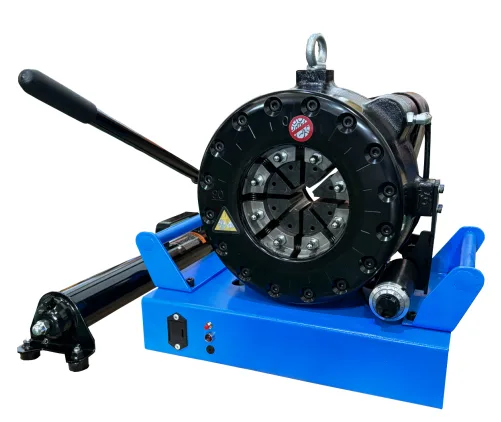
A fixed workshop processing repeat orders may place more value on stable mounting, faster routine operation and permanent tooling storage. Renting a portable machine for a workshop is not wrong, but the format should solve a site condition rather than merely be available.
Price three outcomes
Build one cost line for the on-time project, one for the expected extension and one for an unplanned breakdown. Use the provider’s written terms and the site’s actual downtime cost.
| Outcome | Include |
|---|---|
| On time | Rental, transport, setup and planned labor |
| Extended | Extra days, rescheduled pickup and labor |
| Breakdown | Lost work, response time, replacement transport and recovery |
We do not recommend multiplying the lowest day rate by planned days and calling it the project cost. That number ignores the events that usually decide whether rental worked.
Keep maintenance responsibility visible
The owner normally controls major repair and approved maintenance, while the renter controls daily checks and proper use. Put those boundaries in writing for the exact machine.
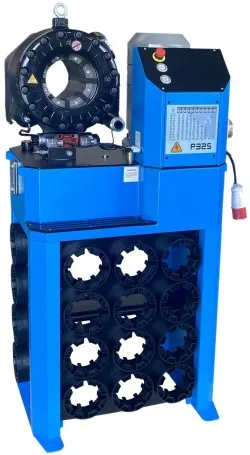
Do not open hydraulic systems, substitute oil or grind tooling without the owner’s procedure and authorization. Report abnormal return, leaks, damaged dies or control faults immediately.
Use the post-project review to answer the next decision
Record how many accepted assemblies were made, how much time the machine waited, which tooling was missing and whether provider response met the project need.
If the same component program appears several times each year, compare the actual rental record with a maintained ownership package. If projects remain rare and predictable, rental may continue to make sense.
The answer can change as the workload changes. Keeping the record means the next decision starts with evidence rather than memory.
Build the decision from three time horizons
For the current project, ask whether the correct machine and dies can be on site for the exact work window. For the next twelve months, list known jobs and emergency exposure. For the longer term, decide whether the business wants to own tooling, training and maintenance.
| Horizon | Main question |
|---|---|
| Current job | Can the complete rental package meet the schedule? |
| Next operating cycle | Will similar demand repeat, and how predictable is it? |
| Long term | Does owning the process fit the business and support plan? |
This avoids using a one-time shutdown to justify permanent equipment, or using today’s low workload to ignore a repeated service problem.
Put outsourcing in the same cost worksheet
Ask a qualified hose shop for the price and turnaround of the fixed component list. Add transport, waiting and site risk. Outsourcing may win for a small batch even when the per-assembly price looks high, because the shop already owns controlled tooling and inspection equipment.
Do not outsource unidentified components or unsafe emergency work merely to avoid the equipment decision. The component and acceptance requirements remain.
Decide the fallback before the first failure
Name the provider contact, response window and replacement route. If the machine cannot be replaced quickly, identify a qualified local hose shop or another approved machine that can cover the critical component rows.
The fallback does not need to duplicate the whole project. It should protect the assemblies whose delay stops the site.
| Failure | First response | Fallback decision |
|---|---|---|
| Machine fault | Isolate and notify provider | Repair, replace or outsource |
| Damaged die | Quarantine the set | Replacement die or approved external assembly |
| Missing crimp data | Stop the component row | Obtain current controlled data |
| Schedule extension | Recheck availability and rate | Extend, replace or buy |
| Operator unavailable | Use trained alternate | Do not assign an untrained operator |
We recommend reviewing the fallback during handover, while the provider and site team can still correct a missing contact or tooling item.
Return commercial lessons to purchasing
Compare invoice, planned cost and actual project record. Separate extra cost caused by the project’s schedule from extra cost caused by the rental package.
That distinction improves the next contract. It may support a longer booking window, a firmer tooling list, another provider or an ownership proposal.
Frequently asked questions
Is hydraulic hose crimper rental worth it?
It can be worth it for a scheduled, short project with a known component system, confirmed dies, trained operators and firm machine availability. It is usually a weak fit for unpredictable emergency work or recurring production because delivery, return, extensions, missing tooling and idle-time risk can exceed the headline rental rate. Compare the complete rental cost with the ready-to-work cost of ownership.
Compare rental with a documented buying set
Use the TRC starter-kit resource as the ownership baseline. Send the project duration and hose schedule for a configuration that can be compared with the complete rental scope.