
A large hose cutter is not simply a small machine with a larger opening. Large reinforced hose changes blade load, workpiece handling, guarding and the amount of debris generated.
Select by construction and real outside diameter, not by an undefined “heavy duty” label. A heavy duty hose cutter claim needs a stated hose construction and test condition.
A mixed hose list exposes handling limits
A distributor wants one cutter for small service hose and occasional large industrial hose. The largest outside diameter is only one input: stiffness, reinforcement, coil handling, blade exposure and operator support can decide whether one machine is practical.
When size becomes a process issue
Large-bore industrial hose can be difficult to support square to the blade. Its weight and bend resistance may pull the cut off line. Multi-layer reinforcement also increases heat and cutting load.
A small hose cutter may be practical for flexible, lower-OD material and light work. It becomes the wrong choice when the operator must force the hose, remove guards or make repeated partial cuts.
Compare the working conditions
| Condition | Small cutter | Large cutter |
|---|---|---|
| Workpiece handling | Often manual | May need tables or guided support |
| Blade load | Lower on soft/small hose | Higher on large reinforced hose |
| Space | Compact | Larger operating envelope |
| Feed | Simple hand feed | Controlled feed may be more important |
| Debris | Lower volume | Requires planned collection and cleaning |
These are general differences. Use product data for any capacity claim.
“Heavy duty” needs a definition
Ask the supplier to identify:
- maximum tested hose construction and OD;
- blade specification;
- power and utility requirements;
- feed and clamping method;
- guarding;
- expected maintenance;
- sample-cut acceptance criteria.
Do not accept hose ID alone. Ferrule and hose ODs can be much larger than the nominal bore.
Operator safety
Large hose can store bending energy and shift during cutting. Support it on both sides, follow the machine manual and keep hands outside the point of operation. OSHA 1910.212 gives general machine-guarding requirements.
Selection path
Use the hydraulic hose cutter category to compare available formats. For a large application, send a representative hose sample. A cut trial should check squareness, bore condition, reinforcement and heat before the equipment is approved.
Plan the material path around the machine
Large hose can fight the operator before it reaches the blade. Curved stock needs room to straighten, and a heavy cut length needs support after separation. If either side hangs from the blade, the cut can wander and the material can move unexpectedly.
Draw the infeed and outfeed path with the machine footprint. Mark where the operator stands, how the hose is supported and where cut parts collect. This often reveals that a machine with adequate diameter capacity is still a poor fit for the available floor space.
Define the acceptance point before the trial
Large size can make a rough end look inevitable. It is not a useful acceptance rule. Decide what the downstream fitting process needs: permissible angle, bore condition, reinforcement containment, absence of heat damage and debris handling. The supplier can then choose the support and blade around a visible result.
When shipping a sample is difficult, send a labelled cross-section, OD, wall and reinforcement information plus a video showing how the hose behaves when straightened. A remote review is weaker than a cut trial, but it is far better than selecting from bore size alone.
Compare the recorded large-hose routes
| Model | Recorded hose scope | Blade | Feed or control | Machine record |
|---|---|---|---|---|
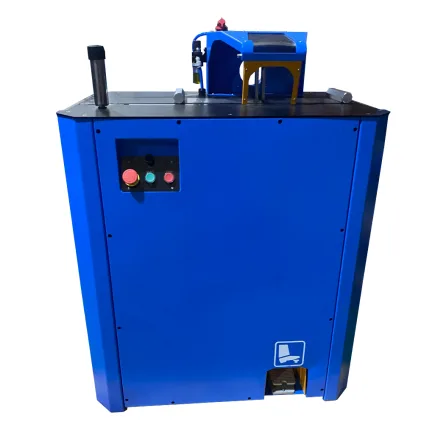
| C400F | Up to 2 inch 4SH | 400 × 4 × 50 mm | Foot pedal | 5.5 kW; 195 kg net |
| C400A | Up to 2 inch 4SH | 400 × 4 × 50 mm | Pneumatic pusher, 6 bar | 5.5 kW; 197 kg net |
| C520A | Up to 6 inch industrial hose | 520 × 4 × 50 mm | Pneumatic pusher, 6 bar | 5.5 kW; 132 mm opening without dies |
The C520A record also lists a 900 × 650 × 1,150 mm machine size. These fields help with floor planning; the buyer still needs a cut trial on the actual hose.
Review the C400F foot-pedal route, C400A pneumatic route and C520A large-diameter route against the same sample and acceptance sheet.
Support the hose before and after the blade
A six-inch industrial hose can be difficult to control even when it fits the opening. Coil memory, mass and stiffness can rotate the stock during feed. The operator should not become the missing support stand.
| Handling point | What to provide | Failure if omitted |
|---|---|---|
| Entry | Level support aligned with the cutting plane | Hose twists or drags |
| Feed | Controlled push and a defined hand position | Unstable pressure near blade |
| Cut-off side | Support for the planned piece length | Part drops or tears at completion |
| Scrap area | Clear container away from controls | Debris accumulates around machine |
| Long-stock path | Floor space without vehicle or pedestrian conflict | Material blocks the aisle |
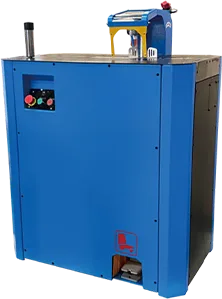
Engineering note: Maximum hose diameter is a fit check. It is not proof that the shop can load, support and remove the hose safely.
Measure production with the material path included
Use accepted cuts per hour = accepted pieces ÷ total elapsed hours. Start the clock when the operator retrieves and aligns the hose. Stop it after end inspection and debris handling.
An illustrative 10-piece trial may take 22 minutes including alignment, cutting and inspection. That is 27.3 accepted cuts per hour before normal interruptions. Replace these inputs with your own trial; the example is not a machine rating or customer result.
Run the trial with the largest normal coil and longest normal cut. A short straight offcut hides the handling work that often controls large-hose output.
Define acceptance before the sample arrives
Photographs alone are weak evidence. Ask the supplier to label the hose, blade, machine and trial conditions, then inspect:
- cut squareness;
- bore deformation;
- pulled reinforcement;
- heat marks;
- loose rubber and wire;
- operator intervention;
- cutting and cleanup time.
If the application has a cleanliness requirement, keep cutting and cleaning as separate controls. ISO/TS 18409:2018 describes sampling methods for solid-particle contamination analysis; it does not certify a cutting machine as clean.
Draw the large-hose cell to scale
The C520A enclosure is only one rectangle in the layout. Add the longest incoming stock, operator position, support stands, cut-piece length, scrap handling, control access and maintenance clearance.
For a coiled hose, draw the coil or payout stand as well. The material should enter the blade without crossing a pedestrian route or pulling sideways on the workpiece.
| Layout dimension | Buyer supplies | Supplier reviews |
|---|---|---|
| Incoming hose length and coil size | Normal and maximum | Entry support |
| Finished cut length | Normal and maximum | Exit support |
| Hose OD and bend behavior | Samples and photos | Opening and feed |
| Available aisle | Floor drawing | Safe access assumptions |
| Air and electrical points | Site data | Utility connection |
| Extraction or cleanup | Site requirement | Optional equipment and interface |
Compare foot-pedal and pneumatic feed by operator movement
C400F and C400A share a recorded 2-inch 4SH hose scope, 400 × 4 × 50 mm blade and 5.5 kW motor. The operating route differs.
With foot-pedal operation, review how the operator holds and supports the hose while using the control. With pneumatic feed, review air preparation, regulator setting, pusher travel and safe loading.
Neither system removes the need for entry and exit support. Pneumatic feed should reduce uncontrolled hand force, not pull an unsupported coil through the cell.
Work through a large-hose purchase example
Assume a distributor cuts 2-inch 4SH every day and receives a six-inch industrial hose request once every two months. C400F or C400A matches the recorded daily size route. C520A reaches the larger recorded industrial-hose scope.
Purchasing should calculate the margin and delay on the rare six-inch work, then compare outsourcing with the added machine, floor and air requirements. If the large hose becomes a strategic weekly service, the answer can change.
This example does not assign prices or production rates. It shows why the largest inquiry should not automatically determine the machine.
Set a support rule for short and long pieces
Short offcuts can rotate or fall near the blade. Long pieces can lever against the cutting plane. Define how both are held without placing hands near the point of operation.
Use a marked safe zone on the floor and a defined scrap container. During commissioning, observe where the operator naturally reaches. If that position crosses the hazard zone, redesign the support before production.
Plan blade replacement and access
A 520 mm blade requires a different handling plan from a compact 250 mm blade. Confirm isolation, guard removal, lifting or handling needs, storage and the exact replacement specification.
Do not stack large blades where edges can contact each other. Keep the machine reference with the spare.
Document the accepted envelope
After trials, state the approved hose references and the largest tested OD. Separate “recorded machine scope” from “buyer-tested materials.”
That distinction helps sales staff quote responsibly. A 6-inch product record is a selection field; the tested list is the evidence for the shop’s actual materials.
Manage coil and straight-stock deliveries differently
Coiled material needs payout and twist control. Straight large hose needs length, lifting and storage planning.
Ask suppliers how stock arrives and what minimum bend limits apply. Do not force a large stiff hose into a smaller floor area to match the machine.
Keep the operator away from suspended loads
If long or heavy hose requires mechanical handling, plan lifting points and support with qualified site personnel. Do not use the cutter table as an improvised lifting fixture.
The operator should control the process from a stable position outside moving material.
Review scrap and short remnants
Large hose scrap has weight and spring. Provide a container or rack that prevents pieces rolling into the aisle.
Label usable remnants with hose identity and length. An unmarked expensive offcut may later be mistaken for another construction.
Price the whole cell
Add machine, support stands, air preparation, electrical work, blade, optional extraction, packing, freight, unloading and commissioning.
large-hose cell cost = cutter + material handling + utilities + safety work + delivery + setup
The formula avoids comparing a bare C520A machine with a fully supported C400A cell as if the quotes were equivalent.
Review first-month bottlenecks
Track accepted cuts, handling time, rejects, blade observations and cleanup. If material payout controls the cycle, another faster cutting motion will not help.
If the rare six-inch hose still needs two people to guide it, redesign support before increasing volume.
Control the first and last meter of a coil
The outside wrap and tight inner wrap can behave differently. Include both in commissioning where practical.
Do not approve the machine from the easiest straight middle section. Record any extra alignment or support needed near the coil core.
Set a maximum manual-handling boundary
Use the site’s qualified safety review to decide when mechanical assistance or a second person is required. Do not invent a universal hose-weight threshold in the product page.
Write the boundary into the work instruction and provide the handling equipment.
Keep large-hose samples identified
Large black hose sections consume space and lose labels. Mark manufacturer, series, size and trial result on a durable tag.
Store accepted and rejected samples separately. Do not let a sales sample return to production stock.
Review air demand before choosing C400A or C520A
Both product records call for 6 bar supply to the pneumatic pusher. Ask the supplier for consumption and connection requirements.
Check pressure at the installed cell under normal plant demand. A compressor nameplate in another room does not prove stable supply at the machine.
Make receiving inspect the support equipment
Count stands, pneumatic parts, spare blade and extraction items beside the machine. Confirm damage and identity before installation.
A large cutter delivered without its planned entry support is not ready for commissioning. Record the shortage instead of asking operators to improvise with pallets.
Close the cell with a witnessed trial
Run the normal large hose and the edge-case sample with the final stands, air supply and operator position. Record first, middle and last cuts.
Purchasing confirms included equipment; engineering confirms cut and handling; operations confirms practical use. Keep open points off the production schedule.
Maintenance should join the handoff to confirm blade access, pneumatic service and replacement-part identity. Logistics should close package damage and missing supports before installation.
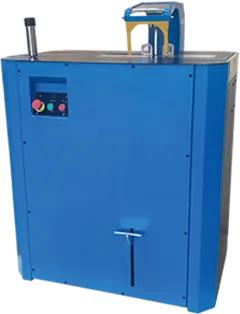
Plan the material path around a large hose
Large hose changes the workstation before it changes the blade. A stiff coil can push the operator off line, a long cut piece can pull on the work and a heavy offcut can drop as the cut finishes. We ask buyers to draw the path from storage to feed support, cutting zone, receiving support, inspection and cleaning.
Take the C520A as a planning example from the verified product record. It is listed for industrial hose up to 6 inches, with a 520 × 4 × 50 mm blade, 5.5 kW motor, 6 bar pneumatic requirement and 132 mm maximum opening. Those numbers describe installation and stated capacity; they do not prove every 6-inch construction will cut acceptably. Send the actual hose for a trial.
The layout must provide space around the machine’s recorded 900 × 650 × 1150 mm body plus the incoming coil and finished length. Check floor condition, electrical service, air quality and pressure, extraction needs, operator reach and a safe way to move large pieces. The receiving support should carry the offcut without pinching the blade or dragging the hose.
An illustrative industrial-hose shop may cut only eight large pieces in an hour. Saving two seconds of blade time has little value if two operators spend a minute lifting and realigning every piece. Better handling can improve accepted output and reduce awkward manual effort without changing the cutting head.
Layout rule: Ask the supplier for a sample-cut record and machine envelope, then design the material path at full hose length. A brochure photograph rarely shows the space required to handle the actual work.
Receiving inspection should repeat the difficult sample with the installed utilities and final work supports. Transport, electrical supply, air pressure and floor layout can alter how a large hose feeds. Keep the factory sample beside the destination result so any difference has a visible starting point.
Record the operator’s handling comments as well; measurements alone will not show an awkward lift, blind feed point or unstable offcut.
Frequently asked questions
How should a hose be cleaned after cutting?
Use the procedure required by the component system and end application. Protect the cut end after cleaning. If particulate cleanliness must be assessed, use an appropriate sampling and analysis plan; cutter size alone says nothing about cleanliness.
Review the complete handling setup
Send a hose sample, coil or straight-length details, cut length, batch size and available floor space through the TRC contact page.