
The best AC hose crimper is the machine that supports your documented hose-and-fitting system, fits the workload and lets operators verify the finished sleeve. There is no responsible single winner for every repair shop, service vehicle and production line.
Use the decision path below instead of a brand ranking.
A smaller documented system beats a larger mystery kit
Two A/C crimpers both appear to cover the required hose sizes. One fits the workshop’s existing beadlock system and inspection process; the other includes more dies but no usable component chart. In this situation, the smaller documented system is the better tool.
First gate: component compatibility
Confirm the refrigerant hose family, fitting, sleeve, die and crimp instruction. An automotive air conditioning hose crimper should be able to reproduce that instruction without improvised tooling.
Reject a recommendation based only on nominal hose size or the number of included dies.
| Evidence gate | Pass | Fail |
|---|---|---|
| Components | Exact hose, fitting and sleeve are identified | Seller says “common A/C hose” |
| Tooling | Die identification and working range are stated | Only die count or nominal size is supplied |
| Finished result | Target and measurement location come from current data | Acceptance is visual |
| Workpiece access | Awkward elbow or tube has been checked | Only a straight sleeve was shown |
Our view: Do not rank a machine that fails the component gate. Price, force and speed do not matter until the shop can make a controlled assembly.
Second gate: operating frequency
| Work pattern | Likely route | What to verify |
|---|---|---|
| Occasional controlled repair | Compact manual system | Correct dies, stable use, measurement |
| Regular workshop work | Powered bench machine | Setting control, die changes, service |
| Mobile repair | Portable hydraulic system | Total carried weight, mounting, pump |
| Repeated production | Dedicated powered machine | Workflow, records, tooling management |
These are starting points, not capacity claims. The actual machine must still fit the component dimensions.
Time one real job before selecting the power route. Use:
accepted assemblies per hour = 60 ÷ observed minutes per accepted assembly
An example trial might record 3 minutes for preparation, 2 minutes for crimping and 2 minutes for inspection. That yields 8.6 accepted pieces per hour before interruptions. Replace every input with your own observation; this is a worked method, not a TRC customer result.
If hand pumping is 30 seconds of a seven-minute cycle, a powered machine will not double output. If the shop runs a documented batch and pumping occupies most of the cycle, the powered route deserves a place on the shortlist.
Third gate: workpiece access
Measure the largest sleeve OD and note elbows, short stubs and awkward fitting orientations. A car AC hose crimping machine can have enough nominal range but still be inconvenient if the head opening or surrounding structure blocks the fitting.
Ask for a loading photo or trial with your most difficult component.
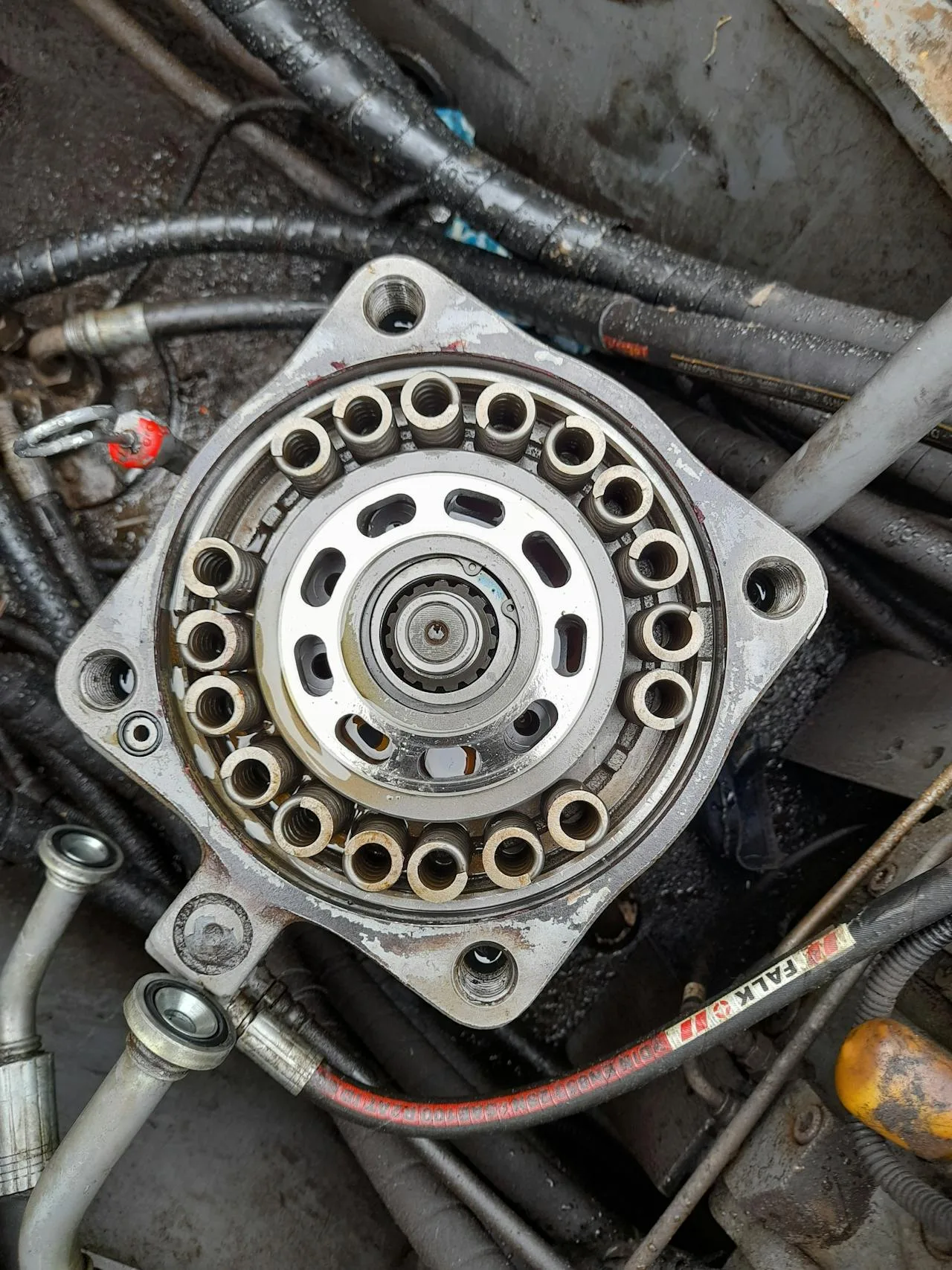
The photo illustrates alignment in a crimping head; it is not an A/C compatibility chart. For your trial, include sleeve OD, sleeve length, distance to the first bend and the direction in which the fitting must enter.
Fourth gate: process control
The best tool for repeated work should make it easy to:
- identify and change dies;
- record settings;
- confirm insertion depth;
- measure at the specified location;
- repeat the first-piece result;
- obtain replacement parts.
Price matters after these requirements are clear. Comparing incomplete bundles creates false savings.
Fifth gate: application boundary
The best automotive air conditioning hose crimper should have a clear limit. “Universal” usually moves the unresolved compatibility risk to the buyer.
TRC records P70C as a dedicated A/C hose crimper with a 0.16–2 inch crimp range and 20-ton maximum force. The record explicitly says it is not for hydraulic-oil hose.
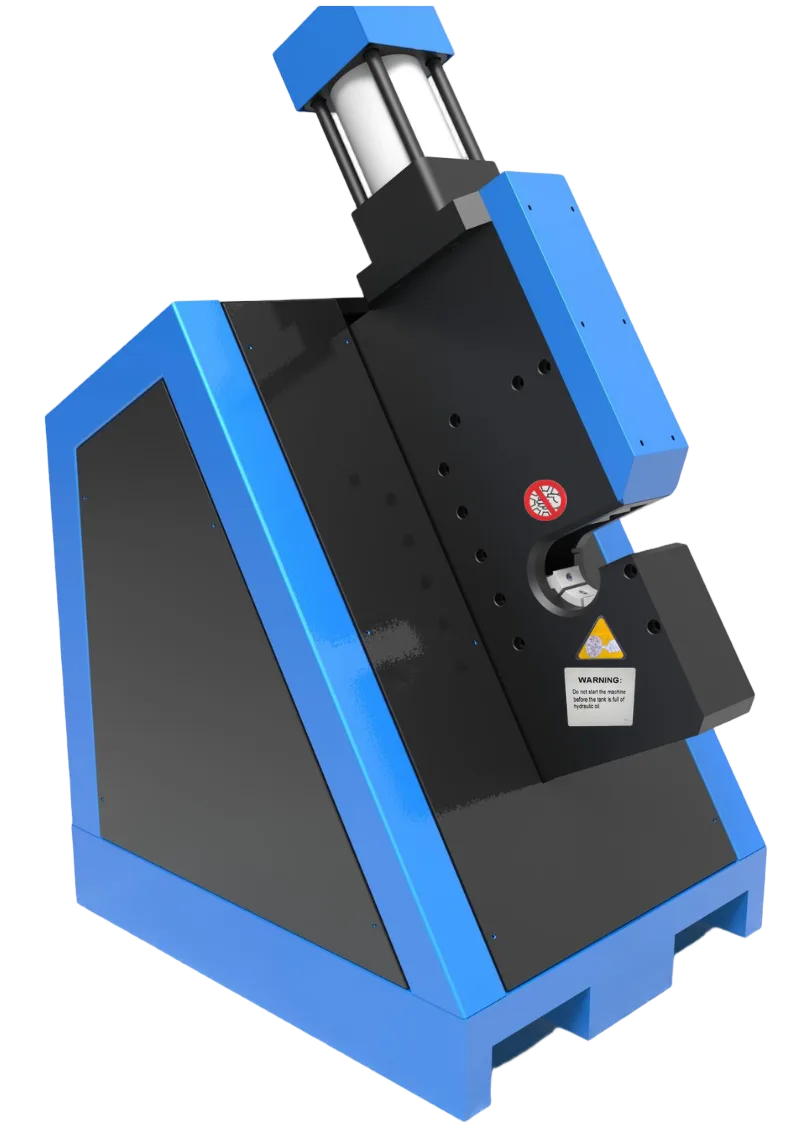
| P70C fact | Purchase use | Boundary |
|---|---|---|
| Dedicated A/C application | Keeps the shortlist on the correct machine family | Does not approve every refrigerant component |
| 0.16–2 inch crimp range | Initial work-envelope check | Not a die-coverage schedule |
| 20-ton maximum force | Machine record | Not the assembly pressure rating |
| Excludes hydraulic-oil hose | Prevents cross-application | A separate hydraulic machine is needed |
The explicit exclusion increases trust. A supplier who can tell you what a machine cannot do is more useful than one who calls every tool universal.
Questions buyers actually need answered
- Will this machine support my standard- or reduced-barrier system?
- Which dies are included for my sleeves?
- Can it load my elbow fittings?
- How is the finished crimp checked?
- What information is needed for a sample trial?
These are technical buyer questions. Answers should come from component records and machine evidence, not generic “universal” claims.
Eliminate unsuitable machines before comparing price
A practical shortlist uses pass/fail gates:
- Component gate: the supplier can map the hose, fitting and sleeve to identified tooling.
- Loading gate: the largest sleeve and most awkward fitting can enter, align and leave the head.
- Workflow gate: the operator can change dies, reach the setting and measure the result without improvisation.
- Support gate: manuals, replacement dies and fault review are available for the identified machine.
A machine that fails one of these gates should not remain in the price comparison. A larger die count, higher stated force or faster closing cycle does not repair the missing evidence.
Score the shortlist without hiding a failed gate
A weighted score helps only after every machine passes the component and safety checks. Do not let a high score for price cancel a failed compatibility row.
| Scored factor | Suggested buyer-owned question | Weight |
|---|---|---|
| Component coverage | How many planned component rows are documented? | Buyer sets |
| Workpiece access | Can the hardest fitting load and leave safely? | Buyer sets |
| Workload fit | Does the power route address the measured bottleneck? | Buyer sets |
| Changeover | Can an operator restore a proven setup? | Buyer sets |
| Support | Are dies, manuals and service parts identifiable? | Buyer sets |
| Delivered cost | Is the ready-to-work scope complete? | Buyer sets |
Use weighted score = Σ(factor score × factor weight). Keep pass/fail gates outside the formula. This prevents a cheap but incompatible car AC hose crimping machine from winning on arithmetic.
Make the trial representative
Use the most difficult normal assembly for a trial: reduced-barrier hose if it is part of the service list, an elbow close to the sleeve, or a rigid tube that limits rotation. Record component identity, die, setting, insertion and finished measurement. Repeat only after the first result is accepted.
For a production shop, also observe a change from one size to another. The operator’s ability to find the correct die and restore a proven setup can matter more than the few seconds spent closing the head.
Compare ready-to-work cost
The machine quote is one line. Add required dies, power unit, bench or mounting, cutter, measurement tools, service stock, packing, freight and destination charges.
ready-to-work cost = machine + tooling + preparation + inspection + delivery + setup
Do not use a generic percentage for freight or tooling. Ask for actual quote lines. If a die family cannot be confirmed, mark it unresolved and remove that machine from the final price ranking.
A shop should also estimate the cost of waiting for an outsourced hose. Use its own lost labor or vehicle downtime, not a borrowed industry average. This creates an honest buy-versus-outsource calculation.
Write the purchase specification before requesting price
Send the supplier:
- Hose, fitting and sleeve references.
- Standard- or reduced-barrier identification.
- Uncrimped sleeve dimensions.
- Photographs of the hardest elbow or rigid tube.
- Normal and peak workload.
- Available power and bench space.
- Required documentation and first-piece method.
The supplier’s response should show assumptions and exclusions. A model number without a component map is not a complete recommendation.
Run a two-stage shortlist
Stage one is document review. Remove any machine whose supplier cannot map the component rows, state the included dies or explain the finished check.
Stage two is a physical trial. Use the most difficult normal fitting and one common high-frequency row. Record setup, loading, finished measurement and size change.
| Shortlist stage | Pass evidence | Decision |
|---|---|---|
| Document review | Component map and complete quotation | Invite to trial |
| Workpiece trial | Awkward fitting loads and measures correctly | Keep candidate |
| Changeover trial | Operator restores two proven setups | Score workflow |
| Support review | Manual, die and parts route are clear | Score ownership |
| Cost normalization | Same delivered boundary | Compare price |
This sequence saves time. There is no reason to arrange freight samples for a seller who cannot identify the die package.
Use clear priorities for different buyers
A mobile technician should prioritize total carried system, secure mounting, component stock and the ability to measure in the field. A fixed repair shop should prioritize workpiece access, die organization and low-friction changeovers.
A production buyer needs batch records, consistent setup and the material flow around the machine. The head’s closing speed is one small part of that decision.
No single ranking can represent all three. The best AC hose crimper is the top-scoring machine inside a buyer’s documented application, after every pass/fail gate has been met.
Review the first year, not only purchase day
Ask what happens when a die is damaged, a seal leaks or a new reduced-barrier family enters the service list. Confirm the identification and ordering route for replacement tooling.
Estimate first-year cost with actual quotations:
first-year cost = delivered setup + required tooling + planned service stock + training + measured operating labor
Do not credit speculative sales growth. Run the calculation with current volume, then add a separate growth case so purchasing can see the assumption.
Keep unsupported work outside the promise
A workshop builds trust by saying no to an untraceable hose or fitting. That is better than calling the machine universal and accepting a repair that cannot be verified.
Write the supported component rows into the service procedure. Add new rows only after tooling, crimp data and the first-off method are documented.
Check the machine after delivery
The selected model still needs receiving inspection. Match the nameplate, power, dies, adapters and documents to the purchase order before commissioning.
Run the same component rows used in the supplier trial. If the destination result differs, inspect transport condition, die seating, setup and measurement before changing the accepted settings.
Make the final recommendation readable
The selection report should fit on one page before the supporting records. State the chosen model, supported component rows, excluded work, included dies, utilities, accepted trial and unresolved items.
That summary gives management a decision and gives the technician boundaries. A long quotation with no stated exclusions does neither.
Final rule: The best machine is the one your team can operate, inspect and support on documented components. Leave unsupported work off the service list.
Recheck the decision after real use
After the first month, review accepted assemblies, rejects, changeover time, tooling problems and parts shortages. Compare actual work with the assumptions used in the shortlist.
If the powered machine spends most of its time waiting for component identification, improve the inventory system. If awkward elbows still go outside, decide whether that volume justifies special tooling.
The review keeps the word “best” tied to the shop’s results rather than the purchase-day brochure.
Use the result to improve the next quotation
Record which specification fields prevented mistakes and which supplier answers arrived too late. Add those lessons to the next RFQ.
If the original trial missed a rigid tube, include it next time. If receiving found unlabeled dies, require an order-linked tooling photograph before packing. This creates a better procurement system without pretending the first purchase was perfect.
The machine recommendation should improve as the shop gathers real component and workload data. The core rule does not change: unsupported components stay outside the service promise.
Give the final shortlist to both purchasing and the lead technician. Purchasing confirms the delivered commercial boundary; the technician confirms tooling, access and measurement. When both can explain why the selected machine won and what it cannot do, the decision is ready.
Keep that decision sheet beside the first-piece evidence. A later buyer can see why a cheaper model failed, which dies were included and which assemblies still go outside. Without this record, the shop may repeat the entire selection exercise after staff changes.
SAE J3062 covers automotive refrigerant hose requirements. SAE J2064 addresses coupled assemblies. Use both only within their published scope.
Review it whenever the component system changes.
Score a shortlist with evidence, not adjectives
We recommend a simple 100-point comparison when three machines all claim to be the “best.” Give 35 points to documented component coverage, 20 to fitting access and usable opening, 15 to repeat workflow, 10 to power and installation fit, 10 to measurement and records, and 10 to spares and support. Adjust the weights for your shop, but do not give a large score to die count by itself.
Take an illustrative two-bay automotive A/C shop. Machine A includes twelve unidentified dies and a powered pump. Machine B includes six mapped dies, current data for the shop’s four normal hose families and a loading trial with its tightest elbow. Machine C is portable but cannot show a replacement-tooling route. Even if Machine A closes fastest, Machine B should lead the shortlist because its useful coverage and acceptance path are visible.
Run the same three sample assemblies on the finalists. Include the most common straight fitting, the largest normal sleeve and the least convenient elbow. Record loading difficulty, changeover steps, finished measurements and any damage to the hose or tube. A sales demonstration on one easy loose sleeve is not enough.
The final decision should also state what the machine will not do. For example, the P70C source record covers automotive A/C hose from 0.16 to 2 inches and explicitly excludes hydraulic oil hose. That boundary is valuable because it prevents the shop from treating available force as universal application approval.
Our view: The best A/C hose crimper is the smallest documented system that covers the real service list with workable fitting access, measurable results and a support route. Extra capability has no value if no approved component row uses it.
Keep the completed scorecard with the purchase order. It gives receiving inspection a clear list of promised component rows, accessories and sample results.
Frequently asked questions
AC hose crimping tools: what works for automotive A/C lines?
Use the machine that maps your exact refrigerant hose, fitting and sleeve to identified tooling and a finished-measurement method. Choose manual or powered operation only after that compatibility check.
Build the shortlist from your assemblies
Review TRC’s automotive air conditioning hose crimper range and send the component schedule. The recommendation should pass the four gates above before model price enters the decision.