Tabla de Contenidos
¿Qué es una herramienta de prensado de manguera 3/8?
A 3/8 hose crimping tool compresses metal ferrules or sleeves around small-diameter hoses (1⁄4′′ to 1⁄2′′ range) used in air conditioning, fuel, and brake systems. Unlike large-bore hydraulic hose crimpers that handle 1′′-4′′ mining hoses, these tools focus on precision at a smaller scale.
The 3/8″ size (approximately 10mm) sits in the middle of the small-bore range. It is the most common fuel line diameter in automotive and marine applications, and a frequent size for AC refrigerant hoses. On Reddit, multiple users in r/CarAV and r/SolarDIY discuss crimping tools in this size range — one reported that “the dies are off for these copper 2/0 flare connectors” when using a budget crimper, highlighting the need for die precision. For a technical overview of hose coupling types involved, see Wikipedia.
For hydraulic-specific work at this diameter, a prensa hidráulica with a G7 or X35 die set handles 3/8″ hoses with ±0.03mm tolerance. For non-hydraulic AC and fuel work, dedicated barb-fitting crimpers are more common. The key difference is in the swaging vs crimping method — hydraulic tools use segmented dies for radial compression, while simpler tools use rotary clamps.
3 aplicaciones: líneas de aire acondicionado, combustible y freno
1. Prensado de mangueras de aire acondicionado
A/C hose assemblies use aluminum or steel ferrules crimped over barrier hose with refrigerant-compatible fittings. The crimp must be tight enough to hold R-134a or R-1234yf refrigerant at pressures up to 350 psi without leaking. A dedicated a/c hose crimping tool or hydraulic a/c hose crimper with the correct die produces consistent results.
2. Prensado de mangueras de combustible
Fuel lines on vehicles, boats, and small engines use 3/8′′ rubber hose with crimped barb fittings. The crimp must resist fuel vapor pressure and vibration. Threaded ferrules (AN fittings) are common in motorsport applications. For production fuel line assembly, a dedicated fuel hose crimping tool or a manual hydraulic hose crimper with a flat-profile die provides repeatable quality.
3. Prensado de líneas de freno
Brake hoses use permanent crimp fittings rated for pressures up to 1,500 psi. These assemblies are safety-critical — a failed crimp means total brake loss. Always use a crimper dies set specified by the brake hose manufacturer per SAE J1401 standards. Never substitute dies on brake assemblies.
| Aplicación | Tipo de manguera | Pressure | Estilo de conexión | Crimper Type |
|---|---|---|---|---|
| AC refrigerant | Barrier hose (#6, #8, #10) | Up to 350 psi | Aluminum ferrule + bead lock | Dedicated AC crimper or hydraulic |
| Fuel line | Rubber fuel hose (3/8′′ ID) | Up to 60 psi | Crimped barb or AN conexión | Manual hydraulic or rotary |
| Brake hose | Reinforced rubber (SAE J1401) | Up to 1,500 psi | Permanent crimp ferrule | Hydraulic with OEM-specified die |
Selección de matrices para conexiones de 3/8″
A 3/8′′ hose (approximately 10mm) uses different dies depending on the fitting profile. Here is the matching guide:
| Tipo de conexión | Serie de Matrices | Cavity Size | Crimper Compatibility |
|---|---|---|---|
| One-piece hydraulic (DIN) | G7 | -6 (3/8′′) | P16HP, P32A, all TRC models |
| One-piece hydraulic (metric) | X35 | 10mm | All TRC models |
| AN / JIC barb conexión | UN24 | -6AN | eléctrica and de servicio pesado modeloos |
| AC aluminum ferrule | AC-specific | #6, #8 | Dedicated AC crimper |
| Brake hose permanent | OEM-specific | 10mm | OEM-specified only |
La regla clave: nunca use una matriz hidráulica en una férula de aluminio de aire acondicionado, y nunca use una matriz de aire acondicionado en una férula de acero hidráulica. La dureza del material y el grosor de pared son diferentes. Una matriz dimensionada para acero producirá prensado excesivo en aluminio; una matriz dimensionada para aluminio producirá prensado insuficiente en acero.
Proceso de prensado paso a paso
Here is the standard process for crimping a 3/8′′ hydraulic hose with a one-piece fitting using a hydraulic hose crimper:
- Cut the hose square using a hydraulic hose cutting machine or a fine-tooth saw. Measure twice – the hose length shrinks 3-4% after crimping.
- Clean the end with a lint-free cloth. Remove all rubber dust and metal particles.
- Insert the fitting fully into the hose. The stem should bottom out inside the hose. Mark the insertion depth with a marker.
- Select the die matching the fitting series and hose size. For a 3/8′′ one-piece DIN fitting, use G7 die size -6.
- Position the assembly in the die cavity. The ferrule must be centered – the mark you made should align with the die edge.
- Activate the crimper. On manual models, pump until the die closes fully. On electric models, the machine stops automatically at the preset crimp diameter.
- Measure the crimp diameter with a vernier caliper. Compare against the manufacturer’s specification sheet. Tolerance: ±0.03mm (TRC standard). Industry baseline: roundness and taper must be ≤ 0.1mm. If the crimp is oval or tapered, the die seat or die may need replacement.
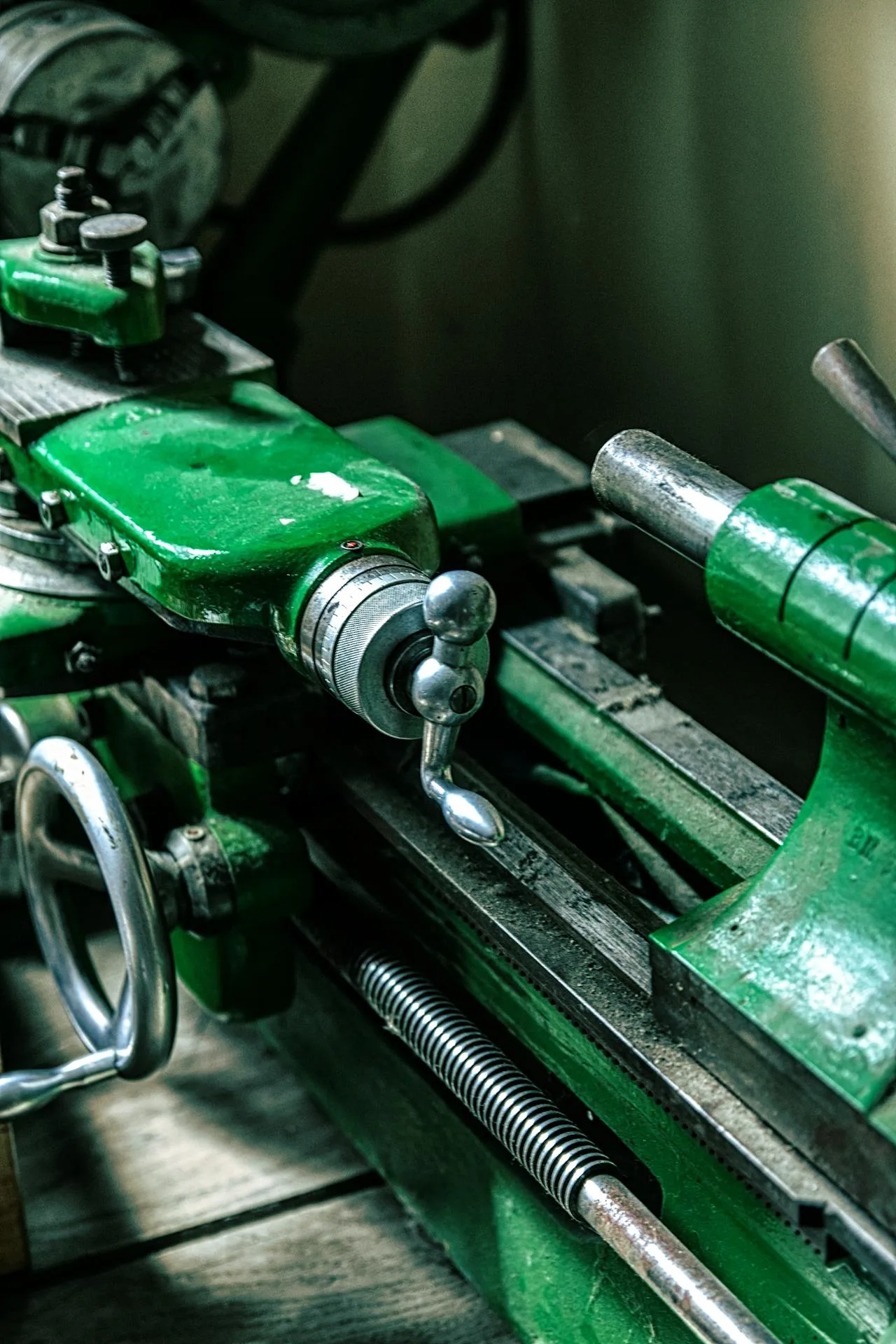
For CNC-controlled machines, the micrometer positioning stop provides precise calibration: one full turn = 1mm adjustment, each graduation mark = 0.01mm. Once calibrated for a specific hose-fitting combination, the same setting produces consistent results for the entire batch.

5 herramientas recomendadas
| Tool | Tipo | 3/8′′ Support | Ideal para |
|---|---|---|---|
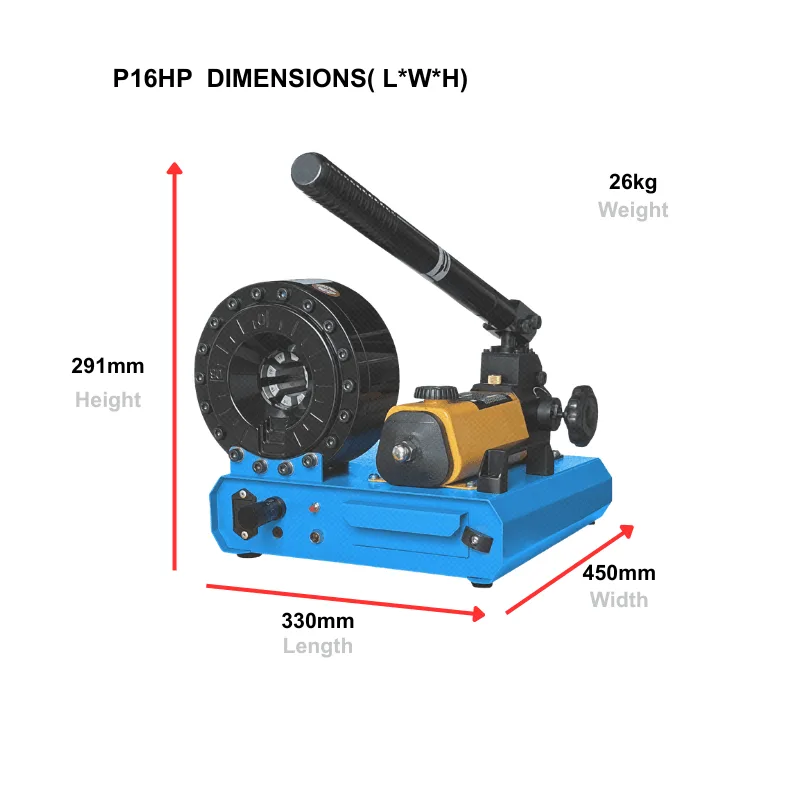
| TRC P16HP | Manual (bomba de mano) | Yes (G7 die -6) | Low-volume shop, reparación de campo |
| TRC P32A | eléctrica bench-top | Yes (all serie de matrices) | producción taller |
| TRC P20CS | Battery portátil | Yes (G7, X35) | servicio móvil calls |
| Rotary clamp herramienta | Hand-operated | Yes (ear clamps) | Low-presión fuel lines only |
| Dedicated AC crimper | Manual / pneumatic | Yes (#6, #8) | AC refrigerant hoses only |
For shops that handle both hydraulic and small-bore work, a electric hydraulic hose crimper with multiple die series is the most versatile choice. One machine covers 1⁄4′′ to 2′′. For field applications, a portable hydraulic hose crimper provides the same crimp quality without bench mounting.
¿Necesita una prensadora para trabajo de diámetro pequeño?
TRC’s manual and portable models handle 3/8′′ hoses with G7 and X35 dies. Contact us for a die matching recommendation.
Preguntas Frecuentes
¿Puedo usar una prensadora de mangueras hidráulicas en líneas de aire acondicionado?
Técnicamente sí, si el perfil de la matriz coincide con la férula de aluminio. Sin embargo, las prensadoras dedicadas para aire acondicionado están diseñadas para el material de aluminio más blando y producen resultados más consistentes. Usar una matriz hidráulica diseñada para acero en una férula de aluminio arriesga un prensado excesivo.
¿Cuál es la mejor herramienta de prensado de manguera 3/8 para líneas de combustible?
For low-pressure fuel lines (<60 psi), a rotary ear-clamp tool works. for an-type fittings in motorsport, manual hydraulic crimper with un24 dies provides the precision needed. see crimping tool for hydraulic hoses guide for options.
¿Puedo prensar líneas de freno con una prensadora estándar?
Solo con la matriz especificada por el OEM. Los conjuntos de freno son críticos para la seguridad y requieren matrices calibradas para la especificación exacta de la férula. No se recomienda sustituir matrices en líneas de freno.
¿Qué matriz necesito para una manguera hidráulica de 3/8″?
Para una conexión DIN de una pieza, use la matriz G7 tamaño -6. Para métrica de una pieza, use la matriz X35 tamaño 10 mm. Para conexiones estilo Parker, use la matriz UN24 tamaño -6. Verifique en la hoja de datos de la conexión.
¿Qué tan apretado debe ser un prensado de manguera de 3/8″?
The crimp diameter is specified by the fitting manufacturer. For a typical 3/8′′ one-piece DIN fitting, the target crimp diameter is approximately 16.5-17.0mm, measured at the ferrule center. Measure with a vernier caliper after every crimp.
¿Necesito pelar una manguera de 3/8″ antes del prensado?
For one-piece fittings on wire-braid hose, external skiving is usually required. For textile-braid hose (low-pressure return lines), skiving is typically not needed. Use a hose skiving machine for consistent results. Check the fitting datasheet for the specific requirement.
¿Puede una prensadora manual manejar manguera de 3/8″?
Yes. 3/8′′ is a small diameter – even a hand-pump manual crimper like the P16HP produces sufficient force (95-137 tons). The cycle time is about 15-20 seconds per crimp.
¿Cuál es la diferencia entre prensado y swaging de una manguera de 3/8″?
Crimping uses segmented dies that compress the ferrule radially – precise and repeatable. Swaging pushes a solid ring inward – faster but less precise. For hydraulic and brake applications, crimping is required because it meets SAE J517 tolerance standards. See Wikipedia: Swaging for the technical difference.


 English
  Español
  Русский