Tabla de Contenidos
- Por qué cada camión de servicio necesita un kit de herramienta de prensado de mangueras
- Elementos imprescindibles para un kit de reparación de campo
- Elegir la prensadora portátil adecuada
- Juegos de matrices y surtido de conexiones
- Herramientas de corte y pelado
- Equipos de seguridad y prueba
- Lista completa de empaque con presupuesto
- 3 escenarios reales de reparación en campo
- Preguntas frecuentes
A crimping hose tool field repair kit is what separates a 30-minute service call from a 4-hour tow job. When a hydraulic hose bursts on an excavator at a remote construction site, the mechanic who has the right portable hydraulic hose crimper and spare parts in the truck fixes it on the spot. Everyone else waits for a hose shop delivery — and the clock ticks at $500+ per hour of downtime.
According to Wikipedia’s crimp joining article, a properly executed crimp forms a gas-tight connection that resists corrosion and vibration. This is the standard every field repair must meet.
Por qué cada camión de servicio necesita un kit de herramienta de prensado de mangueras
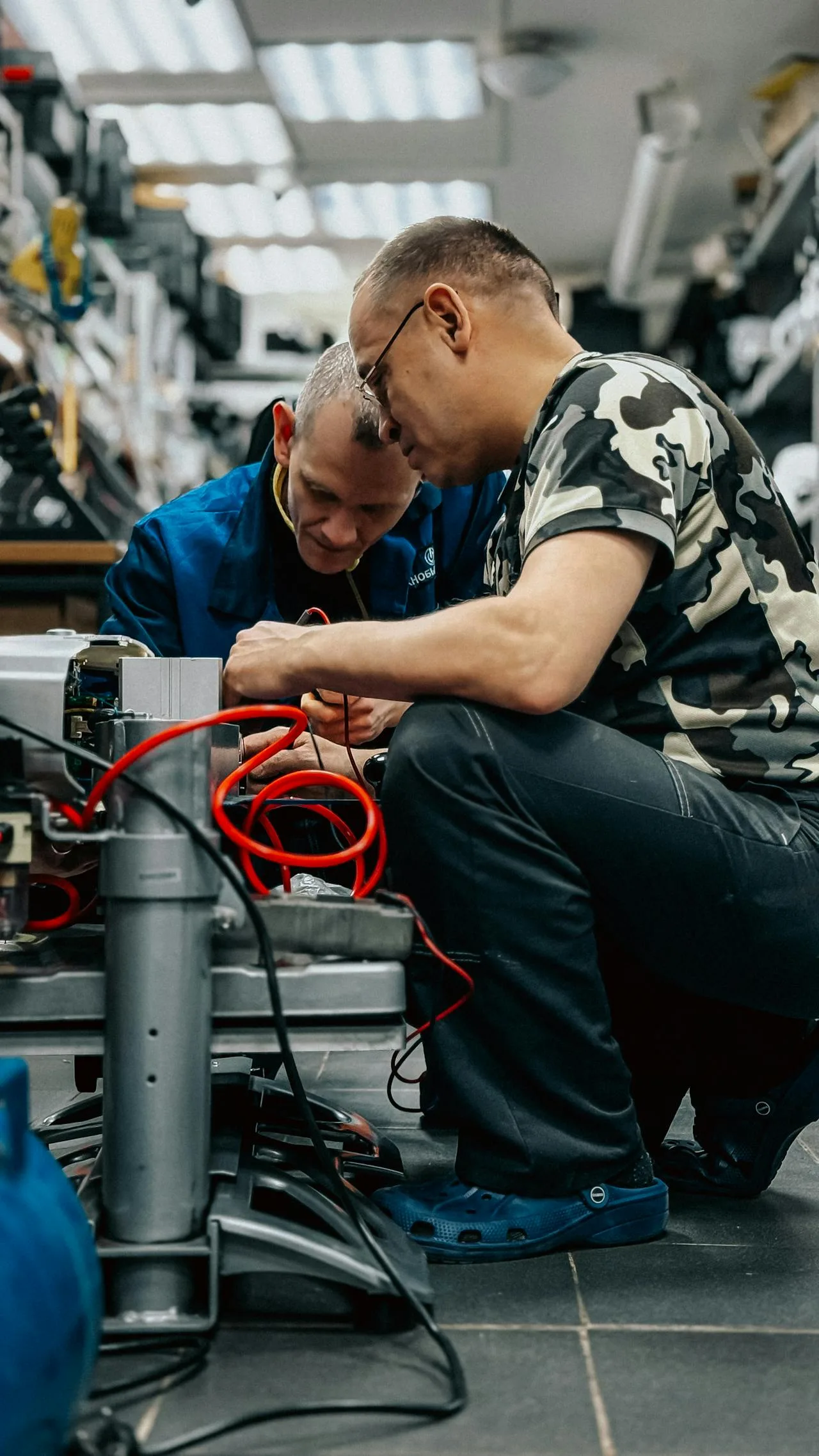
Hydraulic hose failures do not happen at convenient times or locations. A burst hose on a construction site stops the machine cold. A leaking fitting on a mining excavator in a pit means lost production. Mobile service technicians who carry a complete hose crimping tool kit can fabricate assemblies on-site, test them, and get the machine running again fast.
According to Wikipedia, hydraulic hoses operate under pressures ranging from 1,000 to over 5,000 PSI depending on construction type. The QC Hydraulics crimp specification reference lists the exact tolerance requirements for each hose-fitting combination. The economics are simple: a field repair kit costs $2,000–$5,000. One emergency service call that saves 4 hours of downtime pays for the entire kit. After that, every call is profit.
Elementos imprescindibles para un kit de reparación de campo
Cada kit de campo tiene 6 categorías. Esto es lo que va en cada una.
1. Crimper
The core of the kit. Choose based on your typical hose tamaños and whether you have power on site. See the comparison below.
2. Dies
Carry die sets for the hose sizes you encounter most. For most service trucks, that means dies covering 1/4″ through 1″ (Die numbers 6 through 31 in the P16 series, or 6 through 41 in the P18 series). Check crimper dies and accessories for full die range charts.
3. conexiones and ferules
Lleve un surtido de los tipos de conexiones más comunes:
- JIC 37° flare (más común en Norteamérica)
- Rosca paralela BSP (común en Europa, Australia)
- ORFS (sello facial de junta tórica — cada vez más popular)
- NPT (rosca cónica de tubería — equipo antiguo)
Keep at least 2 of each size in 1/4″, 3/8″, 1/2″, 3/4″, and 1″. Match ferrule sizes to your hose types.
4. Hose
Lleve bobinas de 3-6 m de los 3 tipos de manguera más comunes:
- 1-wire braid (SAE 100R1 / DIN EN 853 1SN) — general purpose, low pressure
- 2-wire braid (SAE 100R2 / DIN EN 853 2SN) — most common, medium pressure
- 4-spiral (SAE 100R12 / DIN EN 856 4SP) — high pressure, heavy equipment
5. corte and medición
- Cortador de mangueras (cizalla de banco o sierra portátil)
- Calibre vernier para medición del diámetro de prensado
- Tape measure
6. seguridad and prueba
- Gafas de seguridad y guantes
- Spray detector de fugas o agua jabonosa
- Trapo limpio para limpiar aceite
Elegir la prensadora portátil adecuada
Field service demands portability. You need a hose crimping tool kit that fits in the truck and works without shop power. Three options:
| Tipo | Power Source | Rango de manguera | Peso | Ideal para |
|---|---|---|---|---|
| Manual (bomba de mano) | Human force | 1/4″–1″ 2SP | 25–35 kg | Off-grid sites, no power anywhere |
| Battery (cordless) | 18V/20V litio | 1/4″–1″ 4SP | 15–25 kg | Quick response, moderate volume |
| neumática (air) | Compressor | 1/4″–2″ 4SP | 30–50 kg | Tire shops, fleet yards with air |
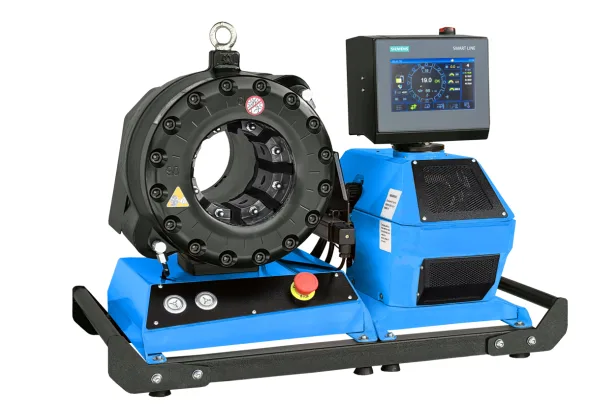
For most mobile service operations, a manual hydraulic hose crimper like the P16HP (95 ton, 34 kg) or a prensa a batería like the P20CS is the best starting point. Both fit in a truck bed or service van.
Juegos de matrices y surtido de conexiones
Su juego de matrices debe cubrir todos los tamaños de manguera que pueda encontrar. Una matriz que no coincide significa un viaje desperdiciado.
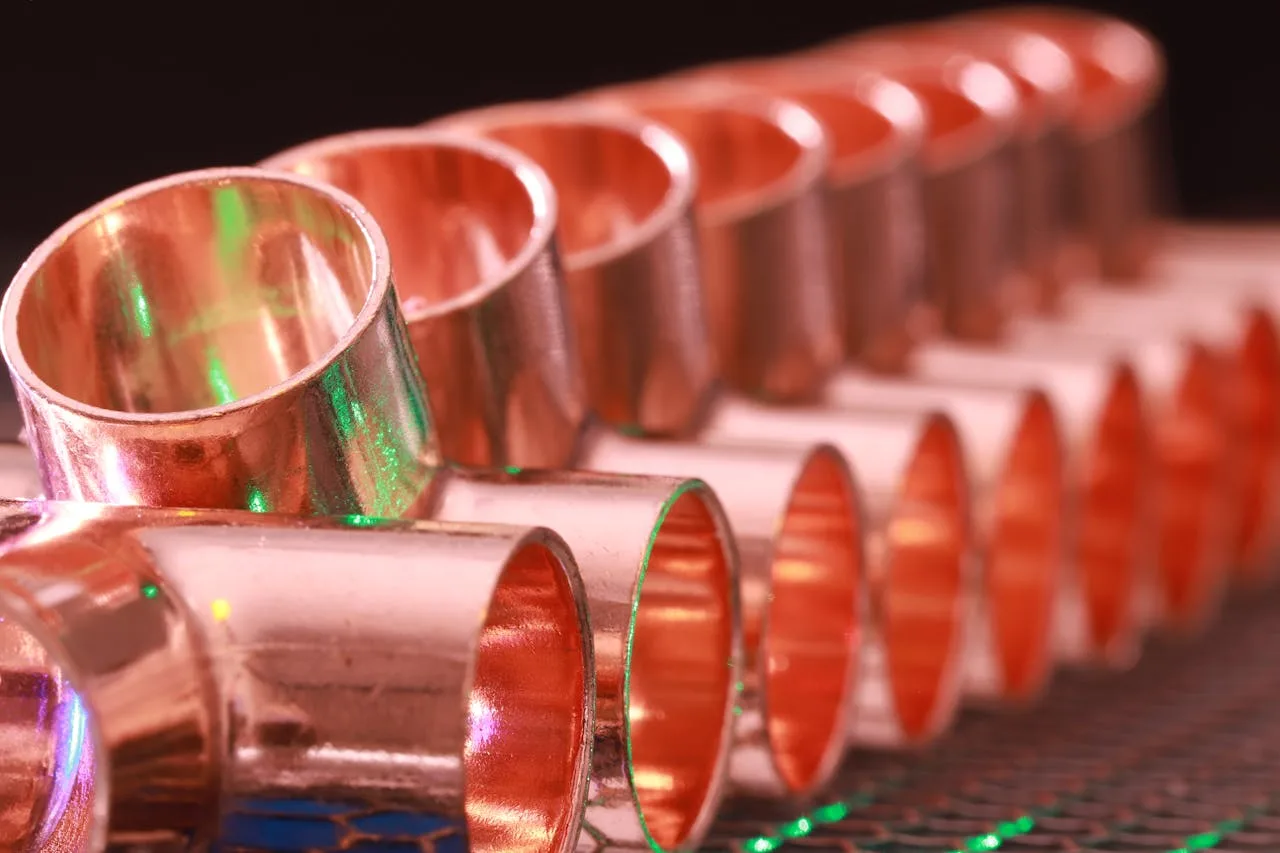
Minimum die coverage for a service truck:
- Die sizes: 6, 8, 10, 12, 14, 16, 19, 23, 27, 31 (covers 1/4″ through 1″ hoses)
- Carry 2 sets if possible — one in the truck, one as backup
- Etiquete cada matriz con su número usando un grabador o marcador permanente
For conexiones, stock these rosca types in straight and 90° codo configurations:
| Thread Type | Common Sizes | Region | Qty to Stock |
|---|---|---|---|
| JIC 37° flare | -4, -6, -8, -10, -12 | North America | 4 each |
| BSP parallel | 1/4″, 3/8″, 1/2″, 3/4″, 1″ | Europe, Australia | 4 each |
| ORFS | -8, -10, -12 | Growing globally | 2 each |
| NPT | 1/4″, 3/8″, 1/2″ | Legacy equipo | 2 each |
Each fitting needs a matching ferrule sized for the hose type and diameter. Buy ferrule assortments — they cost $50–$100 per set and save you from running back to the shop.
Herramientas de corte y pelado
No puede prensar una manguera sin cortarla primero. Para trabajo de campo, lleve:
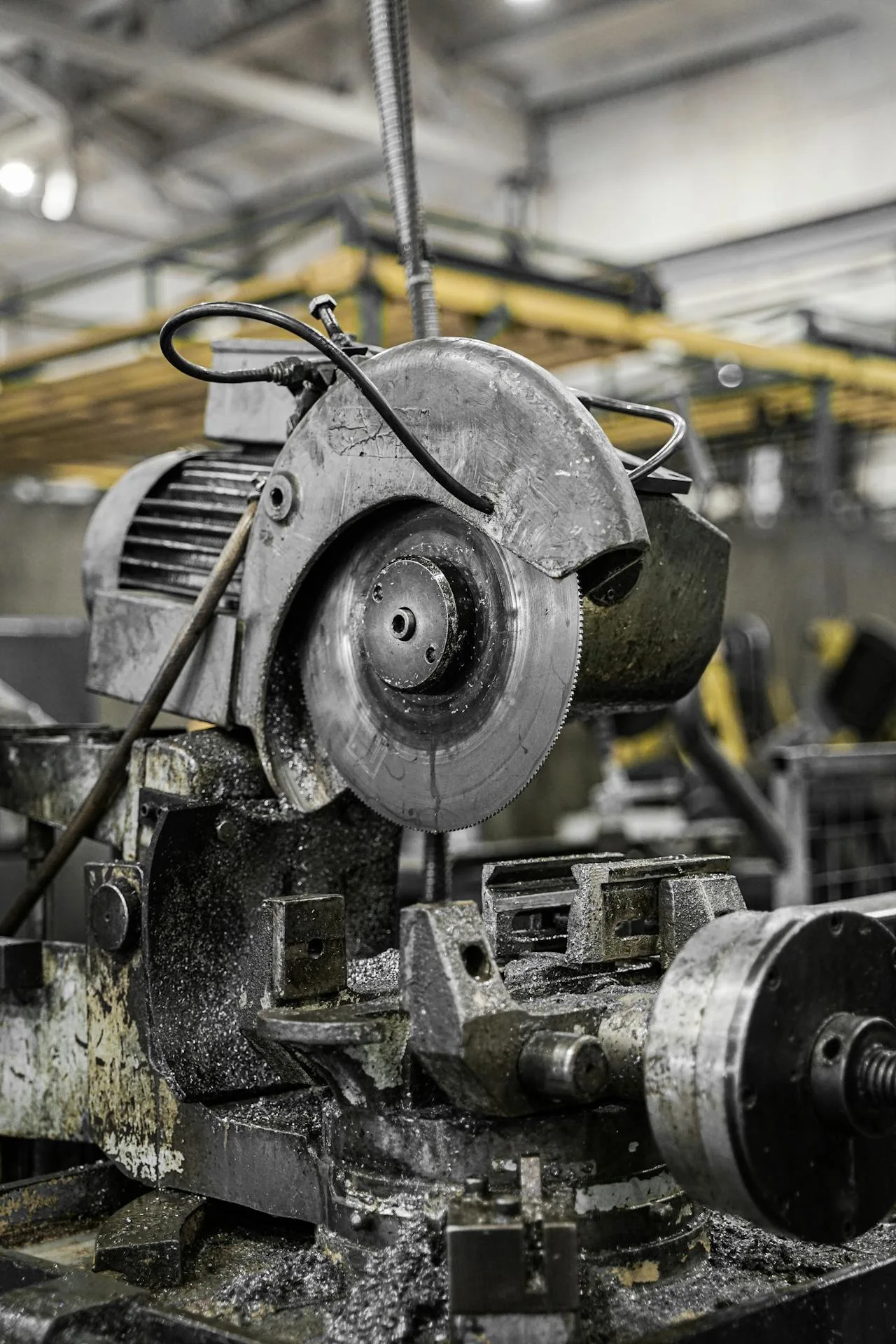
- Portable hose cutter: A hand-held shear for hoses up to 1″. For larger hoses (1-1/2″ to 2″), you need a hydraulic hose cutting machine — either mounted in the truck or brought to site.
- Deburring tool: Clean the cut end before inserting the fitting. Burrs damage the fitting stem seal.
- Skiving tool (optional): Some hose-fitting combinations require skiving (removing the outer cover). For field work, carry a manual skiver or use a utility knife if volume is low. For higher volume, consider the S50 hose skiving machine.
Equipos de seguridad y prueba
Prensar en campo sin prueba de presión es una apuesta. Como mínimo, lleve:
- Hand pump test kit: $200–$500. Lets you proof-test assemblies at 2× working pressure on site.
- Safety glasses and hydraulic-rated gloves: Non-negotiable when working with pressurized systems.
- Whip check cables: Attach to hose ends during testing to prevent hose whip if a connection fails.
According to hydraulic hose safety guidelines, a pinhole leak at 1,000 PSI can inject hydraulic fluid through skin — and the injury may not be immediately visible. Always depressurize before disconnecting and never use hands to check for leaks. The Omni Services SAE standards guide covers hose selection safety in detail.
Lista completa de empaque con presupuesto
| Elemento | Details | Est. Cost |
|---|---|---|
| Manual crimper (P16HP) | 95 ton, 1/4″–1″ hose range | $800–$1,500 |
| juego de matrices (P16 serie) | 8–10 tamaño de matrizs, covers common hoses | $100–$200 |
| conexión assortment | JIC + BSP, straight + 90°, 40 pcs | $300–$600 |
| Ferrule assortment | Matched to conexión types | $50–$100 |
| Hose coils (3 types × 15 ft) | 1SN, 2SN, 4SP | $150–$300 |
| Portable hose cutter | Up to 1″ capacity | $50–$150 |
| Digital caliper | 0.01 mm resolución | $20–$60 |
| Hand pump test kit | 10,000 PSI capacidad | $200–$500 |
| Safety gear | Glasses, gloves, whip checks | $50–$100 |
| Total | $1,720–$3,510 |
This kit handles 90% of field service calls for hydraulic hose repair. The remaining 10% — large-diameter hoses above 1″, multi-spiral R13/R15 — requires a heavier heavy duty hydraulic crimper that stays in the shop.
3 escenarios reales de reparación en campo
Escenario 1: Manguera reventada en una excavadora
A 3/4″ 2-wire hose bursts on a 20-ton excavator at a construction site. The machine is loaded with material and cannot be moved.
With a field kit: Cut a new section of 3/4″ 2SN hose, crimp JIC -12 fittings on both ends with the portable crimper, install, and test at 6,000 PSI. Total time: 25 minutes.
Without a kit: Call a hose shop, wait for delivery (2–4 hours), or tow the machine to the shop. Total downtime: 3–6 hours.
Escenario 2: Conexión con fugas en un camión minero
A 1″ 4-spiral hose fitting leaks at the crimp on a 100-ton mining truck in an open pit. The leak is slow but the machine cannot run at full pressure.
Field repair: Recrimp is not possible on a leaking assembly. Cut off the old fitting, measure the hose, cut a replacement section, crimp new fittings with a prensa portátil with 4SP capability, install, and test. Time: 40 minutes.
Escenario 3: Reparación de emergencia en una granja
Una línea hidráulica del tractor falla durante la temporada de cosecha. El taller de mangueras más cercano está a 45 minutos. El agricultor necesita el tractor funcionando hoy.
Field repair: Measure the failed hose, cut a replacement from your 1SN stock, crimp BSP fittings (common on European-built tractors), and test at 2× working pressure. The Prensadora Manual works without electricity — start cranking and get the farmer back to work. According to Pascal’s Law, even a small hand pump generates enough force for 95 tons of crimping pressure.
Construya su kit de reparación de campo con TRCrimp
Prensadoras portátiles, a batería y manuales construidas para servicio de campo. Juegos de matrices, conexiones y accesorios todos disponibles en precios de paquete.
Preguntas frecuentes
¿Qué tamaño de prensadora portátil necesito para servicio de campo?
For most service trucks, a crimper covering 1/4″ through 1″ hoses handles 90% of calls. The P16HP manual crimper (95 ton) or P20CS battery crimper both cover this range and weigh under 35 kg.
¿Cuántos juegos de matrices debo llevar?
Carry one full set covering your common hose sizes (typically 8–10 die sizes for 1/4″–1″). Keep a second backup set in the shop. Missing a die size means a wasted service call.
¿Puedo usar una prensadora manual para manguera de 4 espirales?
For 4-spiral hose up to 3/4″, a manual crimper with sufficient tonnage (110+ ton) works. For larger sizes (1″ and above 4SP), use a battery or electric hydraulic hose crimper with higher tonnage.
¿Necesito una herramienta de pelado en el campo?
Solo si trabaja con mangueras que requieren pelado. La mayoría de las mangueras de 1 y 2 trenzas usan conexiones sin pelado. Para mangueras de 4 espirales, el pelado suele ser necesario — lleve una peladora manual o un cúter afilado para uso ocasional.
¿Cuánto cuesta un kit completo de reparación de campo?
Un kit completo con prensadora manual, matrices, conexiones, stock de manguera, cortador, calibre y banco de pruebas cuesta $1.700-$3.500. Una llamada de servicio de emergencia típicamente cubre toda la inversión.
¿Cuál es el mejor kit de herramienta de prensado de mangueras para principiantes?
Start with a manual P16HP crimper, a basic P16 die set (8 sizes), JIC fitting assortment (20 pcs), and 2-wire hose in 3/8″ and 1/2″. Total cost under $1,500. Add more sizes as you encounter them in the field.
¿Puedo hacer prueba de presión a los conjuntos en el campo?
Sí. Un kit de prueba con bomba manual (capacidad de 10.000 PSI) cuesta $200-$500 y cabe en una caja de herramientas. Siempre haga prueba de presión a 2× la presión de trabajo antes de devolver la máquina al servicio.
¿Qué equipo de seguridad se requiere para reparación de mangueras en campo?
Safety glasses, hydraulic-rated gloves, and whip check cables are the minimum. Never use bare hands to check for leaks — hydraulic fluid injection injuries require immediate emergency surgery. Follow SAE J517 safety guidelines for all hydraulic work.
Artículos Relacionados



 English
  Español
  Русский