Tabla de Contenidos
- Why a Hose Crimper Usually Can’t Crimp Steel Pipe
- Die Geometry: Hose vs Pipe — What’s Different
- Las excepciones: cuándo una prensadora de mangueras funciona en tubería
- Herramientas correctas para prensado de tubería de acero
- ¿Qué pasa con tubería de cobre y línea de freno?
- Guía de selección de herramientas por material
A hydraulic pipe crimper and a hydraulic hose crimper are not the same tool. The question comes up regularly — on forums and Reddit — and the short answer is: a standard hose crimper usually cannot crimp steel pipe.
The die geometry, tonnage requirements, and material behavior are fundamentally different. Per SAE J517 standards, the tooling requirements for hose and pipe are documented separately for good reason.
Esta guía explica por qué, cubre las pocas excepciones donde una prensadora de mangueras puede hacer trabajo de tubería y le muestra la herramienta correcta para cada material.
Why a Hose Crimper Usually Can’t Crimp Steel Pipe
Hydraulic hose is flexible rubber reinforced with wire braid or spiral. A hose crimper compresses a metal ferrule around the hose, creating a cold-weld bond between ferrule and wire layers. The ferrule deforms; the hose compresses.
Steel pipe doesn’t compress. When you push a hose crimper die against a steel pipe, the die either bounces off (pipe too hard) or crushes the pipe out of round (die geometry wrong for rigid material).
The result is a deformed pipe that won’t seal with any fitting. This is well-documented in SAE standards guides that differentiate between flexible hose and rigid pipe assemblies.
Tres razones técnicas por las que esto falla:
- Yield strength mismatch: Steel pipe (250–550 MPa yield) vs ferrule material (~350 MPa). The die can’t deform the pipe without exceeding crimper tonnage
- Die profile: Hose dies have concave segments that compress ferrules radially. Pipe dies need a different profile — often conical or annular
- Wall thickness: Steel pipe has 2–6 mm walls. Hydraulic hose ferrule walls are 1–2 mm. The crimper is calibrated for thin-wall compression
Die Geometry: Hose vs Pipe — What’s Different
| Parámetro | Hose Crimper Die | Pipe Crimper Die |
|---|---|---|
| Profile shape | Concave segments (8–10 jaws) | Conical or annular ring |
| Compression direction | Radial inward (360°) | Axial or radial with controlled taper |
| Target material | Soft ferrule over rubber hose | Steel/copper pipe wall |
| Tolerancia | ±0.05 mm on ferrule OD | ±0.02 mm on pipe OD |
| Dies per size | 8–10 segments por matriz set | 1–2 piece por matriz set |
Las excepciones: cuándo una prensadora de mangueras funciona en tubería
Hay algunos casos en los que una prensadora de mangueras puede manejar trabajos similares a tubería:
1. Tubería de cobre de pared fina (líneas de aire acondicionado)
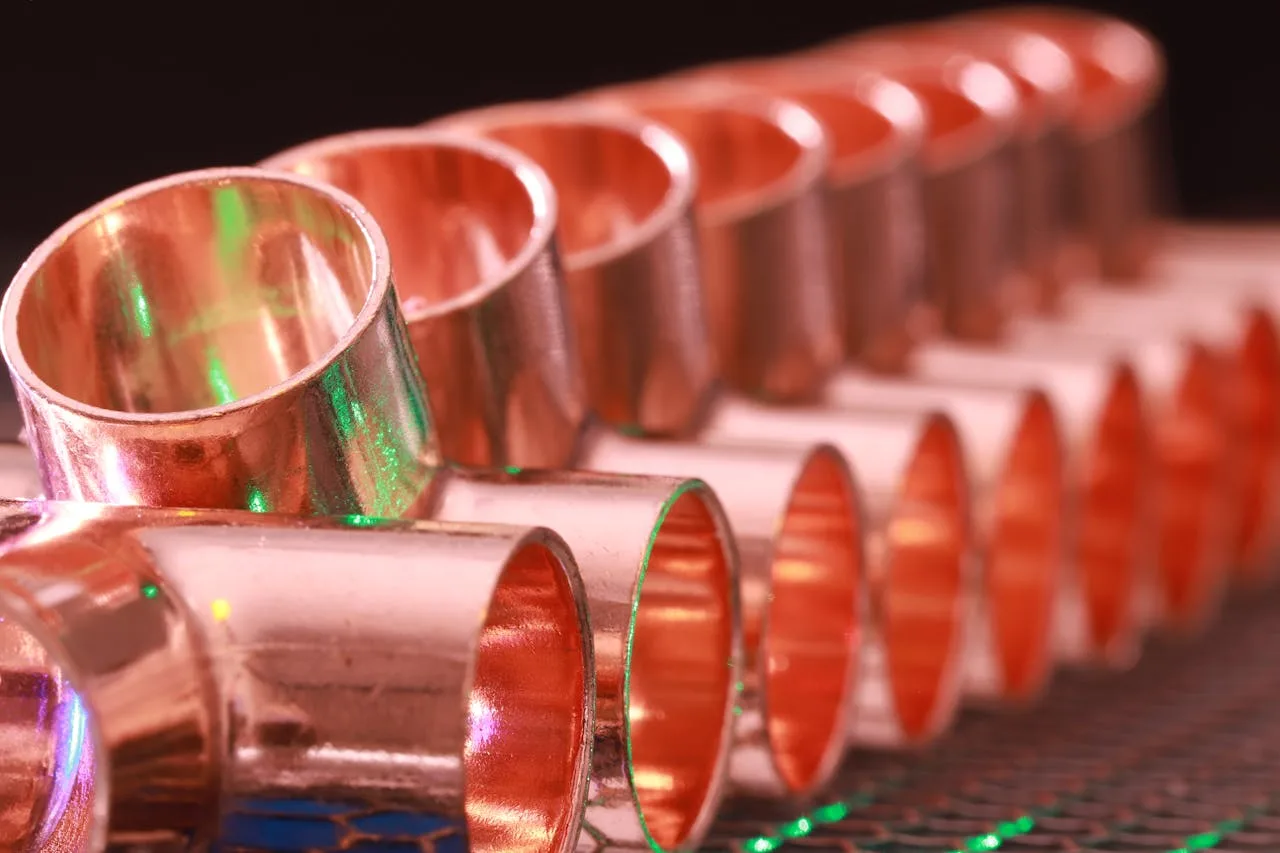
Copper tubing for air conditioning is soft enough that a small hydraulic pipe crimper can deform it. Tools like the TRC P70C (20 ton) are specifically designed for AC hose and thin copper. The P10HP handles aluminum ferrules on AC lines up to 1″ — it’s a compact manual unit built for light-duty AC and automotive work.
2. Manguera con trenza de acero inoxidable (tubería flexible)
Stainless braided flexible hose (not rigid pipe) is within the range of standard hose crimpers. The braided cover is thin enough that the ferrule compresses normally. This includes SAE 100R15 and similar multi-spiral hoses.
3. Tuercas y férulas de tubería (instrumentación)
Small-diameter instrumentation tubing (6–18 mm) uses compression fittings, not crimped ferrules. A die set from a hose crimper won’t work here — you need a dedicated tube fitting tool.
Herramientas correctas para prensado de tubería de acero
Para trabajo real de tubería de acero, necesita una de estas herramientas especializadas — no una prensadora de tubería hidráulica diseñada para manguera flexible:
| Task | Correct Tool | Ejemplo |
|---|---|---|
| Preensamblaje de anillo de corte en tubería de acero | Máquina de ensamblaje de anillo de corte | TRC KT42 — para tubería de acero de Ø6-42 mm (acero al carbono, inoxidable, cobre) |
| Doblar tubería de acero | Máquina de doblado de tubería | TRC WH18 — dobladora manual de Ø6-18 mm |
| Abarquillar extremos de tubería de acero | Herramienta de abarquillado | No en la línea de productos de TRCrimp |
| Prensar férulas en manguera hidráulica | Hose crimper | TRC P32A, P32D |
| Prensar conexiones en tubería de cobre | Herramienta de prensado de tubería | Herramientas de prensado Viega/Makita (no prensadoras de mangueras) |
La máquina de anillo de corte TRC KT42 está diseñada específicamente para preensamblar conexiones estándar tipo férula en tuberías de acero. Maneja acero inoxidable (AISI 316), acero al carbono y cobre desde Ø6×1 hasta Ø42×4 mm. Para aplicaciones de tubería de acero de mayor presión, el modelo KF42 ofrece capacidad de hasta 650 bar. Ambas son herramientas dedicadas para tubería — no prensadoras de mangueras.
¿Qué pasa con tubería de cobre y línea de freno?
La tubería de cobre y la línea de freno automotriz son casos límite. Una prensadora manual pequeña (P10HP o P70C) puede deformar férulas de cobre. Pero la matriz debe coincidir con el perfil de la conexión — usar una matriz de manguera hidráulica en una conexión de línea de freno produce un prensado irregular que tiene fugas.
Para trabajo automotriz:
- Brake lines: Use a dedicated brake line flaring tool, not a hydraulic crimper
- AC lines: Use the P10HP (light-duty manual) or P70C (20 ton, AC-specific) with the correct die for aluminum ferrules
- Fuel lines: Use a portable hydraulic hose crimper with small-bore dies (P18/06 or P18/08)
See our guide on crimping tools for hydraulic hoses for die compatibility details.
Guía de selección de herramientas por material
| Material | Tipo | Use Hose Crimper? | Recommended herramienta |
|---|---|---|---|
| Rubber hose + trenza de alambre | SAE 100R1/R2 | ✅ Yes | P16HP/P18HP manual or P32A electric |
| Rubber hose + espiral de alambre | SAE 100R12/R13 | ✅ Yes (200+ ton) | P140/P175 heavy duty |
| PTFE hose + stainless braid | SAE 100R14 | ✅ Yes | norma hose crimper |
| Steel pipe (carbon) | Rigid | ❌ No | KT42 cut ring máquina |
| Steel pipe (stainless) | Rigid | ❌ No | KT42 or KF42 |
| Copper tube (AC) | Soft | ⚠️ With correct die | P10HP or P70C |
| Copper tube (water) | Rigid | ❌ No | Pipe press herramienta (Viega) |
| Aluminum ferrule (AC) | Soft | ⚠️ With correct die | P10HP with AC die set |
| Brake line (steel) | Rigid, small bore | ❌ No | Dedicated flaring herramienta |
If you’re unsure which tool fits your application, browse TRCrimp’s full hydraulic crimper lineup or contact our team — we respond within 4 hours and can recommend the right machine for your material and volume. For specialized fitting work, see our nut crimping machines. For further reading on hose construction and standards, see QC Hydraulics crimp spec reference.
¿Necesita la herramienta adecuada para su trabajo de tubería o manguera?
Tell us your material, diameter range, and daily volume. We’ll recommend the correct machine — no overselling.
Preguntas frecuentes
¿Se puede usar una prensadora de mangueras hidráulicas en tubería de acero?
No. Una prensadora estándar de mangueras hidráulicas comprime férulas blandas sobre manguera flexible. La tubería de acero es rígida y requiere una herramienta diferente — típicamente una máquina de ensamblaje de anillo de corte o una herramienta de prensado de tubería diseñada para material rígido.
What’s the difference between a pipe crimper and a hose crimper?
La geometría de las matrices es diferente. Las prensadoras de mangueras usan matrices segmentadas cóncavas que comprimen las férulas radialmente. Las prensadoras de tubería usan matrices cónicas o anulares diseñadas para deformar paredes rígidas de tubería sin aplastarlas fuera de lo redondo.
¿Puedo prensar tubería de cobre con una prensadora de mangueras hidráulicas?
Yes, for thin-wall copper (AC lines, refrigeration) with the correct die. Use a small manual unit like the P10HP or P70C. Don’t use standard hose dies — they’re too large and will deform the copper unevenly.
¿Qué herramienta necesito para conexiones de tubería de acero?
Para conexiones tipo anillo de corte en tubería de acero, use la máquina de ensamblaje de anillo de corte TRC KT42. Maneja tubería de Ø6-42 mm en acero al carbono, acero inoxidable y cobre.
¿Puedo prensar líneas de freno con una prensadora de mangueras hidráulicas?
No. Las líneas de freno requieren una herramienta de abarquillado dedicada que cree un abarquillado doble o abarquillado ISO. Las prensadoras de mangueras hidráulicas están diseñadas para conjuntos de manguera de goma, no para tubería rígida de freno de acero.
¿Qué tamaño de prensadora hidráulica necesito para manguera de aire acondicionado?
For AC hose crimping (aluminum ferrules, typically 3/8″ to 3/4″), the P10HP or P70C is sufficient. These are small-bore manual units designed for thin-wall ferrule work.
¿Por qué mi prensadora de mangueras deja marcas en la férula?
Die marks on the ferrule are normal — they indicate the die segments made full contact. If marks are uneven or the ferrule is visibly deformed (not round), the die size is wrong or the ferrule wasn’t centered before crimping.
¿Puedo usar una prensadora de mangueras en manguera flexible con trenza de acero inoxidable?
Sí. La manguera flexible con trenza de acero inoxidable (no tubería rígida) está dentro del rango de las prensadoras estándar de mangueras. La trenza de acero inoxidable es lo suficientemente fina para que la férula se comprima normalmente.


 English
  Español
  Русский