TRC Products | Catalog hub
TRC Hydraulic Hose Assembly Equipment Products by Task
TRC hydraulic hose assembly equipment products are organized by the job: field repair, workshop assembly, heavy-duty production, A/C service, cutting, skiving, cleaning and testing. Browse the range, then verify the actual hose, fitting and ferrule before selecting a model.
Browse by process
Start with the task, then open the current product category
The Products Hub routes buyers to existing category URLs; it does not compete with their category keywords.
Crimping equipment
Manual, pneumatic, electric, portable, vertical and heavy-duty machine families.
Browse crimpers >Cutting equipment
Compact, electric, pneumatic, automatic and large-hose preparation routes.
Browse cutting machines >Skiving equipment
Equipment for external or internal preparation only when the component system specifies it.
Browse skiving machines >Cleaning equipment
Supporting equipment for defined contamination-control procedures after cutting.
Browse cleaning machines >Testing equipment
Equipment routes for a defined acceptance procedure, pressure range and record requirement.
Browse testing machines >Fitting production
Nut crimping equipment for defined fitting-production workpieces.
Browse nut crimpers >Dies and accessories
Find tooling by machine series, mounting geometry, assembly and valid crimp data.
Send die data >Browse by environment
Use the operating site to narrow the route
Farm / remote
Simple utilities, real hose coverage and practical operator effort.
Manual equipment >Catalog filters
Narrow the product range before comparing model cards
This local preview shows the planned filter structure. Live filtering remains a WordPress catalog function and is not implemented here.
A missing weight, opening, cycle or power field must display Confirm with TRC rather than a generic claim.
Representative products
Five starting points with a stated reason and limit
These are navigation examples from the verified product file, not a ranking and not a substitute for the full product category.
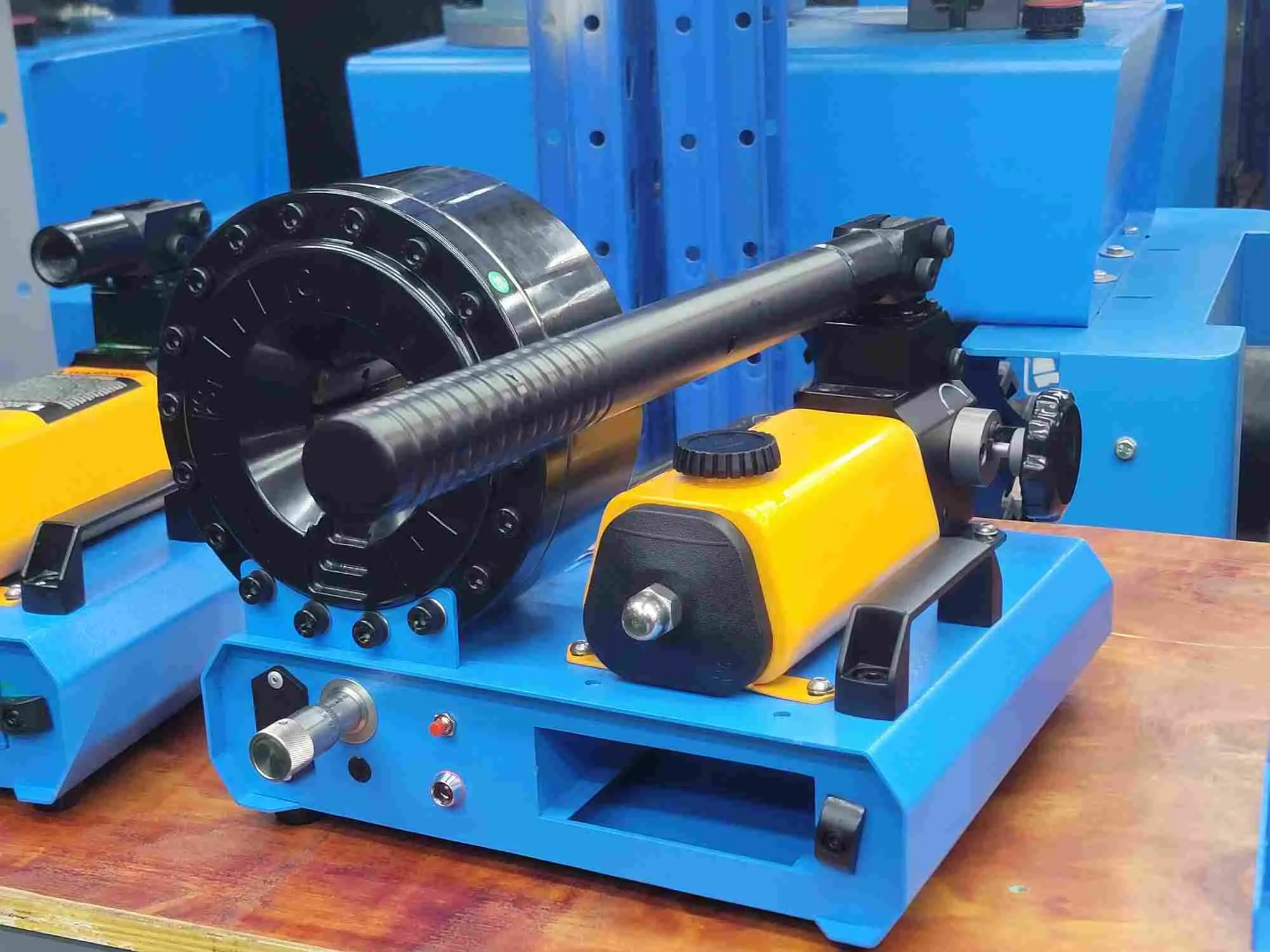
P16HP
Hand-pump operation keeps the utility requirement simple for field or lower-frequency work.
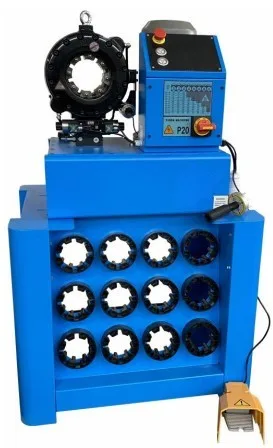
P20
A 137-ton electric route with P20 tooling for regular fixed-location hose work.
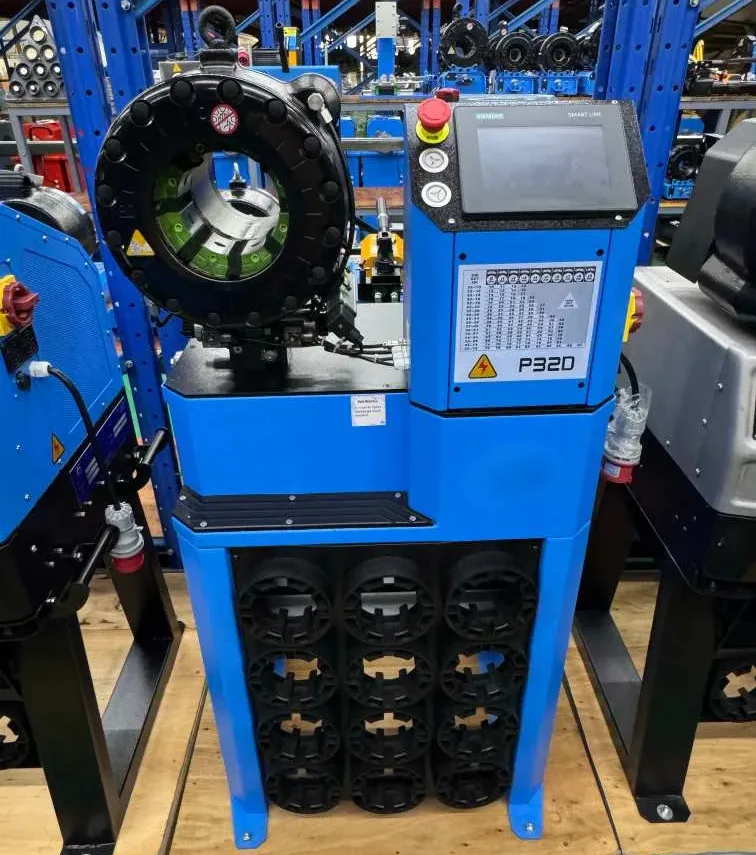
P32D
A 200-ton P32 machine with saved data, correction and reporting functions for controlled repeat work.
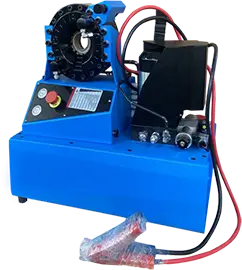
P18CS
A 12/24V, 40 kg battery route for mobile work where vehicle power and compact handling matter.
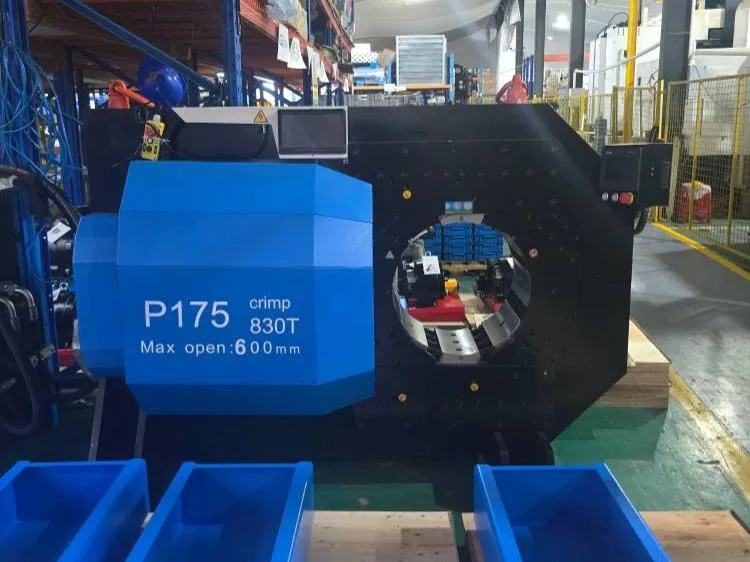
P175
The 830-ton record and 6-290 mm die-range record place it in model-specific heavy-duty reviews.
Family comparison
How the main equipment routes differ
| Family | Best starting point | Questions before selection |
|---|---|---|
| Manual / pneumatic crimpers | Lower-frequency, off-grid or simple service work. | Largest assembly, effort, pump or air source, die coverage. |
| Electric workshop crimpers | Regular fixed-location production. | Voltage, output, controls, return and changeovers. |
| Mobile / battery crimpers | Service trucks and field repair. | Weight, vehicle power, hose range, charging and volume. |
| Vertical crimpers | Workpieces needing a different loading path. | Fitting shape, insertion space, operator position and dies. |
| Heavy-duty crimpers | Larger ferrules and demanding construction. | Ferrule OD, opening, force, handling, control and installation. |
| Cutting machines | Controlled hose preparation. | Hose construction, OD, blade, debris, feed and volume. |
Before asking for a recommendation
Prepare the assembly and site inputs
Provide representative smallest and largest jobs, hose brand and series, fitting and ferrule information, target crimp data, work location, power, output and destination.
Cutting, skiving, cleaning and testing requirements are reviewed as separate process needs rather than assumed inclusions.
Hose construction, pre-crimp ferrule OD, target and fitting envelope.
Normal and peak volume, changeovers and realistic handling time.
Voltage, phase, air, vehicle power and site restrictions.
Measurement, cleaning, testing, documents and acceptance responsibility.
Selection and technical routes
Continue by the decision you need to make
Choose a crimper
Compare machine types from assembly, site, power and workload inputs.
How to Choose >Plan a complete setup
Separate essential equipment from conditional skiving, cleaning and testing.
Starter Kit guide >Compare a configured scope
Prepare model, dies, utilities, options, evidence and destination for a quotation.
For Sale guide >Review supplier evidence
Use the company page for the partner factory, QC responsibilities and certificate route.
About TRC >Products FAQ
Questions that determine the correct product route
Why are there several machines for the same nominal hose size?
Nominal size does not describe reinforcement, ferrule diameter, fitting shape, die series, production pattern or site. Two users making the same nominal size may need different machines.
Should I choose a machine by tonnage?
No. Tonnage is one capacity indicator. Check target diameter, ferrule OD, opening, tooling, fitting access, control and duty cycle.
What is the difference between portable and handheld?
A portable machine may still require a pump, battery pack or stable mounting. A truly handheld tool has different force, range and access limits.
Do I нужен a станок для снятия изоляции?
Only when the specified hose and fitting system requires skiving. Follow valid component data rather than a general pressure rule.
Can TRC recommend dies from hose size alone?
Not reliably. Send the hose series, reinforcement, fitting, ferrule, target crimp and machine model; die numbers are not universal.
Model shortlist
Not sure which product family fits the work?
Send two or three representative assembly specifications, expected workload, available power and work location.