
Машину для резки резиновых шлангов следует приобретать с учетом определенного перечня шлангов и требований к резке. “Режет до двух дюймов” недостаточно, поскольку мягкая резина, проволочная оплетка и многоспиральное усиление ведут себя по-разному при контакте с лезвием.
Запрос предложения без указания конструкции шланга не может быть корректно оценен
Отдел закупок отправляет запрос, в котором указано только “машина для резки резиновых шлангов”. Поставщики не могут сделать ответственный выбор без данных о конструкции шланга, максимальном наружном диаметре, усилении, схеме партий, инженерных коммуникациях и ожидаемом конечном состоянии.
Подготовьте лист технического задания
Включите:
- семейство и конструкцию шланга;
- фактический минимальный и максимальный наружный диаметр;
- слои усиления;
- обычную и пиковую частоту резки;
- требуемые длины и допуски;
- доступное напряжение или сжатый воздух;
- расположение в цехе или сервисном автомобиле;
- требование к последующей очистке.
Используйте репрезентативные образцы для любых сложных или незнакомых шлангов.
Сравнивайте машину, а не заголовок
Для машины для резки резиновых шлангов запросите спецификацию лезвия, проем, требования к двигателю или воздуху, метод подачи, закрепление заготовки, защитные ограждения и замену лезвия. Для автоматической модели добавьте функции контроля длины и работы с партиями.
Машина для резки гидравлических шлангов в продаже должна иметь точную идентификацию модели и упаковочный лист. Фотографий похожей машины недостаточно для закупки.
Требуйте пробную резку
Полезный отчет об образце фиксирует настройки шланга, лезвия и машины, затем проверяет:
- перпендикулярность реза;
- деформацию отверстия;
- состояние усиления;
- термическое повреждение;
- видимый мусор;
- повторяемость на нескольких резах.
Испытание не устанавливает универсальную производительность. Оно подтверждает данные для протестированного шланга и условий.
Планируйте очистку после резки
Резка и очистка — это отдельные операции. ISO/TS 18409:2018 поддерживает сбор образцов загрязнений, но не выбирает резак и не предписывает один универсальный маршрут очистки. Определите последующий процесс, исходя из сборки и требований конечного использования.
Включите проверенные данные TRC в запрос предложения
| модель | Записанный диапазон шлангов | Лезвие | Маршрут подачи | Ключ к инженерным коммуникациям |
|---|---|---|---|---|
| C250AC | До 1 дюйма 4SH | 250 × 3,5 × 32 мм | Ручная обработка | 1,5 кВт, 3-фазный 380 В |
| C300 | До 2 дюймов 4SH | 300 × 4 × 32 мм | Ручная подача | 4,0 кВт 3-фазный или 2,2 кВт однофазный |
| C300A | До 2 дюймов 4SH | 300 × 4 × 32 мм | Пневматический толкатель | Воздух 6 бар плюс электропитание |
| C300D | До 1 дюйма 2SH | 300 × 4 × 32 мм | Автоматический и ручной | Программируемая подача и занимаемая площадь линии |
| C520A | До 6 дюймов промышленный шланг | 520 × 4 × 50 мм | Пневматический толкатель | Воздух 6 бар, 5,5 кВт |
Эти записи помогают составить короткий список. Категория резаков для шлангов TRC содержит актуальные маршруты, но запрос предложения должен включать фактические образцы шлангов или данные о конструкции.
Проверьте передачу на очистку и сборку
Принятый рез по-прежнему нуждается в определенном маршруте очистки и защищенном хранении. Если применение требует проверки загрязнения, ISO/TS 18409:2018 предоставляет методы сбора образцов для анализа твердых частиц. Он не устанавливает один метод очистки или класс чистоты.
Сопоставьте производительность резака с мощностью последующего участка. Партия из 100 деталей не имеет ценности, если половина деталей лежит без заглушек на грязном верстаке.
Превратите один лист технического задания в справедливое сравнение поставщиков
Отправьте каждому поставщику одну и ту же редакцию. Если один поставщик оценивает компактный ручной резак, а другой предполагает пневматическую подачу плюс запасные лезвия, то предложения не являются конкурирующими.
| Строка сравнения | Покупатель фиксирует | Поставщик возвращает |
|---|---|---|
| Набор шлангов | Конструкция, наружный диаметр и репрезентативные образцы | Supported scope and exclusions |
| Производительность | Normal batch and changeovers | Proposed feed and control route |
| Cut result | Photos and written reject conditions | Trial record and sample identity |
| Инженерные коммуникации | Voltage, phase and available air | Exact motor and air configuration |
| Delivery scope | Blade, guards, supports, spares and documents | Included and optional items |
| Приемка | FAT and destination checks | Test method and evidence format |
We prefer a supplier that writes an exclusion over one that quietly assumes every rubber hose cuts the same way.
Choose representative samples
The sample set should include the hardest normal hose, the most common hose and one size near the proposed capacity boundary. Mark each piece before shipping and photograph the identification.
Ask for several cuts per hose. One good face can be luck; a short sequence shows feed stability, heat and repeatability. The report should record blade and machine identity, not just show loose samples beside a ruler.
Match the machine to the actual job
For compact reinforced-hose work, C250AC is recorded for up to 1 inch 4SH with a 250 × 3.5 × 32 mm blade, 1.5 kW three-phase 380 V power and 22 kg mass. It is a different route from C300, which is recorded for up to 2 inch 4SH with manual feed and a 300 × 4 × 32 mm blade.
C300A adds pneumatic feed and requires 6 bar air. C400F and C400A use a 400 × 4 × 50 mm blade and 5.5 kW power for their recorded 2-inch 4SH scope. C520A targets industrial hose up to 6 inches and needs a complete handling plan around its 132 mm opening.
| Job | First route to investigate | Boundary to verify |
|---|---|---|
| Mobile or compact 1-inch workshop | C250AC | Three-phase 380 V and sample suitability |
| Mixed manual 2-inch hose work | C300 | Подача оператором и поддержка материала |
| Repeated pneumatic 2-inch work | C300A or C400A | Stable 6 bar air and guarding |
| Large industrial hose | C520A | Handling, floor space and representative trial |
These figures come from the product record. They do not replace a sample trial for an unfamiliar reinforcement or compound.
Write the FAT around accepted parts
The factory acceptance test should use the identified sample set and destination configuration. Check guards and controls before running. OSHA 1910.212 provides US general machine-guarding context, while the machine manual and site assessment control the specific test. Record first-off quality, several repeated cuts, blade heat or visible damage, bore condition, wire pull-out and debris.
Acceptance rule: “Machine runs” is not a FAT result. The record needs an identified workpiece, an accepted cut criterion and the exact configuration tested.
Photograph accepted and rejected faces from the same angle. Confirm the blade list, spare parts, manuals and packing items before the crate closes.
Repeat the core checks after installation with the same hose if practical. Destination power, air quality, support tables and handling can change the result.
Price the operating package, not the enclosure
The useful comparison is:
delivered cutting cell = machine + feed/support + blades + spares + packing + freight + setup + training
Keep duty and destination charges outside any supplier guess unless the exact route and terms are known. Ask suppliers to use the same Incoterm and named place.
A low machine price can be reasonable, but blank rows for blade replacements, support, air preparation or documents are not zero-cost items. Leave them visible until someone owns them.
Hand the process to the site team
Before production, give the operator the approved hoses, blade identity, inspection photographs, cleaning route, stop conditions and maintenance contact. Include a safe jam-clearance and blade-change procedure from the machine manual.
Review performance after a locally chosen amount of real work. We look for accepted pieces, cut defects, blade changes and downstream insertion problems. There is no useful universal 30- or 90-day rule.
New hose families return to sample review. That keeps the purchase decision accurate after the product mix changes instead of stretching the original test beyond its evidence.
You should also preserve one approved cut sample or a controlled photo record at receiving. We use that reference when the destination team questions whether a new defect came from shipping, installation, blade condition or a different hose. It turns a vague complaint into a comparison.
Ask the supplier to state which hoses were not tested. This short exclusion list matters because a successful 2-inch 4SH trial does not prove performance on every industrial rubber hose with the same nominal bore. Purchasing can then decide whether the untested work needs another sample, another machine or an outsourcing route.
Keep that exclusion list with the signed configuration.
Work through an RFQ that suppliers can answer
Consider a distributor that cuts two normal groups: 1-inch wire-reinforced hydraulic hose in short daily batches and 2-inch 4SH hose several times each month. It also receives occasional large industrial rubber hose that is stiff and difficult to support.
One “six-inch rubber hose cutter” request would be a poor specification. The buyer should first decide whether the occasional large work justifies a C520A-type cell or remains outsourced. The regular 1- and 2-inch work can then be compared across C250AC, C300, C300A, C400F and C400A using samples.
| Вопрос | Workshop answer | Effect on RFQ |
|---|---|---|
| Which hose controls daily output? | 1-inch reinforced stock | Compact route remains relevant |
| Which hose controls machine capacity? | 2-inch 4SH | Trial must include this hose |
| Which work controls material handling? | Occasional large industrial hose | Separate handling and outsourcing decision |
| Is compressed air stable? | Buyer records pressure and demand | Determines whether pneumatic feed is practical |
| What is accepted? | Defined face, bore and reinforcement condition | Gives suppliers the same trial boundary |
This scenario does not produce an automatic model answer. It produces a quotation structure in which each assumption is visible.
Decide whether one cutter should cover every job
The largest machine is not automatically the most economical choice for small daily work. A large opening does not remove setup, blade, support and operator considerations.
Compare two cells only when the workload supports them: a compact daily machine and a larger machine for heavy hose. Otherwise, compare the cost of outsourcing the rare large cut with the floor space, utilities, handling gear and maintenance required to own it.
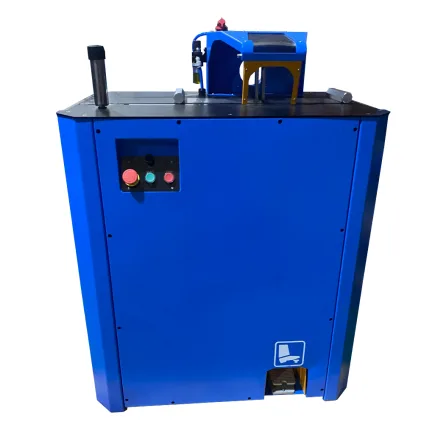
We would not approve the two-machine route from diameter alone. The buyer should show enough accepted large-hose volume or downtime exposure to justify the second cell.
Close technical deviations before the order
Suppliers may propose a different blade, feed or model after testing the samples. Record each deviation against the RFQ and state whether it is accepted, rejected or still open.
| Deviation | Review question |
|---|---|
| Different blade | Was it used for the accepted sample and is replacement available? |
| Larger machine | Which sample or handling limit requires it? |
| Пневматическая подача | What air pressure, volume and preparation are required? |
| Manual support | Can the destination site reproduce it safely? |
| No cleanliness claim | What downstream cleaning route will the buyer use? |
Do not let a change agreed in a call disappear from the signed configuration. The purchase order, test plan and packing list should all point to the same revision.
Give receiving a practical checklist
Receiving should verify the machine nameplate, destination electrical data, blade identification, guards, controls, supports, spares, manuals and packing list before the installation team signs off.
Then run the same identified hose used for the FAT. If the site result differs, check utilities, blade condition, support and handling before changing the acceptance rule.
Procurement view: A rubber hose cutter machine is ready when the delivered package can reproduce the accepted cut at the destination. The crate arriving intact is only the first gate.
Часто задаваемые вопросы
Когда следует заменять лезвие резака?
Investigate rising force, heat, tearing, wire pull-out or cut variation. Replace only with the blade specified for the machine and operating conditions.
Test the hardest normal hose before choosing the machine
Используйте Категория гидравлических шлангорезов TRC to identify formats, then send the application sheet for a sample plan.