
Eine Gummischlauch-Schneidemaschine sollte anhand einer definierten Schlauchliste und Schnittanforderung beschafft werden. “Schnitte bis zu zwei Zoll” reichen nicht aus, da sich weicher Gummi, Drahtgeflecht und mehrspiralige Verstärkung am Messer unterschiedlich verhalten.
Eine RFQ ohne Schlauchkonstruktion kann nicht korrekt angeboten werden
Ein Beschaffungsteam sendet eine RFQ, die nur “Gummischlauch-Schneidemaschine” besagt. Lieferanten können ohne die Schlauchkonstruktion, den maximalen Außendurchmesser, die Verstärkung, das Chargenmuster, die Versorgungsanschlüsse und den erwarteten Endzustand nicht verantwortungsvoll auswählen.
Erstellen Sie ein Anwendungsdatenblatt
Enthalten:
- Schlauchfamilie und Konstruktion;
- tatsächlicher minimaler und maximaler AD;
- Verstärkungslagen;
- normale und Spitzen-Schnittfrequenz;
- erforderliche Längen und Toleranzen;
- verfügbare Spannung oder Druckluft;
- Werkstatt- oder Servicefahrzeug-Standort;
- nachgelagerte Reinigungsanforderung.
Verwenden Sie repräsentative Muster für schwierige oder unbekannte Schläuche.
Vergleichen Sie die Maschine, nicht die Schlagzeile
Fragen Sie bei einer Gummischlauch-Schneidemaschine nach Messerspezifikation, Öffnung, Motor- oder Druckluftanforderungen, Vorschubmethode, Werkstückspannung, Schutzvorrichtungen und Messerwechsel. Bei einem automatischen Modell fügen Sie Längensteuerungs- und Chargenfunktionen hinzu.
Eine zum Verkauf stehende Hydraulikschlauch-Schneidemaschine sollte eine exakte Modellidentität und eine Packliste aufweisen. Fotos einer ähnlichen Maschine reichen für die Beschaffung nicht aus.
Fordern Sie einen Schnittversuch
Ein nützlicher Musterbericht erfasst den Schlauch, das Messer und die Maschineneinstellung und prüft dann:
- Schnittrechtwinkligkeit;
- Bohrungsverformung;
- Zustand der Verstärkung;
- Hitzeschäden;
- sichtbare Rückstände;
- Wiederholgenauigkeit über mehr als einen Schnitt.
Der Versuch stellt keine universelle Kapazität fest. Er unterstützt den getesteten Schlauch und die Bedingungen.
Planen Sie die Reinigung nach dem Schneiden
Schneiden und Reinigen sind getrennte Arbeitsgänge. ISO/TS 18409:2018 unterstützt die Sammlung von Kontaminationsproben, wählt jedoch nicht die Schneidemaschine aus und schreibt keinen universellen Reinigungsweg vor. Definieren Sie den nachgelagerten Prozess basierend auf der Baugruppen- und Endverwendungsanforderung.
Geben Sie verifizierte TRC-Daten in die RFQ ein
| Modell | Aufgezeichneter Schlauchumfang | Klinge | Vorschubweg | Hinweis auf Versorgungsanschlüsse |
|---|---|---|---|---|
| C250AC | Bis zu 1 Zoll 4SH | 250 × 3,5 × 32 mm | Manuelle Handhabung | 1,5 kW, 3-phasig 380 V |
| C300 | Bis zu 2 Zoll 4SH | 300 × 4 × 32 mm | Manueller Vorschub | 4,0 kW 3-phasig oder 2,2 kW einphasig |
| C300A | Bis zu 2 Zoll 4SH | 300 × 4 × 32 mm | Pneumatischer Schieber | 6 bar Druckluft plus Stromversorgung |
| C300D | Bis zu 1 Zoll 2SH | 300 × 4 × 32 mm | Automatisch und manuell | Programmgesteuerter Vorschub und Linien-Stellfläche |
| C520A | Bis zu 6 Zoll Industrieschlauch | 520 × 4 × 50 mm | Pneumatischer Schieber | 6 bar Druckluft, 5,5 kW |
Diese Aufzeichnungen helfen, eine Auswahlliste zu erstellen. Die TRC-Schlauchschneider-Kategorie enthält die aktuellen Wege, aber die RFQ muss tatsächliche Schlauchmuster oder Konstruktionsdaten enthalten.
Prüfen Sie die Übergabe an Reinigung und Montage
Der akzeptierte Schnitt benötigt noch einen definierten Reinigungsweg und geschützte Lagerung. Wenn die Anwendung eine Kontaminationsprüfung erfordert, ISO/TS 18409:2018 bietet Methoden zur Probenahme für die Feststoffpartikelanalyse. Sie legt keine Reinigungsmethode oder Reinheitsklasse fest.
Messen Sie die Leistung der Schneidemaschine an der nachgelagerten Kapazität. Eine 100-Stück-Charge hat keinen Wert, wenn die Hälfte der Teile unverschlossen auf einer schmutzigen Werkbank wartet.
Machen Sie aus einem Anwendungsdatenblatt einen fairen Lieferantenvergleich
Senden Sie jedem Lieferanten die gleiche Revision. Wenn ein Lieferant einen kompakten manuellen Schneider anbietet und ein anderer von pneumatischem Vorschub plus Ersatzmessern ausgeht, sind die Angebote keine konkurrierenden Offerten.
| Vergleichszeile | Käufer legt fest | Lieferant liefert zurück |
|---|---|---|
| Schlauchsatz | Konstruktion, AD und repräsentative Muster | Supported scope and exclusions |
| Ausstoß | Normal batch and changeovers | Proposed feed and control route |
| Cut result | Photos and written reject conditions | Trial record and sample identity |
| Versorgungseinrichtungen | Voltage, phase and available air | Exact motor and air configuration |
| Delivery scope | Blade, guards, supports, spares and documents | Included and optional items |
| Abnahme | FAT and destination checks | Test method and evidence format |
We prefer a supplier that writes an exclusion over one that quietly assumes every rubber hose cuts the same way.
Choose representative samples
The sample set should include the hardest normal hose, the most common hose and one size near the proposed capacity boundary. Mark each piece before shipping and photograph the identification.
Ask for several cuts per hose. One good face can be luck; a short sequence shows feed stability, heat and repeatability. The report should record blade and machine identity, not just show loose samples beside a ruler.
Match the machine to the actual job
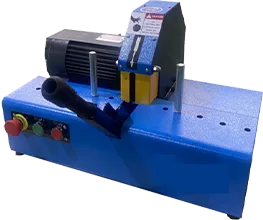
For compact reinforced-hose work, C250AC is recorded for up to 1 inch 4SH with a 250 × 3.5 × 32 mm blade, 1.5 kW three-phase 380 V power and 22 kg mass. It is a different route from C300, which is recorded for up to 2 inch 4SH with manual feed and a 300 × 4 × 32 mm blade.
C300A adds pneumatic feed and requires 6 bar air. C400F and C400A use a 400 × 4 × 50 mm blade and 5.5 kW power for their recorded 2-inch 4SH scope. C520A targets industrial hose up to 6 inches and needs a complete handling plan around its 132 mm opening.
| Job | First route to investigate | Boundary to verify |
|---|---|---|
| Mobile or compact 1-inch workshop | C250AC | Three-phase 380 V and sample suitability |
| Mixed manual 2-inch hose work | C300 | Bedienervorschub und Materialunterstützung |
| Repeated pneumatic 2-inch work | C300A or C400A | Stable 6 bar air and guarding |
| Large industrial hose | C520A | Handling, floor space and representative trial |
These figures come from the product record. They do not replace a sample trial for an unfamiliar reinforcement or compound.
Write the FAT around accepted parts
The factory acceptance test should use the identified sample set and destination configuration. Check guards and controls before running. OSHA 1910.212 provides US general machine-guarding context, while the machine manual and site assessment control the specific test. Record first-off quality, several repeated cuts, blade heat or visible damage, bore condition, wire pull-out and debris.
Acceptance rule: “Machine runs” is not a FAT result. The record needs an identified workpiece, an accepted cut criterion and the exact configuration tested.
Photograph accepted and rejected faces from the same angle. Confirm the blade list, spare parts, manuals and packing items before the crate closes.
Repeat the core checks after installation with the same hose if practical. Destination power, air quality, support tables and handling can change the result.
Price the operating package, not the enclosure
The useful comparison is:
delivered cutting cell = machine + feed/support + blades + spares + packing + freight + setup + training
Keep duty and destination charges outside any supplier guess unless the exact route and terms are known. Ask suppliers to use the same Incoterm and named place.
A low machine price can be reasonable, but blank rows for blade replacements, support, air preparation or documents are not zero-cost items. Leave them visible until someone owns them.
Hand the process to the site team
Before production, give the operator the approved hoses, blade identity, inspection photographs, cleaning route, stop conditions and maintenance contact. Include a safe jam-clearance and blade-change procedure from the machine manual.
Review performance after a locally chosen amount of real work. We look for accepted pieces, cut defects, blade changes and downstream insertion problems. There is no useful universal 30- or 90-day rule.
New hose families return to sample review. That keeps the purchase decision accurate after the product mix changes instead of stretching the original test beyond its evidence.
You should also preserve one approved cut sample or a controlled photo record at receiving. We use that reference when the destination team questions whether a new defect came from shipping, installation, blade condition or a different hose. It turns a vague complaint into a comparison.
Ask the supplier to state which hoses were not tested. This short exclusion list matters because a successful 2-inch 4SH trial does not prove performance on every industrial rubber hose with the same nominal bore. Purchasing can then decide whether the untested work needs another sample, another machine or an outsourcing route.
Keep that exclusion list with the signed configuration.
Work through an RFQ that suppliers can answer
Consider a distributor that cuts two normal groups: 1-inch wire-reinforced hydraulic hose in short daily batches and 2-inch 4SH hose several times each month. It also receives occasional large industrial rubber hose that is stiff and difficult to support.
One “six-inch rubber hose cutter” request would be a poor specification. The buyer should first decide whether the occasional large work justifies a C520A-type cell or remains outsourced. The regular 1- and 2-inch work can then be compared across C250AC, C300, C300A, C400F and C400A using samples.
| Frage | Workshop answer | Effect on RFQ |
|---|---|---|
| Which hose controls daily output? | 1-inch reinforced stock | Compact route remains relevant |
| Which hose controls machine capacity? | 2-inch 4SH | Trial must include this hose |
| Which work controls material handling? | Occasional large industrial hose | Separate handling and outsourcing decision |
| Is compressed air stable? | Buyer records pressure and demand | Determines whether pneumatic feed is practical |
| What is accepted? | Defined face, bore and reinforcement condition | Gives suppliers the same trial boundary |
This scenario does not produce an automatic model answer. It produces a quotation structure in which each assumption is visible.
Decide whether one cutter should cover every job
The largest machine is not automatically the most economical choice for small daily work. A large opening does not remove setup, blade, support and operator considerations.
Compare two cells only when the workload supports them: a compact daily machine and a larger machine for heavy hose. Otherwise, compare the cost of outsourcing the rare large cut with the floor space, utilities, handling gear and maintenance required to own it.
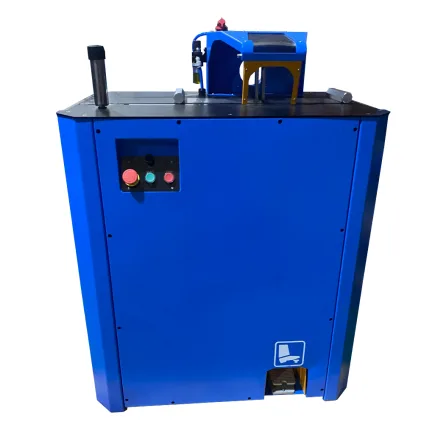
We would not approve the two-machine route from diameter alone. The buyer should show enough accepted large-hose volume or downtime exposure to justify the second cell.
Close technical deviations before the order
Suppliers may propose a different blade, feed or model after testing the samples. Record each deviation against the RFQ and state whether it is accepted, rejected or still open.
| Deviation | Review question |
|---|---|
| Different blade | Was it used for the accepted sample and is replacement available? |
| Larger machine | Which sample or handling limit requires it? |
| Pneumatischer Vorschub | What air pressure, volume and preparation are required? |
| Manual support | Can the destination site reproduce it safely? |
| No cleanliness claim | What downstream cleaning route will the buyer use? |
Do not let a change agreed in a call disappear from the signed configuration. The purchase order, test plan and packing list should all point to the same revision.
Give receiving a practical checklist
Receiving should verify the machine nameplate, destination electrical data, blade identification, guards, controls, supports, spares, manuals and packing list before the installation team signs off.
Then run the same identified hose used for the FAT. If the site result differs, check utilities, blade condition, support and handling before changing the acceptance rule.
Procurement view: A rubber hose cutter machine is ready when the delivered package can reproduce the accepted cut at the destination. The crate arriving intact is only the first gate.
Häufig gestellte Fragen
Wann sollte ein Schneidmesser ausgetauscht werden?
Investigate rising force, heat, tearing, wire pull-out or cut variation. Replace only with the blade specified for the machine and operating conditions.
Test the hardest normal hose before choosing the machine
Verwenden Sie die TRC Hydraulikschlauchschneider-Kategorie to identify formats, then send the application sheet for a sample plan.