Vertical Hydraulic Hose Crimper
Compare US18 and US20 vertical hydraulic hose crimpers by workpiece envelope, opening, die family, voltage and workshop loading conditions.
Compare US18 and US20 vertical hydraulic hose crimpers by workpiece envelope, opening, die family, voltage and workshop loading conditions.
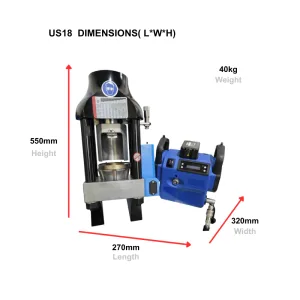
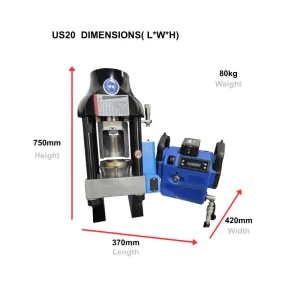
Product category | Vertical Hydraulic Hose Crimper
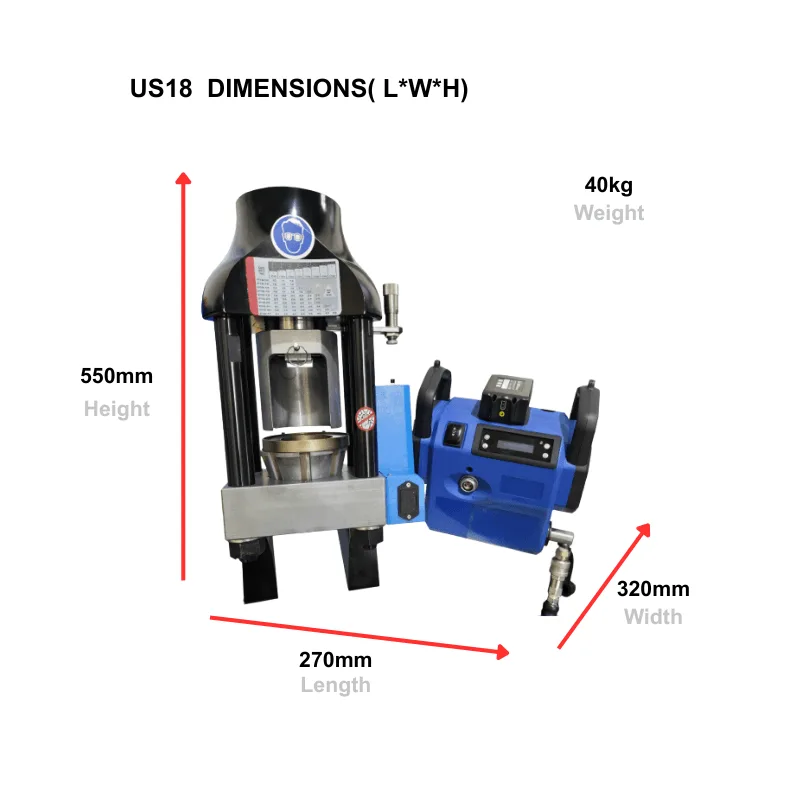
A vertical hydraulic hose crimper can improve the loading posture and clearance for some long or bent fittings. It is not the only feasible design; the submitted workpiece envelope and machine dimensions determine whether the layout is suitable.
A vertical hydraulic crimper is also described as an upright hose crimper or vertical hose crimping machine. Those names identify the machine layout only; actual access still depends on the submitted fitting envelope, opening and tooling.
Prensa de Mangueras Hidráulicas Vertical
Provide the straight and bent fitting envelope, hose/ferrule OD before crimping, insertion orientation, operator height, bench layout, required opening, die range, voltage and expected workload.
Prensa de Mangueras Hidráulicas Vertical
The model record supports the open-frame vertical layout and horizontally adjustable pressure-column description. Actual elbow clearance is approved only against drawings or representative samples. Standard and optional dies remain model-specific.
vertical hydraulic hose crimper FAQ
No. It can improve access in some cases, but the workpiece envelope, opening and tooling must be checked.
Do not assume so. Confirm the exact machine, die series, mounting and target diameter.
Voltage, bench and operator layout, workpiece loading path, maintenance clearance and the largest regular assembly.