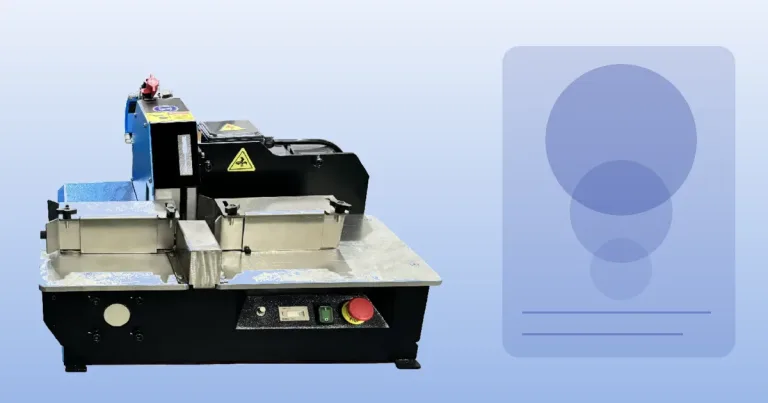

Отрезной станок для шлангов подготавливает конец для установки фитинга и обжима. Работа не заканчивается, когда шланг разделен. Рез должен быть достаточно перпендикулярным для процесса сборки, внутренний канал должен оставаться пригодным для использования, а загрязнения должны контролироваться.
Косые резы указывают на проблему в процессе
Мастерская по шлангам заменяет изношенный отрезной станок после жалоб на косые концы. Решение о покупке должно связывать отрезное устройство с установкой фитинга, очисткой внутреннего канала и обслуживанием диска, потому что быстрый рез, создающий переделку, не является продуктивным.
Выбирайте, ориентируясь на самый твердый шланг
Укажите конструкцию шланга, максимальный наружный диаметр и ожидаемую частоту использования. Отрезные станки для гидравлических шлангов, используемые на армированных шлангах, нуждаются в диске и силовой системе, подходящих для слоев проволоки. Станок для резки гидрошлангов, выбранный для легкой оплетки, может не подойти для крупных многоспиральных шлангов.
Организуйте рабочую зону
Поддерживайте шланг с обеих сторон диска и сохраняйте линию реза стабильной. Используйте ограждения и органы управления так, как предусмотрено производителем. Не снимайте ограждение, чтобы установить шланг большего размера; это сигнализирует о проблеме с производительностью или закреплением заготовки.
Проверяйте рез
Отбраковывайте или переделывайте конец, если он имеет:
- косой рез, выходящий за требования сборки;
- зажатый внутренний канал;
- вытянутую или сильно изношенную проволоку;
- подгоревшую резину;
- незакрепленные загрязнения, которые не были удалены;
- повреждения, препятствующие правильной установке фитинга.
Обслуживайте систему резки
Очищайте станок вокруг диска и зоны подачи. Проверяйте диск на износ или повреждения и используйте указанную замену. Повышенное усилие подачи, нагрев и разрывы являются практическими предупреждающими признаками.
Следуйте инструкциям по блокировке и техническому обслуживанию в руководстве по эксплуатации станка. OSHA 1910.212 предоставляет общий контекст ограждения, а не замену процедурам для конкретного станка.
Разделяйте очистку и проверку
Метод резки влияет на образование загрязнений, но ни одно отрезное устройство не должно обещать универсальную чистоту. ISO/TS 18409:2018 описывает методы отбора проб для анализа твердых частиц загрязнений в шлангах или шланговых сборках. Он не устанавливает универсальный процесс очистки или допустимый класс.
Разработайте процедуру после резки, соответствующую компонентной системе и конечному использованию.
Смотрите Ассортимент отрезных станков TRC для доступных форматов. Отправляйте образцы шлангов, если есть неопределенность в конструкции или пригодности диска.
Используйте дефекты как сигналы для обслуживания
Не ждите, пока диск перестанет резать. Отслеживайте растущее усилие подачи, увеличение времени цикла, нагрев, запах, вытягивание проволоки и неровную поверхность реза. Внезапное изменение после замены диска указывает на идентичность, установку или посадку; постепенное ухудшение чаще свидетельствует об износе или загрязнении.
Ведите краткий журнал обслуживания с идентификацией диска, датой установки, количеством обработанных шлангов и замеченными дефектами. Это полезнее, чем замена дисков по единому календарю, поскольку рабочая нагрузка и материал различаются.
Подбирайте станок под обычные и крайние случаи шлангов
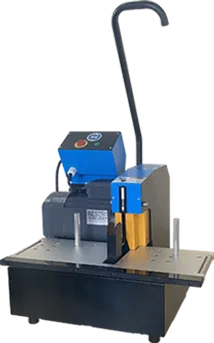
| модель | Обычный путь для исследования | Зарегистрированное лезвие | Основное ограничение для подтверждения |
|---|---|---|---|
| C250AC | Компактная резка 1-дюймовых шлангов для мастерских | 250 × 3,5 × 32 мм | Трехфазное 380 В в карточке продукта |
| C300 | Ручная подача для 2-дюймовых работ с 4SH | 300 × 4 × 32 мм | Подача оператором и поддержка материала |
| C300A | Пневматическая подача для 2-дюймовых работ с 4SH | 300 × 4 × 32 мм | Подходящая подача воздуха 6 бар и настройка |
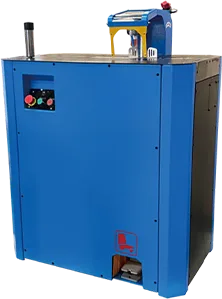
| C400F | Ножная педаль для 2-дюймовых работ с 4SH | 400 × 4 × 50 мм | Пространство, ограждение и масса станка 195 кг |
| C520A | Крупные промышленные шланги до 6 дюймов | 520 × 4 × 50 мм | Отверстие 132 мм и полный путь обработки |
Используйте категории отрезных станков для гидравлических шлангов чтобы сравнить маршруты, затем отправьте самый твердый обычный шланг для пробного реза.
Контролируйте замену диска
Изолируйте станок в соответствии с его руководством и процедурой на месте. Подтвердите идентичность сменного диска, диаметр, толщину, отверстие и указанное направление перед установкой.
После установки:
- Проверьте посадку и положение ограждения.
- Вращайте или тестируйте только так, как разрешено в руководстве.
- Выполните первый пробный рез без принудительной подачи.
- Inspect the face, bore, reinforcement and debris.
- Record the blade identity and acceptance result.
OSHA 1910.212 provides general guarding context. Machine-specific isolation and blade-change instructions still come from the manual and local safety procedure.
Правило для цеха: If the replacement blade marking does not match the approved specification, stop. Similar diameter is not enough.
Measure the process that follows cutting
A cut-off machine can reduce cutting time while the shop still loses output at cleaning, insertion or inspection. Observe the full hose-assembly route.
Используйте accepted cut pieces per hour = accepted pieces ÷ cutting-cell hours. Then compare it with accepted crimped assemblies per hour. If the cutter produces 40 accepted pieces and the crimping cell releases 20 assemblies in the same period, another faster cutter will not raise finished output.
This bottleneck example uses round numbers only to show the method. Replace them with one full shift of shop data.
Write the machine specification from the hose backward
Start with the hardest hose you expect to cut every week, not the largest size printed in a catalogue. We ask for its construction, actual OD, minimum bend condition at the machine, daily quantity and the end defect your assembly team will reject. That information determines the blade route, opening, support and feed method.
| RFQ field | What you should submit | Why it changes the choice |
|---|---|---|
| Hose identity | Family, reinforcement and actual OD | Separates light rubber work from wire-braid or spiral hose |
| Режим работы | Normal batch, peak batch and changeovers | Shows whether manual feed is still practical |
| Cut acceptance | Squareness, bore and reinforcement limits | Gives the trial a pass or fail point |
| Инженерные коммуникации | Voltage, phase and available air | Prevents an unusable destination configuration |
| Downstream process | Cleaning, insertion and inspection route | Stops the cutter from being judged in isolation |
If you cannot identify the hose, send a marked sample. “Hydraulic hose” is not a blade specification.
Link cutting to fitting insertion
The useful cut is the one that lets the operator insert the specified fitting without hiding damaged wire or loose debris. During commissioning, take several accepted cut pieces through cleaning and fitting insertion. A clean-looking face that collapses during insertion is still a failed process.
We recommend keeping one accepted sample and one rejected sample at the cell. Photographs help, but the physical samples show the operator how an angled face, pinched bore or pulled wire actually feels during insertion.
Commission the complete cutting cell
Run a normal batch from coil handling through accepted parts. Record setup time, cutting time, rejected ends, cleaning time and operator corrections. This exposes whether the bottleneck sits at the blade, the material support or the next process.
Техническое примечание: Do not claim a production rate from blade movement alone. Accepted pieces per hour includes loading, measuring, cutting, handling and inspection.
A practical commissioning record contains:
- hose and blade identity;
- machine configuration and utilities;
- first-off result;
- defect count and reason;
- post-cut cleaning route;
- operator and approval date.
Repeat the first-off check after a blade change, a jam or a material change. You do not need a universal calendar. You need a trigger that operators can recognize.
Recover from a jam or abnormal cut
Stop and isolate the machine using its manual and site procedure. Do not clear a jam through an exposed blade path or compensate by pushing harder.
After the obstruction is removed, check blade seating, guard position, work support and the hose end. Run one representative sample before returning to production. If heat, smoke, wire pull-out or vibration remains, keep the machine out of service until the cause is identified.
The blade owner should also control the replacement specification. Diameter alone is not enough; thickness, bore, direction, speed and intended material all matter. OSHA’s interpretation on unsuitable cutting wheels addresses a different machine case, but the safety principle is relevant: a cutting tool must match the machine speed and intended use.
Compare a compact and a large cutting route
A compact shop processing mainly 1-inch reinforced hose can begin with the C250AC record: up to 1 inch 4SH, a 250 × 3.5 × 32 mm blade and 1.5 kW three-phase 380 V power. A shop cutting 2-inch 4SH should investigate C300, C300A, C400F or C400A according to feed method and utilities.
C520A is a different handling problem. Its product record covers industrial hose up to 6 inches, a 520 × 4 × 50 mm blade, 5.5 kW power, 6 bar air and a 132 mm opening. The hose support, operator path and floor space matter as much as the opening.
These are model facts, not a promise for every hose inside the nominal diameter. We still require a representative cut when construction or reinforcement is uncertain.
Hand the accepted process to production
The handover sheet should state the approved hose families, blade, guards, support arrangement, normal feed method, inspection points and stop conditions. Put the maintenance and blade reorder route beside it.
Review the process after enough real work has passed to show a trend. Use one locally chosen interval, then look at accepted pieces, blade changes and defects. A fixed “30-day” or “90-day” rule adds no value unless it matches the shop’s workload.
The final boundary should be plain: this machine is released for the listed hoses and setup. New hose constructions return to sample-cut review before routine production.
A maintenance record should explain the defect
A useful maintenance log does more than record that a blade was replaced. It connects the hose, symptom, inspection and corrective action. Without that chain, the next shift sees the same torn wire and changes another blade without knowing whether support or feed caused the problem.
| Наблюдение | Первая проверка | Не предполагайте |
|---|---|---|
| Cut face wanders | Hose support and blade seating | The motor lacks power |
| Wire pulls from the end | Blade condition and match to reinforcement | All spiral hose behaves this way |
| Rubber smears or burns | Edge condition, feed and heat | Faster feed will clear it |
| Bore closes | Workholding and support | Cleaning can restore the shape |
| Debris rises suddenly | Blade damage and cutting setup | A stronger air blast solves the cause |
We recommend attaching a photograph of the cut face to the record when a defect first appears. Use the same angle and include the hose identification. That gives maintenance something more useful than “bad cut.”
Separate cleaning from cutting correction
Loose particles must be removed through the approved post-cut process, but cleaning does not correct a pinched bore, heat damage or pulled reinforcement. Reject the cut first, then clean the accepted replacement.
If the end-use specification calls for particulate verification, define the sampling method and acceptance authority in the quality plan. ISO/TS 18409:2018 addresses collection of contamination samples from hydraulic hose and assemblies. It does not prescribe one universal shop-cleaning method.
Give purchasing the real consumable requirement
When the first machine is ordered, ask for the fitted blade specification, one planned replacement route and the information needed to reorder it. The request should include diameter, thickness, bore and machine model. Do not rely on an unlabeled spare wrapped inside the crate.
For a C520A route, the product record states a 520 × 4 × 50 mm blade. That fact still needs to remain with the C520A asset; it should not be copied to another cutter because both machines happen to process large hose.
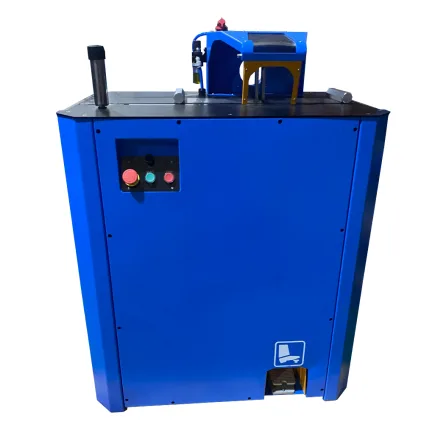
The same record should state who can release a new blade, where accepted spares are stored and what first-off test follows installation. That is enough control for a small shop without turning the job into paperwork for its own sake.
Часто задаваемые вопросы
What is the best cutter for a reinforced hose?
There is no answer without the hose construction and workload. The correct machine uses an approved blade, holds the hose without crushing it and produces an acceptable sample under guarded operation.
Build the maintenance scope into the quotation
Ask TRC for the proposed blade specification, replacement route and sample-cut acceptance points together with the machine quotation.