
La location d'une sertisseuse hydraulique peut être judicieuse pour un projet court et défini lorsque la machine, les matrices et les données des composants sont disponibles ensemble. L'achat devient plus intéressant lorsque les retards, la demande répétée et le contrôle des stocks l'emportent sur le coût de possession.
Un arrêt de dix jours met la location à l'épreuve
Un entrepreneur a besoin d'une sertisseuse pour un projet d'arrêt et compare la location avec un ensemble permanent. La fréquence compte, mais la disponibilité, les matrices compatibles, le transport, la formation, le stock de composants et l'exposition aux temps d'arrêt peuvent changer la réponse.
La location fonctionne mieux lorsque
- le travail est temporaire et planifié ;
- le système de flexible requis est connu ;
- la location inclut des matrices identifiées ;
- les opérateurs ont des instructions et des outils de mesure ;
- l'état de l'équipement peut être vérifié ;
- le moment du retour ne crée pas de risque de temps d'arrêt.
L'achat fonctionne mieux lorsque
- les réparations surviennent de manière imprévisible ;
- l'accès à la machine affecte la disponibilité de l'équipement ;
- l'atelier peut contrôler l'inventaire des flexibles et des raccords ;
- des opérateurs formés sont disponibles ;
- la charge de travail justifie la possession de l'entretien et de l'outillage.
Comparez des systèmes complets
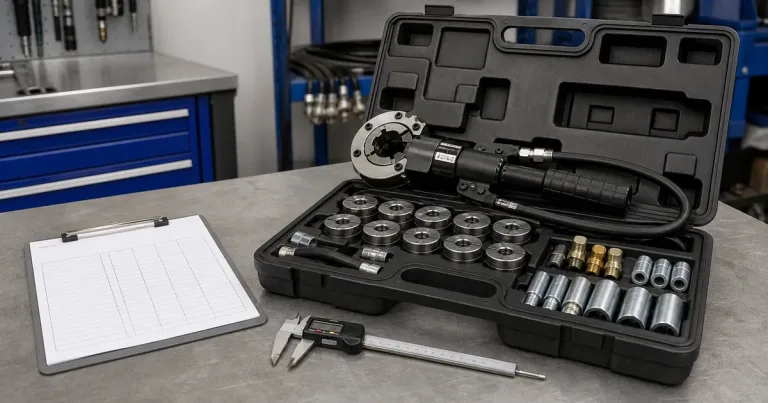
Un ensemble de sertisseuse hydraulique loué ou acheté doit inclure la pompe ou le groupe motopompe, les matrices et les adaptateurs nécessaires. Il n'inclut pas automatiquement un coupeur, un équipement de nettoyage, des composants ou des outils de validation.
Modèle de coût
N'utilisez pas une liste de prix générique pour machine à sertir les flexibles. Comparez :
Location : tarif journalier/hebdomadaire, livraison, dépôt, responsabilité des dommages, consommables, temps de mise en place et risque de retour tardif.
Achat : machine, matrices, fret, importation, services publics, entretien, formation et coût du capital.
Ajoutez ensuite les temps d'arrêt évités ou créés par chaque option.
État de l'équipement
Inspectez l'outillage de location avant utilisation. Enregistrez l'identité des matrices et l'usure visible. Fabriquez et mesurez une première pièce en utilisant des données de composants valides. Ne présumez pas que l'équipement de location a été étalonné pour votre système de flexible.
Préparez le dossier de location avant de demander un tarif
Fournissez à l'entreprise de location le système de composants, la gamme de flexibles, les rangées de raccords et de douilles, la source des données de sertissage, les dates du projet, le lieu et les services publics disponibles. Un tarif journalier signifie peu tant que la machine et les matrices ne sont pas adaptées au travail.
| Élément du dossier | Confirmer avant l'expédition | Pourquoi c’est important |
|---|---|---|
| Machine | Modèle exact, puissance et état | Évite une configuration inutilisable sur site |
| Matrices | Liste marquée liée aux rangées de composants | Empêche une livraison “ machine seule ” |
| Données de sertissage | Source contrôlée actuelle | Donne à l'opérateur la configuration cible |
| Outils de mesure | Méthode et responsabilité | Permet de libérer le travail fini |
| Formation | Opérateurs désignés et briefing spécifique au modèle | Réduit les erreurs de configuration et de manipulation |
| Transport | Livraison, levage, retour et dispositifs de retenue | Expose le temps et le risque de dommages |
| Assistance en cas de panne | Contact, réponse et conditions de remplacement | Chiffre le temps d'arrêt au lieu de l'ignorer |
Si le fournisseur ne peut pas documenter les matrices ou les données de processus actuelles, la machine n'est pas prête pour le travail d'assemblage de flexibles.
Gates’ crimp data and dies manual is one manufacturer example of why the component, die and completed measurement must stay together. Use only the current data for the rented machine’s approved component system.
Inspect at handover
Photograph the machine, nameplate, dies and existing damage. Check controls, guards, power, loaded operation and return. Run one identified component sample and record the completed measurement before the provider leaves.
Les instructions de montage specified-crimper preventive-maintenance guidance shows why condition evidence should include more than an empty cycle. Its maintenance intervals and fluid instructions remain limited to the named Parker equipment.
Repeat the inventory at return. This protects both sides and keeps a worn die or missing tool from becoming an argument after the project.
Put availability risk into the cost model
Rental cost includes more than days on site:
rental project cost = rental + delivery + pickup + tooling + setup + extension + standby + expected downtime
Buying includes machine, dies, freight, commissioning, maintenance and capital tied up. Use the same project horizon and component scope for both.
| Event | Rental effect | Ownership effect |
|---|---|---|
| Project finishes on time | Known term and return | Asset remains available |
| Project extends | Extra rent and rescheduling | Mainly labor and operating cost |
| Machine fails | Provider response controls downtime | Owner controls spares and repair route |
| New hose family appears | New dies/data may be unavailable | Owner still needs validated tooling |
| Next emergency starts | Rental availability must be checked again | Machine can be ready if maintained |
Do not insert invented market rates. Put your actual quote, transport distance, labor rate and downtime exposure into the model.
Work through a 14-day shutdown
A plant plans ten production days plus setup and contingency. The component list is fixed, the dies are confirmed and the rental machine can arrive two days before work begins. Rental can be a sensible way to avoid owning a machine used once.
Now change one fact: the shutdown moves by a week, but the provider has promised the machine to another customer. The low daily rate no longer describes the risk.
Commercial point: The value of rental is access to the correct working system on the correct dates, not temporary possession of a press.
We recommend agreeing extension rates, collection notice and breakdown response before dispatch. If downtime would stop a critical site, price an alternate repair route or replacement machine.
Compare rental with outsourcing
For a very small, fixed batch, a qualified hose shop may be safer and cheaper than bringing a crimper to site. Outsourcing transfers equipment setup to the supplier, but you still need correct hose and fitting identification, routing dimensions and acceptance.
A service truck can justify rental when it supports a planned remote project with a known component program. It is a poor fit when crews expect to make any hose they encounter from mixed, unverified parts.
Close the project with operating evidence
Record machine hours, accepted assemblies, extensions, faults, damaged tooling and final cost. Compare that result with the ownership model before the next project.
If repeated rentals occur because demand is unpredictable but frequent, the evidence may support buying. If the machine sat idle for most of the hire, the better answer may be tighter scheduling or outsourcing.
There is no universal break-even month. Use your project record, not a generic “rent for short term, buy for long term” slogan.
The job schedule determines whether rental is practical
Put the crimper on the project schedule beside the component delivery, operator training and test window. If any of those arrive late, the rental clock may run while no accepted hose can be made.
Confirm the component system before booking
The provider should receive exact hose, fitting and ferrule references, not “one-inch hydraulic hose.” Ask which dies and crimp data support each row. If a component remains unresolved, decide before dispatch whether to substitute an approved system, add tooling or outsource that assembly.
| Schedule gate | Evidence before the next gate |
|---|---|
| Booking | Machine and die availability confirmed |
| Dispatch | Component map and destination utilities approved |
| Remise | Identity, condition and inventory accepted |
| Production | First component row released |
| Extension | Cost and availability rechecked |
| Return | Condition, hours and loose items reconciled |
The sequence prevents an urgent project from treating delivery as technical acceptance.
Compare a service-truck case with a workshop case
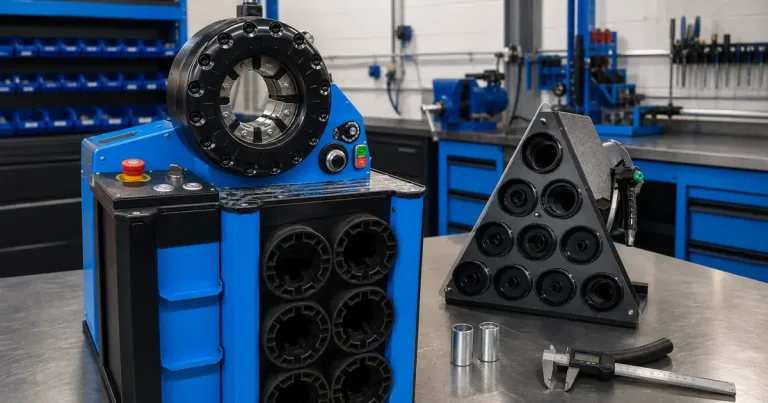
A service truck supporting a planned mine shutdown may need a portable split-body machine because the work is spread around the site. P20HPZ, for example, is recorded as a 137-ton separate-pump manual crimper with a 501 × 422 mm product image in the media record. Its suitability still depends on the component and die program.
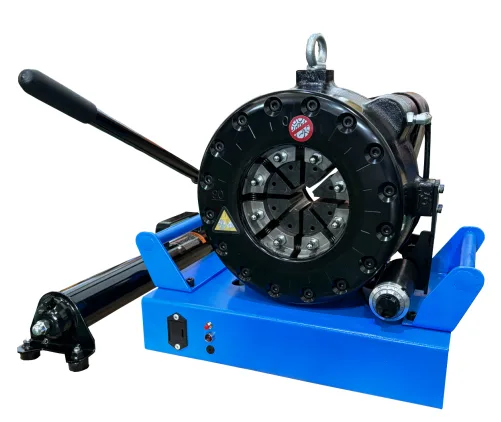
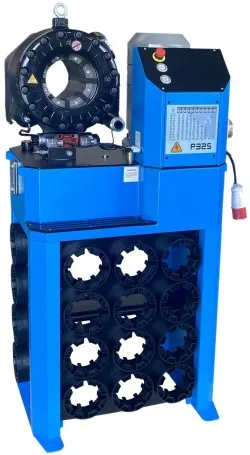
A fixed workshop processing repeat orders may place more value on stable mounting, faster routine operation and permanent tooling storage. Renting a portable machine for a workshop is not wrong, but the format should solve a site condition rather than merely be available.
Price three outcomes
Build one cost line for the on-time project, one for the expected extension and one for an unplanned breakdown. Use the provider’s written terms and the site’s actual downtime cost.
| Outcome | Include |
|---|---|
| On time | Rental, transport, setup and planned labor |
| Extended | Extra days, rescheduled pickup and labor |
| Breakdown | Lost work, response time, replacement transport and recovery |
We do not recommend multiplying the lowest day rate by planned days and calling it the project cost. That number ignores the events that usually decide whether rental worked.
Keep maintenance responsibility visible
The owner normally controls major repair and approved maintenance, while the renter controls daily checks and proper use. Put those boundaries in writing for the exact machine.
Do not open hydraulic systems, substitute oil or grind tooling without the owner’s procedure and authorization. Report abnormal return, leaks, damaged dies or control faults immediately.
Use the post-project review to answer the next decision
Record how many accepted assemblies were made, how much time the machine waited, which tooling was missing and whether provider response met the project need.
If the same component program appears several times each year, compare the actual rental record with a maintained ownership package. If projects remain rare and predictable, rental may continue to make sense.
The answer can change as the workload changes. Keeping the record means the next decision starts with evidence rather than memory.
Build the decision from three time horizons
For the current project, ask whether the correct machine and dies can be on site for the exact work window. For the next twelve months, list known jobs and emergency exposure. For the longer term, decide whether the business wants to own tooling, training and maintenance.
| Horizon | Main question |
|---|---|
| Current job | Can the complete rental package meet the schedule? |
| Next operating cycle | Will similar demand repeat, and how predictable is it? |
| Long term | Does owning the process fit the business and support plan? |
This avoids using a one-time shutdown to justify permanent equipment, or using today’s low workload to ignore a repeated service problem.
Put outsourcing in the same cost worksheet
Ask a qualified hose shop for the price and turnaround of the fixed component list. Add transport, waiting and site risk. Outsourcing may win for a small batch even when the per-assembly price looks high, because the shop already owns controlled tooling and inspection equipment.
Do not outsource unidentified components or unsafe emergency work merely to avoid the equipment decision. The component and acceptance requirements remain.
Decide the fallback before the first failure
Name the provider contact, response window and replacement route. If the machine cannot be replaced quickly, identify a qualified local hose shop or another approved machine that can cover the critical component rows.
The fallback does not need to duplicate the whole project. It should protect the assemblies whose delay stops the site.
| Failure | First response | Fallback decision |
|---|---|---|
| Machine fault | Isolate and notify provider | Repair, replace or outsource |
| Damaged die | Quarantine the set | Replacement die or approved external assembly |
| Missing crimp data | Stop the component row | Obtain current controlled data |
| Schedule extension | Recheck availability and rate | Extend, replace or buy |
| Operator unavailable | Use trained alternate | Do not assign an untrained operator |
We recommend reviewing the fallback during handover, while the provider and site team can still correct a missing contact or tooling item.
Return commercial lessons to purchasing
Compare invoice, planned cost and actual project record. Separate extra cost caused by the project’s schedule from extra cost caused by the rental package.
That distinction improves the next contract. It may support a longer booking window, a firmer tooling list, another provider or an ownership proposal.
Foire aux questions
Is hydraulic hose crimper rental worth it?
It can be worth it for a scheduled, short project with a known component system, confirmed dies, trained operators and firm machine availability. It is usually a weak fit for unpredictable emergency work or recurring production because delivery, return, extensions, missing tooling and idle-time risk can exceed the headline rental rate. Compare the complete rental cost with the ready-to-work cost of ownership.
Compare rental with a documented buying set
Utilisez la TRC starter-kit resource as the ownership baseline. Send the project duration and hose schedule for a configuration that can be compared with the complete rental scope.