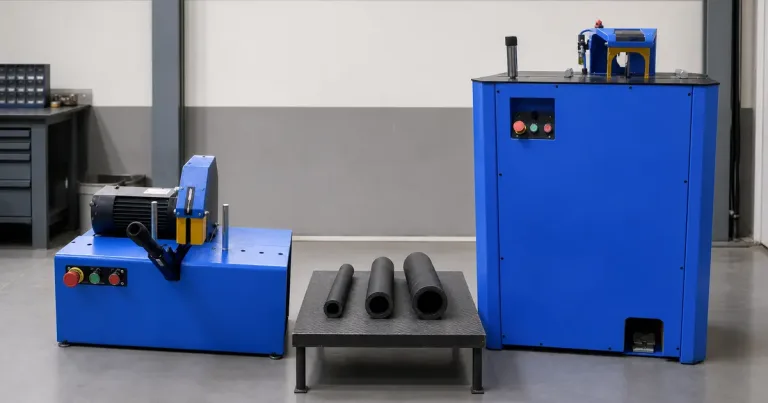

Le prix d'une coupeuse de flexible hydraulique varie selon le flexible à couper, le système d'entraînement, la lame, la méthode d'avance, les commandes et la configuration livrée. Un devis utile ne peut pas se réduire à la taille de la machine ou à un diamètre maximal.
TRC ne publie pas de grille tarifaire universelle dans cet article. Le coût actuel dépend du modèle confirmé, des options, de la tension, de l'emballage et des conditions commerciales.
Normalisez le périmètre avant de comparer les prix
Deux devis de coupeuses diffèrent fortement même s'ils mentionnent la même taille nominale de flexible. L'un inclut l'avance programmée et la configuration export ; l'autre est une scie manuelle de base. La comparaison des coûts n'a de sens qu'une fois le périmètre normalisé.
Facteurs fondamentaux de la machine
| Facteur | Pourquoi cela affecte le devis |
|---|---|
| Construction du flexible et diamètre extérieur | Modifie la charge sur la lame, l'ouverture et la puissance requise |
| Lame et entraînement | Différents procédés de coupe nécessitent différents matériels |
| Méthode d'avance | L'avance manuelle, assistée et automatique utilise différents systèmes |
| Contrôle de longueur par CNC | Ajoute des exigences de contrôleur, d'entraînement et de configuration |
| Protection et maintien de la pièce | Modifie le bâti et l'agencement opérationnel |
| Accessoires | La lame de rechange, les tables et l'équipement de collecte peuvent être séparés |
Automatique ne décrit pas une configuration unique
Lorsque vous comparez une offre de coupeuse de flexible automatique en gros, demandez si la machine contrôle la longueur d'avance, la quantité, le cycle de lame et le stockage par lots. Deux annonces peuvent toutes deux indiquer “ automatique ” tout en fournissant des fonctions différentes.
Coût livré
Le prix de la coupeuse de flexible sur un devis peut inclure ou non :
- l'emballage export ;
- la lame de rechange ;
- la conversion de puissance ou la personnalisation de la tension ;
- le support d'avance externe ;
- le fret et l'assurance ;
- les taxes d'importation ;
- l'installation ou la formation ;
- les pièces de rechange et d'usure.
Comparez le même périmètre et les mêmes conditions commerciales.
Évitez de payer pour une capacité inutilisable
Une machine plus grande n'est pas automatiquement un meilleur investissement. Le surdimensionnement peut prendre plus de place et de puissance sans améliorer le processus normal. Le sous-dimensionnement crée une avance forcée, des coupes médiocres et une usure prématurée de la lame.
Envoyez au fournisseur la gamme réelle de flexibles et le modèle de lots. Le bon devis doit identifier à la fois la plage de travail normale et le cas limite difficile.
Demandez un devis actuel
Utilisez la Catégorie de coupeurs de flexible hydraulique TRC pour affiner le format de la machine. Envoyez ensuite des échantillons de flexible ou la construction exacte, le diamètre extérieur maximal, la quantité, les besoins de contrôle de longueur, les services publics et la destination.
Une comparaison de prix défendable explique ce que chaque machine inclut et quel travail elle est censée accomplir.
Pourquoi des tailles maximales similaires peuvent entraîner des coûts différents
Deux machines peuvent indiquer la même taille maximale de flexible tout en utilisant des lames, des groupes moteurs, des protections, des systèmes d'avance et des commandes différents. L'une peut être conçue pour des coupes simples manuelles ; une autre peut inclure l'avance de longueur programmée et la gestion par lots. La capacité nominale ne rend pas les configurations équivalentes.
Établissez une feuille de prix avec des lignes distinctes pour la machine de base, la lame et les pièces de rechange, l'avance, le contrôle de longueur, la configuration électrique, l'emballage, le fret et la mise en service. Ajoutez ensuite le coût des coupes rejetées et du temps opérateur en utilisant les propres chiffres de l'acheteur. Cela garde l'article utile sans inventer une fourchette de prix de marché.
Normalisez trois configurations courantes de coupeuses
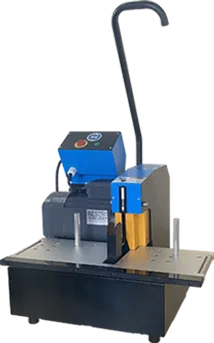
| Couche de coût | C300 avance manuelle | C300A avance pneumatique | C300D contrôle de longueur automatique |
|---|---|---|---|
| Portée de tuyau enregistrée | Jusqu'à 2 pouces 4SH | Jusqu'à 2 pouces 4SH | Jusqu'à 1 pouce 2SH |
| Lame | 300 × 4 × 32 mm | 300 × 4 × 32 mm | 300 × 4 × 32 mm |
| Options de moteur dans le dossier | 4,0 kW triphasé / 2,2 kW monophasé | Mêmes options enregistrées | Mêmes options enregistrées |
| Système supplémentaire | Avance opérateur | Pousseur pneumatique, air 6 bar | Dévidoir, compteur et barre de coupe |
| Cost question | Material support and labor | Air preparation and pusher | Controls, footprint and commissioning |
Similar blades and motors do not create the same quotation. Feed, controls, line components and supported hose range differ.
Utilisez la Page produit du C300, C300A product page et C300D product page to name the exact configuration in the RFQ.
Build a delivered-cost worksheet
delivered cost = machine + options + packing + freight + insurance + destination charges + setup
Classification, duty and tax depend on destination and shipment facts. Ask a qualified broker rather than copying another buyer’s percentage.
| Line | Supplier states | Buyer verifies |
|---|---|---|
| Machine | Model, voltage, blade and feed | Matches sample and site |
| Options | Spare blade, supports, extraction or controls | Required for operation |
| Packing | Size, weight and method | Freight quotation basis |
| Freight term | Incoterm and named place | Comparable across suppliers |
| Destination | Excluded charges | Broker estimate |
| Commissioning | Included documents and support | Local labor and utilities |
Commercial rule: Never compare an EXW machine with a delivered package as if both prices covered the same boundary.
Calculate cost per accepted cut
Purchase price alone does not show whether automation earns its cost.
machine cost per accepted cut = annualized machine cost ÷ annual accepted cuts
Add blade consumption, energy, air, maintenance, operator time and rejected material. Use shop-owned inputs and show the period used to annualize the machine.
An illustrative shop comparing 10,000 and 50,000 accepted cuts per year will spread the same machine cost across very different volumes. This explains why a larger automatic system can have a lower unit cost in a stable high-volume line and a poor payback in a mixed low-volume shop.
Price the sample trial and support route
A supplier who runs the exact hose, labels samples and records conditions gives the buyer better information than one who sends only a catalog video. The trial has a cost, but it can expose the wrong blade, incomplete feed system or unrealistic output claim before shipping.
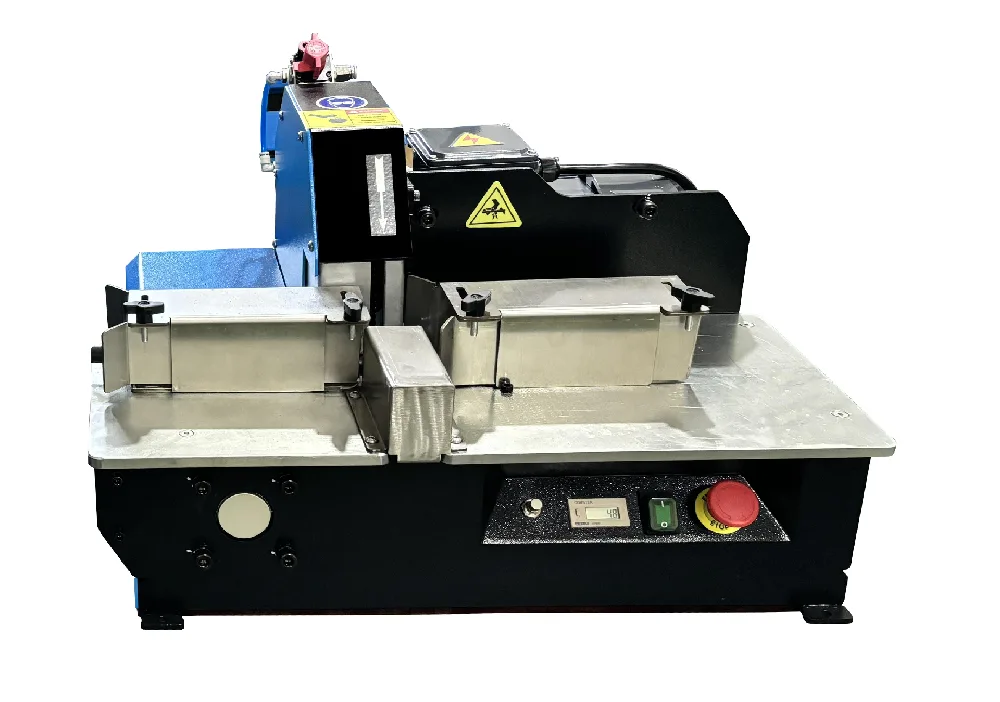
Ask about replacement blade identity, service response, electrical drawings, pneumatic parts and the parts that the buyer can hold locally. Do not convert a support promise into a monetary saving unless the supplier states the response and scope in writing.
Why capacity changes price unevenly
Moving from compact hose to large industrial hose can change blade, frame, opening, feed and material support together. Price does not rise in a straight line with nominal diameter.
C250AC records a 250 mm blade, 1.5 kW motor and 22 kg net weight. C520A records a 520 mm blade, 5.5 kW motor, pneumatic pusher, 132 mm opening without dies and a much larger industrial-hose route.
Those differences affect manufacturing and shipping. They also affect the buyer’s floor, air and handling cost.
Compare manual, pneumatic and programmed feed
Manual feed places more control on the operator. Pneumatic feed adds pusher and air-system requirements. Programmed feed adds control, counter and material-line components.
The right question is not which is cheapest. Ask which route removes the measured constraint in the buyer’s process.
If the operator makes short mixed batches, automatic length control may spend too much time in setup. If the line repeats one length all day, manual feed can consume labor and create variation.
Add reject material to the cost model
annual reject cost = rejected hose length × buyer's material cost per length
Record rejects by cause: wrong length, angled face, pulled wire, heat or wrong material. Automation may reduce one category and expose another.
Do not publish a guessed percentage. A one-week controlled trial gives a better starting input.
Include floor and utility work
A larger cutter may require reinforced floor review, air piping, electrical work, material stands and extraction. Add these destination items even when the supplier does not sell them.
| Site item | Buyer checks |
|---|---|
| Electrical | Voltage, phase, protection and cable route |
| Air | Pressure, consumption, treatment and connection |
| Floor | Level, load and anchoring requirement |
| Material path | Coil, entry, exit and finished parts |
| Ventilation | Material and cutting-process assessment |
| Formation | Operators and maintenance |
Build a five-year scenario without fake certainty
Use the company’s planning horizon and discount method. Include machine, financing, maintenance, blades, utilities, labor, rejects and downtime.
Run low, normal and high volume. Keep machine life, resale and maintenance assumptions visible.
A spreadsheet with editable inputs is better than a blog claiming one cutter pays back in a fixed number of months.
Ask what the quotation excludes
Suppliers often state the machine and standard blade, while entry supports, spare blade, air preparation, extraction and commissioning remain outside.
Put exclusions beside the total. A low quotation with five unresolved essentials is not cheaper yet.
Use an import broker before shipment
The machine description, package data and origin documents affect freight and destination review. Ask the broker to assess the exact configuration and destination.
Do not select an HS code or duty rate from another buyer’s shipment. Classification can differ with goods and jurisdiction.
Work through two quote boundaries
Quote A lists a C300 machine at EXW factory. Quote B lists C300A with pneumatic feed, spare blade, export packing and freight to the named destination.
The buyer cannot subtract the two totals and call the difference an automation premium. It must add packing, freight and missing items to Quote A, then separate the C300A pusher and air-system scope.
After normalization, the buyer can see the actual machine and feed difference. Before normalization, the cheaper quote only has fewer included lines.
Price voltage and frequency changes
Ask the supplier to state whether destination voltage, phase and frequency are standard, optional or unavailable. Put the final value on the order.
Do not assume local conversion is cheaper. Obtain an electrical review and include control, motor and certification effects.
Include unloading and internal movement
Freight ends at the agreed place. The buyer may still need forklift, crane, doorway review and movement to the final cell.
Use package size and gross weight from the packing plan. Add local handling to landed project cost.
Compare warranty boundaries
State duration, parts, labor, freight, remote diagnosis and exclusions. International warranty often covers parts differently from local on-site service.
Do not assign a financial value to “long warranty” until the service boundary is clear.
Review financing separately
Cash purchase, loan and supplier payment terms change cash flow. Keep finance cost separate from technical machine cost.
Use company finance assumptions. This article does not provide investment or lending advice.
Use sensitivity analysis
Change annual accepted cuts, labor cost, reject rate and blade use one at a time. See which assumption changes the decision.
If automation wins only at the highest optimistic volume, management should know that. A normal case and downside case make the business plan more honest.
Build the final comparison memo
State selected model, accepted hose scope, feed route, delivered boundary, site work, sample evidence, total planned cost and unresolved risks.
Attach quotations and calculations. The memo should explain why the buyer pays more or less, not merely identify the lowest number.
Review the quote expiration and schedule
Currency, freight and material costs can change. Record quote validity and estimated production schedule.
Do not assume a machine offered today can ship after the buyer delays approval for three months. Request an updated commercial confirmation.
Separate lead time from transit
Production, inspection, packing, booking, ocean or air transit, customs and inland delivery are different stages.
Build a schedule with an owner for each. A short factory lead time does not guarantee a short delivered project.
Price the first production delay
If the machine arrives after a planned contract starts, the buyer may continue outsourcing or lose work. Use the company’s actual alternative cost.
Do not use an exaggerated industry downtime figure to force the purchase.
Check package volume as well as weight
Freight can depend on dimensions and mode. Obtain final package data.
Large supports or coilers can drive volume even when the cutter is compact. Ask whether they pack together.
Keep tax treatment with finance
Import tax, recoverability, depreciation and accounting treatment vary. Finance and broker should supply the inputs.
The technical comparison should not guess them.
State the final decision threshold
Management should know what must change for another model to win: annual accepted cuts, labor, special-hose demand or downtime exposure.
Write those thresholds beside the recommendation. If volume remains below the automatic route’s break-even case, retain the simpler machine. If repeated batches grow beyond it, reopen the comparison with current quotes.
That makes the price review a living business decision, not a one-time spreadsheet built to support a preferred model.
Reconcile budget and final purchase order
Before signature, compare the selected configuration with the approved budget line by line. Confirm that dies, blade, supports, packing and destination power remain included.
If cost reduction removes an option, update technical scope and acceptance. The company should never approve one machine and buy a stripped version without reopening the decision.
Keep the rejected option and its cost effect in the file. If production volume changes later, management can reopen the decision without rebuilding the original comparison.
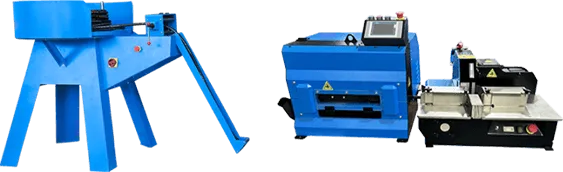
OSHA 1910.212 is relevant when site work or options change guarding. US Customs and Border Protection tariff-classification guidance shows why an importer should use the exact machine facts rather than copy another shipment’s code.
Put downtime and consumables into the same calculation
Two quotations can differ because one includes a complete operating package and the other stops at the machine. Build a landed-cost sheet with purchase price, selected blade and spares, packing, freight, destination charges, electrical work, air preparation when required, work supports, training and commissioning. Keep taxes and duties based on the destination broker’s advice.
Then calculate an internal cost per accepted piece. One useful formula is:
(annual ownership cost + annual blade/maintenance cost + labor + expected downtime cost) / accepted pieces
Use your figures rather than a supplier’s generic saving percentage. If a shop cuts 20,000 accepted pieces a year, a modest support table that removes ten seconds of handling can matter. If it cuts 200 pieces, simple controls and available replacement blades may matter more than automation.
In an illustrative comparison, Machine A is cheaper at the factory but lacks the required power configuration, work support and spare blade. Machine B costs more but arrives with the correct electrical scope and a successful sample trial. Once installation and one week of delayed production are added, Machine B can have the lower ready-to-work cost.
Also model an adverse case. Ask what happens if a blade shipment takes four weeks, the pneumatic pusher needs a local component or the machine fails the difficult hose trial. A price decision that works only under perfect conditions is not a purchasing plan.
Commercial note: We recommend comparing offers at the same Incoterm and written scope. A low EXW number and a delivered, commissioned package are not competing prices until every excluded item is added.
Foire aux questions
How much does a hydraulic hose cutting machine cost?
There is no useful single price without a defined hose range and supply scope. Compare the machine, blade, feed and holding method, guarding, power, included wear parts, packing, freight, taxes and commissioning on the same basis. Ask each supplier to cut the same difficult sample before treating two quotations as comparable.
Request a comparable quotation
Envoyez TRC the hose schedule, sample, batch pattern, automation boundary, voltage and destination. The response should identify included scope and exclusions instead of giving an isolated machine price.