Una máquina automática de corte de manguera hidráulica controla más la secuencia de avance y corte que una máquina manual. Eso puede mejorar el trabajo repetitivo, pero solo cuando la manguera avanza de manera consistente y la longitud programada se verifica con piezas reales.
Una prueba con bobina mixta expone el verdadero cuello de botella
Un comprador está decidiendo entre un cortador de avance manual y un sistema de longitud programada. La prueba útil ejecuta una bobina representativa y registra las correcciones de avance, los extremos rechazados, el tiempo de limpieza y la intervención del operador, en lugar de citar solo el movimiento de la cuchilla.
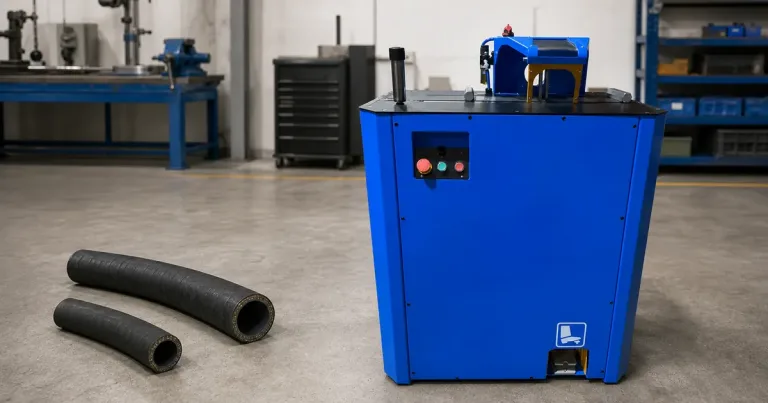
Máquinas de control manual
El operador mide, posiciona y avanza cada pieza. Esta ruta puede adaptarse a trabajos mixtos, lotes cortos y cambios frecuentes. También hace que la producción dependa más de la manipulación y el marcado.
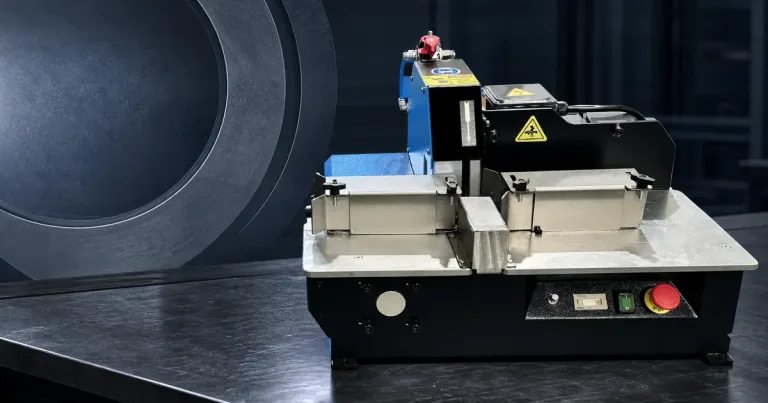
Máquinas CNC o de avance programado
Las máquinas programadas de corte de manguera hidráulica pueden controlar la longitud y la cantidad en un lote. Son más útiles cuando la misma manguera y la misma longitud de corte se repiten con frecuencia.
Pregunte qué gestiona realmente el controlador:
- distancia de avance;
- conteo de cortes;
- ciclo de la cuchilla;
- memoria de lotes;
- condiciones de error o parada.
No asuma que cada máquina descrita como automática incluye las cinco.
Compare el trabajo total, no un solo movimiento
El proceso completo incluye carga de la bobina, enderezado, avance, corte, manipulación de piezas, limpieza e inspección. El CNC puede reducir la medición repetida, pero no puede eliminar un soporte deficiente de la manguera o una cuchilla desgastada.
Acepte el corte antes de aceptar la producción
Inspeccione la escuadría, el estado del orificio, el refuerzo y el calor. Aplique el proceso de limpieza posterior. La producción que necesita retrabajo frecuente no es producción productiva.
Compare el control manual y el programado con el mismo lote
Use un pedido real con varias longitudes. Registre el tiempo de preparación, el trabajo de medición, las piezas aceptadas y las correcciones. El control manual puede ser más rápido para unas pocas longitudes irregulares porque la programación y la preparación de la bobina llevan tiempo. El avance programado se vuelve útil cuando un material estable y una lista de longitudes repetidas eliminan suficiente medición manual para justificar la preparación.
La comparación debe incluir los cambios. Una máquina que ejecuta una longitud rápidamente pero tarda mucho en recuperar el programa, la guía y la configuración de la cuchilla correctos para la siguiente manguera puede no mejorar la producción del día.
Compare C300 y C300D como diferentes rutas de producción
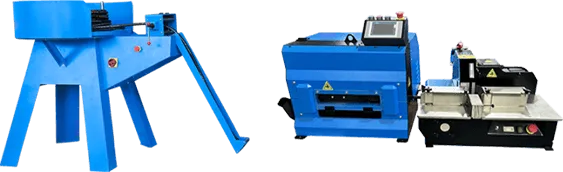
| Campo | C300 | C300D |
|---|---|---|
| Alcance registrado de mangueras | Hasta 2 pulgadas 4SH | Hasta 1 pulgada 2SH |
| Avance y control | Avance manual | Corte automático y manual |
| Cuchilla | 300 × 4 × 32 mm | 300 × 4 × 32 mm |
| Motor | 4,0 kW trifásica o 2,2 kW monofásica | 4,0 kW trifásica o 2,2 kW monofásica |
| Precisión de tamaño repetido | Sin valor en el archivo de producto | ±0.2 mm registrado para C300D |
| Razón principal para preseleccionar | Alcance más amplio registrado de manguera reforzada | Control de longitud repetida |
La C300D no es una C300 de mayor capacidad. Cambia un alcance registrado de manguera más estrecho por una ruta de avance y control de longitud más automatizada.
Compare el modelo de avance manual C300 y modelo automático C300D usando el mismo plan de lote.
Mantenga separadas la longitud de corte y la longitud del ensamblaje terminado
La longitud de corte de la manguera no siempre es la longitud del ensamblaje terminado. Los accesorios añaden geometría y la profundidad de inserción cambia la relación entre ambas.
| Registro de longitud | Lo que describe | Dónde aparece un error |
|---|---|---|
| Longitud de avance programada | Material avanzado por la línea de corte | Programa incorrecto o deslizamiento de avance |
| Longitud de manguera cortada | Pieza de manguera después del corte | Escuadría del extremo y método de medición |
| Longitud del ensamblaje terminado | Manguera completa con accesorios | Incorrecta contracción o inserción |
Approve the relationship through the component drawing or assembly instruction. Do not adjust the cutter until a fitting take-up error has been ruled out.
Nota de ingeniería: The C300D ±0.2 mm field is a machine product value. It is not a universal finished-assembly tolerance.
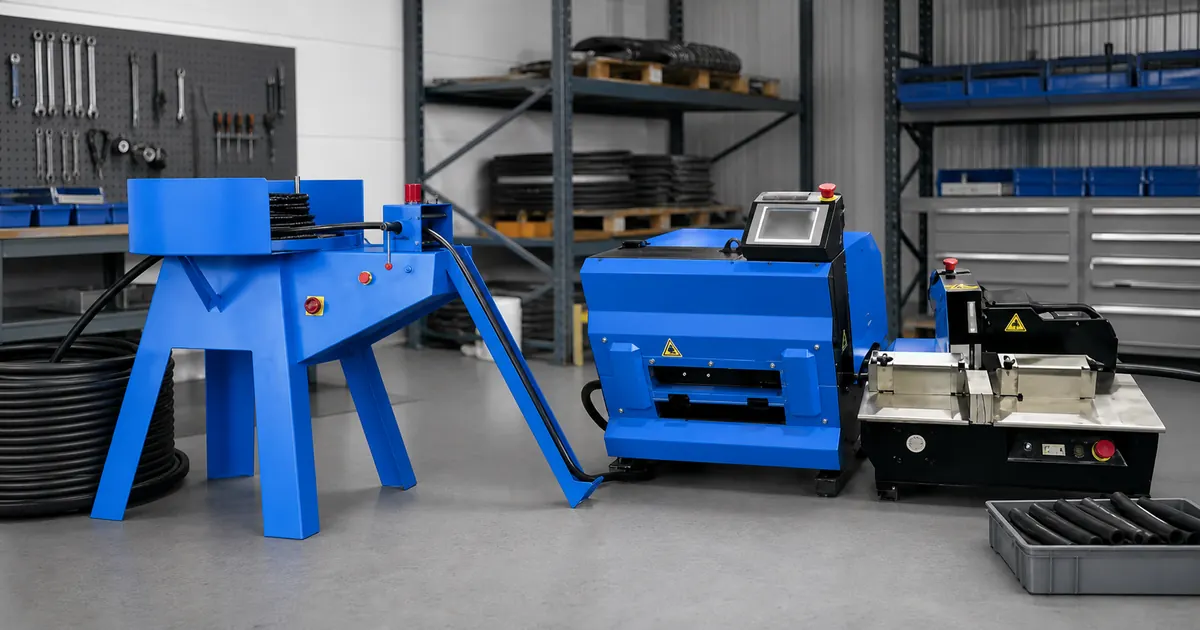
Plan the full C300D footprint
The product file lists three main assemblies: a 900 × 1,350 × 1,200 mm coiler, 700 × 530 × 640 mm counter and 650 × 600 × 450 mm cutter bar.
Add operator access, control access, finished-part handling and maintenance clearance to those dimensions. A line squeezed into the cutter’s enclosure footprint will be awkward to run.
Specify the control level in operating terms
“Automatic” is too vague for an RFQ. Write down which actions the machine performs and which actions still belong to the operator.
| Función | Manual route | Programmed route | Acceptance evidence |
|---|---|---|---|
| Length setting | Operator marks or positions material | Controller stores feed length | First-off measurement |
| Cantidad | Operator counts pieces | Batch counter stops at target | Batch reconciliation |
| Feed correction | Operator repositions hose | Parameters or guides are adjusted | Restart sample |
| Material change | Physical setup and new mark | New program plus physical setup | Approved changeover |
| Fault recovery | Operator follows manual procedure | Operator resets after cause is cleared | Recovery test |
This table prevents a buyer from paying for a controller that does not solve the actual repeated task.
Control programs and restarts
Give each approved program a hose identity, length revision and owner. Restrict edits to trained staff, but keep a documented manual route for recovery. After a power interruption, sensor fault or material slip, the operator should know whether the feed position is still valid.
Run a first-off piece after a restart that could change position. Do not let an automatic counter turn an unverified batch into hundreds of identical rejects.
Prove repeatability with one mixed batch
Test one repeated length, one changeover and one difficult coil. Measure setup, accepted pieces, rejects, interventions and usable remnant. The same batch should be run on the manual and automatic route if you want a fair comparison.
C300D’s product record states automatic and manual cutting, a 300 × 4 × 32 mm blade, up to 1 inch 2SH and repeated-size accuracy of ±0.2 mm. That accuracy belongs to the recorded machine function. It is not a universal finished-assembly tolerance and it does not raise C300D to the C300’s recorded 2-inch 4SH scope.
Measurement note: Verify the gauge or length method before judging a ±0.2 mm result. A display value cannot correct a loose reference point or inconsistent hose tension.
For a 500-piece order, an automatic route is attractive only if setup and feed remain stable. If the first 25 pieces need several corrections, stop and fix the cause. Do not average the error across the full batch.
Keep length records connected to the drawing
The program length, cut hose length and finished assembly length are different records. Fitting insertion and take-up affect the completed assembly.
When a drawing changes, revise the program reference and approve a new first-off. Keep units visible. A 500 mm program copied into an inch-based job is an avoidable control failure, not a machine-capacity problem.
Identify cut pieces when several lengths look alike. A simple batch traveler with hose, length, quantity and program revision is usually enough.
Plan failure ownership before installation
The operator should know who handles a failed counter, feed sensor, controller or backup. Keep current electrical information and a saved copy of approved programs with the asset.
Manual backup is useful, but only if operators have practiced it and the manual route has its own measurement check. “The machine can also run manually” is not a recovery plan.
At installation, prove:
- destination power and safe access;
- material path and coiler setup;
- first-off measurement;
- changeover and restart;
- emergency stop and guarded operation;
- record backup and restore;
- downstream cleaning and identification.
The C300D consists of a coiler, counter and cutter-bar assembly in the product record. Floor planning must include operator and material movement around all three, not only the cutter enclosure.
OSHA 1910.212 provides US general machine-guarding context for the cutting cell. Where the application requires a measured contamination result, ISO/TS 18409:2018 addresses collection of a fluid sample from hydraulic hose or assemblies; it does not define the automatic cutter’s cleaning process.
Decide with accepted output, not automation level
Use accepted pieces per labor hour, first-pass yield and changeover time. A manual C300 can be the better choice for mixed short work and the broader recorded hose scope. C300D is the better route when repeated lengths inside its 1-inch 2SH scope justify programmed feed.
We recommend a trial with your normal coil and length list. That result gives purchasing an operating reason for the control level, rather than a preference for the word “CNC.”
A production order should survive a shift change
Automatic cutting fails quietly when the controller contains a correct number with no material context. The second shift sees “1250,” loads a different hose and assumes the program remains valid.
Use a short traveler that follows the batch:
| Traveler field | Example of the required fact |
|---|---|
| Manguera | Exact internal material reference |
| Drawing revision | Current finished-assembly drawing |
| Program | Approved name and revision |
| Feed length | Value and unit |
| Primera pieza | Measured result and approver |
| Cantidad | Planned, cut, rejected and accepted |
| Cambio | Time and reason |
| Remnant | Identity and usable length |
The table is intentionally simple. An operator should be able to reconcile it with the coil, program and finished pieces without opening several systems.
Treat coil behavior as part of the setup
Two coils of the same nominal hose can enter the guides differently after storage or transport. Watch for drag, twist and inconsistent payout. If the operator repeatedly pulls the hose straight by hand, the line is not controlling the material path.
Record a guide or tension correction against the hose lot when it materially changes feed. Do not quietly edit the length program to compensate for a mechanical problem; the next stable coil will inherit the wrong value.
Measure automation losses by cause
Separate setup, changeover, material fault, machine fault, inspection and waiting time. “Downtime” is too broad to tell you whether a different machine will help.
An illustrative mixed batch might contain 200 repeated pieces and ten specials. If the repeated pieces run smoothly but the specials consume most of the setup time, keeping a manual route for the specials may cost less than forcing every order through the automatic line. This is a planning example, not a TRC output claim.
The same logic applies to remnants. A programmed machine can hit quantity while creating unusable short stock. Record remaining length by hose identity, then decide whether the next order can consume it.
Prove backup and restore
Export or document approved programs according to the controller instructions. Then test one restore with a non-production job before the backup is trusted. A file that exists but cannot be restored is not protection.
After restoration, run a first-off piece and compare it with the traveler. The check confirms the program, units, feed reference and measurement route together.
Vista del taller: Automation is earning its cost when another trained operator can reproduce the accepted batch without guessing what the last operator changed.
Before purchase, ask the second-shift operator to review the proposed traveler and trial plan. The questions raised by the person who did not create the program often expose unclear names, missing units and hidden manual adjustments. That review costs little and tests whether the automatic route can operate without one expert standing beside it.
Keep the accepted first-off beside the traveler until the batch is released. A visible reference catches a wrong hose or program faster than a production report reviewed after the pieces have moved downstream.
Preguntas frecuentes
¿Cómo se debe limpiar una manguera después del corte?
Apply the documented cleaning process after accepting the cut, then protect the ends. Use cleanliness sampling only when the application requires a measured contamination result.
Review the control level you actually need
Send the length list, tolerance method, coil condition, batches and downstream handling to TRC. The proposal should state which steps remain manual.