Tabla de Contenidos
- Lo que obtiene a este precio
- Material de construcción: donde empieza la diferencia
- Calidad de matrices: la pieza que toca cada conjunto
- Repetibilidad: ¿Puede alcanzar el mismo diámetro dos veces?
- Vida útil de juntas y fiabilidad a largo plazo
- Cuándo una económica es realmente suficiente
- Cuándo necesita grado profesional
- Comparación de especificaciones lado a lado
- Preguntas frecuentes
Many first-time buyers start their search with a hydraulic hose crimper Harbor Freight model or similar budget retailers. The price is tempting — often half or a third of a professional unit. But what are you actually getting?
This isn’t a hit piece on budget tools. It’s an honest look at where the limits are, so you can decide based on your actual needs, not marketing. The differences come down to five things: build material, die quality, repeatability, seal life, and after-sales support.

Lo que obtiene a este precio
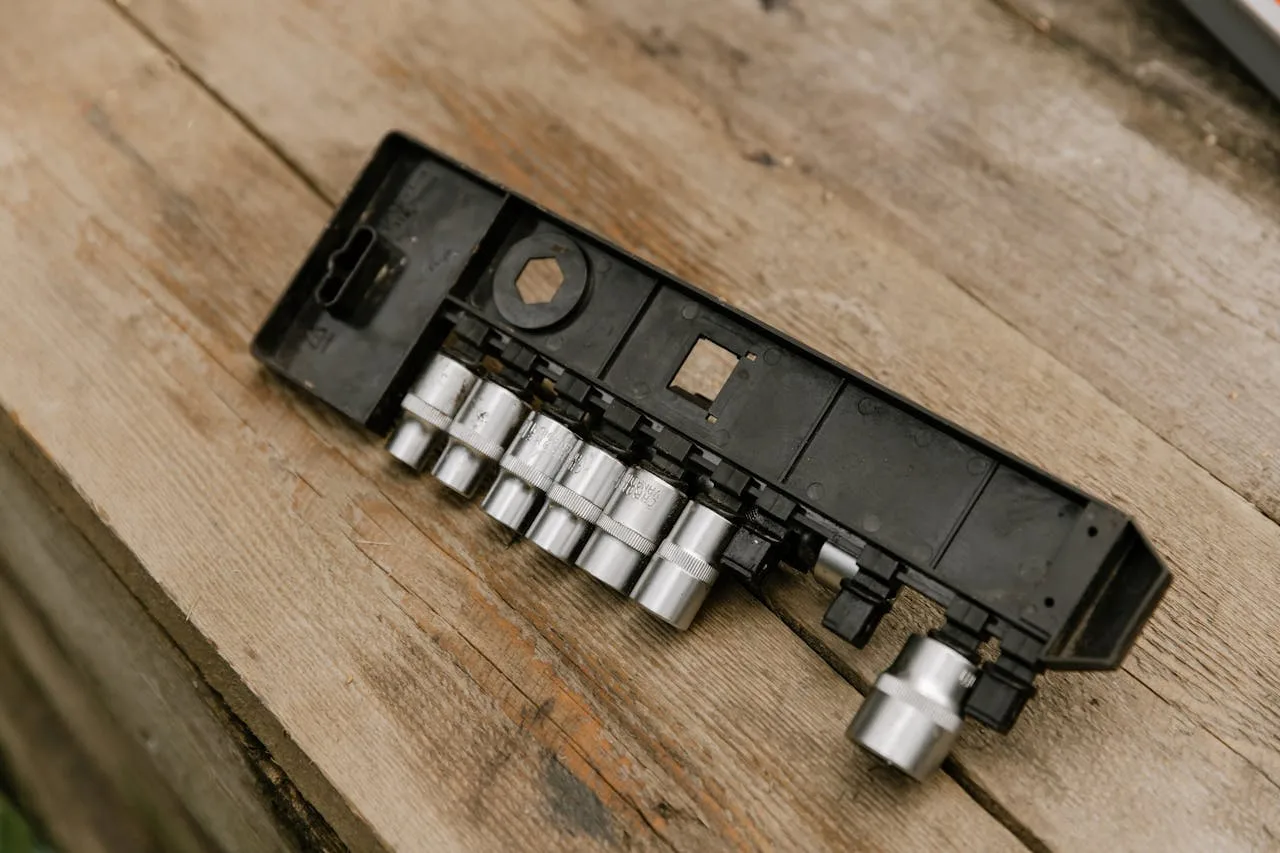
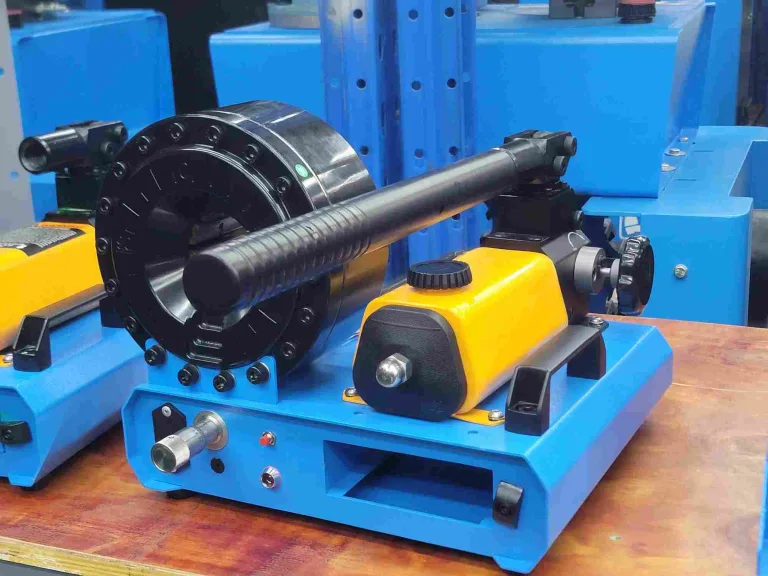
Las prensadoras de mangueras hidráulicas económicas en el rango de $150-400 comparten un diseño común: un cilindro hidráulico de bomba manual que empuja matrices segmentadas hacia adentro. Normalmente incluyen un juego básico de matrices que cubre tamaños comunes (normalmente -6 a -16), un estuche de plástico moldeado y una hoja de instrucciones de una página.
Here’s what that price point usually means in practice:
- Tonnage: 8-20 tons (sufficient for 1- and 2-wire braid up to -12)
- Die material: Cast steel or low-grade tool steel
- Die markings: Often poorly stamped or missing
- Crimp chart: Generic, not tested for specific fitting brands
- Warranty: 90 days to 1 year
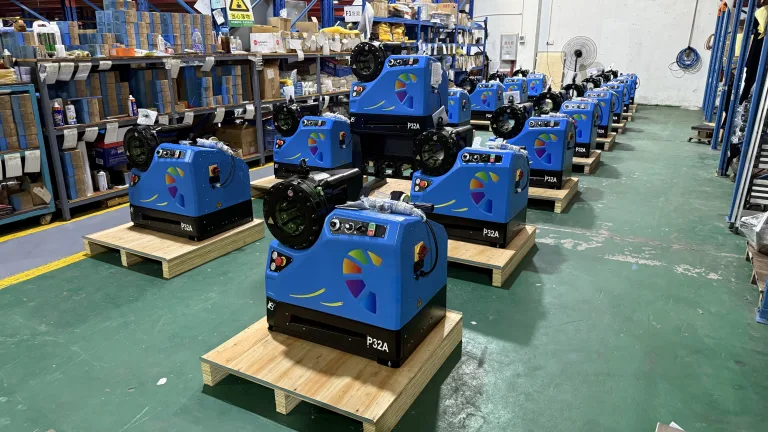
Compare that to a professional unit like the TRC P32A: 200 tons, Cr12MoV die steel with HRC 58-62 hardness, factory-tested crimp charts for specific fitting series, and a 3-year warranty with 48-hour spare parts shipping. The prensa hidráulica line from TRC covers everything from manual to CNC.
Material de construcción: donde empieza la diferencia
The biggest visible difference is the cylinder and frame material.
Budget units often use thinner cylinder walls and lower-grade steel. That doesn’t mean they’ll explode — it means the cylinder flexes under load, and the crimp force isn’t distributed evenly across all die segments. One side compresses more than the other.
The result? An oval crimp instead of a round one. On a low-pressure return line, that might never cause a problem.
On a 3,000 PSI pressure line, it’s a leak waiting to happen. Proper hose cutting and skiving preparation before crimping also contribute to assembly quality.
Professional units like the TRC P20S use a thick-walled cylinder bore with internal honing. The force distribution is uniform across all segments, producing a round crimp within ±0.03 mm tolerance — a specification that matches SAE J517 requirements. For context, the swaging and crimping standards in industrial applications require this level of precision for any hose carrying over 2,000 PSI.
Calidad de matrices: la pieza que toca cada conjunto
Dies are where presupuesto and profesional herramientas diverge most. Dies from presupuesto crimpers are typically:
- Made from lower-acero al carbono (HRC 40-50, vs HRC 58-62 profesional)
- Not individually heat-treated — batch process with inconsistent hardness
- Surface-finished but not de precisión-ground
What does lower hardness mean in practice? After 200-300 crimps, budget dies start showing scoring marks on the ferrule surface. By 500 crimps, the die cavity widens from wear. By 1,000 crimps, you’re undercrimping and don’t know it — unless you measure with a caliper every time.
Professional dies from TRC use Cr12MoV tool steel with individual vacuum heat treatment. Each die is hardened to HRC 58-62 and precision-ground to ±0.01 mm. They maintain tolerance for 5,000+ crimps before showing any measurable wear. This is consistent with ISO 8434 requirements for crimped fittings.

Repetibilidad: ¿Puede alcanzar el mismo diámetro dos veces?
We tested this with a budget crimper against a TRC P32A. Same hose (-8 2SN), same fitting, 10 crimps each.
Why does this matter? Under-crimping means the hose can pull out from the fitting under pressure. Over-crimping cracks the inner tube — hydraulic oil enters the wire reinforcement and causes bulging or bursting.
Both scenarios are dangerous. The cold-weld bond that holds a proper crimp only forms within a narrow diameter range.
| Crimp # | presupuesto unidad Ø (mm) | TRC P32A Ø (mm) |
|---|---|---|
| 1 | 21.15 | 20.74 |
| 2 | 21.08 | 20.76 |
| 3 | 21.22 | 20.73 |
| 4 | 20.95 | 20.75 |
| 5 | 21.18 | 20.74 |
| 6 | 21.30 | 20.75 |
| 7 | 20.88 | 20.74 |
| 8 | 21.25 | 20.76 |
| 9 | 21.10 | 20.75 |
| 10 | 21.05 | 20.74 |
| Rango | 0.42 mm | 0.03 mm |
| Std Dev | 0.13 mm | 0.01 mm |
The budget unit’s 0.42 mm range is larger than the typical crimp tolerance for -8 2SN hose (±0.12 mm). In other words, some crimps pass spec and some don’t — and there’s no way to predict which ones.
One Reddit user described a similar issue with an Amazon crimper: “The dies are off for these copper 2/0 flare connectors I have, I have to use 1/0 dies. Is that acceptable?” Using the wrong die because the included set doesn’t match your actual fitting — that’s a common budget tool problem.
Vida útil de juntas y fiabilidad a largo plazo
The hydraulic seals inside budget cylinders are usually NBR (nitrile) O-rings. They work fine for the first few months. But they’re not rated for continuous industrial use.
Common fallo modes on presupuesto crimpers after 6-12 months:
- Oil weeping from the cylinder rod seal
- Pressure drop — pump stroke no longer builds full tonnage
- Cylinder rod scoring from inadequate surface treatment
When a budget crimper’s seals fail mid-crimp, you get a partial crimp that can’t be undone without cutting the fitting off. That’s a ruined hose, fitting, and ferrule — plus the downtime to rebuild or replace the cylinder.
Professional-grade crimpers use hardened cylinder bores with polyurethane seals rated for 31.5 MPa continuous operation. Seal life exceeds 50,000 cycles.

Cuándo una económica es realmente suficiente
Para ser justos, una prensadora económica es la herramienta adecuada en situaciones específicas:
- Occasional use (under 10 crimps per month) — A homeowner doing a one-time tractor repair doesn’t need a 200-ton professional unit.
- Low-pressure applications — Return lines, drain lines, and suction hoses operating under 500 PSI don’t demand ±0.03 mm tolerance.
- Learning and practice — Practicing crimp technique on a budget unit before investing in professional equipment makes sense.
- Non-safety-critical assemblies — Water lines, air lines, and low-pressure fluid transfer where a leak is an inconvenience, not a hazard.
In these cases, spending $200 on a budget unit is reasonable. Spending $800 on a professional unit for 5 crimps a year is overkill. For anything in between, a mid-range workshop crimper might be the right fit. And if you’re building a full workshop from scratch, see our machine setup guide for everything you need to get started.
Cuándo necesita grado profesional
Buy a professional-grade hydraulic hose crimper when:
If you’ve been using a hydraulic hose crimper Harbor Freight unit and finding inconsistent results, upgrading to professional grade solves the root cause — not just the symptom.
- Prensa más de 10 conjuntos por semana
- Cualquiera de sus mangueras transporta fluido por encima de 2.000 PSI
- Trabaja en construcción, minería, agricultura o cualquier industria donde un fallo de manguera cause parada o lesión
- Su cliente requiere registro de datos de prensado o trazabilidad ISO
- You need to crimp spiral hose (4SP, 4SH, 6SP, R12, R13) — budget units don’t have the tonnage
A single hose failure on an excavator costs $500-2,000 in downtime. A professional crimper that prevents one such failure has paid for itself. Check crimp specifications for your specific fittings to understand the tolerances you need to hit.

Comparación de especificaciones lado a lado
| Especificación | presupuesto (Typical) | TRC P16HP | TRC P32A |
|---|---|---|---|
| Max tonnage | 8-20 ton | 95 ton | 200 ton |
| Hose range | -6 to -12 | -6 to -31 (1″ 2SP) | -6 to -69 (2″ 4SP) |
| Die steel | Cast/low-carbon | Cr12MoV HRC 58-62 | Cr12MoV HRC 58-62 |
| Repetibilidad | ±0.20 mm | ±0.05 mm | ±0.03 mm |
| Seal life | ~2,000 cycles | 20,000+ cycles | 50,000+ cycles |
| Crimp chart | Generic | Factory-tested per serie | Factory-tested per serie |
| Garantía | 90 days – 1 year | 3 years | 3 years |
| Spare parts | Limited / none | 48-hour envío | 48-hour envío |
Los números cuentan la historia. Las prensadoras económicas tienen un papel, pero ese papel es limitado. Si los conjuntos hidráulicos son parte de su trabajo diario, una prensadora profesional es la inversión correcta.
For reference, required fuerza de prensado by tamaño de manguera: 1/4 to 3/4 inch R1/R2 needs 20-60 tons; 3/4 to 1 inch R2 needs 60-95 tons; 1 to 1-1/2 inch 4SP needs 95-185 tons; 2 to 4 inch R12/R13 needs 200-1,750 tons. A presupuesto 8-20 ton unidad simply cannot generate the force needed for spiral ensamblajes de manguera.
¿Necesita una prensadora profesional de mangueras hidráulicas?
TRCrimp ofrece 9 series desde manual hasta CNC, cada una con matrices coincidentes de fábrica y tablas de prensado probadas. Certificadas CE, SGS y UL. Enviadas a más de 50 países.
Preguntas frecuentes
Can a Harbor Freight hose crimper handle trenza de 2 alambres hose?
Most budget models can physically compress a 2-wire braid hose up to -12 size. The question is whether the crimp meets spec. Without factory-tested die charts and consistent repeatability, you’re gambling on each assembly.
What’s the biggest hose a budget crimper can handle?
Typically -12 (3/4″) in 2-wire braid. Anything larger or any spiral hose (4SP, 4SH) requires tonnage that budget units simply don’t produce. You’ll bottom out the pump before the ferrule is fully compressed.
¿Son intercambiables las matrices económicas con máquinas profesionales?
No. Die geometry, segment count, and mounting dimensions differ between manufacturers. A budget die won’t fit a TRC machine, and vice versa. Even if it physically fits, the crimp profile won’t match.
¿Cómo sé si mi prensadora económica todavía es precisa?
Measure every crimp with a caliper and compare against the fitting manufacturer’s crimp specification. If you see more than ±0.15 mm variation between identical assemblies, the dies or cylinder are worn.
¿Vale la pena reconstruir una prensadora económica?
Usually not. Seal kits and replacement dies for budget models often cost nearly as much as a new unit. And the underlying cylinder quality hasn’t changed. The money is better put toward a professional tool.
What’s the minimum I should spend on a reliable hydraulic hose crimper?
Para una unidad manual de grado profesional, espere empezar alrededor del precio de una TRC P16HP — que le da 95 toneladas de fuerza, matrices probadas y garantía de 3 años. Cualquier cosa significativamente más barata está recortando en materiales que importan.
¿Puedo usar una prensadora económica para reparaciones de campo?
Yes, for low-pressure, non-safety-critical applications. Keep a caliper with you and measure every crimp. For high-pressure field repairs, consider a professional portable hydraulic hose crimper like the P16HP.



 English
  Español
  Русский