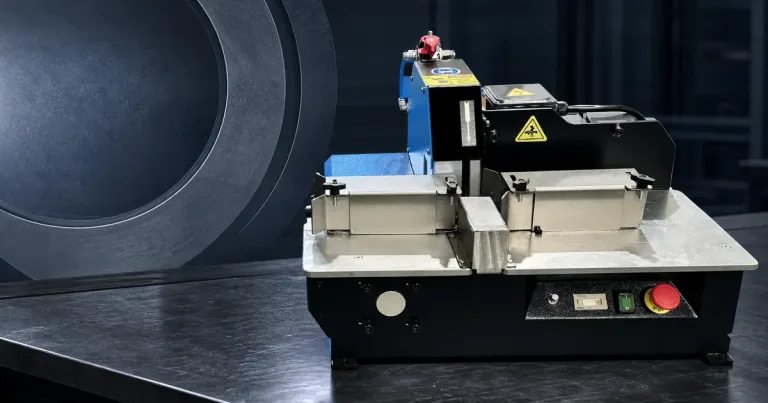

Uma máquina de corte de mangueira prepara a extremidade para inserção de conexões e crimpagem. O trabalho não termina quando a mangueira se separa. O corte deve ser suficientemente esquadrejado para o processo de montagem, o diâmetro interno deve permanecer utilizável e os detritos devem ser controlados.
Cortes angulares revelam um problema de processo
Uma oficina de mangueiras substitui uma máquina de corte desgastada após reclamações sobre extremidades angulares. A decisão de compra deve conectar o cortador à inserção de conexões, limpeza do diâmetro interno e manutenção da lâmina, porque um corte rápido que gera retrabalho não é produtivo.
Selecione com base na mangueira mais difícil
Forneça a construção da mangueira, o diâmetro externo máximo e a frequência esperada. Máquinas de corte de mangueira hidráulica usadas em mangueiras reforçadas precisam de uma lâmina e sistema de potência adequados para as camadas de arame. Um cortador de mangueira hidráulica escolhido para trançado leve pode não ser adequado para mangueiras multi-espirais grandes.
Configure a área de trabalho
Apoie a mangueira em ambos os lados da lâmina e mantenha a linha de corte estável. Use proteções e controles conforme pretendido pelo fabricante. Não remova uma proteção para encaixar uma mangueira maior; isso sinaliza um problema de capacidade ou fixação da peça.
Inspecione o corte
Rejeite ou retrabalhe uma extremidade quando apresentar:
- um corte angular fora do requisito de montagem;
- diâmetro interno estrangulado;
- arame puxado ou muito desfiado;
- borracha queimada;
- detritos soltos que não foram removidos;
- danos que impeçam a inserção correta da conexão.
Faça a manutenção do sistema de corte
Limpe a máquina ao redor da lâmina e da área de alimentação. Inspecione a lâmina quanto a desgaste ou danos e use a substituição especificada. Força de alimentação aumentada, calor e rasgamento são sinais de alerta práticos.
Siga as instruções de bloqueio e manutenção no manual da máquina. OSHA 1910.212 fornece contexto geral de proteção, não um substituto para procedimentos específicos da máquina.
Mantenha a limpeza e a verificação separadas
O método de corte influencia os detritos, mas nenhum cortador deve prometer limpeza universal. ISO/TS 18409:2018 descreve métodos de amostragem para análise de contaminação por partículas sólidas em mangueiras ou conjuntos de mangueira. Não define um processo de limpeza universal ou classe aceitável.
Crie um procedimento pós-corte apropriado para o sistema do componente e uso final.
Veja a Linha de máquinas de corte de mangueira TRC para formatos disponíveis. Envie amostras de mangueira quando a construção ou adequação da lâmina for incerta.
Use defeitos como gatilhos de manutenção
Não espere a lâmina parar de cortar. Monitore o aumento do esforço de alimentação, ciclos mais longos, calor, cheiro, arrancamento de arame e uma face irregular. Uma mudança repentina após a troca da lâmina aponta para identidade, instalação ou assentamento; a deterioração gradual sugere mais frequentemente desgaste ou contaminação.
Mantenha um registro de manutenção resumido com identidade da lâmina, data de instalação, mangueiras processadas e defeitos observados. É mais útil do que trocar lâminas em um calendário universal porque a carga de trabalho e o material diferem.
Combine a máquina com a mangueira normal e de casos extremos
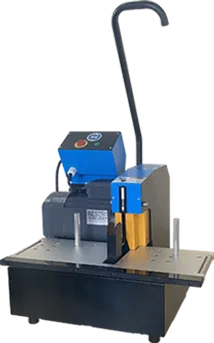
| Modelo | Rota normal para investigar | Lâmina registrada | Limite principal para confirmar |
|---|---|---|---|
| C250AC | Corte compacto de oficina de 1 polegada | 250 × 3,5 × 32 mm | Trifásico 380 V no registro do produto |
| C300 | Trabalho com alimentação manual de 2 polegadas 4SH | 300 × 4 × 32 mm | Alimentação do operador e suporte de material |
| C300A | Trabalho com alimentação pneumática de 2 polegadas 4SH | 300 × 4 × 32 mm | Suprimento de ar adequado de 6 bar e configuração |
| C400F | Trabalho com pedal de 2 polegadas 4SH | 400 × 4 × 50 mm | Espaço, proteção e massa da máquina de 195 kg |
| C520A | Mangueira industrial grande de até 6 polegadas | 520 × 4 × 50 mm | Abertura de 132 mm e caminho de manuseio completo |
Use a categoria de cortador de mangueira hidráulica para comparar rotas e, em seguida, envie a mangueira normal mais difícil para um corte de amostra.
Controle uma troca de lâmina
Isole a máquina de acordo com seu manual e procedimento local. Confirme a identidade da lâmina de substituição, diâmetro, espessura, furo e direção especificada antes da instalação.
Após a instalação:
- Verifique o assentamento e a posição da proteção.
- Gire ou teste apenas conforme o manual permitir.
- Execute o primeiro corte representativo sem forçar o avanço.
- Inspect the face, bore, reinforcement and debris.
- Record the blade identity and acceptance result.
OSHA 1910.212 provides general guarding context. Machine-specific isolation and blade-change instructions still come from the manual and local safety procedure.
Regra para o chão de fábrica: If the replacement blade marking does not match the approved specification, stop. Similar diameter is not enough.
Measure the process that follows cutting
A cut-off machine can reduce cutting time while the shop still loses output at cleaning, insertion or inspection. Observe the full hose-assembly route.
Uso accepted cut pieces per hour = accepted pieces ÷ cutting-cell hours. Then compare it with accepted crimped assemblies per hour. If the cutter produces 40 accepted pieces and the crimping cell releases 20 assemblies in the same period, another faster cutter will not raise finished output.
This bottleneck example uses round numbers only to show the method. Replace them with one full shift of shop data.
Write the machine specification from the hose backward
Start with the hardest hose you expect to cut every week, not the largest size printed in a catalogue. We ask for its construction, actual OD, minimum bend condition at the machine, daily quantity and the end defect your assembly team will reject. That information determines the blade route, opening, support and feed method.
| RFQ field | What you should submit | Why it changes the choice |
|---|---|---|
| Hose identity | Family, reinforcement and actual OD | Separates light rubber work from wire-braid or spiral hose |
| Padrão de trabalho | Normal batch, peak batch and changeovers | Shows whether manual feed is still practical |
| Cut acceptance | Squareness, bore and reinforcement limits | Gives the trial a pass or fail point |
| Utilidades | Voltage, phase and available air | Prevents an unusable destination configuration |
| Downstream process | Cleaning, insertion and inspection route | Stops the cutter from being judged in isolation |
If you cannot identify the hose, send a marked sample. “Hydraulic hose” is not a blade specification.
Link cutting to fitting insertion
The useful cut is the one that lets the operator insert the specified fitting without hiding damaged wire or loose debris. During commissioning, take several accepted cut pieces through cleaning and fitting insertion. A clean-looking face that collapses during insertion is still a failed process.
We recommend keeping one accepted sample and one rejected sample at the cell. Photographs help, but the physical samples show the operator how an angled face, pinched bore or pulled wire actually feels during insertion.
Commission the complete cutting cell
Run a normal batch from coil handling through accepted parts. Record setup time, cutting time, rejected ends, cleaning time and operator corrections. This exposes whether the bottleneck sits at the blade, the material support or the next process.
Nota de engenharia: Do not claim a production rate from blade movement alone. Accepted pieces per hour includes loading, measuring, cutting, handling and inspection.
A practical commissioning record contains:
- hose and blade identity;
- machine configuration and utilities;
- first-off result;
- defect count and reason;
- post-cut cleaning route;
- operator and approval date.
Repeat the first-off check after a blade change, a jam or a material change. You do not need a universal calendar. You need a trigger that operators can recognize.
Recover from a jam or abnormal cut
Stop and isolate the machine using its manual and site procedure. Do not clear a jam through an exposed blade path or compensate by pushing harder.
After the obstruction is removed, check blade seating, guard position, work support and the hose end. Run one representative sample before returning to production. If heat, smoke, wire pull-out or vibration remains, keep the machine out of service until the cause is identified.
The blade owner should also control the replacement specification. Diameter alone is not enough; thickness, bore, direction, speed and intended material all matter. OSHA’s interpretation on unsuitable cutting wheels addresses a different machine case, but the safety principle is relevant: a cutting tool must match the machine speed and intended use.
Compare a compact and a large cutting route
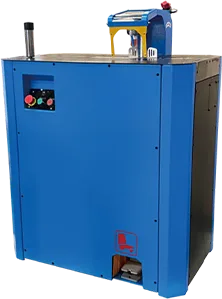
A compact shop processing mainly 1-inch reinforced hose can begin with the C250AC record: up to 1 inch 4SH, a 250 × 3.5 × 32 mm blade and 1.5 kW three-phase 380 V power. A shop cutting 2-inch 4SH should investigate C300, C300A, C400F or C400A according to feed method and utilities.
C520A is a different handling problem. Its product record covers industrial hose up to 6 inches, a 520 × 4 × 50 mm blade, 5.5 kW power, 6 bar air and a 132 mm opening. The hose support, operator path and floor space matter as much as the opening.
These are model facts, not a promise for every hose inside the nominal diameter. We still require a representative cut when construction or reinforcement is uncertain.
Hand the accepted process to production
The handover sheet should state the approved hose families, blade, guards, support arrangement, normal feed method, inspection points and stop conditions. Put the maintenance and blade reorder route beside it.
Review the process after enough real work has passed to show a trend. Use one locally chosen interval, then look at accepted pieces, blade changes and defects. A fixed “30-day” or “90-day” rule adds no value unless it matches the shop’s workload.
The final boundary should be plain: this machine is released for the listed hoses and setup. New hose constructions return to sample-cut review before routine production.
A maintenance record should explain the defect
A useful maintenance log does more than record that a blade was replaced. It connects the hose, symptom, inspection and corrective action. Without that chain, the next shift sees the same torn wire and changes another blade without knowing whether support or feed caused the problem.
| Observação | Primeira verificação | Não presuma |
|---|---|---|
| Cut face wanders | Hose support and blade seating | The motor lacks power |
| Wire pulls from the end | Blade condition and match to reinforcement | All spiral hose behaves this way |
| Rubber smears or burns | Edge condition, feed and heat | Faster feed will clear it |
| Bore closes | Workholding and support | Cleaning can restore the shape |
| Debris rises suddenly | Blade damage and cutting setup | A stronger air blast solves the cause |
We recommend attaching a photograph of the cut face to the record when a defect first appears. Use the same angle and include the hose identification. That gives maintenance something more useful than “bad cut.”
Separate cleaning from cutting correction
Loose particles must be removed through the approved post-cut process, but cleaning does not correct a pinched bore, heat damage or pulled reinforcement. Reject the cut first, then clean the accepted replacement.
If the end-use specification calls for particulate verification, define the sampling method and acceptance authority in the quality plan. ISO/TS 18409:2018 addresses collection of contamination samples from hydraulic hose and assemblies. It does not prescribe one universal shop-cleaning method.
Give purchasing the real consumable requirement
When the first machine is ordered, ask for the fitted blade specification, one planned replacement route and the information needed to reorder it. The request should include diameter, thickness, bore and machine model. Do not rely on an unlabeled spare wrapped inside the crate.
For a C520A route, the product record states a 520 × 4 × 50 mm blade. That fact still needs to remain with the C520A asset; it should not be copied to another cutter because both machines happen to process large hose.
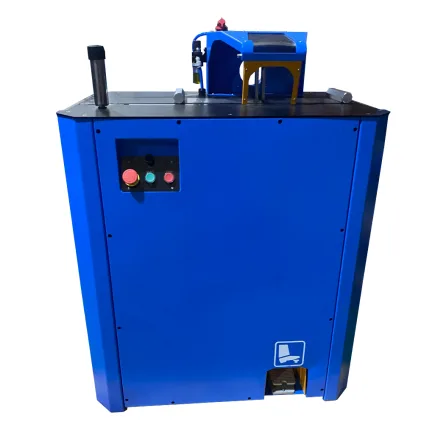
The same record should state who can release a new blade, where accepted spares are stored and what first-off test follows installation. That is enough control for a small shop without turning the job into paperwork for its own sake.
Perguntas frequentes
What is the best cutter for a reinforced hose?
There is no answer without the hose construction and workload. The correct machine uses an approved blade, holds the hose without crushing it and produces an acceptable sample under guarded operation.
Build the maintenance scope into the quotation
Ask TRC for the proposed blade specification, replacement route and sample-cut acceptance points together with the machine quotation.