
Ein automatischer Gummischlauchschneider kann wiederholtes Messen und Zuführen reduzieren, aber die Automatisierung beseitigt nicht die Notwendigkeit, die Maschine auf den Schlauchaufbau abzustimmen und den Schnitt zu prüfen.
Die nützlichste Kauf-Frage lautet: Welche Teile des Schneidzyklus sind gesteuert und welche hängen noch vom Bediener ab?
Die Automatisierung beginnt vor dem Messer
Eine Produktionslinie misst und schneidet den ganzen Tag wiederholte Längen, aber der Bediener richtet jede Spule noch von Hand und räumt jedes Teil von Hand weg. Den Messerzyklus als automatisch zu bezeichnen, verbirgt den eigentlichen Engpass; der gesamte Materialweg muss getaktet und geprüft werden.
Definieren Sie “automatisch”
Ein automatischer Schlauchschneider kann Vorschublänge, Schnittzahl, Messerzyklus oder eine Kombination daraus steuern. Bitten Sie den Lieferanten, jede Funktion der Schlauchschneidemaschine anzugeben. Schließen Sie nicht allein aus einer automatischen Messerbewegung auf eine CNC-Längensteuerung.
Prüfen Sie den Materialweg
Das Zuführsystem muss den Schlauch bewegen, ohne ihn zu quetschen, rutschen zu lassen oder Längenfehler einzubringen. Aufgespulter Schlauch kann sich dem geraden Zuführen widersetzen. Große oder steife Schläuche benötigen möglicherweise externe Unterstützung.
Überprüfen:
- Schlauch-Außendurchmesser und Verstärkung;
- minimale und maximale Schnittlänge;
- Losgröße;
- Spulenhandhabung;
- Vorschub- und Klemmmethode;
- Messertyp;
- Auswurf- und Sammelbereich.
Messen Sie die Gesamtzyklus-Leistung
Die Messerschließzeit ist nicht die Produktionsrate. Der vollständige Zyklus umfasst Laden, Richten, Zuführen, Schneiden, Entfernen des Teils, Messerrückstellung, Reinigung und Prüfung.
Führen Sie für einen realistischen Versuch den vorgesehenen Schlauch und die Länge über ein repräsentatives Los aus. Erfassen Sie sowohl zurückgewiesene Schnitte und Bedienereingriffe als auch erfolgreiche Teile.
Die Schnittqualität bleibt das Abnahmekriterium
Die Automatisierung sollte nicht genehmigt werden, wenn sie abgewinkelte Enden, gequetschte Bohrungen, übermäßige Hitze oder lose Verstärkung erzeugt. Der nachgelagerte Montage- und Fügeprozess legt den verwendbaren Schnittzustand fest.
Wenden Sie nach dem Schneiden den definierten Kontaminationskontrollprozess an. Eine automatische Maschine ist nicht automatisch ein sauberer Schlauchprozess.
Definieren Sie die Übergaben rund um die Automatisierung
Ein automatischer Gummischlauchschneider kann Material messen und zuführen, aber ein Bediener kann immer noch Spulen laden, Krümmungen korrigieren, geschnittene Teile entfernen, Enden prüfen und Störungen beheben. Schreiben Sie jede Übergabe auf. Automatisierung ist wertvoll, wenn sie einen wiederholten Engpass beseitigt; sie ist enttäuschend, wenn der Engpass lediglich zum Laden oder zur Prüfung wandert.
Erfassen Sie für einen Versuch die programmierte Länge und die gemessene Schnittlänge über das Los. Notieren Sie Stillstände, Korrekturen und zurückgewiesene Enden. Das Ergebnis ist eine nutzbare Ausbringungszahl, keine werbliche Messerzyklus-Zahl.
Nehmen Sie jeweils eine Produktfamilie in Betrieb
Laden Sie den ersten Schlauch, überprüfen Sie den Zuführweg und fertigen Sie ein kurzes Los. Prüfen Sie die tatsächliche Länge und den Schnittzustand, bevor Sie das Programm speichern. Notieren Sie die Materialreferenz zusammen mit dem Programmnamen; eine Angabe wie “25 mm” ist mehrdeutig, wenn mehrere Schlauchkonstruktionen dieselbe Nenngröße verwenden.
Wiederholen Sie die Prüfung nach einem Spulenwechsel, Messerwechsel oder einer größeren Zuführanpassung. Wenn die Maschine eine Loszählung enthält, gleichen Sie den Zähler mit den akzeptierten Teilen ab, anstatt anzunehmen, dass jeder Zyklus ein verwendbares Teil erzeugt hat.
Entscheiden Sie, wo die Prüfung angesiedelt ist
Ein Bediener kann jeden Schnitt prüfen, in einer definierten Häufigkeit stichprobenartig prüfen oder einen anderen genehmigten Plan anwenden. Die Wahl hängt vom Anwendungsrisiko und der Prozessstabilität ab. Entscheidend ist, dass die Prüfung geplant ist und nicht unterbleibt, weil die Zuführung automatisch ist.
Verwenden Sie C300D als Beispiel für eine Steuerungsebene
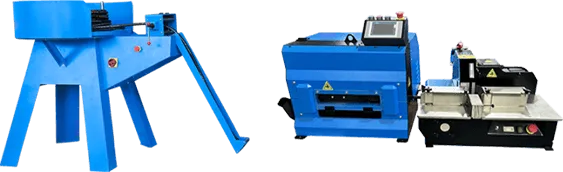
TRC erfasst C300D für Schlauch bis 1 Zoll 2SH. Er verfügt über automatische und manuelle Schneidfunktionen, ein 300 × 4 × 32 mm Sägeblatt, einen 4,0 kW Drehstrom- oder 2,2 kW Einphasenmotor und eine aufgezeichnete Wiederholgenauigkeit von ±0,2 mm.
Dieser ±0,2 mm Wert gilt nur für C300D. Er sollte mit dem Schlauch des Käufers, dem Spulenzustand, der Zuführeinrichtung und der Schnittlängenmethode überprüft werden.
| C300D Baugruppe | Aufgezeichnete Größe |
|---|---|
| Schlauchaufwickler | 900 × 1.350 × 1.200 mm |
| Schlauchzähler | 700 × 530 × 640 mm |
| Schneidbalken | 650 × 600 × 450 mm |
Die Linie beansprucht mehr Platz als das Schneidgehäuse. Zeichnen Sie Aufwickler, Zähler, Schneidgerät, Bedienerposition und Fertigteilbereich vor der Bestellung in den Grundriss ein.
Überprüfen Sie die C300D Produktweg nach Bestätigung, dass sein 1-Zoll-2SH-Bereich zur Charge passt.
Automatisches Schneiden von automatischer Produktion trennen
Ein automatischer Sägeblattzyklus richtet die Spule nicht, identifiziert den Schlauch nicht, entfernt keine Ausschussteile und prüft das Ende nicht. Legen Sie fest, wer jede Übergabe verantwortet.
| Phase | Maschine kann unterstützen | Bediener oder Linie behält die Kontrolle |
|---|---|---|
| Spulenabwicklung | Aufwickler unterstützt die Materialzufuhr | Correct coil and tension |
| Length feed | Counter and programmed route | First-off length verification |
| Schneiden | Automatic or manual function | Blade condition and safe setup |
| Part removal | Depends on layout | Segregation and handling |
| End acceptance | No automatic claim in product record | Squareness, bore and debris inspection |
Warnung: Do not call a line unattended unless the manufacturer documents every loading, guarding, sensing and discharge function. “Automatic” is not a safety category.
Calculate accepted output after rejects and changeovers
Verwendung:
accepted pieces per hour = (total pieces − rejected pieces) ÷ elapsed hours
Then calculate first-pass yield = accepted pieces ÷ total pieces × 100.
If an illustrative trial cuts 100 pieces in two hours and five require rejection or rework, accepted output is 47.5 pieces per hour and first-pass yield is 95%. These figures only demonstrate the calculation; they are not TRC field results.
Time a size change separately. A fast repeated batch can coexist with a slow changeover, especially when coils, length programs and downstream labels all change.
Commission one hose family at a time
Start with a stable hose reference and a length that represents normal production. Verify the first piece, middle piece and last piece for length and cut quality.
Add a second length only after the first program is stable. Add another hose construction last. This order helps the team separate feed, blade and material effects.
Create a program record another shift can restore
The program name should identify hose family and cut length without relying on one operator’s memory. Record the hose reference, coil setup, feed path, length target, blade and first-off result.
| Program field | Example format | Grund |
|---|---|---|
| Program ID | Shop-defined code | Prevents duplicate names |
| Schlauch | Manufacturer and series | Separates similar black hose |
| Cut length | Drawing reference and unit | Avoids unit or revision error |
| Coil setup | Payout and tension note | Controls feed behavior |
| First-off | Measured result and disposition | Releases production |
| Revision | Date and approver | Removes obsolete settings |
Do not save a corrected length under the old drawing revision. The next shift may restore the wrong setup and produce a full batch before inspection.
Control starts and restarts
Make a first-off check after loading a new coil, changing the program, changing the blade or restarting after a fault. Check again after a long interruption if the site’s process requires it.
A machine that resumes automatically can still start with a different material condition. Coil tension may have changed, the first feed may include a bent end or an operator may have moved the stock.
Keep rejected pieces traceable
Place rejected lengths in a marked container and record the cause. Do not return a short or damaged piece to the good stack because the next station may not see the defect until fitting insertion.
Track:
- wrong length;
- angled or damaged face;
- feed slip;
- blade defect;
- wrong hose;
- interrupted cycle.
The distribution tells the team whether to improve programming, material handling, blade maintenance or identification.
Calculate changeover loss
Verwendung:
changeover loss = scheduled production time − accepted production time
Break the loss into coil removal, material identification, program selection, trial pieces, inspection and cleanup. If searching for the correct program consumes more time than changing the coil, fix program control before buying more automation.
An illustrative changeover might take 18 minutes: six minutes for material, four for program review, five for first pieces and three for cleanup. This is an example calculation, not a C300D claim.
Plan labels with the cut batch
If downstream operators cannot identify the hose and length, automated cutting has created an anonymous pile. Generate or apply batch identification at discharge.
The label should survive normal handling and link to the hose reference, cut length, quantity and program. Keep it away from the fitting insertion zone.
Audit the claimed accuracy correctly
The C300D record states ±0.2 mm repeated-size accuracy. Verify the machine value with a stable method on the buyer’s material.
Record the measuring instrument, reference points, piece temperature if relevant, operator and sample count. Do not compare a cut-hose measurement with a finished-assembly tolerance.
If the results change across the batch, review coil feed, slip, stock tension and measurement before editing the program.
Decide when automation is the wrong answer
Manual feed may be stronger for short mixed jobs, frequent unusual materials or a shop where the operator must inspect every special cut. C300D is built around repeated-length control and a recorded 1-inch 2SH scope.
Do not buy automatic equipment solely because the normal hose is smaller. Buy it when repeated length, batch control and operator intervention are measured constraints.
Connect the production order to the program
The order should state hose, drawing revision, cut length, quantity and due date. The program record should reference that order.
At completion, reconcile programmed quantity, accepted pieces, rejects and remaining stock. Do not close the order because the controller reached its count.
Handle partial coils
Mark remaining hose with identity and usable length. Return it to controlled storage.
If the coil is too short for the next programmed piece, the line should stop or reject it by the documented method. Do not splice or improvise.
Review counter and feed condition
Length variation can come from slip, tension, dirty rollers, stock deformation or measurement. Inspect the complete feed path.
Do not change the program until the mechanical and material causes are checked.
Prepare maintenance access in the layout
The C300D coiler, counter and cutter bar need room for cleaning, blade service and feed inspection. Leave space around covers and controls.
Show the maintenance team the proposed layout before fixing machines and utilities.
Use a low-volume manual mode deliberately
C300D records both automatic and manual cutting functions. Manual mode can support setup, trials or special work under its instruction.
Do not let manual mode become an undocumented workaround for bad programs. Record the piece and inspection.
Review automation with operators
Ask where they intervene, why they stop and which alarms or conditions repeat. Compare this with recorded rejects.
The best improvement may be a better coil stand, program name or discharge rack rather than a control change.
Check the first piece against the production order
The operator should compare hose identity, length, drawing revision and program before release. A correct measured length from the wrong hose is still a reject.
Use a second-person check where process risk justifies it.
Reconcile controller count with physical quantity
Count accepted parts in labeled containers. Subtract rejects and setup pieces.
If the controller says 500 and the batch contains 497 accepted pieces, investigate before closing the order. Do not edit the paperwork to match the screen.
Measure downtime by cause
Separate coil change, program review, blade service, feed fault, inspection hold and material shortage. The total alone does not show what to fix.
Use the largest recurring cause for the next improvement. Automation cannot solve a missing coil or late drawing.
Review spare controller data
Record controller model, software or configuration information supplied with the machine. Ask how replacement and restore are handled.
Do not connect unauthorized devices or copy settings outside the supplier and site procedure.
Set a clear end-of-batch routine
Reconcile quantity, label remnants, clear rejects, return the program to its approved state and clean the cell safely.
The next operator should not find an unknown hose threaded through the feed system.
Keep production planning realistic
Schedule setup pieces, inspection and changeover. A plan based only on controller cycle count will overstate available hours.
When the line receives many small orders, group compatible batches only if identity and drawing controls remain clear. Do not combine work merely to keep the machine moving.
Review schedule performance with accepted output, not total cuts. That single choice keeps the planning number tied to saleable pieces.
Approve the first production week
Review every batch record from the first week: program, first-off, accepted quantity, rejects, remnants and operator intervention. Look for recurring correction.
Close program and layout issues before increasing volume. A quiet controller does not prove that labels, feed and physical output agree.
Compare scheduled quantity, controller count and accepted physical pieces. Review every mismatch by cause.
Keep the first-week programs under tighter approval until another trained operator can restore them, run a changeover and close a batch record correctly.
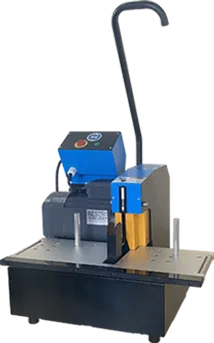
Überprüfen Sie die C300A pneumatic-feed cutter when assisted feed, rather than programmed length, is the measured requirement.
OSHA 1910.212 provides general guarding context. ISO/TS 18409:2018 covers contamination sample collection; it does not approve automatic cutting or set a universal cleanliness class.
Calculate output from accepted pieces, not programmed cuts
Automatic feeding earns its place when repeated lengths dominate the schedule. It does not remove coil handling, straightening, size changes, cut inspection, cleaning or rejected pieces. We recommend a timed batch that begins with the actual supply form and ends with accepted, labeled pieces ready for the next process.
The C300D source record, for example, lists automatic and manual control, repeated-size tolerance of ±0.2 mm and a stated range up to 1 inch 2SH. Its 300 × 4 × 32 mm blade and motor options belong to that model record. Those facts help define a trial; they do not authorize the same result on every hose construction.
For an illustrative 100-piece order, suppose programmed feeding and cutting takes 18 minutes. Coil loading, first-piece confirmation, two changes, inspection and cleaning add 22 minutes, and five pieces are rejected. The useful rate is 95 accepted pieces in 40 minutes, not 100 programmed cuts in 18 minutes.
Record why an operator intervenes. Common categories include coil snag, length correction, cut-end defect, blade stop and discharge problem. A machine that needs frequent hand correction may be powered but not practically automatic for that job.
Production note: The first target is a stable accepted-piece rate across a representative batch. Only after that should you optimize blade cycle time. Fast cutting with unstable feeding simply creates defects sooner.
Keep rejected pieces by defect category during the trial. A pile marked “length,” “fray,” “bore” and “handling” tells the supplier where the automatic sequence loses control and prevents one average reject rate from hiding several causes.
Häufig gestellte Fragen
Wann sollte ein Schneidmesser ausgetauscht werden?
Review the blade when force, heat, noise, tearing, length variation or rejected cuts increase. Follow the machine maker’s blade and maintenance instructions.
Send a batch, not one easy sample
For an automatic-hose-cutter review, senden Sie TRC the coil condition, hose structure, target lengths, tolerance requirement and batch pattern. Trial the normal range and the difficult edge case.