
O aluguel de crimpadora de mangueira hidráulica pode fazer sentido para um projeto curto definido quando a máquina, as matrizes e os dados dos componentes estão disponíveis juntos. A compra se torna mais forte quando atrasos, demanda repetida e controle de inventário superam o custo de propriedade.
Uma parada de dez dias dá ao aluguel um teste justo
Um contratante precisa de uma crimpadora para um projeto de parada e está comparando o aluguel com um conjunto permanente. A frequência importa, mas a disponibilidade, matrizes compatíveis, transporte, treinamento, estoque de componentes e exposição a tempo de inatividade podem mudar a resposta.
O aluguel funciona melhor quando
- o trabalho é temporário e programado;
- o sistema de mangueira necessário é conhecido;
- o aluguel inclui matrizes identificadas;
- os operadores têm instruções e ferramentas de medição;
- a condição do equipamento pode ser verificada;
- o momento da devolução não cria risco de tempo de inatividade.
A compra funciona melhor quando
- os reparos ocorrem de forma imprevisível;
- o acesso à máquina afeta o tempo de atividade do equipamento;
- a oficina pode controlar o inventário de mangueiras e conexões;
- operadores treinados estão disponíveis;
- a carga de trabalho suporta a manutenção e a propriedade do ferramental.
Compare sistemas completos
Um conjunto de crimpadora de mangueira hidráulica alugado ou comprado deve incluir a bomba ou unidade de potência, matrizes e adaptadores necessários. Não inclui automaticamente um cortador, equipamento de limpeza, componentes ou ferramentas de validação.
Modelo de custo
Não use uma lista de preços genérica de máquina de crimpar mangueiras. Compare:
Aluguel: taxa diária/semanal, entrega, depósito, responsabilidade por danos, consumíveis, tempo de configuração e risco de devolução tardia.
Compra: máquina, matrizes, frete, importação, utilidades, manutenção, treinamento e custo de capital.
Em seguida, adicione o tempo de inatividade evitado ou criado por cada rota.
Condição do equipamento
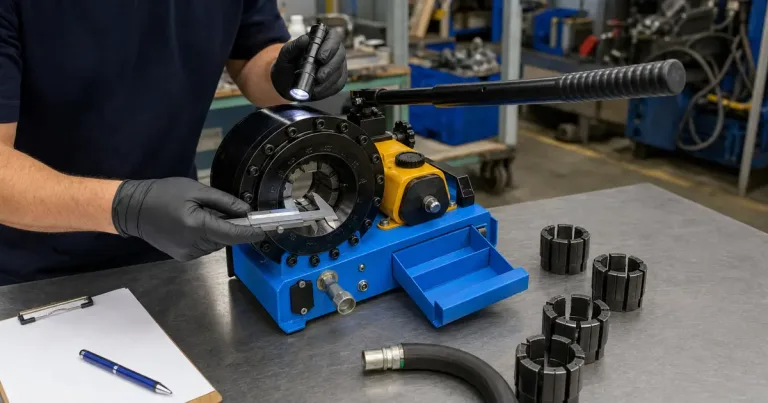
Inspecione o ferramental alugado antes do uso. Registre a identidade da matriz e o desgaste visível. Faça e meça uma primeira peça usando dados de componentes válidos. Não presuma que o equipamento alugado foi calibrado para o seu sistema de mangueira.
Monte o pacote de trabalho do aluguel antes de pedir uma taxa
Forneça à empresa de aluguel o sistema de componentes, faixa de mangueira, linhas de conexões e ponteiras, fonte de dados de crimpagem, datas do projeto, localização e utilidades disponíveis. Uma taxa diária significa pouco até que a máquina e as matrizes sejam combinadas com o trabalho.
| Item do pacote | Confirmar antes do envio | Por que é importante |
|---|---|---|
| Máquina | Modelo exato, potência e condição | Evita uma configuração de local inutilizável |
| Matrizes | Lista marcada vinculada às linhas de componentes | Impede uma entrega “apenas máquina” |
| Dados de crimpagem | Fonte controlada atual | Fornece ao operador a configuração alvo |
| Ferramentas de medição | Método e responsabilidade | Permite que o trabalho concluído seja liberado |
| Treinamento | Operadores nomeados e briefing específico do modelo | Reduz erros de configuração e manuseio |
| Transporte | Entrega, içamento, devolução e restrições | Expõe o tempo e o risco de danos |
| Suporte a avarias | Contato, resposta e termos de substituição | Precifica o tempo de inatividade em vez de ignorá-lo |
Se o fornecedor não puder documentar as matrizes ou os dados atuais do processo, a máquina não está pronta para o trabalho de montagem de mangueiras.
Portões’ crimp data and dies manual is one manufacturer example of why the component, die and completed measurement must stay together. Use only the current data for the rented machine’s approved component system.
Inspect at handover
Photograph the machine, nameplate, dies and existing damage. Check controls, guards, power, loaded operation and return. Run one identified component sample and record the completed measurement before the provider leaves.
As instruções de montagem de conexões de tubo specified-crimper preventive-maintenance guidance shows why condition evidence should include more than an empty cycle. Its maintenance intervals and fluid instructions remain limited to the named Parker equipment.
Repeat the inventory at return. This protects both sides and keeps a worn die or missing tool from becoming an argument after the project.
Put availability risk into the cost model
Rental cost includes more than days on site:
rental project cost = rental + delivery + pickup + tooling + setup + extension + standby + expected downtime
Buying includes machine, dies, freight, commissioning, maintenance and capital tied up. Use the same project horizon and component scope for both.
| Event | Rental effect | Ownership effect |
|---|---|---|
| Project finishes on time | Known term and return | Asset remains available |
| Project extends | Extra rent and rescheduling | Mainly labor and operating cost |
| Machine fails | Provider response controls downtime | Owner controls spares and repair route |
| New hose family appears | New dies/data may be unavailable | Owner still needs validated tooling |
| Next emergency starts | Rental availability must be checked again | Machine can be ready if maintained |
Do not insert invented market rates. Put your actual quote, transport distance, labor rate and downtime exposure into the model.
Work through a 14-day shutdown
A plant plans ten production days plus setup and contingency. The component list is fixed, the dies are confirmed and the rental machine can arrive two days before work begins. Rental can be a sensible way to avoid owning a machine used once.
Now change one fact: the shutdown moves by a week, but the provider has promised the machine to another customer. The low daily rate no longer describes the risk.
Commercial point: The value of rental is access to the correct working system on the correct dates, not temporary possession of a press.
We recommend agreeing extension rates, collection notice and breakdown response before dispatch. If downtime would stop a critical site, price an alternate repair route or replacement machine.
Compare rental with outsourcing
For a very small, fixed batch, a qualified hose shop may be safer and cheaper than bringing a crimper to site. Outsourcing transfers equipment setup to the supplier, but you still need correct hose and fitting identification, routing dimensions and acceptance.
A service truck can justify rental when it supports a planned remote project with a known component program. It is a poor fit when crews expect to make any hose they encounter from mixed, unverified parts.
Close the project with operating evidence
Record machine hours, accepted assemblies, extensions, faults, damaged tooling and final cost. Compare that result with the ownership model before the next project.
If repeated rentals occur because demand is unpredictable but frequent, the evidence may support buying. If the machine sat idle for most of the hire, the better answer may be tighter scheduling or outsourcing.
There is no universal break-even month. Use your project record, not a generic “rent for short term, buy for long term” slogan.
The job schedule determines whether rental is practical
Put the crimper on the project schedule beside the component delivery, operator training and test window. If any of those arrive late, the rental clock may run while no accepted hose can be made.
Confirm the component system before booking
The provider should receive exact hose, fitting and ferrule references, not “one-inch hydraulic hose.” Ask which dies and crimp data support each row. If a component remains unresolved, decide before dispatch whether to substitute an approved system, add tooling or outsource that assembly.
| Schedule gate | Evidence before the next gate |
|---|---|
| Booking | Machine and die availability confirmed |
| Dispatch | Component map and destination utilities approved |
| Transferir | Identity, condition and inventory accepted |
| Produção | First component row released |
| Extension | Cost and availability rechecked |
| Return | Condition, hours and loose items reconciled |
The sequence prevents an urgent project from treating delivery as technical acceptance.
Compare a service-truck case with a workshop case
A service truck supporting a planned mine shutdown may need a portable split-body machine because the work is spread around the site. P20HPZ, for example, is recorded as a 137-ton separate-pump manual crimper with a 501 × 422 mm product image in the media record. Its suitability still depends on the component and die program.
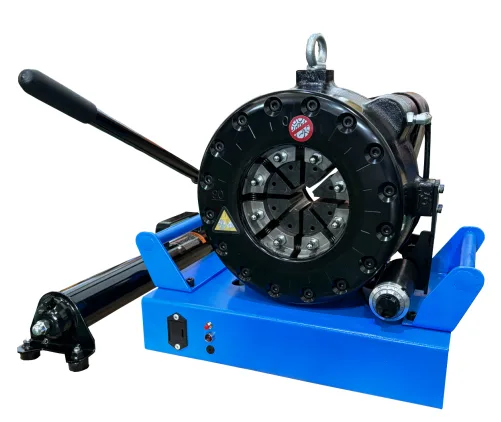
A fixed workshop processing repeat orders may place more value on stable mounting, faster routine operation and permanent tooling storage. Renting a portable machine for a workshop is not wrong, but the format should solve a site condition rather than merely be available.
Price three outcomes
Build one cost line for the on-time project, one for the expected extension and one for an unplanned breakdown. Use the provider’s written terms and the site’s actual downtime cost.
| Outcome | Include |
|---|---|
| On time | Rental, transport, setup and planned labor |
| Extended | Extra days, rescheduled pickup and labor |
| Breakdown | Lost work, response time, replacement transport and recovery |
We do not recommend multiplying the lowest day rate by planned days and calling it the project cost. That number ignores the events that usually decide whether rental worked.
Keep maintenance responsibility visible
The owner normally controls major repair and approved maintenance, while the renter controls daily checks and proper use. Put those boundaries in writing for the exact machine.
Do not open hydraulic systems, substitute oil or grind tooling without the owner’s procedure and authorization. Report abnormal return, leaks, damaged dies or control faults immediately.
Use the post-project review to answer the next decision
Record how many accepted assemblies were made, how much time the machine waited, which tooling was missing and whether provider response met the project need.
If the same component program appears several times each year, compare the actual rental record with a maintained ownership package. If projects remain rare and predictable, rental may continue to make sense.
The answer can change as the workload changes. Keeping the record means the next decision starts with evidence rather than memory.
Build the decision from three time horizons
For the current project, ask whether the correct machine and dies can be on site for the exact work window. For the next twelve months, list known jobs and emergency exposure. For the longer term, decide whether the business wants to own tooling, training and maintenance.
| Horizon | Main question |
|---|---|
| Current job | Can the complete rental package meet the schedule? |
| Next operating cycle | Will similar demand repeat, and how predictable is it? |
| Long term | Does owning the process fit the business and support plan? |
This avoids using a one-time shutdown to justify permanent equipment, or using today’s low workload to ignore a repeated service problem.
Put outsourcing in the same cost worksheet
Ask a qualified hose shop for the price and turnaround of the fixed component list. Add transport, waiting and site risk. Outsourcing may win for a small batch even when the per-assembly price looks high, because the shop already owns controlled tooling and inspection equipment.
Do not outsource unidentified components or unsafe emergency work merely to avoid the equipment decision. The component and acceptance requirements remain.
Decide the fallback before the first failure
Name the provider contact, response window and replacement route. If the machine cannot be replaced quickly, identify a qualified local hose shop or another approved machine that can cover the critical component rows.
The fallback does not need to duplicate the whole project. It should protect the assemblies whose delay stops the site.
| Failure | First response | Fallback decision |
|---|---|---|
| Machine fault | Isolate and notify provider | Repair, replace or outsource |
| Damaged die | Quarantine the set | Replacement die or approved external assembly |
| Missing crimp data | Stop the component row | Obtain current controlled data |
| Schedule extension | Recheck availability and rate | Extend, replace or buy |
| Operator unavailable | Use trained alternate | Do not assign an untrained operator |
We recommend reviewing the fallback during handover, while the provider and site team can still correct a missing contact or tooling item.
Return commercial lessons to purchasing
Compare invoice, planned cost and actual project record. Separate extra cost caused by the project’s schedule from extra cost caused by the rental package.
That distinction improves the next contract. It may support a longer booking window, a firmer tooling list, another provider or an ownership proposal.
Perguntas frequentes
Is hydraulic hose crimper rental worth it?
It can be worth it for a scheduled, short project with a known component system, confirmed dies, trained operators and firm machine availability. It is usually a weak fit for unpredictable emergency work or recurring production because delivery, return, extensions, missing tooling and idle-time risk can exceed the headline rental rate. Compare the complete rental cost with the ready-to-work cost of ownership.
Compare rental with a documented buying set
Use a TRC starter-kit resource as the ownership baseline. Send the project duration and hose schedule for a configuration that can be compared with the complete rental scope.