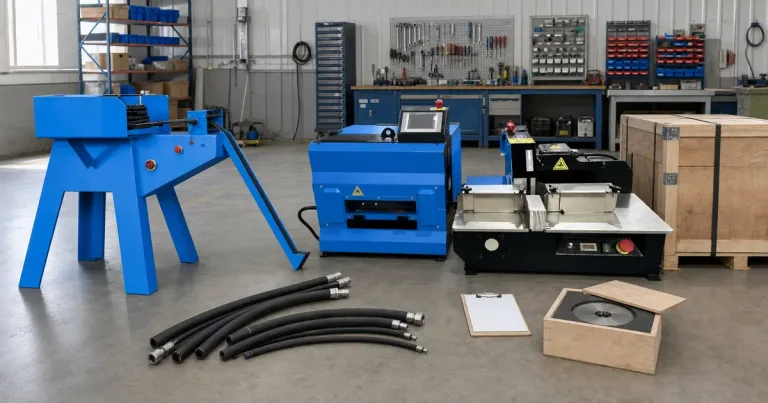

العناية الواجبة عند شراء مكبس خراطيم مستعمل تتساءل عما إذا كان البائع والسجلات يدعمان الماكينة المعروضة. الفحص المادي لا يمكنه بمفرده الإجابة عن الملكية، أو سجل الخدمة، أو صحة المستندات.
يبدأ الشحن الخارجي بعد التحقق من البائع
يعرض بائع إعادة بيع مكبسًا منخفض السعر موجودًا في الخارج. قبل ترتيب الشحن، يحتاج المشتري إلى التحقق من البائع القانوني، والرقم التسلسلي، والملكية، وسجل الإصلاح، والعدد والأدوات، واختبار القبول الذي سيتم الشهود عليه.
التحقق من البائع
تأكيد اسم الشركة، والعنوان، والشخص المسؤول، وسلطة البيع. اسأل كيف تم الحصول على الماكينة ولماذا يتم بيعها. بالنسبة للوسيط، حدد المالك الحالي وإمكانية الوصول للفحص.
مطابقة السجلات مع الماكينة
يجب أن يكون الرقم التسلسلي أو هوية الطراز متسقة عبر:
- لوحة الاسم؛;
- الفاتورة أو سجل الملكية؛;
- سجلات الصيانة؛;
- تقرير المعايرة أو الفحص؛;
- الدليل؛;
- الصور والفيديو؛;
- قائمة التعبئة.
لا تقبل تقارير عامة تخص مكبس خراطيم هيدروليكي مستعمل مختلف.
مراجعة السجل
اسأل عن الإصلاحات المعروفة، والتسريبات الهيدروليكية، واستبدالات وحدات التحكم، وأعمال مقعد القالب، وفترات التوقف عن الخدمة. السجل المفقود لا يثبت وجود عيب، لكنه يزيد من عدم اليقين ويجب أن يؤثر على السعر وشروط القبول.
تحديد اختبار القبول
بالنسبة لمكبس خراطيم هيدروليكي مستعمل، اتفق على:
- وظائف الماكينة المحددة للاختبار؛;
- القوالب المحددة؛;
- مكونات الاختبار والبيانات المستهدفة؛;
- طريقة القياس؛;
- الصور/الفيديو أو حضور طرف ثالث؛;
- النتيجة التي تسمح بالرفض؛;
- المسؤولية عن الإصلاح والشحن.
فيديو التشغيل بدون حمل ليس اختبار قبول كامل.
التحقق من دعم المستندات وقطع الغيار
تحقق من وجود دليل حالي، ومعلومات كهربائية، ومسار لقطع الغيار. قد تبقى الماكينة القديمة مفيدة، لكن قيود الدعم يجب أن تُسعّر بصدق.
بناء ملف عناية واجبة واحد قبل الدفع
احتفظ بهوية البائع، وهوية الماكينة، وأدلة الملكية، والفحص، والعدد والأدوات، والدفع، والشحن في ملف واحد. يفقد المشتري السيطرة عندما تكون كل إجابة في سلسلة رسائل مختلفة.
| قسم الملف | الحد الأدنى من السجل | علامة تحذيرية |
|---|---|---|
| البائع | الاسم القانوني، والعنوان، وجهة الاتصال الموثقة | اسم الدفع لا يطابق البائع |
| الماكينة | لوحة الاسم، والرقم التسلسلي، وصور حالية | الرقم التسلسلي مخفي أو معدل |
| الملكية | فاتورة، أو سجل أصول، أو سلسلة موثوقة | البائع لا يستطيع تفسير الحيازة |
| الحالة | اختبار مستقل أو مشهود عليه | فيديو معدل بدون هوية الماكينة |
| الأدوات | مخزون محدد وخريطة عينات | قوالب مفككة بدون سجل توافق |
| الدفع | المستفيد المسمى والشروط | تغيير الحساب في اللحظة الأخيرة |
| الشحن | الاستلام، والتعبئة، وعدد الملحقات | No owner for loading damage |
Verify important contact details through a second route. If bank instructions change, stop and reconfirm with a known contact.
Make payment follow evidence
A deposit may be normal, but the payment stages should correspond to facts the seller can prove. For example, final payment can follow identity confirmation, the agreed loaded test and reconciliation of the included tooling.
Do not let an auction deadline remove a basic identity check. A missed bargain is cheaper than an untraceable machine.
Control the remote test
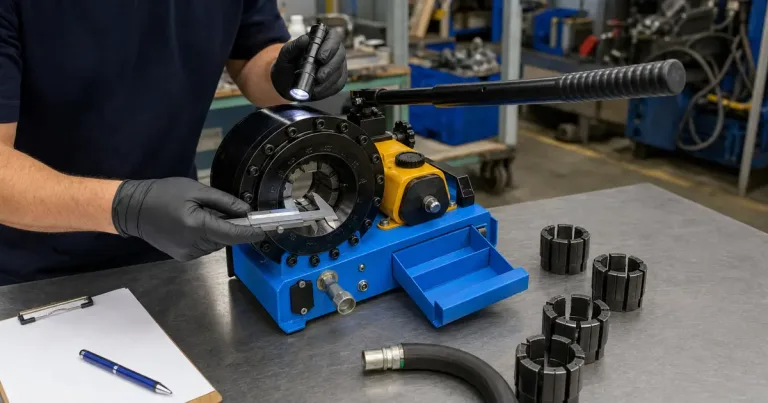
Ask the inspector to show the nameplate and machine in one continuous sequence. Record cold condition, controls, no-load movement, the representative component setup, finished measurement and return.
Independent inspection is useful only when the inspector’s scope is written. “Verify the machine works” is too broad. State the hose and fitting, die, measurement, photographs and documents you need.
Remote-buying rule: A live call reduces editing risk, but it does not replace a valid component test or ownership check.
Put unresolved items into the contract once
Use one open-item register. Each line needs an owner, due date, commercial effect and closure evidence.
| Open item | Contract treatment |
|---|---|
| Missing die inventory | Exclude from value or require list before final payment |
| Unverified repair | Seller provides record or buyer prices allowance |
| Damaged guard | Repair before pickup or reject |
| Unclear serial | Hold payment until resolved |
| Packing responsibility | Name who loads, restrains and photographs |
This avoids repeating the same unknown in the inspection report, payment email and shipping instruction with different wording.
Protect pickup and transport
Reconcile every die, tool and accessory before loading. Photograph the machine condition, lifting points, restraints and closed package. Identify who carries risk during loading and under the agreed sale and freight terms.
Used equipment may also face destination rules, cleaning requirements or import restrictions. The buyer and its broker should check those requirements before collection, not after the truck arrives at the border.
Transfer the file with the asset
The due-diligence record becomes the machine baseline. Give asset management the identity photographs, tooling list, accepted sample, open repairs and support contacts.
After commissioning, update the file with destination power checks, repairs and the first approved component rows. Do not overwrite the original condition; the before-and-after evidence matters if a fault or dispute appears later.
A used hose crimper becomes a controlled asset only when ownership, condition, tooling and process are traceable. Closing normally is one observation, not permission to make hose assemblies.
Use current component data in the release process. Gates’ crimp data and dies manual demonstrates the system-specific link among hose, coupling, die and finished measurement; it does not validate unknown auction tooling.
A remote purchase needs two independent chains
One chain proves that the seller can sell the machine. The second proves what the machine is and what condition it is in. A clean inspection report cannot cure a false payment beneficiary, and a valid seller identity cannot prove that the press performs under load.
Verify the commercial chain outside the listing
Confirm the legal seller, address and payment account through records appropriate to the seller’s jurisdiction. Call a known number when payment instructions change. If a broker is involved, document whether the broker owns the machine or only introduces the sale.
Ask why the machine is being sold and where it operated. The answer does not prove condition, but inconsistencies can reveal a record problem.
Verify the machine in one continuous session
The remote inspector should show the nameplate, full machine and controls before starting the test. Then move through the agreed die and component setup without switching to another unit.
Require the finished sample and measurement to remain visible with the machine identity. Save the original video, not a messaging-app preview.
باركر crimper preventive-maintenance document is useful context for the kinds of oil, wear, cleanliness and completed-diameter evidence that a remote test can investigate. Apply its exact service data only to the named Parker equipment.
| Remote-test risk | Control |
|---|---|
| Video is edited | Request live or continuous sequence |
| Wrong machine is shown | Keep nameplate and full machine in sequence |
| No-load motion substitutes for a test | Use identified components and recorded result |
| Dies are swapped after inspection | Reconcile marked inventory at pickup |
| Damage occurs during loading | Photograph condition and restraints |
Decide who may be independent
An inspector recommended by the seller may still do good work, but the buyer should know the relationship. Write the scope, evidence and reporting route directly with the inspector.
For high-value or cross-border equipment, consider a separate verification of seller and bank details. The machine technician does not need access to commercial payment records, and the commercial reviewer does not need to judge die wear.
Use the contract to control failure, not hide it
Define what happens if the sample fails, a die is missing, the serial differs or the package is damaged before pickup. State whether the seller repairs, reduces price, returns a deposit or cancels the sale.
Transaction rule: A contract clause is useful when it names the evidence, decision and remedy. “Machine in good condition” is too vague to control a dispute.
Work through an overseas auction case
A buyer wins a press that is stored at a third-party warehouse. The auctioneer collects payment, but the warehouse controls access and loading. The listing shows the machine, while the die cabinet appears in a separate photograph.
Before final payment or pickup, the buyer should reconcile auctioneer, owner and warehouse roles; confirm the serial; inventory the dies; specify the loaded test; and assign responsibility for loading. If any party cannot authorize the test, the buyer records that limitation before deciding.
This is an illustrative due-diligence case, not legal advice. The buyer should use local legal, tax, customs and insurance advisers for the transaction.
Use red flags as stop points
Stop the transaction when a basic identity or payment conflict appears. Do not ask the inspector to solve a bank-account problem by taking more machine photographs.
Common stop points include:
- the beneficiary changes shortly before payment;
- the serial cannot be shown;
- the person arranging pickup cannot prove authority;
- the seller refuses a component test already agreed in writing;
- loose tooling disappears between inspection and loading;
- package weight or dimensions change without an explanation.
We recommend reopening the relevant chain and documenting the resolution. If you cannot resolve it independently, keep payment on hold.
Match insurance to the actual handoff
Ask when the buyer takes risk and who is responsible for lifting, loading, securing and unloading. Photographs should show the machine before movement, on the vehicle and after restraint.
Insurance coverage, exclusions and claim evidence differ by provider and route. Give the insurer the machine value, condition, packing and transport plan. Do not assume a general freight policy covers loading damage to used machinery.
Keep repair quotations independent from the sale
When practical, obtain a repair estimate from someone other than the seller. The estimate should state the observed fault, inspection limit, parts and work excluded.
A vague “probably needs seals” statement is not enough for an allowance. If the technician cannot inspect the machine until arrival, label the budget provisional and keep a larger commercial stop point.
Recheck the machine after transport
At the destination, compare package condition, serial and inventory with the pickup file. Inspect power configuration before connection, then repeat the controlled sample after installation.
If the result changes, preserve both tests. Transport movement, destination power, setup or pre-existing condition may need investigation. The evidence chain prevents everyone from guessing.
Keep personal data and machine evidence separate
Share bank, identity and legal records only with the people who need them. The technical inspector normally needs machine identity and test requirements, not the buyer’s complete payment file.
Store unedited inspection media and signed commercial records under controlled access. If a dispute arises, the buyer can provide the relevant evidence without forwarding every internal message or personal document.
Close the open-item register
Do not archive the file while rows still say “seller to confirm.” Each item should close with evidence, transfer into a repair work order or remain as an accepted commercial risk signed by the decision owner.
After commissioning, compare the final machine, dies and condition with the purchase file. This last reconciliation turns due diligence into the starting baseline for maintenance rather than a folder nobody opens again.
الأسئلة المتداولة
I found a hydraulic hose press at auction. What should I verify before using it?
Verify the machine identity, power supply, hydraulic condition, controls, dies, manuals and known repairs before you attempt a production crimp. Then obtain current data for one identified hose, fitting and ferrule system and make a measured first-piece trial. A no-load closing video proves movement, not production readiness.
I restored a hose press. Can I start making hoses if it closes normally?
No. Normal movement does not establish tooling compatibility, setting accuracy or component-system approval. Confirm the die route, make controlled samples, measure them against the current crimp data and complete any validation required by the responsible hose system.
Keep the decision file with the machine
استخدم used-crimper due-diligence route و ask TRC to compare a documented new configuration when unresolved used-equipment risk becomes expensive.